
News
President Tinubu Orders Comprehensive Forensic Audits of MDAs, IPPIS
The exercise will establish the nature and extent of weaknesses in Government’s control system, and determine how such weaknesses have been exploited.

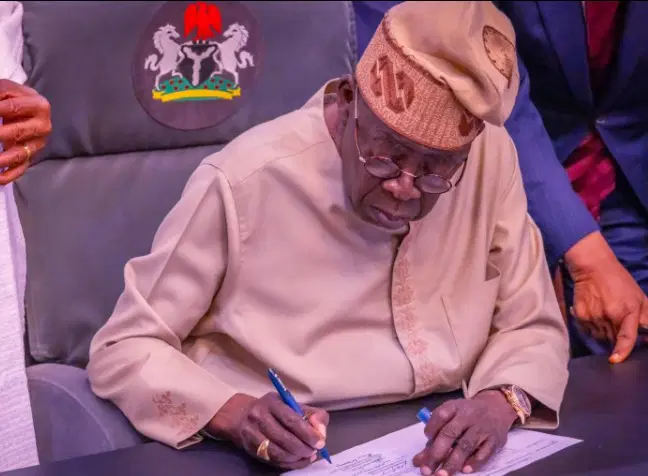
President Bola Ahmed Tinubu has directed the Minister of Finance and Co-ordinating Minister of the Economy, Mr Taiwo Oyedele, to oversee and coordinate a comprehensive forensic audit of Federal Government systems.
The audit will include a review of the Integrated Personnel and Payroll Information System (IPPIS), Federal Government agencies, and their administration and internal controls.
Bayo Onanuga,Special Adviser to the President(Information & Strategy), in a press release on Friday, said that President Tinubu’s directive follows the Federal Executive Council’s resolution on August 19, 2026, in response to findings by the Independent Corrupt Practices and Other Related Offences Commission (ICPC) on “fake agencies”, ghost workers, and other control failures.
The exercise will establish the nature and extent of weaknesses in Government’s control system, and determine how such weaknesses have been exploited.
The review will comprise two interconnected components. The first will focus on a forensic audit of Government systems, particularly IPPIS and related payroll, personnel, pension and financial-management platforms.
It will examine reported cases of ghost workers and payroll fraud, reconcile the figures identified by the ICPC, trace how fictitious or ineligible persons were enrolled, and review access, identity, biometric and bank-account controls.
The exercise will also examine the interfaces between IPPIS and other government platforms, including GIFMIS, Remita, the Treasury Single Account (TSA) and Sub-TSA, to determine whether fraud resulted from system defects, process failures, inadequate segregation of duties or deliberate circumvention.
The second component of the audit will cover all Federal Government agencies, departments, commissions, councils, parastatals and other government bodies.
It will establish a definitive inventory of such bodies and verify their legal basis, while examining how entities obtain official recognition, budgetary consideration, correspondence privileges, office facilities and access to government systems.
The exercise will assess governance, procurement, internal-audit, and oversight controls across Government to close systemic weaknesses that could allow irregular entities or persons to access public resources.
President Tinubu directed that the exercise be conducted with the highest standards of independence, professionalism and forensic integrity.
The audit team will have access to relevant government systems and records. It will collaborate with the ICPC to ensure that the review complements all ongoing investigations, prosecutions and recoveries.
President Tinubu expects the exercise to go beyond identifying individual cases of fraud or administrative failure by strengthening the architecture of Government, closing systemic loopholes, improving data verification and reconciliation, reinforcing accountability, and ensuring that only duly constituted entities and eligible personnel have access to Government resources.
The exercise underscores the President’s commitment to strengthening transparency, accountability, fiscal governance and institutional integrity across the Federal Government.





News
South Africans Begin Another ‘Operations Flush Out Nigerians’ Protest
Fani-Kayode described those behind xenophobic attacks as a tiny minority who should not be allowed to define the character of the country’s population.
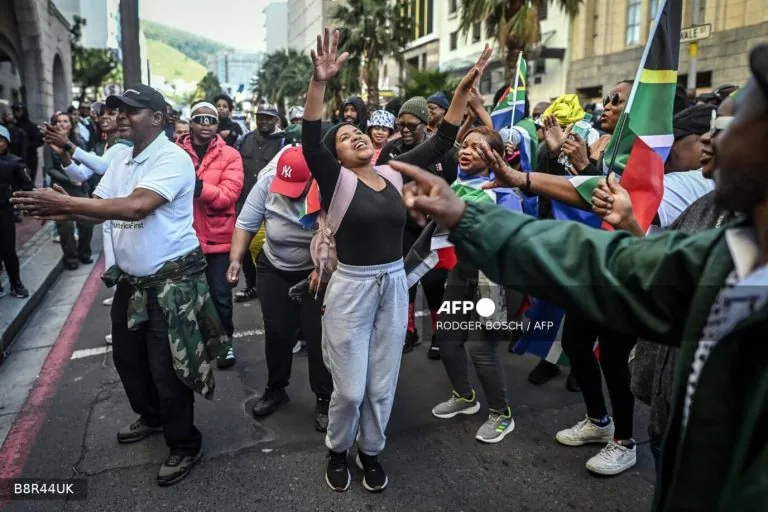
Nigeria’s High Commissioner to South Africa, Femi Fani-Kayode, is sweating to protect Nigerians and Nigeria’s image as protesters, operating under the March and March movement launched a fresh anti-Nigerian campaign, ” The state must ban Nigerians from South Africa. They must ban Nigerians until they stop selling drugs to our people. The rest of Africa, we are fine, but we do not want Nigerians in South Africa anymore. That is what we are saying.”
The protesters on Wednesday led by the group’s leader, Jacinta Ngobese-Zuma, took a particularly confrontational turn in Sunnyside, a Pretoria suburb popularly associated with a sizeable Nigerian community and sometimes described as ‘Little Lagos.
They specifically accused Nigerians of engaging in drug trafficking and contributing to social problems in South African communities.
The demonstration, .Challenging Nigerian residents to explain their presence and influence in the neighbourhood, Ngobese-Zuma questioned how the area acquired the nickname.
“I am being told here that we’ve entered Sunnyside, the home of Nigerians. I am inviting Nigerians to come out, let’s talk to each other. We want to know who gave you this place and called it Nigeria. Who gave you permission to call this place Lagos or whatever you call it?” she asked.She further questioned who had authorised Nigerians to identify parts of South African territory with their home country.
The remarks point to the increasingly hostile rhetoric directed at the immigrant community.
Ngobese-Zuma described the convention as “not sustainable and not feasible”.
She alleged that the presence of migrants was placing additional pressure on public resources and aggravating the frustrations of South African citizens.
The movement said it was taking its grievances to the Department of Home Affairs, where it intended to formally present its demands for tougher immigration controls, restrictions on refugee admissions and accelerated deportation of undocumented foreign nationals.
For his part, the group’s legal representative, Xolani Zuma, went further by demanding an outright prohibition on Nigerians entering South Africa.
The latest demonstration comes amid growing strain in relations between Nigeria and South Africa over recurring xenophobic hostility, the safety of Nigerian nationals and disagreements surrounding the diplomatic representation of both countries.
Only last week, Fani-Kayode, and the South African Presidency were involved in a diplomatic exchange following the exclusion of his prepared speech during the presentation of his credentials.
Fani-Kayode had described the omission as disrespectful to Nigeria.
Although he subsequently said the disagreement had been resolved following the intervention of South African President Cyril Ramaphosa and an invitation from the country’s Department of International Relations and Cooperation.
The envoy also disclosed that he had begun addressing concerns affecting Nigerians in South Africa since assuming office.
Fani-Kayode described those behind xenophobic attacks as a tiny minority who should not be allowed to define the character of the country’s population.
He maintained that the majority of South Africans were decent and accommodating.
He expressed confidence that the two countries could overcome their differences without severing longstanding diplomatic relations.
However, Fani-Kayode had warned that patience was running thin within Nigeria’s corridors of power over repeated attacks on its citizens.He insisted that the country would not abandon its nationals to xenophobic violence.




Traffic
News
Tinubu Hails National Assembly For Quick Work on State Police Bill
He emphasised that President Tinubu will review the Constitution Alteration Bill in consultation with the Attorney-General of the Federation.Thereafter, he will assent to the Bill at a formal signing ceremony.
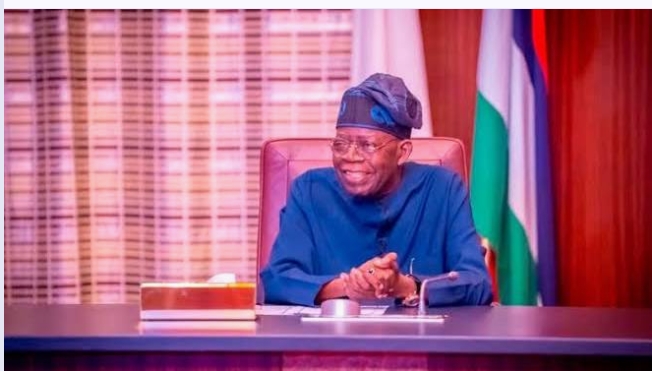
President Tinubu expresses his appreciation to the President of the Senate, the Speaker of the House of Representatives, members of the National Assembly, the Clerk to the National Assembly, the 36 State Governors, the State Houses of Assembly, and all Nigerians who have demonstrated a shared commitment to addressing the nation’s security challenges.
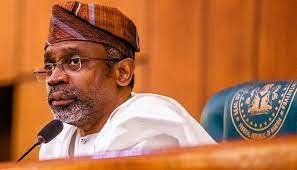
Chief of Staff to the President / Chairman, Presidential Working Group on State Police , Femi Gbajabiamila, disclosed this on Thursday, confirming that President Bola Ahmed Tinubu has received the Constitution (Sixth Alteration) Bill.
In a statement, Gbaja said the Bill was formally transmitted to him today by his Special Advisers on Senate and House of Representatives Matters, Senator Basheer Lado and Dr. Wasiu Olanrewaju-Smart.
All 36 State Houses of Assembly have approved the Bill, exceeding the constitutional requirement of at least 24 States, representing two-thirds of the 36 States, as stipulated in Section 9(2) of the Constitution.
He emphasised that President Tinubu will review the Constitution Alteration Bill in consultation with the Attorney-General of the Federation.Thereafter, he will assent to the Bill at a formal signing ceremony.
Meanwhile, the Presidential Working Group on State Police, which I chair, with the support of the Policy Advisory Committee, has undertaken extensive stakeholder engagement and nationwide consultations towards developing a draft National Policing Bill.
The draft Bill has been submitted to the Federal Ministry of Justice for legislative drafting validation.
Upon receipt of the validated version, the Working Group will review it and present it, alongside its report, to Mr President for consideration.


South Africans Begin Another ‘Operations Flush Out Nigerians’ Protest

Soludo Bets on Tinubu – Shettima Winning Second Term

UPDATE: 17 Kidnap Victims Rescued After Forest Gun Battles in Kogi – Police (Images)

BREAKING: Lagos Govt Declares Today, Thursday Work-Free to Mark 2026 Ìṣẹ̀ṣe Day

Tech Expert, Zuckerberg trains with UFC champions, Adesanya, Alexander

Organ Trafficking: Ekweremadu bags 10 years in UK prison
-

 Business3 days ago
Naira Exchange Rates Tuesday, 17 Nov 2026
-

 Business3 days ago
NGX Acquires 10% Stake in Nairobi Securities Exchange
-
 News3 days ago
Kano Gov Yusuf Divorcing Wife Zainab
-
 News3 days ago
Vanguard’s Online Editor, Femi Ajasa, dies at 44
-
 Crime12 hours ago
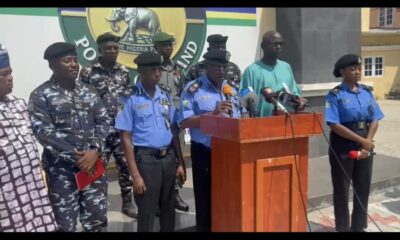
UPDATE: 17 Kidnap Victims Rescued After Forest Gun Battles in Kogi – Police (Images)
-

 Business3 days ago
Why Onion is expensive – Producers
-

 News2 days ago
British Airways Flight to Lagos Loses Nose Gear on Heathrow Runway (Video)
-

 News1 day ago
Lockdown on Lagos/Ibadan highway [PHOTOS] motorists spend whole day in traffic