
News
NUC issues new rules on honorary doctorates
The guidelines limit honorary awards to a maximum of three recipients per convocation and require that the degrees carry the designation “Honoris Causa,” such as Doctor of Science (D.Sc. h.c.) or Doctor of Law (LL.D. h.c.).

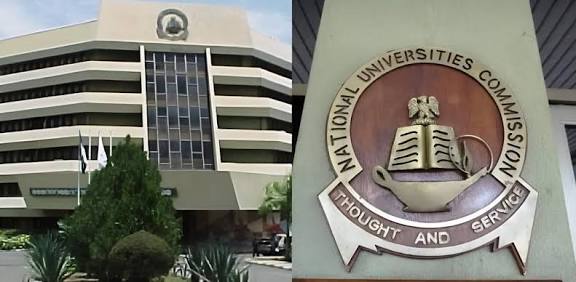
The National Universities Commission (NUC) on Thursday, released fresh guidelines regulating the award and use of honorary doctorate degrees in Nigeria.
Honorary doctorate degrees are non-earned distinctions granted honoris causa to recognise distinguished merit, public service, scholarly impact, creative achievement or other significant contributions aligned with the values of the awarding institution.
In a public notice shared on its official X page, the Commission found widespread misuse of honorary degrees, with 32 entities among 61 institutions and professional bodies identified as operating as honorary degree mills — including unaccredited foreign universities, unlicensed local institutions and organisations without degree-awarding powers. Some were also found issuing fake professorships.
Consequently, the Executive Secretary of the Commission, Abdullahi Yusufu Ribadu, said that the new guidelines were developed in line with established academic traditions and resolutions of the Association of Vice-Chancellors of Nigerian Universities, including the Keffi Declaration of 2012, alongside inputs from universities submitted in December 2025.
NUC said that the new rules are designed to standardise the conferment process, protect academic integrity and safeguard the credibility and global reputation of Nigeria’s university system. Universities and other degree-awarding institutions were directed to strictly comply, with sanctions promised for violations.
Under the new rules, only approved universities that have graduated their first set of PhD students are eligible to award honorary doctorates. The purpose, criteria and selection procedures must be clearly defined and publicly accessible, while nominations must pass through statutory committees and receive approval from both the University Senate and Governing Council.
The guidelines limit honorary awards to a maximum of three recipients per convocation and require that the degrees carry the designation “Honoris Causa,” such as Doctor of Science (D.Sc. h.c.) or Doctor of Law (LL.D. h.c.).
Awards must be conferred in person, except in exceptional circumstances where they may be given virtually, in absentia or posthumously.
The Commission stressed that honorary doctorates must be granted free of charge and recipients must not present the honour as an earned academic qualification.
NUC specifically warned that recipients cannot use the “Dr.” — which is reserved for holders of earned doctoral or medical degrees — nor use the award to supervise research, practise as scholars or manage academic units.
Universities are also required to provide recipients with orientation on the proper use of the honour, publish lists of awardees on their websites to promote transparency and establish clear mechanisms for revoking awards if recipients are convicted of fraud or engage in unethical conduct.
The NUC said all eligible universities must comply strictly with the framework, reiterating that regulatory sanctions will apply to institutions that confer honorary doctorates in breach of the new guidelines.

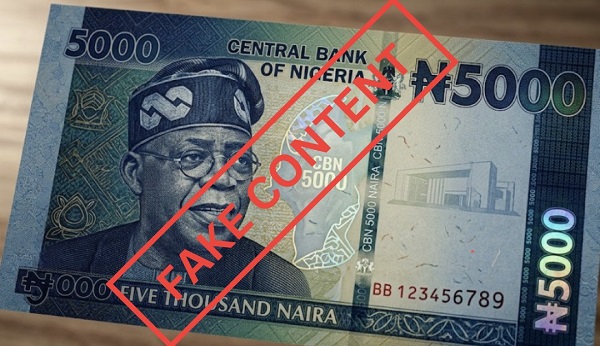
The Central Bank of Nigeria (CBN) has firmly dismissed as fake a circulating image purporting to show a new ₦5,000 banknote bearing the portrait of President Bola Ahmed Tinubu.
In a statement posted on its official X (formerly Twitter) handle on Thursday, April 9, 2026, the apex bank declared: “This content is fake. Let the public be guided.” The clarification came after the image went viral on social media, sparking debates and reactions among users who questioned its authenticity.
The viral mock-up, which some claimed was a “first sample” of a redesigned higher denomination note, has been identified by fact-checkers and media outlets as AI-generated.
Tests using AI detection tools reportedly showed over 90% AI-generated content, and earlier versions of similar images carried watermarks linked to Grok, an AI tool on the X platform.
This is not the first time such claims have surfaced. In 2025, the CBN similarly debunked reports of impending introductions of ₦5,000 and ₦10,000 notes, describing those as false and clarifying that no such policy or designs were in the works.
The CBN urged Nigerians to disregard the misleading image and rely only on official communications from the bank. It has not announced any plans to introduce new currency denominations or redesign existing notes with the president’s image.
The development comes amid ongoing efforts by authorities to combat misinformation that could potentially cause public confusion or economic anxiety regarding the naira.
Members of the public are advised to verify currency-related information directly through the CBN’s official website (cbn.gov.ng) or verified channels.
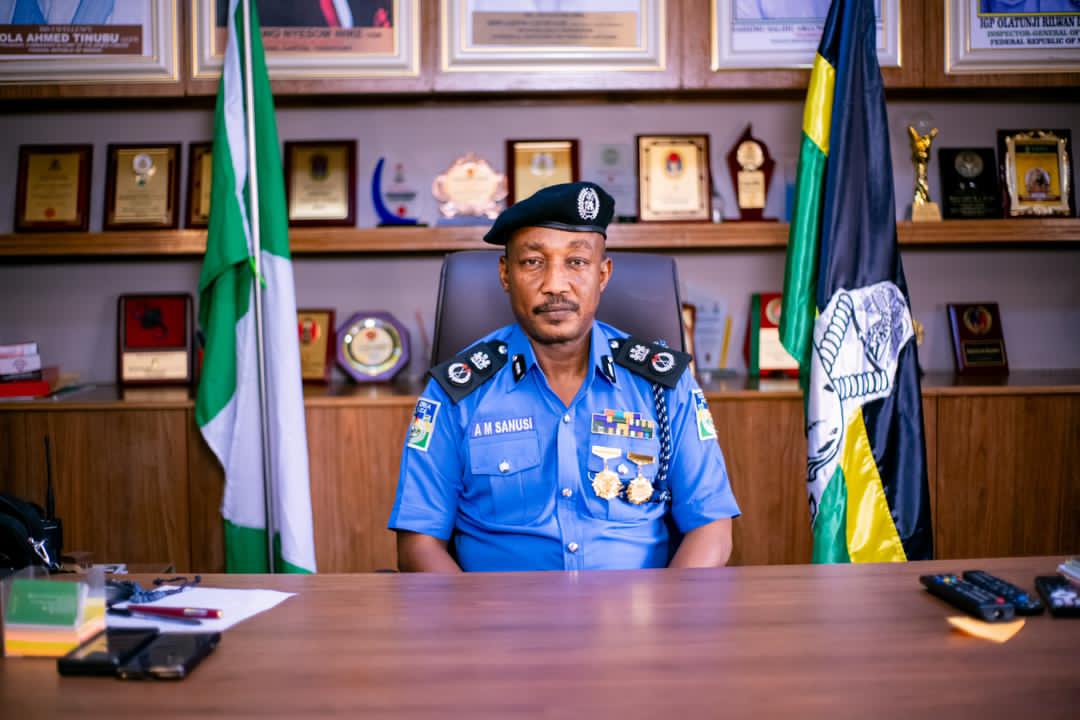
The Federal Capital Territory (FCT) Police Command has dismissed as false and misleading a viral video claiming terrorists were advancing on Abuja with heavy gunfire.
In a statement on Thursday, the Command said there was no terrorist attack or security breach anywhere in the Federal Capital Territory.
Commissioner of Police, Ahmed Sanusi, described the video as a deliberate attempt to incite panic and spread misinformation.
According to the Police Public Relations Officer, SP Josephine Adeh, preliminary investigations revealed that the gunshots in the footage were manipulated and edited from an unrelated source, then superimposed on visuals of buildings under construction at an unidentified location.
The Commissioner has ordered a full forensic analysis to trace the origin of the video and identify those responsible for prosecution.
The FCT Police warned content creators and social media users against spreading false information that could cause fear and public disorder.
Residents were urged to disregard the video and refrain from sharing unverified content.
The Command reassured residents of its commitment to maintaining safety and security in the FCT.
News
US Declares 23 Nigerian States High-Risk for Citizens
Southern and Southeastern states were not spared. The Department urged caution in Abia, Anambra, Bayelsa, Delta, Enugu, Imo, and Rivers (excluding Port Harcourt), citing crime, kidnapping, and violent protests.
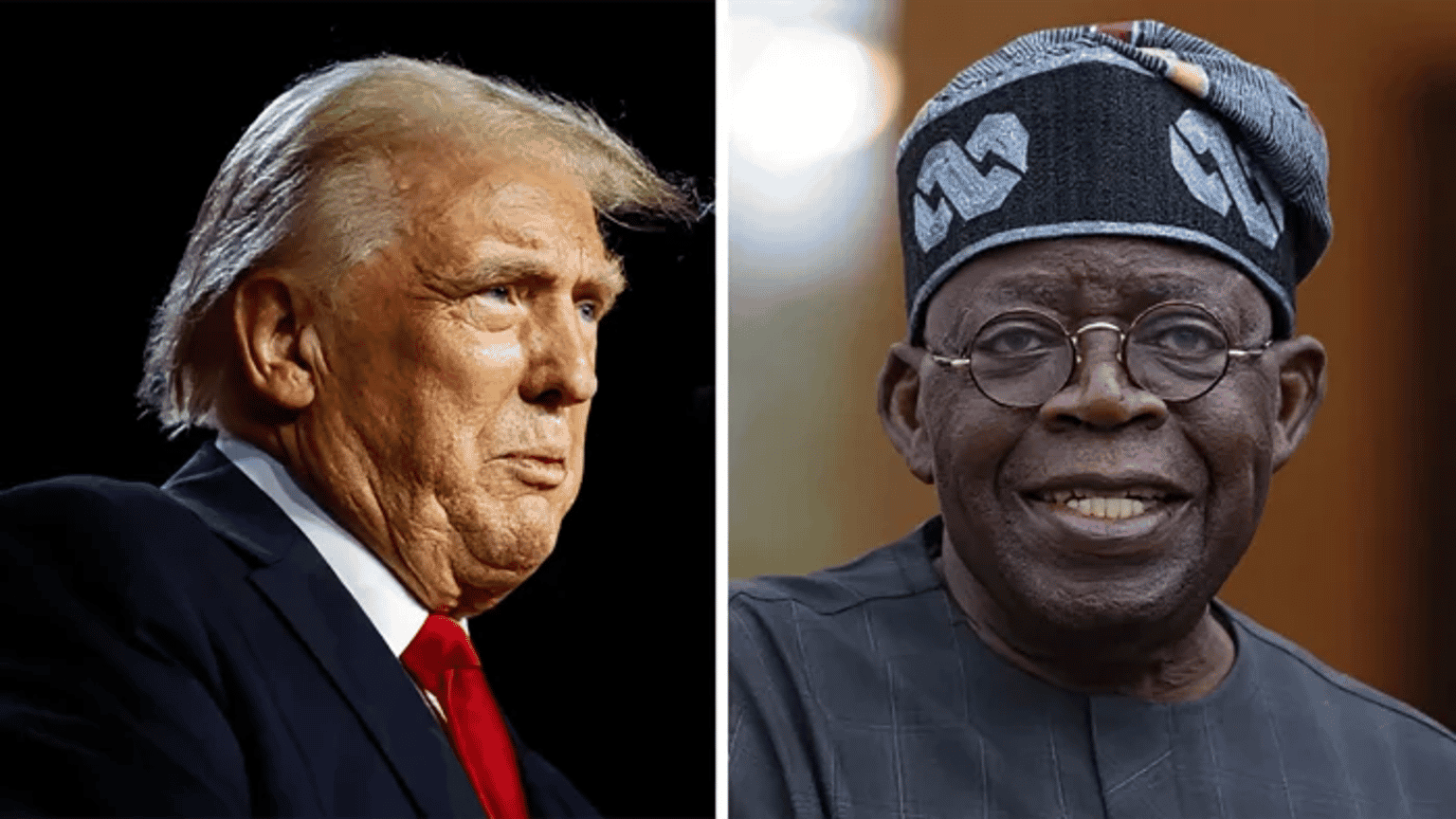
Photo: President Donald Trump; President Bola Tinubu
The United States Department of State has classified 23 Nigerian states “High Insecurity Risks” for its citizens to go , work and live.
In an updated travel advisory issued on Wednesday, the Embassy in Nigeria urged Americans to reconsider travel to Nigeria, with certain states classified under “Level 4: Do Not Travel” due to heightened security risks.
Plateau, Jigawa, Kwara, Niger, and Taraba were added to the list, bringing the total to 23 states where travel is strongly discouraged.
In Northern Nigeria, the advisory highlighted Borno, Jigawa, Kogi, Kwara, Niger, Plateau, Taraba, Yobe, and northern Adamawa as particularly high-risk, citing terrorism, kidnapping, and violent crime.Bauchi, Gombe, Kaduna, Kano, Katsina, Sokoto, and Zamfara were also flagged due to civil unrest, widespread crime, and kidnappings.
“The security situation in these states is unstable and uncertain due to civil unrest. Widespread violence between communities and armed crime, including kidnapping and roadside banditry.
“Security operations to counter these threats may occur without warning,” the advisory warned.
Southern and Southeastern states were not spared. The Department urged caution in Abia, Anambra, Bayelsa, Delta, Enugu, Imo, and Rivers (excluding Port Harcourt), citing crime, kidnapping, and violent protests.
“Crime is widespread in Southern Nigeria. There is a high risk of kidnapping, violent protests, and armed gangs,” the advisory stated.


NBA Cautions Lawyers Against Involvement in Political Party Disputes

2027: Bode George warns INEC, Judiciary Drifting Nigeria Towards ” One Party Rule”

DR Congo Central Bank Announces Ban on Foreign Currency Cash Transactions from 2027

Tech Expert, Zuckerberg trains with UFC champions, Adesanya, Alexander

Organ Trafficking: Ekweremadu bags 10 years in UK prison

SAINT OBI: Between his marriage and his death
-
 Politics2 days ago
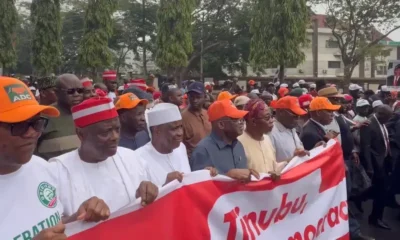
Atiku, Obi, Kwankwaso, Aregbesola, Storm INEC Hqtrs in Protests
-
 Politics3 days ago
JUST IN: ADC Faces Fresh Crisis as New Faction Emerges, rejects David Mark-led coalition
-
Politics2 days ago
Coalition Leaders Rouse Nigerians to Reject ‘One Party ‘Rule’, Warning INEC “Don’t kill Democracy”
-

 Business2 days ago
Crude Oil Prices Drop Below $95 After US-Iran Ceasefire
-
 International2 days ago
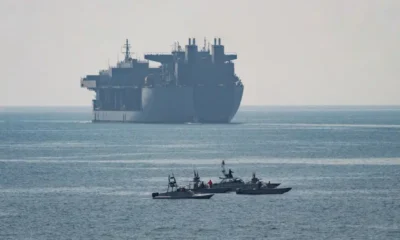
Iran reopens Strait of Hormuz following two-week cease-fire agreement with Trump
-

 News8 hours ago
CBN Debunks Viral Fake News of ₦5,000 Banknote Featuring President Tinubu’s Image
-

 Politics2 days ago
Rep Dasuki Joins ADC, says INEC Chair Becoming Threat to Nigeria’s Multi-party Democracy
-
 News1 day ago
INEC releases updated voters registration figure nationwide