
News
NOA DG Urges National Assembly to criminalise Fuel Scooping
The Director- General called on the National Assembly to urgently initiate and enact comprehensive legislation that will expressly criminalise the act of fuel scooping from fallen tankers and prescribe firm, clear, and deterrent penalties for perpetrators.


• Fuel scooping from a fallen tanker at Liverpool bridge, Lagos , Monday 19 January 2026.
The Director General of the National Orientation Agency (NOA), Mallam Lanre Issa-Onilu, has condemned the act of scooping fuel from a fallen tanker, as witnessed today at the Liverpool Bridge, Apapa area of Lagos State.
The Director- General therefore called on the National Assembly to urgently initiate and enact comprehensive legislation that will expressly criminalise the act of fuel scooping from fallen tankers and prescribe firm, clear, and deterrent penalties for perpetrators.
” This practice is completely unacceptable in a modern society and poses an extreme and avoidable threat to human life, public safety, and national infrastructure,” said Issa-Onilu .
He pointed out that the risks involved are not limited to those directly engaged in the act; the collateral danger to motorists, nearby communities, emergency responders, and critical assets is enormous and far outweighs any perceived or imagined benefit.
Issa-Onilu noted that the National Orientation Agency has, over the years, consistently deployed nationwide sensitisation and public enlightenment campaigns to conscientise Nigerians on the dangers inherent in fuel scooping and similar high-risk behaviours. Regrettably, despite sustained advocacy, repeated warnings, and value-reorientation efforts, some individuals have remained adamant and have continued to engage in this undesirable and life-threatening conduct.
The Director General stated unequivocally that this behaviour cannot be justified under any circumstances. “This is not poverty.
Poverty does not take away the sense in people’s heads, nor does it eliminate judgement or the instinct for self-preservation. What we are witnessing is a conscious, reckless, and criminal disregard for human life and public safety,” he said.
He recalled that Nigeria has, in the past, recorded several tragic incidents across different parts of the country where fuel tanker accidents led to explosions and infernos after people attempted to scoop fuel, resulting in the loss of hundreds of lives. These recurring tragedies, he stressed, are painful reminders that this menace is recurrent, preventable, and must no longer be tolerated.In view of the grave danger posed by this practice, t
He emphasised that sustained public enlightenment must now be complemented by strong legal and enforcement frameworks to decisively end this deadly behaviour.
Issa-Onilu emphasised that this trend must not be allowed to continue, adding that Nigerians must collectively reject actions that repeatedly lead to mass casualties, national trauma, and avoidable loss of lives.
He reaffirmed the Agency’s commitment to intensifying its value-reorientation and safety advocacy across the country.
“Human life is sacred and priceless. No situation, no (excuse, and no momentary gain should justify conduct that places lives in imminent danger,” said the Director – General.

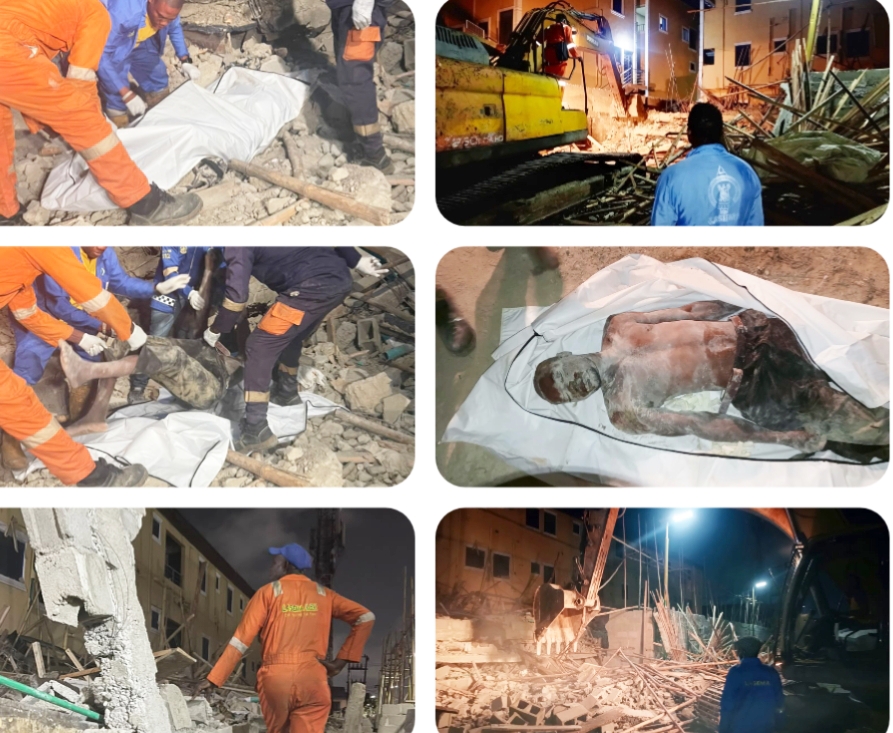
A two-storey building has collapsed in the Fadeyi area of Lagos, resulting in one fatality and the rescue of three people, emergency officials confirmed on Friday morning.
The incident occurred in the early hours, sending residents and nearby traders into panic as the structure suddenly gave way. Rescue teams from the Lagos State Emergency Management Agency (LASEMA) and other first responders quickly arrived at the scene and began extracting victims from the rubble.
According to preliminary reports, one person was confirmed dead at the site, while three others were pulled out alive and rushed to a nearby hospital for treatment. Their conditions have not yet been disclosed.
Security personnel have cordoned off the area to allow rescue operations to continue and to prevent further access by onlookers. Officials are still assessing whether any other persons remain trapped under the debris.
The cause of the collapse has not been established. Authorities have not ruled out structural failure, but investigations are ongoing.
Further updates are expected as the rescue operation progresses and more details become available from emergency services.
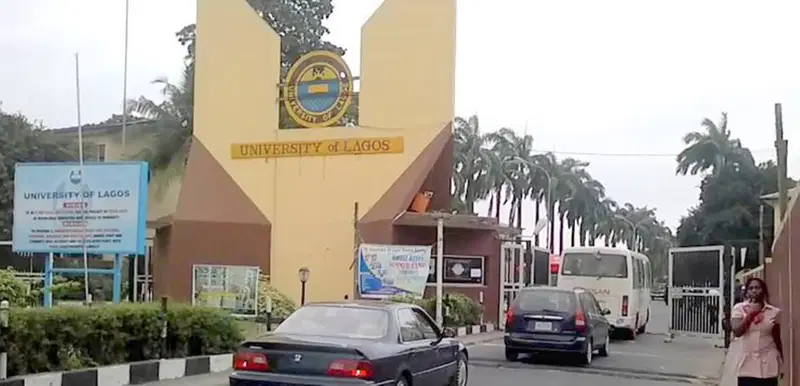
Teachers at the International School, University of Lagos (ISL), on Wednesday commenced a work-to-rule action over unpaid salary arrears, their removal from the university’s payroll, and delays in implementing a National Industrial Court judgment.
The staff are demanding the payment of outstanding Consolidated Tertiary Institutions Teaching Allowance (CONTTA) arrears, as well as arrears from the 25 per cent and 35 per cent salary adjustments approved in 2024. They also want full restoration to the university’s payroll.
Comrade Razak Yusuf, Chairman of the Senior Staff Association of Nigerian Universities (SSANU), University of Lagos branch, said the industrial action followed prolonged delays in resolving the teachers’ employment status and financial entitlements.
The teachers had approached the National Industrial Court of Nigeria, which ruled in their favour on May 11, 2026. Despite the judgment, they claim the university has yet to fully restore their names to the payroll or settle outstanding benefits.
Protesters carried placards with messages such as “Equal Work, Equal Rights,” “ISL tutors deserve their due,” and “Other UNILAG staff paid, ISL tutors still owed.” The action disrupted teaching and a scheduled mid-term examination at the school.
The teachers called on the university management to restore the affected staff to the payroll, settle all outstanding financial obligations, and provide a clear payment plan with timelines.
They rejected suggestions that any interim arrangement under the university’s Council protocol amounted to goodwill, insisting they were only seeking recognition of their employment rights.
The development continues a pattern of industrial disputes at the University of Lagos over salary and allowance issues.
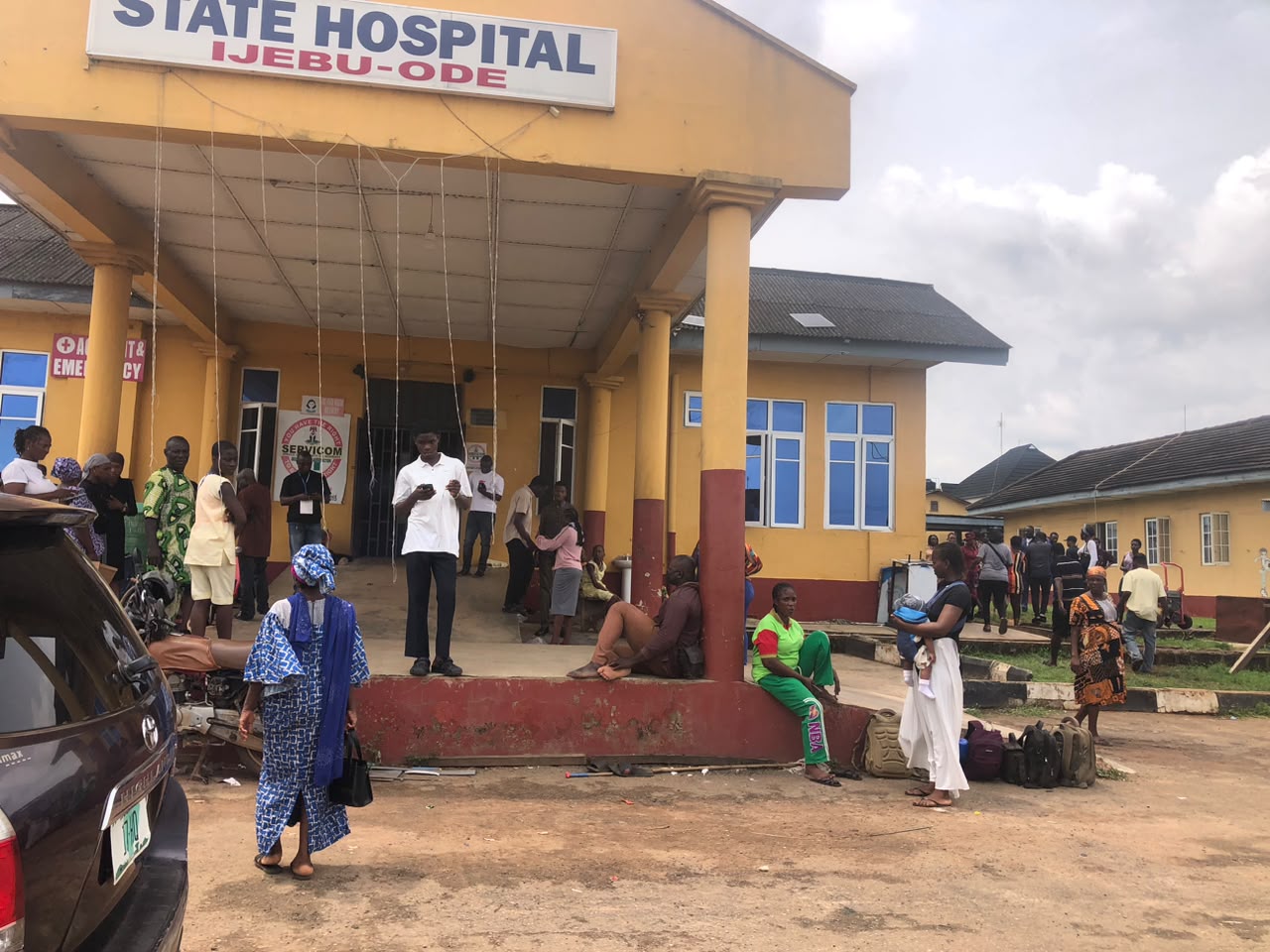
Hundreds of students were hospitalised on Wednesday morning after fresh gaseous emissions hit parts of Ogun State, including Ijebu-Ode, Ijebu-Igbo and Ago-Iwoye.
The incident affected pupils at Anglican Girls Grammar School, Obalende, Ijebu-Ode, and Ijebu-Igbo Girls Grammar School. Several schools in Ago-Iwoye suspended academic activities and sent students home as a precaution.
Kehinde Bello, General Manager of the Ogun State Environmental Protection Agency (OGEPA), visited the affected areas and linked the emissions to underground gas previously recorded in Ijebu-Ode since April 2026. He said the situation was under control and attributed the releases to natural geological and tectonic fault lines, ruling out sabotage or a gas pipeline leak.
Bello assured residents that the state government was working on a lasting solution. He advised anyone exposed to the odour to cover their noses and mouths with wet handkerchiefs.
The recurring emissions have renewed concerns about the safety of students and residents in the affected communities.


JUST IN: Four Pilots Die After Mid-Air Collision of Military Planes in Philippine

JUST IN: Another Nollywood Actor, Dies After Brief Illness

Ebola patient in Abuja showing signs of recovery – FG

BREAKING: Lagos Govt Declares Today, Thursday Work-Free to Mark 2026 Ìṣẹ̀ṣe Day

Tech Expert, Zuckerberg trains with UFC champions, Adesanya, Alexander

Organ Trafficking: Ekweremadu bags 10 years in UK prison
-

 Business2 days ago
Naira To Dollar, Pound, Euro… Today October 23
-

 Health3 days ago
UPDATE: Identity of Woman Who Flew into Nigeria with Ebola Virus Revealed
-

 Business2 days ago
Obasanjo Accuses Tinubu : “You Made Every Nigerian Poor By 300% Naira Devaluation”
-

 Entertainment2 days ago
JUST IN: Nollywood Veteran Francis Duru Dies at 57 After Brief Illness
-
 News2 days ago
JUST IN: 1 Dead, 3 Rescued in Fadeyi Building Collapse, Lagos
-

 Business2 days ago
History of Naira Revaluation and Devaluation (1973–2026) (Part 1)
-

 Business2 days ago
CBN Licences Abbey Bank to Start Full Commercial Banking in November 2026
-

 Politics1 day ago
2027 presidential election: Tinubu’s Northern test begins today