
Business
NNPCL, marketers clash over subsidy, operators peg petrol at N1,200/litre


The Nigerian National Petroleum Company Limited and fuel marketers under the aegis of the Independent Petroleum Marketers Association of Nigeria, on Tuesday, clashed again over the removal of subsidy on petrol.
This came against the backdrop of the depreciation of the naira against the United States dollar at both the official Investors & Exporters Window and the parallel market.
On Tuesday, the local currency closed at 998/dollar at the official market, while it traded at 1,225/dollar at the black market.
On the back of the falling naira rate, economists and oil marketers said PMS subsidy was increasing in recent times, but the NNPC quickly countered these positions and declared that it was recovering its full cost on the importation of Premium Motor Spirit, popularly called petrol, countering the positions of
The Chief Executive Officer, Financial Derivatives Company, Bismarck Rewane, had during a live television programme on ChannelsTV on Sunday, explained that fuel subsidy was not removed but reduced.
Similarly, oil marketers told our correspondent on Tuesday that subsidy on petrol was increasing considering the crash of the naira against the United States dollar and the cost of crude oil, stressing that PMS should sell for N1,200/litre in a free market.
Petrol, which is solely imported into Nigeria by the NNPCL, currently sells for between N617/litre to N660/litre, depending on the location of purchase in Nigeria.
Also speaking on the matter, the Chief Executive Officer, Centre for the Promotion of Private Enterprise, Dr Muda Yusuf, said there was partial subsidy on petrol, but noted that the commodity was subsidised by the government for political, social and economic reasons.
Full cost recovery
But when contacted, the Chief Corporate Communications Officer, NNPCL, Olufemi Soneye, described the positions of economists and marketers as assumptions, and insisted that the Federal Government had stopped subsidy on petrol.
President Bola Tinubu had during his inaugural speech on May 29, 2023, declared that subsidy on petrol was gone, a declaration that was effectively implemented the next day by NNPCL.
Before Tinubu’s declaration, the pump price of petrol was below N190/litre, but it jumped to over N500/litre after the President’s statement, and moved up again to over N600/litre a few weeks later.
Asked to state if the NNPCL, being Nigeria’s sole importer of petrol, subsidising the commodity as posited by dealers and experts, the oil firm’s CCCO replied, “We prioritise our time on substantive matters rather than responding to assumptions.
“At NNPC Ltd, we prioritise national development through energy security and sustainable growth. We reiterate that the Nigerian government does not pay subsidy on fuel; we recover full costs from our imported products.
“As a global energy company, our focus remains on fostering a vibrant and energy-secure Nigeria.”
‘Subsidy reduced’
Rewane had earlier explained that subsidy on petrol was reduced and not removed, while featuring on a live television programme on Sunday evening, as he further highlighted the effects of the reduction in fuel subsidy and how it was affecting salary earners in Nigeria.
He said, “At the inauguration, it was said that (fuel) subsidy was gone but subsidy was actually reduced.”
Buttressing his position, he explained, “There is the convergence of exchange rates and reducing the windows into one. The consequence of that is that money has been transferred from consumers to the government.
“Subsidies are reversed taxes; if you reduce them, you increase the people’s taxes and reduce their income. What has happened is that government revenue has increased by 44 per cent between May and June (2023). Money has been transferred to the government but what is the government doing with it?
“The consumers, on the other hand, had a minimum wage, which in dollar terms was $40 in 2002. In 2019, it was about $70, but it has now been reduced to $24.”
Marketers project N1,200/litre
The National Public Relations Officer, Independent Petroleum Marketers Association of Nigeria, Chief Ukadike Chinedu, stated that subsidy on petrol was rising and that the cost of the commodity should be around N1,200/litre in a free market.
“To be pragmatic in this analysis let’s consider the cost of petrol today in the United States. For premium petrol, it is $2.99, while super petrol sells for $3.15 or $3.10 depending on the part of that country where you are making the purchase.
“Now, $3 in Nigeria is over N3,000, because a dollar in the parallel market is over N1,000. You can also see the cost of diesel, that is over N1,000/litre, and it is important to state that petrol is usually higher in price than diesel in a free market.
“So if you consider the cost of diesel, dollar and other international factors, the price of petrol in Nigeria should be around N1,200/litre, but the government is subsidising it, which to an extent is understandable,” he stated.
Ukadike noted that he had earlier explained that the government was implementing quasi-subsidy, and by this it means that “the Federal Government, instead of taking out the subsidy by 100 per cent, decides to take out about 50 per cent.”
The IPMAN official, however, expressed optimism again that the cost of refined petroleum products would reduce as soon as the Port Harcourt and Dangote refineries start producing the commodities.
“I also believe that there will be a reduction in the prices of petroleum products this year when you consider what the government is currently doing. The coming onboard of the Port Harcourt refinery and the supply of crude to Dangote refinery are good developments in the sector.
“Their operations will help stabilise the price of PMS and other petroleum products in Nigeria, because it will definitely cut down the importation of products,” Ukadike stated.
Social, economic reasons.
The Centre for the Promotion of Private Enterprise CEO said subsidy was being retained partially because of its economic, social and political implications.
Yusuf said, “To protect the citizens from further hardship is the reason why the government seems to have applied the brakes on subsidy removal. We are all witnesses to the pain and hardship that citizens are going through.
“So when you are adopting some of these policies, especially these liberal economic policies, it comes to a point where you have to moderate your position for social reasons.
“Just as the World Bank said, if we want to leave the price fully to market forces and the liberal economic policies, the fuel price will be above N800/litre. Can any government that is sensitive to the feelings of its citizens allow that to happen?
“Even if economically that is the way to go, there must always be a human face to economics. So what the government has done is to moderate the reform, and that is why I think the government has insisted that the NNPC should still hold the price at the current level.”
Yusuf noted that the government must balance the gains and side effects of subsidy, stressing that economic hardship may worsen should subsidy be removed 100 per cent.
“All of us who were saying that they should remove the subsidy, we can see that they have partially removed it now, but look at the consequences. Economically it will sound good, but socially and politically it is very costly.
“So those in government need to balance all those considerations. They need to balance economic, political and social considerations. That is why we find ourselves in a situation where we have partial subsidies, both in petrol and electricity,” he stated.
The World Bank had stated in December that subsidy on petrol was still being implemented by the Federal Government, as it insisted that the cost of PMS should not be less than N750/litre if there was no subsidy.
Naira at N988/$
The naira closed at N988.46/$ on the first day of official trading on the Investors and Exporters Window on Tuesday.
This is an 8.97 per cent decline from the N907.11/$ it closed trading on Friday (the last day of official trading for 2023) according to data from the FMDQ Securities Exchange. This continues a worrying trend for the naira which was one of the worst performing currencies of 2023.
According to Bloomberg, the naira had one of its worst years in 2023, a title that 2024 might usurp. It noted that the national currency lost about 55 per cent of its value as of Thursday 28, 2023.
Based on Kyle Chapman, FX markets analyst at London-based Ballinger & Co, the naira was the third worst-performing global currency in 2023 due to a backlog of unsettled forwards, undelivered promises of dollar inflows, and a two-decade peak in inflation.
Chapman said, “The naira’s downward momentum is likely to continue through much of 2024, and its ultimate trajectory will depend on whether the CBN’s rhetoric transforms into concrete policy moves that drive up the flow of US dollars into Nigeria and shore up trust in the official market.
“If the CBN’s promised measures materialise and Tinubu’s government enacts structural changes to increase oil production or to drive foreign investment, there is plenty of opportunity for the naira to lift from its record lows. But a quick fix is unlikely, and further depreciation will come to counteract supply and demand imbalances.”
In its December Nigeria Development Update, the World Bank noted that naira had depreciated against the US dollar by 41 per cent in the official market and by 30 per cent in the parallel market. It noted that the naira needs increased volume to stabilise in the official market.
It said, “Further monetary policy tightening is expected to help underpin the value of the naira. However, there is also a need to increase FX supply in the market. Facilitating FX flows, especially from all exports, through the NAFEM can help provide additional volumes in the official window that can help provide stability.
“In addition, clarity on the CBN’s net reserve position, and on the CBN’s continued progress in clearing the FX backlog, would also strengthen market confidence.”
NNPCL records thefts
Meanwhile, the Nigerian National Petroleum Company Limited, on Tuesday, said a total of 112 cases of crude oil theft were recorded in the Niger Delta in one week.
It said the oil theft incidents occurred between December 23, 2023 and December 29, 2023, adding that in the past week, 42 illegal refineries were discovered in several locations in the oil rich region.
It outlined the locations to include Konsho and Tebidaba in Bayelsa State; Obokofia in Imo State; as well as Ogidigben, Mereje and Obodo Omadina, in Delta state
The oil firm disclosed this in a documentary posted on its official X handle, adding that the “illegal refineries in Umuire, Abia State, and Upata in Rivers State, were also discovered and destroyed.”
It further stated that 14 illegal connections were uncovered in several parts of the Niger Delta, as a tunnel covering an illegal connection was also uncovered in Owaza, Abia State, while 10 cases of vandalism were discovered.
In the two minutes and 44 seconds documentary, the company stated that, “Illegal storage sites were discovered in Ebocha and Ton Kiri in Rivers State where oil pits were found.
“In Ogbia, Bayelsa State, sacks of crude oil were discovered. More illegal storage sites were uncovered in Urhonigbe, in Edo State; Ekuku-Agbor and Bomadi in Delta State.”
According to the firm, 22 wooden boats conveying stolen crude were discovered in Okrika and Tombia in Rivers State as well as Emereje, Delta State.
It stated that during an operation, 11 vehicle arrests were made in Delta State, as eight of these (oil theft) incidents took place in the deep water, 46 in the eastern region, 32 in the central region, while 26 took place in the western region.
“Between the 23rd and 26th of December, 2023, 18 suspects were arrested,” the national oil company stated, adding that it would not back down in the war against crude oil theft.
Nigeria loses billions of naira to oil theft and finds it tough to meet the production quota approved for the country by the Organisation of Petroleum Exporting Countries, due to the menace of oil thieves.







Business
Diesel Costs Bite: LAMATA Accelerates Shift To CNG, Electric Buses
The move comes as diesel prices have more than doubled, rising from about N950 per litre at the beginning of the year to between N1,950 and N2,100 per litre, depending on the source.

Lagos is accelerating its transition away from diesel-powered public transport as the Lagos Metropolitan Area Transport Authority (LAMATA) begins phasing out diesel buses from its regulated fleet, amid a surge in diesel prices that has pushed operating costs sharply higher.
LAMATA is targeting clean-energy propulsion for 52 per cent of its Bus Rapid Transit (BRT) fleet by 2050, with compressed natural gas (CNG) and electric vehicles (EVs) taking the place of conventional diesel buses under a policy that took effect at the beginning of 2026.
The Managing Director and Chief Executive Officer of LAMATA, Mrs. Abimbola Akinajo, disclosed this weekend, during the handover of 20 additional high-capacity CNG buses under the Presidential Initiative on CNG and EVs.
The latest delivery brings LAMATA’s CNG fleet to about 170 buses, following the deployment of approximately 150 CNG buses before the new vehicles were received.
The authority also operates high-capacity and medium-capacity electric buses.
Akinajo said some of the new CNG buses would be deployed on the busy Ikorodu–Tafawa Balewa Square corridor, where passenger demand remains high.
“We will only work with CNG or EV buses, and this has been the policy since the beginning of the year,” she said.
The move comes as diesel prices have more than doubled, rising from about N950 per litre at the beginning of the year to between N1,950 and N2,100 per litre, depending on the source.
For LAMATA, the shift is therefore not only an environmental policy but also a cost-management strategy aimed at shielding commuters and transport operators from the impact of rising fuel expenses.
Akinajo said regulated public transport fares had not been increased, partly because the lower operating costs of CNG and electric buses were helping to contain the pressure on operators.
“Regulated public transport fares have not increased, and these buses have helped us achieve that,” she said.
Diesel phase-outUnder the new policy, existing diesel-powered buses in the regulated system will be progressively replaced with CNG and electric alternatives.
Akinajo said the long-term direction was for the regulated system to ultimately operate an entirely electric fleet, while the broader clean-energy target provides a pathway towards reducing emissions from Lagos’ transportation sector.
Transportation remains a major source of emissions in the megacity, making the switch to cleaner buses a key component of Lagos State’s long-term ambition of achieving net-zero emissions by 2050.
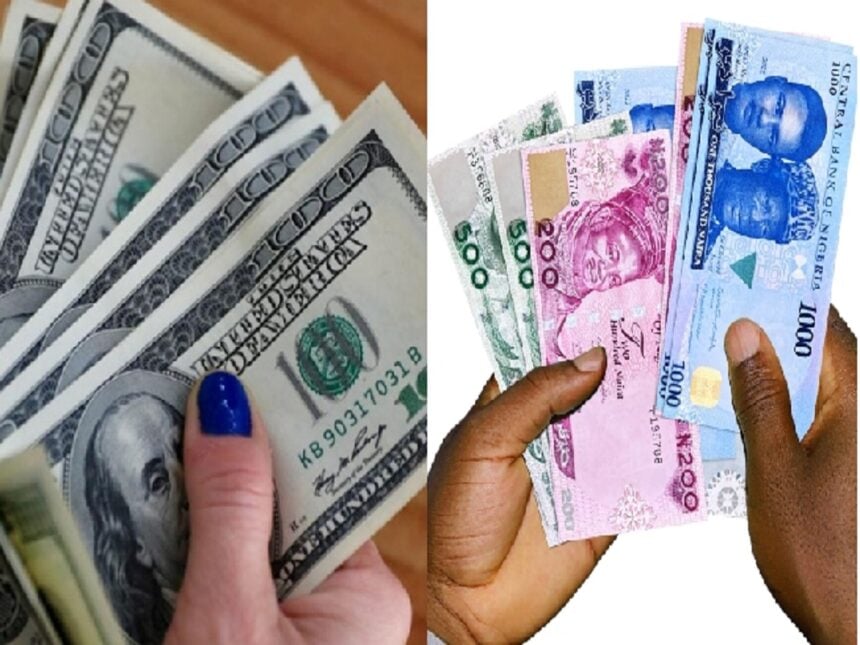
BLACK MARKET RATES
₦1375DOLLAR (USD)
₦1845 POUND (GBP)
EURO (EUR) ₦1550
₦1000 CANADIAN DOLLAR (CAD)
₦70 SOUTH AFRICAN RAND (ZAR)
₦370 UAE DIRHAM
₦190 CHINESE YUAN (CNY)
₦100 GHANA CEDI (GHS)
₦2350 CFA F.(XOF)
₦2250 CFA F.(XAF)
₦850 AUSTRALIAN DOLLAR (AUSSIE)
Official CBN Exchange Rates
DOLLAR (USD)₦1329.16
POUND (GBP)₦1766.59
EURO (EUR) ₦1510.06
SWISS FRANC (CHF) ₦1593.91
JAPANESE YEN (JPN)₦8.47
CFA FRANC (XOF) ₦2.30
WEST AFRICAN UNIT OF ACCOUNT (WAUA) ₦1807.23
CHINESE YUAN (CNY) ₦198.25
SAUDI RIYAL (SAR) ₦353.97
SOUTH AFRICAN RAND (ZAR) ₦81.18
Business
Obasanjo: “Aliko Embarrass Me”
He got all his workers together in that refinery and said, without telling me, and there, said…
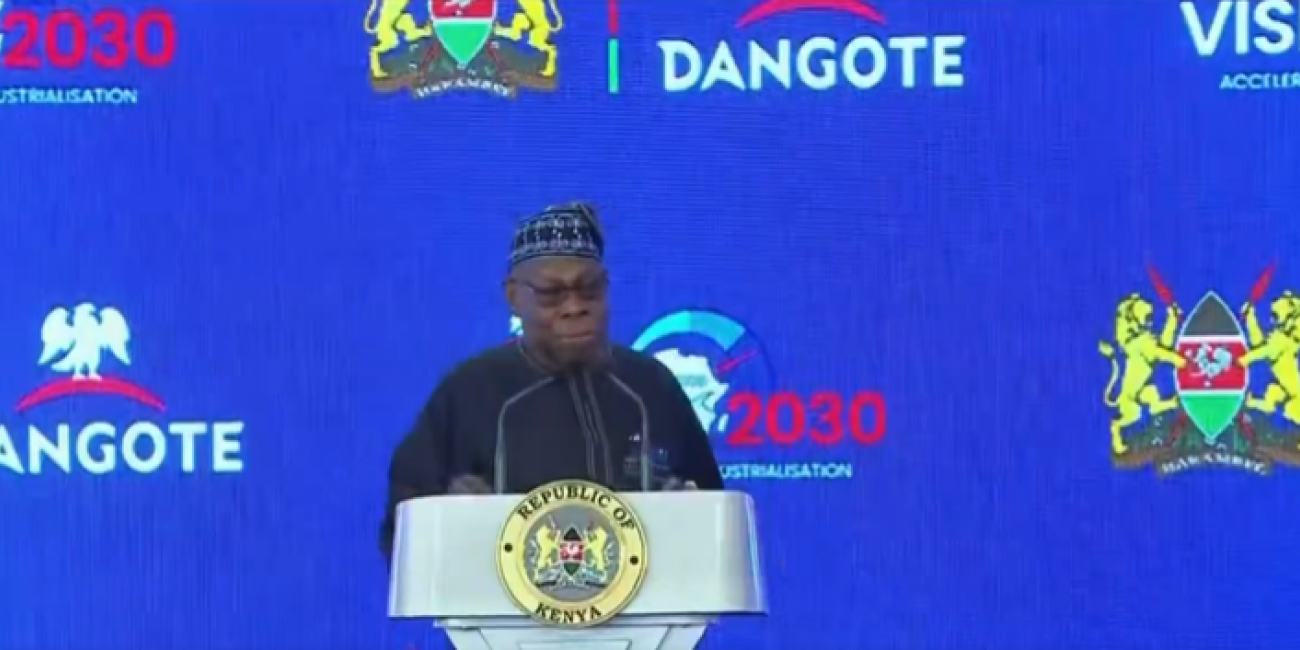
Former President of Nigeria, Olusegun Obasanjo, has described Aliko Dangote as his “boss”, crediting the businessman’s industrial achievements to the policies and encouragement provided by his administration.
Obasanjo said this while speaking at the groundbreaking ceremony of the Dangote East Africa Refinery in Lamu, Kenya, where he recalled his recent visit to the Dangote refinery and the businessman’s acknowledgement of the role he played in his transition from cement importation to production.
He said, “About two months ago, three months ago, I visited the refinery which you visited last week. And I just couldn’t stop being surprised what Aliko did. But then Aliko embarrassed me.”
According to Obasanjo, Dangote had gathered his workers during the visit and publicly attributed part of his success in cement production and the eventual development of his refinery to the policies and encouragement of the former president.
He said, “He got all his workers together in that refinery and said, without telling me, and there, said, all of you working here, all of you, the man you have to thank is this man, that’s me. I didn’t have anything to do with his refinery or what it is.
He said, without this man, I would not have been in cement production.“And it is the cement production that provided the encouragement, the inspiration for the refinery. So, thank you. They all shouted and thanked me.”
Obasanjo said Dangote had expanded the opportunities created by his administration beyond Nigeria, particularly through cement production across Africa, and was now replicating the model in the petroleum refining sector.
“May God continue to expand your coast. And you are my boss. You will continue to be my boss.”


Ethiopian woman says she hasn’t eaten or drunk water since age 10

Nigerian-Born Former Texas Professor Gets 78 Months For $921,000 Student Aid Fraud

Italy marks 800 years since death of Saint Francis of Assisi

Tech Expert, Zuckerberg trains with UFC champions, Adesanya, Alexander

Organ Trafficking: Ekweremadu bags 10 years in UK prison

SAINT OBI: Between his marriage and his death
-
 Business6 hours ago
Diesel Costs Bite: LAMATA Accelerates Shift To CNG, Electric Buses
-
 Politics3 days ago
Obafemi Hamzat promises to end ‘unauthorised levies’ in Lagos if he is elected
-

 International5 hours ago
US’s Gullah Geechee communities celebrate historic cultural festival rooted in West Africa
-
 News4 hours ago
Nigerian-Born Former Texas Professor Gets 78 Months For $921,000 Student Aid Fraud
-
 Business3 days ago
Naira Rates To Dollar, Pound ,Euro… Friday, October 2
-
 International5 hours ago
Italy marks 800 years since death of Saint Francis of Assisi
-
 International4 hours ago
Ethiopian woman says she hasn’t eaten or drunk water since age 10