
Business
NNPCL Invites Doubters to Tour Port Harcourt Refinery


The Nigerian National Petroleum Company Limited (NNPC Ltd) has insisted that the Old Port Harcourt Refinery is up and running, with loading operations in full swing.
The Group Chief Executive Officer, Mr Mele Kyari, gave the confirmation at the commissioning of the NUPENG Towers in Lagos on Wednesday.
In a goodwill message at the event, Kyari extended invitation to human rights activist and lawyer, Mr Femi Falana, and all those in doubt, to join the NNPC Ltd on a tour of the refineries in Port Harcourt, Warri, and Kaduna to verify their status.
He also shed light on the controversy around products blending, stating that blending was not a crime as it is an integral part of the refining process. “If you don’t blend, you will bring out off-spec products which will destroy your vehicles.
Every refinery blends because what is on specification in the United States of America will be off-spec in Nigeria and elsewhere. Blending is necessary to bring products to the specification of different countries or regions,” he explained.
Kyari also congratulated NUPENG on the successful completion of the NUPENG Towers and urged the union to continue to prioritize dialogue and co-operation in its relationship with NNPC Ltd and the Federal Government.
He disclosed that the President’s interventions in the oil and gas industry by way of Executive Orders were yielding positive results, with more investments coming in and prospects of more jobs in the industry.
Business
Supreme Court Overturns Appellate’s Ruling on $2bn Debt Recovery Battles Nestoil /Neconde Energy vs FBNQuest Merchant Bank
In the lead judgment read by Justice Mohammed Baba Idris, the five-member apex court panel held it was a “legal anomaly” to allow lawyers appointed by the Receiver/Manager to also represent the companies, citing a conflict of interest.

The Supreme Court of Nigeria on Friday ruled in favor of Nestoil and Neconde Energy, overturning a previous appellate court decision that disqualified their legal counsel, including Wole Olanipekun (SAN) and Muiz Banire (SAN).
The court upheld the companies’ right to appoint their own lawyers to challenge the ongoing receivership.
The apex court ruled that despite the receivership initiated by a consortium of banks, Nestoil and Neconde retain the right to appoint their own legal counsel to challenge that very receivership.
Nestoil Limited (an oil services firm) and its affiliate Neconde Energy Limited (which holds interests in Oil Mining Lease 42) are embroiled in a multi billion-dollar debt recovery suit filed by lenders, primarily FBNQuest Merchant Bank Limited and First Trustees Limited.
The lenders allege that Nestoil, Neconde, and their promoters (Ernest Azudialu-Obiejesi and Nnenna Azudialu-Obiejesi) owe over $2 billion (plus N430 billion in related liabilities) under financing arrangements, including a Common Terms Agreement.
In the lead judgment read by Justice Mohammed Baba Idris, the five-member apex court panel held it was a “legal anomaly” to allow lawyers appointed by the Receiver/Manager to also represent the companies, citing a conflict of interest.
The judgment affirms that the boards of the companies retain the authority to act in defense of the companies’ interests.
A receiver/manager was appointed over the companies’ assets and interests, leading to disputes over who controls the companies and who can represent them in court.
In January 2026, the Supreme Court sent related appeals back to the Court of Appeal to resolve the preliminary issue of legal representation before proceeding on the merits.
On January 23, 2026, the Court of Appeal disqualified senior advocates Wole Olanipekun (SAN) (for Neconde) and Muiz Banire (SAN) (for Nestoil), ruling that the Ernest Azudialu-Obiejesi-led boards lacked authority to appoint counsel once the receiver/manager was in place. It allowed counsel appointed by the receiver to represent the companies instead.
Nestoil/Neconde and their promoters appealed this disqualification to the Supreme Court (one key appeal being SC/CV/48B/2026 by Neconde).
The apex court had reserved judgment after hearing arguments from a five-member panel.
In Friday’s ruling, the Supreme Court upheld the appeal by Nestoil and Neconde (and their promoters).
It set aside the Court of Appeal’s judgment disqualifying the companies’ chosen counsel.
Their boards (led by Ernest Azudialu-Obiejesi) retain the authority to appoint counsel of their choice to defend their interests, particularly since the validity of the receivership itself is being challenged.
Allowing the receiver/manager’s counsel (appointed by the lenders) to represent the companies would create a serious conflict of interest and undermine fairness and independence in legal representation.
The arrangement involving the lenders (FBNQuest and First Trustees) as appointors of the receiver was deemed fundamentally flawed.
The appointments of Wole Olanipekun (SAN) and Dr. Muiz Banire (SAN) (along with their teams) as counsel for Neconde and Nestoil are restored.
The companies are now free to proceed with their preferred lawyers in the ongoing debt recovery proceedings.
The ruling is procedural (focused solely on representation) and does not decide the merits of the underlying debt claims or receivership.
Those substantive issues will now continue in the lower courts with the restored counsel.

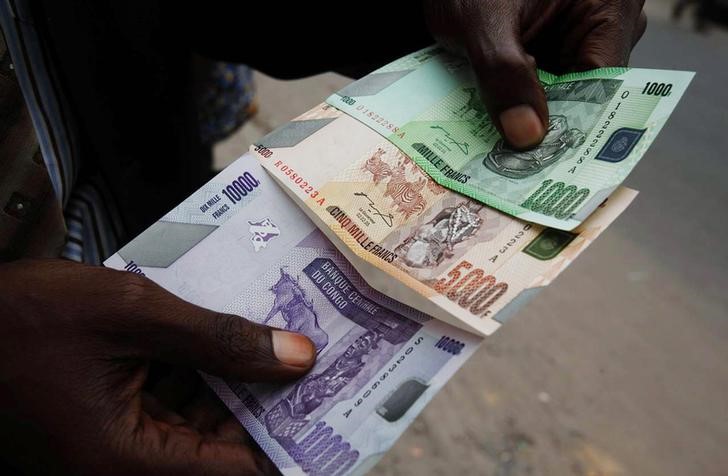
The Central Bank of the Democratic Republic of Congo (BCC) has announced plans to prohibit cash transactions in foreign currencies, including the US dollar, starting April 9, 2027, in a fresh attempt to promote the use of the local Congolese franc (CDF) and reduce dollarisation in the economy.
In a statement issued on Thursday, April 9, 2026, the BCC declared that from the effective date, “no person will be authorised to carry out cash transactions in foreign currencies,” and commercial banks will no longer be allowed to import or distribute physical foreign banknotes.
Under the new measure, payments in dollars, euros or other foreign currencies will still be permitted, but only through electronic means such as bank transfers, cards, or mobile money platforms. Cash dealings must be conducted exclusively in Congolese francs.
The BCC’s move aims to strengthen the national currency, enhance monetary sovereignty, and curb the widespread use of the US dollar, which dominates many business transactions in the country despite official policies favouring the CDF.
The Congolese economy has long been heavily dollarised, with foreign currency widely accepted even in everyday dealings.
This is not the first attempt by the BCC to limit dollar use. Previous efforts to ban or restrict foreign currency have largely failed to take full effect, as the dollar remains deeply entrenched in commerce, mining, and daily life across the vast Central African nation.
The announcement comes amid broader initiatives by the central bank, including interventions in the foreign exchange market and efforts to build gold reserves, to support the Congolese franc and reduce reliance on the US dollar.
Analysts and businesses are watching closely to see how the policy will be enforced, given past challenges in implementing similar restrictions in a country where cash remains king and banking penetration is relatively low.
The BCC has urged the public and financial institutions to prepare for the transition and to rely increasingly on formal banking and electronic payment systems.
Further details on implementation guidelines and penalties for non-compliance are expected in the coming months. The public is advised to monitor official communications from the Banque Centrale du Congo for updates.
Business
Crude Oil Prices Drop Below $95 After US-Iran Ceasefire
Earlier, crude prices had surged above $110 per barrel amid fears of supply disruptions as tensions escalated in the Middle East.

Crude oil prices fell below $95 per barrel in early trading on Wednesday following a ceasefire agreement between the United States and Iran.
The global oil benchmark fell by about 13% to around $94–$95 per barrel, marking one of the steepest single-day declines in recent years after weeks of war-driven price spikes.
The dramatic selloff came after U.S. President Donald Trump announced a conditional two-week ceasefire, pausing military operations in exchange for the reopening of the Strait of Hormuz—a critical route for global oil shipments.
West Texas Intermediate (WTI), the U.S. benchmark, also dropped significantly to around $95–$96 per barrel, reflecting a broad easing of geopolitical tensions and a rapid unwinding of the war risk premium in oil markets.
Earlier, crude prices had surged above $110 per barrel amid fears of supply disruptions as tensions escalated in the Middle East.
However, the ceasefire has restored some confidence that oil flows will resume, triggering a sharp correction in prices.


Dozens Feared Dead in Nigerian Air Force Airstrike on Jilli Market in Yobe State (Images)

FG Unmasks 60 Persons and Corporates Behind Terrorism Financing, Order Banks To Freeze Their Accounts

Police reopens, handover PDP Hqtrs to Wike backed Faction

Tech Expert, Zuckerberg trains with UFC champions, Adesanya, Alexander

Organ Trafficking: Ekweremadu bags 10 years in UK prison

SAINT OBI: Between his marriage and his death
-

 News3 days ago
CBN Debunks Viral Fake News of ₦5,000 Banknote Featuring President Tinubu’s Image
-

 Politics2 days ago
2027: Bode George warns INEC, Judiciary Drifting Nigeria Towards ” One Party Rule”
-

 Crime3 days ago
Tinubu Mourns Soldiers Killed in Benisheikh Terror Attack
-

 Business3 days ago
DR Congo Central Bank Announces Ban on Foreign Currency Cash Transactions from 2027
-

 Politics2 days ago
NBA Cautions Lawyers Against Involvement in Political Party Disputes
-

 Business2 days ago
Supreme Court Overturns Appellate’s Ruling on $2bn Debt Recovery Battles Nestoil /Neconde Energy vs FBNQuest Merchant Bank
-

 News3 days ago
Police Debunk Viral “Terror Attack” Video in Abuja, Launch Investigation
-

 News2 days ago
Plateau Community Laments ‘ No Security To Repel Attackers’