
Opinions
Nigeria Must Prioritize Local Defense Contractors for National Security and Economic Growth
While Nigeria strives for self-reliance and national security, its defense procurement landscape remains heavily tilted in favour of foreign contractors.


BY BEM IBRAHIM GARBA
Despite the growing capacity among Indigenous defense firms, Nigeria continues to favor foreign contractors.
This pattern threatens long-term national security, economic independence, and local innovation.
While Nigeria strives for self-reliance and national security, its defense procurement landscape remains heavily tilted in favour of foreign contractors.
Despite significant strides in capacity development, manufacturing, design, and operational capability, Nigerian-owned defense companies face systemic bias and limited access to government contracts.
This preference for foreign contractors and solutions incurs costs: economically, strategically, and technologically.
If Nigeria is committed to developing a robust, sovereign, and exportable defense industry, it must start by prioritizing local contractors.
FOREIGN FIRMS STILL GET THE FIRST CALL
Today, many Nigerian companies have developed capacity.
They offer reliable, innovative, and scalable solutions, including the production of sensitive equipment/systems, tactical vehicles, protective gear, and training facilities.
Yet, when the time comes for procurement, tenders and negotiations disproportionately favour foreign companies and suppliers.
These foreign firms are not only awarded high-value contracts but are often given easier access to key decision-makers.
Local companies, by contrast, face endless social and political hurdles: excessive scrutiny, limited engagement from end-users, and a lack of pilot opportunities to prove their systems in the field.
THE COST OF MARGINALISING OUR LOCAL INDUSTRY
The consequences of this procurement imbalance are far-reaching:
Capital Flight:
Nigeria loses billions annually by supporting foreign companies instead of helping Nigerian-owned businesses.
This practice enriches foreigners economically and denies local firms the opportunity to collaborate with international partners, which could enhance technology transfer, experience, and knowledge-sharing.
Job Loss:
Neglecting local defense companies negatively impacts the Nigerian economy and leads to job losses.
Manufacturing opportunities that could employ thousands of Nigerian youth are instead given to foreign factories, resulting in the creation and maintenance of valuable jobs overseas that could have been retained in Nigeria.
Technology Dependence:
Relying on foreign suppliers undermines Nigeria’s ability to develop, control, or modify critical defence platforms.
When Nigerian companies receive support, they are encouraged to strengthen partnerships with foreign technology partners, who can provide training and opportunities for technology transfer.
This strategy is essential for helping Nigerian companies develop the necessary technology more quickly.
Export Inhibition:
Without domestic validation, Nigerian-made defense products face challenges in entering foreign markets.
Nigeria aims to promote exports across all sectors.
For exportation to be successful, our products and solutions must meet international standards.
The export of Nigerian defense products will struggle unless these items are first given a chance to succeed in Nigeria.
We need to develop our local industry, validate our products, and then actively launch them into regional and continental markets.
BRAZIL AND INDIA: CASE STUDIES IN STRATEGIC PATRONAGE
Countries such as Brazil and India have demonstrated how intentional local patronage can foster globally competitive defense industries.
In Brazil, companies like Embraer and IMBEL grew under government-backed contracts and patronage.
The Brazilian Armed Forces committed to buying local, even when products were still under development and maturing.
Today, Brazil exports military aircraft and arms globally and has become a respected defense manufacturer.
Nigerian companies require more than just praise; they need patronage. Securing contracts, creating opportunities, and engaging in long-term planning are essential for our local defense firms to thrive.
India’s ‘Make in India’ initiative transformed its defense sector by mandating local sourcing.
Companies like Bharat Forge, TATA Advanced Systems, and Larsen & Toubro received long-term government backing, which allowed them to scale and improve.
India now produces high-quality drones, tanks, and artillery systems with export potential.
The lesson is clear: Nations that support local firms boost their economies, strengthen national defense, and enhance global influence.
A CALL FOR REORIENTATION IN NIGERIA
Nigerian companies require more than just praise; they need patronage. Securing contracts, creating opportunities, and engaging in long-term planning are essential for our local defense firms to thrive.
We call on the Nigerian Armed Forces, the Ministry of Defence, the Police, and all relevant government agencies to:
Adopt a Local-First Procurement Policy: Allocate a specific percentage of all defense procurement contracts to Nigerian companies.
Award Contracts for Capability and Growth:
Support local businesses by placing genuine orders instead of merely making promises or running pilot tests.
Various procurement models can be utilized to encourage the growth of local companies while minimizing risks for buyers.
We urge the Armed Forces and relevant purchasers to explore these models in the interest of our collective growth.
Foster Strategic Partnerships with Local Leadership:
The federal government, the armed forces, the police, and all other buyers should require foreign companies to partner with Nigerian companies to secure contracts.
Similar to the laws in places like Dubai, foreign companies should not be eligible to secure defense contracts in Nigeria directly.
They must partner with Nigerian defense companies to facilitate knowledge transfer and equity sharing with Nigerian firms.
Create End-User Incentives:
Encourage military and police leaders to implement solutions made in Nigeria and provide rewards for successful adoption.
Establish a Nigerian Defence Development Fund:
The government should create a Nigerian Defence Development Fund to provide long-term capital to local firms for research and development, infrastructure, and certifications.
THE TIME IS NOW
Nigeria’s future security needs to be developed within the country. This requires us to trust our own companies and local initiatives to provide the solutions we need.
Like Brazil and India, we must be willing to support homegrown solutions and products through their early challenges, understanding that true mastery comes with experienced local companies cannot thrive on encouragement alone—they require contracts, partnerships, and a long-term belief from their own country.
We possess the talent, ambition, and drive. What we need now is opportunity.
If Nigeria aims to become a true continental power in defense and technology, the change must begin with a simple decision:
Buy Nigerian, trust Nigerian, and defend Nigerian.
• This article was written by Bem Ibrahim Garba, a defense industry professional and advocate for indigenous industrial growth in Nigeria.
Opinions
Human Capital Africa Statement For International Day of the Girl Child 2026
UNICEFs 2026 estimates show that about one in five girls worldwide is married before 18.

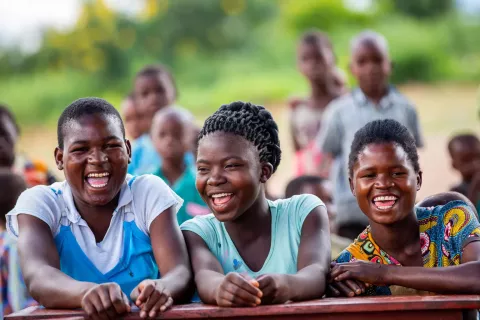
Image credit : UN
By Obiageli ObyEzekwesili
A girl who learns is a girl who is not a bride.
Today the world is asked to end child marriage and invest in girls rights.
I join that call wearing three hats: as a member of the advisory council behind Columbia University’s report Accelerating Efforts to End Child Marriage; as Civil Society Representative on the Steering Committee of the African Unions Decade of Accelerated Action for the Transformation of Education and Skills Development in Africa (20252034); and as the leader of Human Capital Africa, an organisation that has spent years arguing that Africas human capital crisis begins in the early-grade classroom.
The numbers are clear.
UNICEFs 2026 estimates show that about one in five girls worldwide is married before 18.
That adds up to roughly 650 million women and girls alive today who were married as children.
More than 12 million girls are still married each year, about one every three seconds, and sub-Saharan Africa has the highest prevalence at 31 per cent
.In Nigeria, 23.6 million women and girls were married before 18, the largest number in West and Central Africa.
In parts of the North the situation is a national emergency: in Jigawa, 78 per cent of women were first married before 18, and 63 per cent of women left school to marry.
The cost of inaction is high. Our Columbia report includes new analysis by the Center for Global Development.
It estimates losses of up to $175 billion a year, or almost $2.5 trillion by 2040, from lost productivity and higher health risks caused by child marriage.
The report also warns that aid cuts, weakening global commitment to womens rights, and rising conflict could slow or reverse progress.
Child marriage is not a side issue in development. It drains a nations human capital directly.Progress is possible.
An estimated 68 million child marriages have been averted over the past 25 years, through girls education, legal reform and social protection.
In parts of the North the situation is a national emergency: in Jigawa, 78 per cent of women were first married before 18, and 63 per cent of women left school to marry.
The evidence on what works is strong: Each year of secondary education lowers a girls chance of marrying before 18 by five percentage points or more.
In Niger, when the government removed the direct costs of middle school for rural girls, each additional year in secondary school was associated with a 19 percentage point lower probability of marriage.
If every African girl completed secondary education, child marriage could be almost eliminated.
Where HCAs mission and this campaign meet.
A girl cannot stay in secondary school if she never learned to read.
Today, 89 per cent of children in sub-Saharan Africa are in learning poverty, unable to read and understand a simple text by age ten.
A girl who cannot read by ten falls behind, then drops out.
Once she is out of school, she is at the greatest risk of marriage. That is why we say schooling is not learning.
Foundational literacy and numeracy are the first and cheapest protection a girl has.
At the Columbia launch I said that community programmes and advocacy are not enough on their own. Governments must lead.
On this Day of the Girl, Human Capital Africa calls on African governments to:
1. Make foundational learning a girl-protection policy. Every girl should be reading with comprehension by age ten, using proven methods such as structured pedagogy and Teaching at the Right Level.
2. Guarantee the move into secondary school. Remove fees, uniform and transport costs for girls, especially in rural communities with high rates of child marriage.
3. Enforce 18 as the minimum age of marriage in law and in practice, in every state and every community, with traditional and religious leaders as partners.
4. Fund this domestically. As foreign aid shrinks, African budgets and African philanthropy must take over.
5. Measure and publish.
Track girls learning, their transition to secondary school, and child marriage rates in national accountability systems.
The AU Decade of Education gives Africa ten years and a continental mandate.
As a member of its Steering Committee, I will press for girlslearning and retention to be at the centre of how the Decades success is measured.
A Decade that does not end child marriage will not have transformed African education.
The Columbia report sets a realistic target: cutting child marriage prevalence from one in five to one in seven within five years.
Africa can lead the way to that target, but only if we treat every girls classroom as the place where her childhood is protected.
Any girl-child should be a student, not a bride. She should learn, then lead.
• Obiageli ObyEzekwesiliFounder, Human Capital Africa | Former Nigeria’s Minister of Education and Vice President for Africa Region, World Bank.
Opinions
The Girl Who Was Almost Married at 10 Is Taking Her Story to the United Nations
On September 4 this week…Sierra Leone’s First Lady is expected to stand before the United Nations General Assembly with a proposal aimed at protecting millions of girls from the same fate.

• Sierra Leone’s First Lady, Fatima Maada Bio
By Ahmed Sahid Nasralla (De Monk)
AT about 10 years old, Fatima Maada Bio already knew who she was expected to marry.
She was a child, but an adult decision had been made about the direction her life should take. Somehow, she escaped that future.
On September 4 this week, many, many years after that little girl could have been sent into a marriage she did not choose, Sierra Leone’s First Lady is expected to stand before the United Nations General Assembly with a proposal aimed at protecting millions of girls from the same fate.
She is expected to present a draft resolution seeking the proclamation of November 27 as an ‘International Day for the Elimination of Child, Early and Forced Marriage’. The proposal is new.
The date is not yet an official UN observance. It is a call for the international community to give the issue a permanent place on its calendar and, with it, sustained attention and action.
There is something deeply personal about that journey.
According to briefing material from the Office of the First Lady of Sierra Leone, she knew at around the age of 10 who she was expected to marry and narrowly escaped child marriage.
That experience did not become a footnote in her life. It became part of the reason she has spent years speaking about the rights and protection of women and girls.
The First Lady’s public advocacy has taken her from communities in Sierra Leone to some of the world’s most important international forums.
Her flagship ‘Hands Off Our Girls’ campaign has focused on ending rape, early marriage and violence against women and girls, while her work has also extended into girls’ education, women’s health and other issues affecting vulnerable communities.
However, her return to the United Nations this time carries a particularly personal weight.
She is taking a subject that could have defined her own childhood and asking the international community to give it greater and lasting attention.
It is not her first attempt to put child protection on the UN agenda.
In 2022, she spearheaded the effort that led the General Assembly to proclaim November 18 as the ‘World Day for the Prevention of and Healing from Child Sexual Exploitation, Abuse and Violence’.
“She is expected to present a draft resolution seeking the proclamation of November 27 as an ‘International Day for the Elimination of Child, Early and Forced Marriage’. The proposal is new.”
UNAIDS describes her as having championed the adoption of that first-ever World Day.
The United Nations has also continued to strengthen its attention to child, early and forced marriage.
In December 2024, the General Assembly adopted a resolution addressing the issue.
Sierra Leone has been moving on the national front too. The country enacted legislation in 2024 prohibiting marriage involving anyone under 18.
So when Fatima Maada Bio walks into the General Assembly this week, she will be carrying a story that has travelled through several stages: from the experience of a young girl, to a national campaign, to legislation, and now to another attempt to secure a place for the issue on the global calendar.
The numbers behind the issue are sobering.
The United Nations and other international organisations have consistently described child marriage as a major barrier to girls’ education, health, economic opportunity and personal autonomy.
Behind every statistic, though, there is a girl whose childhood is being shortened.
There is a school she may leave, friends she may lose, choices she may never get to make, and a future that may be decided for her before she is old enough to understand what that future means. That is why the personal history of the woman making this proposal is important.
Fatima Maada Bio knows what it means for adults to imagine a future for a girl before she has had the opportunity to imagine one for herself. She also knows what it means to get away.
That gives her advocacy a particular human quality. The issue is something she encountered as a child and has carried into her public life as an adult.
The fight has also taken her beyond child marriage. Last week, OncoDaily named her among its 100 Influential Women in Oncology for 2026, recognising her work in women’s health and cancer prevention.
The publication highlighted her partnership with the Merck Foundation, which has supported specialist medical training in Sierra Leone, including scholarships that contributed to the development of the country’s cancer-care workforce.
It also noted her advocacy for breast cancer awareness and early detection and her participation in discussions around the WHO Global Breast Cancer Initiative.
It is another part of a public role that has increasingly stretched beyond the traditional image of a First Lady.
Then there is child protection, and women’s health.
There is girls’ education, and the wider question of how countries protect women and children who often have the least power over decisions affecting their lives.
The international recognition in oncology is significant for another reason.
It shows that her advocacy is being noticed in fields far removed from the political spotlight in which First Ladies are usually seen.
Nonetheless, the child-marriage campaign remains different. It brings her public work unusually close to her own childhood.
Sierra Leone, as a country, has its own reason to pay attention to what happens in New York this week.
The country has already taken the important step of outlawing marriage involving children under 18.
The First Lady has been one of the most visible voices pushing the protection of girls into the national conversation.
Her campaign has also received international recognition, including her appointment by UNAIDS as a champion for the empowerment and engagement of adolescent girls and young women.
Now she is taking the conversation back to the United Nations. The proposed international day would not, by itself, end child marriage.
A date on the UN calendar cannot keep a girl in school, or protect her from an abusive household or change the circumstances that make families vulnerable to marrying off their daughters.
Those things require laws, enforcement, education, economic opportunity, social protection and changes in attitudes that can take generations.But international days can keep issues alive.
They create opportunities for governments, schools, civil society organisations, communities and international agencies to return to a problem every year, measure progress and remind themselves of what remains unfinished. That is the opportunity behind November 27.
This may also be the reason why the story of the little girl who nearly became a child bride is worth remembering when Fatima Maada Bio enters the General Assembly. She is no longer that girl.
She got education and became a journalist, an actress, an advocate, a mother, and Sierra Leone’s First Lady. She also became the President of the Organisation of African First Ladies for Development.
She is now asking the world to give millions of girls something she was fortunate enough to have: the chance to grow up and become all of that and even more before someone else decides what their lives should become.
That is what, on behalf of Sierra Leone and the world, she is carrying into the United Nations on September 4.
Not a speech or a title. She is carrying a powerful story the General Assembly should listen and act on.
• Ahmed Sahid Nasralla is the Ex-Officio and Immediate Past President of the Sierra Leone Association of Journalists (SLAJ), and the Chairman of the Federation of African Journalists (FAJ) Working Group on Climate Change.
Opinions
Is Dangote Refinery Playing the Giraffe by Leaving Domestic Oil Supply to Marketers?
Is Nigeria gradually returning to a situation where imported petrol is competing with locally refined PMS, even as Dangote Refinery has the capacity to supply a substantial portion of domestic demand?
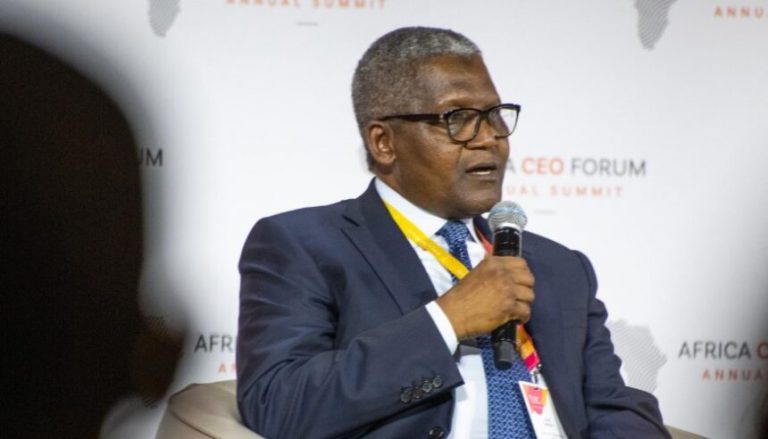
[File Photo] Aliko Dangote
By Ochefa
WHEN I was younger, bedtime storytelling was one of my favourite pastimes in my family. After the evening meal, my mother would usually gather us together for this special treat.
Of all the fables she told us, one that has remained indelibly etched in my memory to this day was Why the Giraffe Eats from Tall Trees.
The story portrayed the giraffe as a humble and considerate animal. Because of its long neck, it could reach the leaves and branches of tall trees, leaving the grasses and shorter vegetation for sheep and goats whose shorter necks could not reach the higher branches.
So, what is the point?
Could the Dangote Petroleum Refinery be playing the giraffe in Nigeria’s downstream petroleum market—leaving marketers to supply the domestic market with imported Premium Motor Spirit (PMS), while it increasingly exports its refined products to other countries?
Recent developments in the petroleum industry appear to lend some credence to this question.
The management of Dangote Petroleum Refinery recently attributed its increased export volumes to rising imports of petrol into Nigeria.
The refinery said the decision to focus more on exports should not be interpreted as a lack of commitment to the Nigerian market.
“Rather, exports are a prudent operational response to the realities of a market where imported products continue to compete with locally refined fuel despite the availability of sufficient domestic refining capacity,” the refinery said.
Figures from the Nigerian Midstream and Downstream Petroleum Regulatory Authority (NMDPRA) appear to support the changing supply pattern.
According to the regulator’s recent report, Dangote Refinery’s supply of PMS to the domestic market fell by 21 per cent to 25.8 million litres per day in July, from 32.5 million litres per day in June.
The monthly factsheet showed that the refinery produced about 25.9 million litres of PMS per day in July and exported 3.4 million litres per day.
The July domestic supply figure was reportedly the lowest recorded by the refinery in 2026.
At the same time, petrol imports rose by nine per cent to 19.7 million litres per day, from 18.1 million litres per day in June.
These figures raise an important question: Is Nigeria gradually returning to a situation where imported petrol is competing with locally refined PMS, even as Dangote Refinery has the capacity to supply a substantial portion of domestic demand?
Dangote Refinery has expressed concern about the continued issuance of import licences for petroleum products. It maintains that it has demonstrated sufficient capacity to meet, and even exceed, Nigeria’s domestic PMS requirements.
The refinery said that although it remains committed to Nigeria’s energy security and uninterrupted fuel availability, the continued inflow of imported PMS has created uncertainty around domestic demand forecasting and inventory management.
According to the refinery, it has consistently maintained sufficient inventories and reserved product volumes to guarantee steady supplies to the Nigerian market since commencing operations.
That commitment, it said, has involved substantial investment in storage facilities, logistics and working capital to protect consumers from supply disruptions and market volatility.
Why Dangote Says It Is Exporting More
The refinery’s major concern appears to be the lack of transparency over the volume of imported petrol expected to enter the country.
Without reliable information on future import volumes, it argues, it becomes increasingly difficult to plan production and manage inventories efficiently.
Maintaining large stocks of petrol that may not be absorbed by the domestic market also comes with significant storage and financing costs.
“As a responsible energy provider, we have always endeavoured to keep adequate reserves to satisfy local demand at all times,” the refinery said.
However, where significant quantities of imported PMS continue to enter the market through licences issued by the regulator, and there is limited visibility on future import volumes, the refinery says it becomes commercially unsustainable to hold excess inventory indefinitely.
Its argument is straightforward: when locally refined products cannot be absorbed by the domestic market because of competing imports, the surplus must be moved elsewhere.
Hence, the increased exports.
The refinery insists that this does not mean Nigeria’s domestic market cannot be supplied. Rather, it says the exports are a response to market uncertainty created by competing imports.
It also warned that if supply shortages eventually occur because of market distortions caused by excessive importation and the resulting difficulty in forecasting domestic demand, such shortages should not automatically be blamed on Dangote Refinery.

The company maintains that it remains ready and capable of meeting and exceeding Nigeria’s petroleum product requirements.
Dangote’s Transparency Concern Is Genuine—Expert
Oil and gas expert Dr Ayodele Oni believes Dangote Refinery’s concern over transparency is legitimate.
According to him, Section 317 of the Petroleum Industry Act contemplates the issuance of import licences where there is a demonstrable shortfall.
But, he argued, a shortfall determination that is not published cannot easily be scrutinised.
“NMDPRA should publish, ex ante, the aggregate volume of import authorisations it has approved for each quarter and the shortfall assessment behind them. That is a modest reform and it costs the regulator nothing,” he said.
However, Oni cautioned against simply shutting out imports.
He pointed to the performance of the country’s government-owned refineries, noting that NNPC’s three refineries produced nothing in July.
“A single plant supplying nearly the entire national market, with imports switched off, is a structural risk, not an achievement,” he argued.
He added that the Federal Competition and Consumer Protection Act exists to address such situations, stressing that regulatory policy should not be based on the assumption that a single refinery will never experience an unplanned outage.
According to him, the solution is structural: a transparent shortfall methodology, published quarterly import quotas, and the development of genuine second and third domestic refineries.
“Everything else is noise,” he said.
” The government cannot simultaneously encourage domestic refining, allow substantial imports without clearly communicating the basis for them, and expect refiners to maintain costly inventories indefinitely.”
Imports or Domestic Refining?
Another industry analyst and former Managing Director of 11PLC, formerly Mobil, Otunba Adetunji Oyebanji, believes Dangote Refinery is within its rights to export.
He argued that the government must retain the flexibility to import petroleum products whenever there is a potential shortfall.
“This is an internationally traded product,” he said, pointing out that even countries with substantial refining capacity, including the United States, continue to import petroleum products.
His argument is that economics, rather than sentiment, ultimately determines where petroleum products are bought and sold.
“We heard that Dangote exported to America. Don’t they have refineries?” he asked rhetorically.
For him, pricing remains a major determinant.
And therein lies the real issue.
The giraffe in my mother’s story was not merely tall; it was considerate. It reached the leaves that other animals could not reach and left the lower vegetation for them.
But Nigeria’s petroleum market is not a fable. Dangote Refinery is a commercial enterprise, not a charitable institution. It must make economically rational decisions, just as marketers and importers do.
The bigger question, therefore, is not whether Dangote Refinery should export.
It is whether Nigeria’s petroleum regulatory framework is creating the right conditions for locally refined products to compete fairly, while ensuring that consumers are protected and the country is not exposed to the risks of relying too heavily on a single refinery.
If Dangote has the capacity to meet domestic demand but finds it more commercially sensible to export because imported PMS is competing with its products at home, then the problem may be bigger than Dangote.
It may point to a regulatory and market-structure problem that requires urgent attention.
The government cannot simultaneously encourage domestic refining, allow substantial imports without clearly communicating the basis for them, and expect refiners to maintain costly inventories indefinitely.
There must be transparency.
There must also be competition.
And, most importantly, Nigeria needs more functioning refineries capable of supplying the domestic market.
Perhaps, then, the lesson from the giraffe is not that Dangote should leave the “grass” to the marketers.
It is that the rules of the forest must be clear enough for every animal to know where it stands.


Germany plans tax on sugary drinks

ASCON To Be Rebranded “National School Of Government”

CAF Increases Annual Funding for Member Federations to $700,000

Tech Expert, Zuckerberg trains with UFC champions, Adesanya, Alexander

BREAKING: Lagos Govt Declares Today, Thursday Work-Free to Mark 2026 Ìṣẹ̀ṣe Day

Organ Trafficking: Ekweremadu bags 10 years in UK prison
-

 Business2 days ago
Dangote Refinery IPO Attracts N8.61trn in Subscriptions, Four Times Offer
-
Business2 days ago
Top 10 Highest-Paid CEOs in Nigeria
-

 Business3 days ago
AI to eliminate 40% of global jobs – IMF boss
-

 Business2 days ago
Naira Exchange Rates To Dollar , Pound ,Euro, … Tuesday, October 13
-

 Business2 days ago
Global smartphone shipments fall 20% in Q3 2026, lowest in 14 years
-

 International2 days ago
Child marriage in southern Germany: Over 350 cases recorded, some brides as young as 11
-
Sports2 days ago
Rwanda to host F1’s first race in Africa since 1993
-

 International3 days ago
JUST IN: Pope Leo XIV to Undergo Surgery for Early-Stage Lung Nodule