Business
NEPC reports $2.7bn in non-oil exports half year 2024


The Nigerian Export Promotion Council reported that non-oil exports generated $2.7bn in the first half of 2024, representing a 6.26 per cent increase from the $2.5bn recorded during the same period in 2023.
This was disclosed by the Executive Director/Chief Executive of NEPC, Nonye Ayeni, during a presentation of the progress report on non-oil export performance for H1 2024 in Abuja on Wednesday.
Ayeni stated that the total volume of exports during the review period was 3.834m metric tonnes, with 211 products exported, ranging from agricultural commodities to products from extractive industries.
She noted that the performance indicates that Nigerian products are gradually diversifying from traditional raw agriculture exports to semi-processed and manufactured goods.
She attributed the increase in export value to the successful transition of government in May 2023 and the policy initiatives under President Bola Tinubu’s Renewed Hope Agenda. Additionally, Ayeni highlighted the impact of the NEPC’s “Operation Double Your Exports” initiative, which she said has positively influenced the sector’s performance.
“In just six months, we have seen tangible results from our concerted efforts to expand Nigeria’s non-oil export base.
“I am optimistic that with the several export intervention programmes and projects we have started and are ongoing, complemented by the NEPC flagship campaign programme, ‘Operation Double Your Exports.
‘The sector is positioned to contribute immensely to the country’s Gross Domestic Product, increase the country’s foreign exchange earnings and thereby ensure sustainable economic growth, which aligns with the Renewed Hope Agenda of His Excellency, President Bola Ahmed Tinubu, for job creation, poverty alleviation, among others,” Ayeni stated.
She also emphasised the council’s commitment to collaborating with stakeholders to stimulate export growth. Reflecting on her tenure since October 2023.
“When I assumed office in October 2023, I and my management team resolved to reposition the non-oil export sector towards global competitiveness,” she said.
Ayeni also discussed the growing prominence of several exportable products, such as fresh vegetables, citrus peel, and sorghum, which are increasingly in demand in global markets.
BLACK/ PARALLEL MARKET RATES
₦1370 DOLLAR (USD)
₦1800 POUND (GBP)
₦1510 EURO (EUR)
₦970 CANADIAN DOLLAR (CAD)
₦65 SOUTH AFRICAN RAND (ZAR)
₦350 UAE DIRHAM (AED)
₦190 CHINESE YUAN (CNY)
₦100 GHANAIAN CEDI (GHS)
₦2300 WEST AFRICAN CFA F.(XOF)
₦2200 CENTRAL AFRICAN CFA F.(XAF)
₦850 AUSTRALIAN DOLLAR AUSSIE (AUD)
CBN OFFICIAL RATES
DOLLAR (USD)₦1331.61
POUND (GBP)₦1764.26
EURO (EUR)₦1490.48
SWISS FRANC (CHF)₦1608.23
JAPANESE YEN (JPN)₦8.4
CFA FRANC (XOF)₦2.27
WEST AFRICAN UNIT OF ACCOUNT (WAUA)₦1802.33
CHINESE YUAN (CNY)₦199.01
SAUDI RIYAL (SAR)₦354.83
SOUTH AFRICAN RAND (ZAR)₦80.49
Business
WEF could appoint Lagarde as its next chair, sources say
The WEF’s Board of Trustees, which includes Lagarde herself, was due to meet on November 2 and could elect her as its next chair, said the people close to the organisation, who spoke on condition of anonymity due to the sensitivity of the matter.

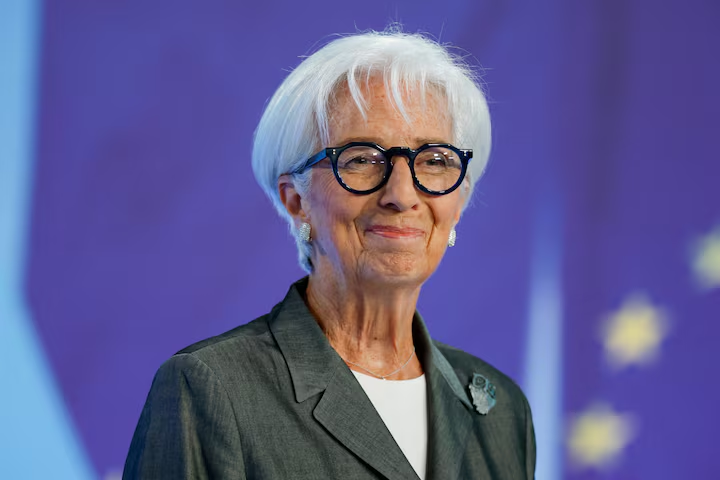
•European Central Bank President Christine Lagarde
The World Economic Forum could appoint Christine Lagarde as its next chair as soon as next month, four people close to the organisation told Reuters, meaning she would step down early as European Central Bank chief and trigger a wider reshuffle at the top of the ECB.Lagarde’s ECB term is scheduled to end in October 2027.
Leaving early would give European Union leaders a chance to pick a new ECB President before France’s spring presidential election, which opinion polls suggest the far-right could win, and could pave the way for a deal involving two other senior ECB roles.
The WEF’s Board of Trustees, which includes Lagarde herself, was due to meet on November 2 and could elect her as its next chair, said the people close to the organisation, who spoke on condition of anonymity due to the sensitivity of the matter.
No final decision has been taken yet, they said.
A spokesperson for the WEF said the forum could not confirm when the next full Board of Trustees meeting would take place, but that the aim was to hold one before the end of the year.
Business
Germany plans tax on sugary drinks
The tax is expected to generate additional revenue for the federal government of €690 million in 2027 and €925 million in 2028.
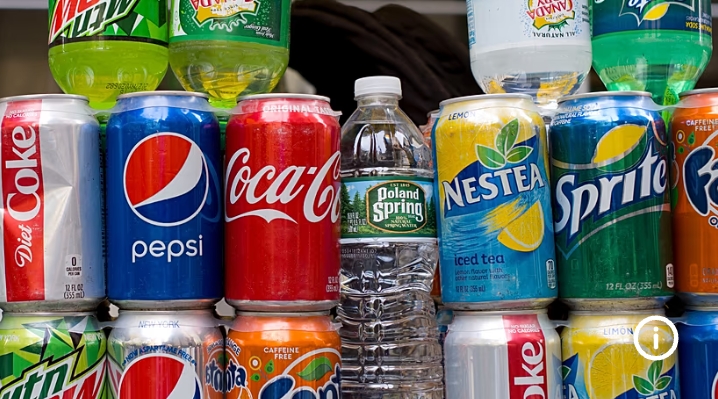
The German cabinet has approved draft legislation to tax sugary drinks in Europe’s biggest economy.
If passed by the German Bundestag, the tax will take effect on 1 July 2027.
The coalition aims to raise revenue for the federal budget while encouraging manufacturers to reduce sugar content and offer healthier products.
The levy is intended to ease pressure on the healthcare system, which faces costs of more than €2 billion every year linked to the high consumption of sugary drinks, which contributes to obesity, diabetes and tooth decay.
According to the federal government, Berlin is using the tax to implement “what associations from the fields of health, science, child protection, and consumer protection have long been demanding.”
The tax is expected to generate additional revenue for the federal government of €690 million in 2027 and €925 million in 2028.


BREAKING: Nigeria Confirms First Ebola Case

Mbappé wins Onze d’Or award for 2025/26 season

Ronaldo Gets 30-Day Suspension For Portugal Camp Walkout

BREAKING: Lagos Govt Declares Today, Thursday Work-Free to Mark 2026 Ìṣẹ̀ṣe Day

Tech Expert, Zuckerberg trains with UFC champions, Adesanya, Alexander