
Health
More than 95,000 died of suicide so far in 2026 — WHO
Certain vulnerable populations face disproportionately higher risks, including refugees and migrants, indigenous peoples, LGBTI persons, prisoners, and others who experience discrimination, social exclusion or limited access to support services.


World Health Organization (WHO) data reported that more than 95,000 people have died by suicide globally since the start of 2026.
According to Worldometer, the figure as of the time of this report, stands at 95, 406 so far in 2026.
The early-year toll highlights the continuing scale of suicide as a major global public health challenge.
WHO estimates show that about 727, 000 people die by suicide every year worldwide, with millions more attempting to take their own lives.
Health experts note that while annual suicide figures are usually released with a reporting delay, real-time counters help illustrate how frequently lives are lost to a largely preventable cause.
Suicide occurs across all regions and age groups, but WHO data indicate that it remains one of the leading causes of death among young people aged 15 to 29, ranking third globally in that age group in 2021.
The impact extends far beyond individuals, leaving long-lasting emotional, social and economic consequences for families, communities and entire nations.
Contrary to common assumptions, suicide is not limited to high-income countries.
WHO reports that nearly three-quarters (73%) of global suicides occur in low- and middle-income countries, where access to mental health care and social support services is often limited.
While suicide is closely linked to mental health conditions such as depression and alcohol use disorders, particularly in high-income countries,WHO notes that many suicides occur impulsively during moments of acute crisis.
These crises may stem from financial stress, relationship conflicts, chronic pain, illness, exposure to violence, displacement, or a profound sense of isolation.
Certain vulnerable populations face disproportionately higher risks, including refugees and migrants, indigenous peoples, LGBTI persons, prisoners, and others who experience discrimination, social exclusion or limited access to support services.
WHO stresses that suicide is preventable and requires a coordinated public health response rather than isolated interventions.
Evidence-based and often low-cost measures, such as restricting access to lethal means, promoting responsible media reporting, strengthening life skills among adolescents, and ensuring early identification and follow-up care for those at risk, have been shown to save
Health
Women giving birth on their backs or squatting – Which is Better?
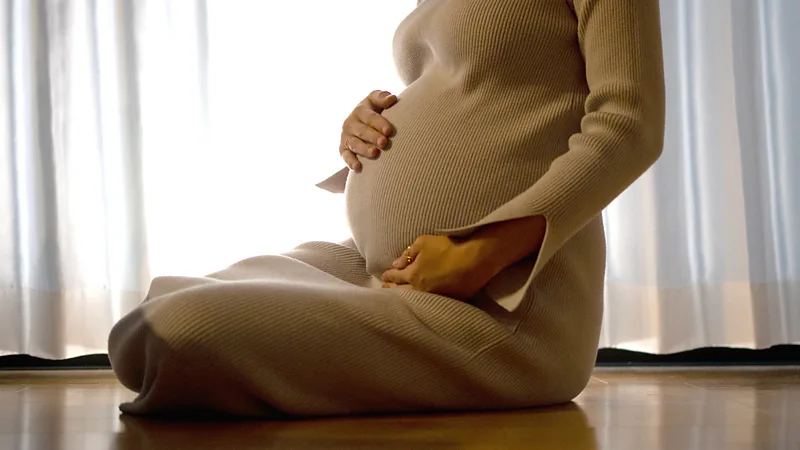
Squatting can enlarge the pelvic diameter by at least 2.5cm (1in), while working with gravity makes it far easier to give birth.So why do so many women today give birth on their backs?
Credit: Getty images
For thousands of years, across the world, women tended to give birth in an upright position – whether kneeling as per Cleopatra, using birthing stools and chairs, or squatting.
In fact, squatting can enlarge the pelvic diameter by at least 2.5cm (1in), while working with gravity makes it far easier to give birth.So why do so many women today give birth on their backs?”
There is a generalised ignorance amongst professions and pregnant women about the physiology of birth,” says Janet Balaskas, founder of the Active Birth Centre in the UK, and author of a number of books detailing how mothers can take control of their birth experience.
In 1982, Balaskas published an “active birth manifesto” that became the central tenet of her organisation.
“Throughout the world, and for thousands of years, women have spontaneously laboured and given birth in some form of upright or crouching positions,” the manifesto reads. “Whatever the race or culture… the same upright positions predominate.”
Most women in post-industrial countries are confined to hospital in recumbent positions, Balaskas says. “This practice is illogical, making birth needlessly complicated and expensive, turning a natural process into a medical event and the labouring woman into a passive patient,” she argues.
“No other species adopts such a disadvantageous position at such a crucial time.”
Other experts agree.
In fact, giving birth lying down is a “relatively modern phenomenon”, Hannah Dahlen, professor of midwifery at Australia’s Western Sydney University, wrote in a 2013 op-ed for The Conversation.
Pregnancy as ‘illness
‘It’s only in the past 300 to 400 years that women have been largely giving birth on their backs. They can thank a French man named François Mauriceau.
He claimed that the reclining position would be both more comfortable for the pregnant woman and more convenient for the male physician attending to her (there was already a movement emerging to dispense of midwives and instead have male surgeons present at births).
Mauriceau viewed pregnancy as an illness.
In his 1668 book The diseases of women with child and in child-bed, Mauriceau advised: “The best and surest is to be delivered in their bed, to shun the inconvenience and trouble of being carried thither afterwards.”
However, some scholars argue that the change in birthing position may actually be due to another Frenchman who lived the same time as Mauriceau – King Louis XIV.
” Since Louis XIV reportedly enjoyed watching women giving birth, he became frustrated by the obscured view of birth when it occurred on a birthing stool, and promoted the new reclining position,” wrote Lauren Dundes, a professor of sociology at McDaniel College in Maryland, US, in her 1987 paper on the evolution of birthing positions.
The influence of the king’s policy is unknown, although the behaviour of royalty must have affected the populace to some degree,” she added. “Louis XIV’s purported demand for change did coincide with the changing of the position and may well have been a contributing influence.”
Regardless of how giving women birth on their backs came about, the trend stuck, much to the detriment of their birthing experience.
“Birth has become institutionalised with options such as home birth – which is more conducive for many women wanting a physiological or ‘natural’ birth – declining,” says Balaskas.
Proven by science
The main reason women have given birth in upright positions for so many thousands of years is simple: gravity. A baby has to travel downwards through the birthing canal, and gravity is beneficial to the process.
It has been shown that left to their own devices, women will instinctively lean forward during labour – not backwards – adopting positions such as squatting, leaning forward on their hands and knees, or leaning against a low piece of furniture.
Credit: BBC


The National Association of Resident Doctors (NARD) has announced plans to commence a total and indefinite nationwide strike starting at midnight on Tuesday, April 7, 2026, citing the Federal Government’s failure to fully implement key agreements.
In a statement following an Extraordinary National Executive Council (e-NEC) meeting, NARD President Dr. Mohammed Suleiman said the strike, tagged: No Implementation, No Going Back,” is aimed at pressing the government to address several outstanding issues.
These include the reinstatement of five dismissed colleagues, payment of promotion and salary arrears across various health institutions, timely release of funds under the 2026 Medical Residency Training Fund (MRTF), and clearance of long-overdue professional allowances.
The association is also protesting the alleged suspension or scrapping of the agreed Professional Allowance Table (PAT), describing the government’s action as unjustifiable and a threat to doctors’ welfare and the stability of the health sector.
Despite the Federal Government’s recent release of ₦21.3 billion (with additional tranches processed) to clear outstanding allowances of which about 60% of affected doctors have reportedly received alerts NARD maintains that critical demands remain unaddressed.
The group insists the strike will proceed unless there is full implementation of the agreements reached in previous negotiations.
“The responsibility to avert this lies with the Federal Government,” sources close to the association emphasised, warning that partial payments and unfulfilled promises have eroded trust.
Healthcare stakeholders have expressed concern over the potential impact of the strike. Resident doctors form a critical backbone of service delivery in teaching hospitals and federal medical centres across the country.
A shutdown is expected to disrupt emergency care, outpatient services, surgeries, and training programmes, putting additional strain on an already overstretched system and leaving many patients vulnerable.
The development comes amid recurring industrial disputes in Nigeria’s health sector, with NARD previously suspending strikes after signing memoranda of understanding with the government, only for fresh disagreements to arise over implementation.
As of now, neither the Federal Ministry of Health nor the Presidency has issued an official response to the latest announcement, though past statements have highlighted efforts to meet multiple demands and urged dialogue to prevent disruption of essential services.
Patients and the public have been advised to seek updates from their local hospitals and explore alternative care options where possible as the April 7 deadline approaches.
Health
From South Africa to US, ‘Cicada’ COVID-19 variant spreading
According to the latest available data from the health authorities, this variant has been spotted in 23 countries and in wastewater from 25 US states.

• New Cicada COVID variant detected across US states.
“Cicada” a nickname given to BA.3.2, a COVID-19 variant, is spreading around the world , according to the U.S. Centers for Disease Control and Prevention and the World Health Organization.
Like most other variants, the symptoms of the Cicada variant are the same as those of other COVID-19 variant infections.
According to the CDC, these includes:
Runny or stuffy nose, Fever, Headache, Fatigue, Sneezing, Sore throat,Cough, Muscle pain or body aches Vomiting, Diarrhea, and Changes to the sense of smell or taste.
According to the latest available data from the health authorities, this variant has been spotted in 23 countries and in wastewater from 25 US states.
In November 2024, BA.3.2 popped up in a nose swab of a 5-year-old boy in South Africa, and it looked very different than its parent virus.
It was first picked up in the US last summer, in a traveler from the Netherlands.
In January , the first clinical sample from a sick patient turned out to be BA.3.2.
It appears to be circulating in the US at low levels, although testing has been scaled back since the height of the pandemic, so it may be more widespread than currently known.


Kebbi Assembly Speaker Muhammad Usman Zuru dies in Egypt

Benue Govt Confirms Total Evacuation of Benue Students From University of Jos

Trump warns Entire Iran could be ‘taken out’ Tuesday night

Tech Expert, Zuckerberg trains with UFC champions, Adesanya, Alexander

Organ Trafficking: Ekweremadu bags 10 years in UK prison

SAINT OBI: Between his marriage and his death
-

 Crime3 days ago
Three Killed, One Injured in Fresh Jos Attack (Video)
-

 News3 days ago
Nigerian Army Debunks Claims of Attack on Bishop Matthew Kukah’s Residence and Sokoto Catholic Cathedral
-

 News2 days ago
Kaduna Mando Garage Explosion Not Bomb- Police
-

 News2 days ago
Atiku hires US lobbying firm for $1.2m to boost image – Report
-

 Politics1 day ago
Obidients mobilise for #OccupyINEC protest
-

 News3 days ago
JUST IN: Lagos Fire Service Successfully Contains Two Overnight Fire Incidents iin Lagos
-

 Business1 day ago
President Tinubu Approves N3.3Trn Payments Plan To Restore Reliable Electricity
-

 Health2 days ago
Resident Doctors Set to Begin Nationwide Indefinite Strike on April 7 Over Unmet Demands