
Business
MAN Ties Local Raw Materials Development To Adequate Funding of RMRDC


The Manufacturers Association of Nigeria ( MAN) says that the Federal Government should adequately fund the Raw Materials and Research Development Council (RMRDC).
This is to enable it develop more local raw materials for industries.
The Association made the call through it’s Director-General, Segun Ajayi-Kadir.
He cites for instance, that the development and production of Active Pharmaceutical Ingredients (APIs) has continuously eluded due to limited funding of the RMRDC by the government.
” The absence of local production of APIs has been having dire consequences on the pharmaceutical production, particularly in the current situation of acute shortage of forex,” he said.
Corroborating to this, Mr. Ken Onuegbu, the National Chairman of Industrial Pharmacists of Nigeria (NAIP), said that foreign exchange has placed over 20 percent hike on production of drugs locally and that is why achieving medical security is the core topic of NAIP’s conference coming up next week in Enugu.
Coal City 2023
He said that the conference, tagged ‘Coal City 2023’, has the theme ‘Role of Pharmaceutical Industry Towards Achieving Medicines Security in Nigeria.’
Onuegbu highlighted negative impact of importing over 80 per cent of medicines into Nigeria.
He attributed acute inadequacy of local manufacturers to an unsuitable working environment.
He lamented that while the country continues to worry over shortage of local investors and high cost of imported drugs, few surviving manufacturers are being shut down.
He said that the NAIP is not against government policies intended to sanitise the sector and called for mutual engagement and understanding between the association and authorities.


E-hailing drivers in Lagos State have commenced an indefinite strike over unresolved concerns about fare structures, high platform commissions, deductions and welfare conditions.
The industrial action, organised by the Amalgamated Union of App-Based Transporters of Nigeria (AUATON), an affiliate of the Nigeria Labour Congress, began on Monday and will continue until further notice or until satisfactory progress is made in addressing the drivers’ grievances.
In a notice issued ahead of the strike, AUATON said the decision followed persistent complaints about operational policies, drivers’ earnings, safety, security and the long-term sustainability of app-based transport work. “Despite repeated efforts by drivers and stakeholders to draw attention to these concerns, many of the issues remain unresolved,” the union stated.
The action primarily affects drivers on major platforms including Bolt and inDrive. Drivers are demanding a substantial reduction in commissions — with the union pushing for a maximum of 10 per cent — and a review of fare structures to better reflect rising operating costs such as fuel, vehicle maintenance, insurance, repairs and financing. They are also seeking improved welfare measures, stronger passenger verification, accident support and better protection against risks including robbery and assault.
To ease the financial pressure on participants, AUATON appealed to fleet owners and managers to temporarily suspend daily remittance obligations and related operational targets. The union urged partners not to impose penalties or sanctions solely because of a driver’s participation in the strike, noting that drivers would not be generating normal revenue during the industrial action.
AUATON said it plans to deploy its task force across local government areas in Lagos to monitor compliance, with internal disciplinary measures possible for drivers who defy the directive. The notice was signed by the Lagos State Chairman of AUATON, Jaiyesimi Olalabi Azeez (popularly known as Makavelli), who reaffirmed the union’s willingness to pursue peaceful dialogue with platforms, fleet owners and other stakeholders.
Bolt has called for constructive dialogue, saying it recognises the economic pressures facing drivers and has proposed a roundtable discussion with AUATON and driver representatives. The company stated it is committed to addressing concerns around earnings, operating costs, transparency and welfare.
Commuters in Lagos who rely heavily on app-based services may experience fewer available vehicles, longer waiting times and potential fare increases while the strike continues.
Business
Afreximbank Hails Africa Credit Rating Agency
” We must all use it, and in return expect a complete assessment of where we (Africa) stand: the strengths the market has ignored, and the weaknesses we still need to fix.”

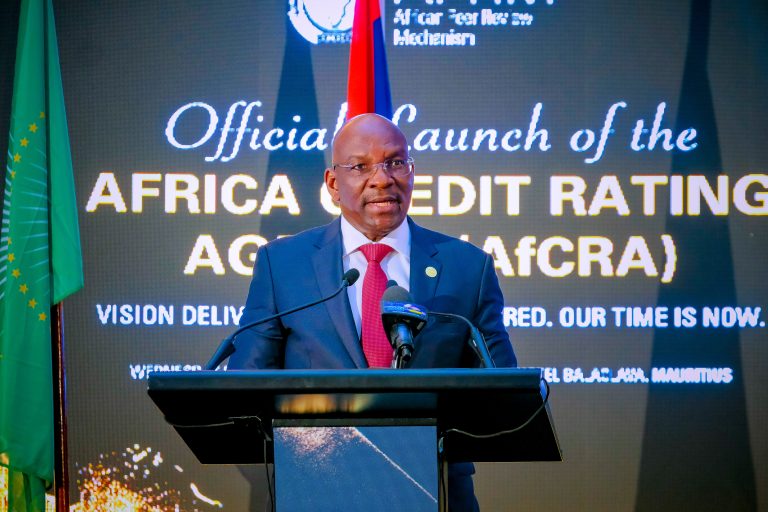
Photo: Mr Denys Denya, Senior Executive Vice President of Afreximbank addresses guests during the launch of the Africa Credit Rating Agency in Port Louis, Mauritius on October 7, 2026
African Export-Import Bank (Afreximbank) has declared it’s strong backing for the recently launched Africa Credit Rating Agency (AfCRA) by the African Union.
“AfCRA is an important milestone in strengthening Africa’s financial architecture and expanding the continent’s capacity to generate credible, independent analysis of African credit risk,” said Mr Denys Denya, Senior Executive Vice President of Afreximbank.
Mr Denya emphasised that credit ratings play an important role in determining access to capital, influencing investor perceptions and shaping the cost at which governments, institutions and businesses can finance development.
It is therefore essential that assessments of African credit risk are independent, rigorous and evidence-based, while reflecting a complete understanding of the structures, institutions and economic realities being assessed.
The establishment of AfCRA adds an important African-led source of credit opinion to the market.
Its value will not be measured by whether it produces more favourable ratings, but by the credibility of its analysis, the quality of its data and transparency of its methodology, and its ability to deepen understanding of African sovereigns, sub-sovereigns and corporate credit.
This is particularly important given that many African issuers remain unrated, while local-currency and sub-sovereign markets continue to have limited rating coverage.
Expanding credible rating coverage can improve the information available to investors and support the development of deeper domestic and regional capital markets.
Alongside fellow members of the Alliance of African Multilateral Financial Institutions (AAMFI), Afreximbank has consistently maintained that African Multilateral Financial Institutions should be assessed on the basis of their fundamentals, performance, legal frameworks, mandates and operating models.
Ensuring that these institutional characteristics are properly understood is essential to achieving informed, balanced and credible assessments of African risk.
Commenting on the uniqueness of the African market, and need for AfCRA’s rating methodology to reflect this, Mr Denya, said: “The rating methodology AfCRA develops must recognise the uniqueness of our environment and its institutional structures.
The Agency must set its own standards and not follow those set elsewhere — it must build a unique identity that conforms to an ‘African best practice.
”Highlighting the need for the autonomy of the Africa Credit Rating agency as it takes off, Mr Denya added: “Most importantly, AfCRA must set a new benchmark for the continent, maintain its independence, and remain wholly owned and controlled by Africans.
“We must all use it, and in return expect a complete assessment of where we (Africa) stand: the strengths the market has ignored, and the weaknesses we still need to fix.”
AfCRA should therefore be seen as complementary to existing international and regional rating agencies, broadening the range of credible analysis available to investors and issuers while strengthening competition, transparency and analytical capacity within Africa’s credit markets.
As Africa seeks to mobilise the scale of capital required for industrialisation, trade, infrastructure and economic transformation, credible African institutions that improve information, strengthen market confidence and deepen the continent’s financial markets will become increasingly important.
Afreximbank congratulates the African Union, the African Peer Review Mechanism (APRM) and all those involved in bringing AfCRA from concept to launch, and looks forward to the contribution the Agency will make to deeper, more transparent and more efficient African capital markets.
Business
Nigeria’s ₦33bn Fruit Import Bill Exposes Missed Opportunities in Jos
“In North Central Plateau State, apples grow very well. Unfortunately, …, the government, especially the state government, has not been serious about mobilising farmers, training them, giving them improved varieties and the right inputs.”
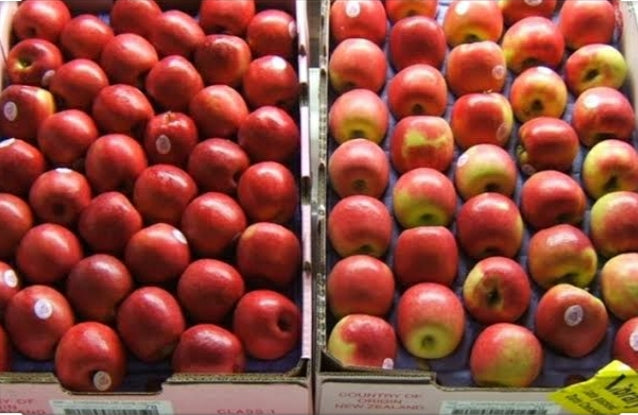
Data from the foreign trade statistics compiled by the National Bureau of Statistics (NBS) revealed that Nigeria imported apples and strawberries worth N33 billion from South Africa in the first half of 2026 (January -June).
The report stated that N10.38bn of apples were imported in the first quarter while N22.65bn of apples and strawberries were imported in the second quarter.
According to the report, apples are known to grow best in temperate climates with cold seasons providing 800–1,000+ chilling hours below 45°F (7°C) to break dormancy and ensure proper fruit set.
It can also grow in moderate weather (ideally 65–75°F or 18–24°C). This helps with optimal growth and flavour development without excessive heat stress.
This temperature is suitable in Plateau State, however, a former President of the All Farmers Association of Nigeria (AFAN), Mohammed Gettado, explained that apples were grown in limited quantities in Plateau State but suffered neglect due to poor government attention and the widespread view that the fruit was meant for the wealthy.
Gettado said, “In North Central Plateau State, apples grow very well. Unfortunately, people consider apples a fruit for the elite only. So, the government, especially the state government, has not been serious about mobilising farmers, training them, giving them improved varieties and the right inputs.”
He added that production remained “very small” because farmers lacked support, stressing that subsidised inputs delivered at the right time were critical to scaling output.
“What farmers require are inputs such as fertiliser, agrochemicals and improved varieties, and they must be given at the right time, before planting,” he said. “If farmers can get these, and also have access to markets, Nigeria can produce whatever it needs and even beyond.”


FG Withdraw Charges Against PFIPC DG Adeyemi

CJN Kekere-Ekun swears in 68 new SANs

BREAKING: Fire Engulfs First Bank Branch Along Abuja-Keffi Road

Tech Expert, Zuckerberg trains with UFC champions, Adesanya, Alexander

Organ Trafficking: Ekweremadu bags 10 years in UK prison

SAINT OBI: Between his marriage and his death
-

 Business9 hours ago
Nigeria’s ₦33bn Fruit Import Bill Exposes Missed Opportunities in Jos
-

 Business9 hours ago
Naira To Dollar, Pound ,Euro …Rates For Monday, October 12
-

 International22 hours ago
‘Up to our people’ to pick leader, Zelenskyy responds to Trump’s pledge for new elections in Ukraine
-

 Opinions16 hours ago
Human Capital Africa Statement For International Day of the Girl Child 2026
-

 Business3 days ago
Investors Rush For Airtel Money IPO on LSE
-

 Politics3 hours ago
BEWARE: Fake 2027 Gov’ Candidates List Circulating Online — INEC Raises Alarm
-

 International23 hours ago
Time for Ukraine to get a new president’, says Trump
-

 News9 hours ago
Forbes Scores GTBank Best Employers 2026