
Business
MAN Asks FG to Implement single -use plastic ban in phases


The Manufacturers Association of Nigeria (MAN), on Tuesday, has called on the Federal Government government to put in place a phased implementation policy for the proposed single-use plastics ban.
This is to allow the operators in the sector sufficient time to adapt and mitigate disruptions that will arise from the ban.
The Association also advocates for an adequate government-stakeholders engagement and collaborative efforts on the journey to the eventual elimination of single use plastics.
‘MAN supports a balanced approach in addressing the challenges posed by single-use plastics. While recognizing the need to protect the environment, we also emphasize the importance of mitigating economic disruptions for our members,” said MAN.
The association, assures it’s committed to collaborating with government agencies, environmental groups, and other stakeholders to develop sustainable solutions that balance environmental concerns with the need to protect jobs and guarantee the survival of businesses.
The statement further reads: “In this regards, adequate incentive should be given to offset the costs of adopting alternative materials, including tax breaks to encourage investment in sustainable technologies, and comprehensive training programmes to equip the workforce with the necessary skills.
Furthermore, we proposes the establishment of a dedicated fund to support Research and Development into sustainable packaging solutions.
This would foster innovation and create new business opportunities within the manufacturing sector.
It is also important to state that many manufacturers have already commenced the implementation of extended producer responsibility (EPR) schemes, which hold producers responsible for the entire lifecycle of their products, including end-of-life management.
“By working collaboratively with the government and other stakeholders, MAN is ready to play crucial role in shaping a win-win transition to a single-use plastics free environment.
The one that minimizes business closures and job losses, and ensures a smoother transition to a circular economy.”



Business
Oil price jumps to $106, stocks drop on uncertainty over US-Iran talks
Crude prices rallied more than three percent on Thursday, with Brent crude above $106 per barrel and WTI around $93.

Oil prices jumped and equities slid Thursday as hopes for a peace deal between the US and Iran wavered after Tehran rejected Washington’s bid to wind down the nearly four-week war.
Markets had been buoyed this week by US President Donald Trump’s announcement that strikes targeting Iran’s energy infrastructure would be postponed, adding that the two sides were in peace talks.
But uncertainty over the talks and the virtual closure of the Strait of Hormuz — through which around 20 percent of oil and liquefied natural gas passes — have cast a shadow over market sentiment.
“The market rollercoaster continues,” said Joshua Mahony, chief market analyst at Scope Markets.
Crude prices rallied more than three percent on Thursday, with Brent crude above $106 per barrel and WTI around $93.
( VANGUARD)
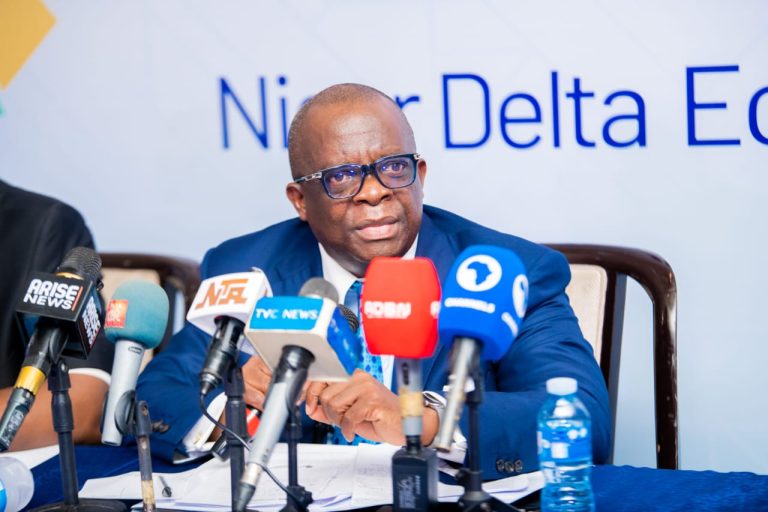
Photo: Ambassador Idaere Gogo Ogan
The Niger Delta Chamber of Commerce, Industry, Trade, Mines and Agriculture (NDCCITMA) has unveiled plans to attract up to five billion dollars structured investments to the oil-producing region in five years.
The Chairman of NDCCITMA, Ambassador Idaere Gogo Ogan, made the disclosure at a pre-summit conference ahead of the Niger Delta Economic and Investment Summit in Port Harcourt, Rivers State.
He said that the initiative would catalyse no fewer than 500,000 direct and indirect jobs as well as spur investments and create wealth.
He said the summit with the theme, “Driving Investment, Innovation, and Industrial Growth in the Niger Delta”, slated for Port Harcourt, would deliberate on investment mobilisation, enterprise growth, industrial expansion, and regional coordination.
Business
Dangote: Middle East crisis might take us back to ‘Work from home’ COVID era
In some countries today, what they’ve done is ask everybody to work from home because they cannot afford it.“I think in Indonesia, they only go to work four days a week.
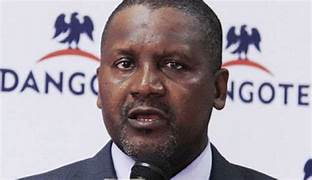
The President of the Dangote Group, Aliko Dangote, has expressed concerns about the ongoing Middle East crisis taking many countries back to the COVID19 era’s work from home.
Dangote stated this on Monday, after a meeting with President Bola Ahmed Tinubu at his residence in Lagos.
While expressing concern about the economic impact of oil price uncertainty, Africa’s Richest man noted that Nigeria and other African countries might be forced to start working from home, just like the COVID19 era.
Dangote called for prayers and international intervention to end the conflict which has affected the price of fuel and other energy sources in the country.
He said, “In some countries today, what they’ve done is ask everybody to work from home because they cannot afford it.“I think in Indonesia, they only go to work four days a week. And they will look at the situation. If it doesn’t improve, they will ask everybody not to go to work anymore. We will do like that time of COVID, where people will now go and work from home,” Dangote said.
It’s not only energy. Some people will try to take a chance and say, ‘Ah, this is an opportunity. So, let me make money. So, if this thing doesn’t de-escalate, it is going to keep going up and governments cannot really now go and add salaries also. So, people will really feel the pinch,” he said.
Dangote explained that the crisis would hit hardest at ordinary Africans operating small businesses, “People who are barbers, people who are doing bread, people who have industries who have to pay their own generator, I mean, you can see what is happening,” he said.


El-Rufai’ loses mother, Hajiya Umma

Kano Deputy Governor Resigns

Abia State Holds State Burial for Renowned Evangelist Rev. Dr. Uma Ukpai

Tech Expert, Zuckerberg trains with UFC champions, Adesanya, Alexander

Organ Trafficking: Ekweremadu bags 10 years in UK prison

SAINT OBI: Between his marriage and his death
-

 Entertainment2 days ago
Superstory TV Drama Begins Today With ‘Game Boys’
-

 News2 days ago
Akpabio confirms creation of Anioma State
-

 Health2 days ago
Health Workers Protest Against Regulatory Bill
-

 Business1 day ago
Oil price jumps to $106, stocks drop on uncertainty over US-Iran talks
-
 News1 day ago
IGP Disu presents state police framework to deputy senate president
-

 News1 day ago
UK revises visa fees upward from April
-

 News1 day ago
Court discharges ex-Aviation Minister Oduah,after pleading guilty
-
 Politics1 day ago
What Ex-INEC Commissioner Igini says about 2026 Electoral Act