
Business
JUST IN: NNPC Clarifies Petrol Discount: Relief Initiative, Not Subsidy Restoration

The Nigerian National Petroleum Company Limited (NNPC Ltd) has clarified that its ongoing petrol discount is a temporary customer relief measure and does not amount to a restoration of the petroleum subsidy abolished in 2023.
In a statement issued on Friday by Chief Corporate Communications Officer Andy Odeh, the company said the N66-per-litre sales discount, first introduced on 1 October 2026 to mark Nigeria’s 66th Independence Anniversary, will continue until 31 October 2026 at NNPC Retail stations nationwide.
NNPC stressed that the initiative is designed to ease the burden of rising fuel prices linked to elevated global crude oil costs and the Middle East conflict. It applies only to NNPC Retail outlets and does not set a uniform national pump price or change the market-based pricing framework for petroleum products.
“This discount is a customer relief initiative and does not represent the reintroduction of petroleum subsidy,” the statement said. The company urged the public to disregard any interpretation of the measure as a return to the subsidy regime.
The clarification followed comments by Finance Minister and Coordinating Minister of the Economy Taiwo Oyedele, who explained that the discount is funded solely from NNPC Retail’s own profit margin and involves no public funds from the federal budget or Federation Account.


The Central Bank of Nigeria (CBN) and the National Information Technology Development Agency (NITDA) have intensified efforts to ensure that banks, fintech firms and payment service providers comply with Nigeria’s data localisation directive by January 1, 2027.
The regulators insist that critical payment data must be stored and managed within Nigeria to strengthen digital sovereignty, protect sensitive customer information and improve regulatory oversight of the financial system.
CBN Deputy Governor for Financial System Stability, Lamido Yuguda, stated this at the CBN-NITDA Executive Regulatory Dialogue on the National Sovereign Cloud Initiative and data localisation, held in Lagos on Wednesday.
Yuguda emphasised that institutions must do more than store data locally, stressing the need for robust cybersecurity, business continuity, disaster recovery and risk-management frameworks.
“Local storage alone is not enough; institutions must maintain strong cybersecurity, business continuity, disaster recovery and risk-management frameworks,” he said.
Director of the CBN’s Information Technology Department, Hajiya Rakiya Shuaibu Mohammed, said the apex bank was working closely with industry stakeholders to achieve full compliance before the deadline.
She disclosed that a recent CBN survey showed that more than half of the institutions that responded were already prepared to meet the data localisation requirement.
“Our ultimate expectation is that by January 2027, everyone will be on board to have payment data localised,” Mohammed said.
She explained that the policy would give regulators better visibility into financial transactions and strengthen the stability of the financial system.
Director-General of NITDA, Kashifu Inuwa, said Nigeria’s growing dependence on digital infrastructure had made control over critical technology and data a national priority.
He explained that the National Sovereign Cloud Initiative was designed to build domestic capacity and ensure that essential digital services could continue operating even when external disruptions affect global technology providers.
Business
History of Naira Revaluation And Devaluation (1973-2026 (Part 3) Time Line: (2016-2026)
Following the sharp depreciation of 2023 and early 2024, Nigeria continued pursuing foreign-exchange market reforms.

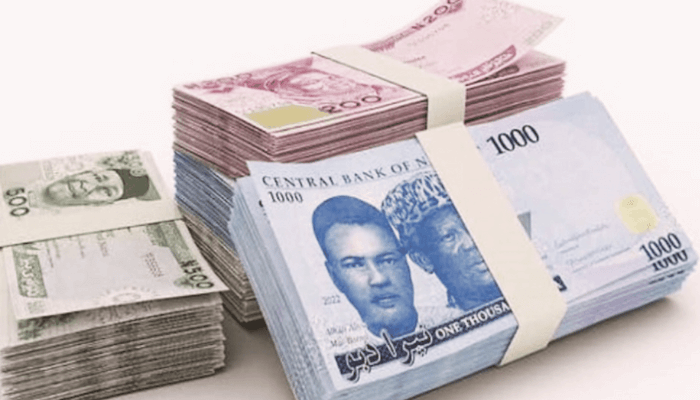
Today, we concluded our piece on the history of the Nigerian Naira currency movement, and how it can gain weight against the world’s top three currencies – The US Dollar, Pound and the Euro.
2016: Another Major Exchange-Rate
In June 2016, the CBN adopted a managed floating exchange-rate regime.
The policy followed increased pressure on foreign exchange, declining receipts from crude oil sales and falling reserve inflows.
The new arrangement allowed market forces a greater role in determining the naira’s value, while the CBN retained the ability to intervene.
The reform was intended to improve foreign-exchange market efficiency and liquidity.However, exchange-rate restrictions and differences between official and parallel-market rates continued in subsequent years.
2020–2022: Further Depreciation
Between 2020 and 2022, the naira continued to weaken.
The CBN’s historical data show the official exchange rate moving from approximately ₦358.81 per dollar in 2020 to ₦454.06 in 2022.
The parallel-market rate was weaker.
Factors influencing the currency included:
1.Foreign-exchange supply constraints.
2. Demand for imported goods and services.
3. Dependence on crude oil exports.
4. Pressure on external reserves.
Differences between official and parallel-market exchange rates.
Although the authorities maintained various exchange-rate management measures, the disparity between official and parallel-market prices remained a major policy challenge.
2023: Exchange-Rate Unification and Sharp Depreciation
In June 2023, the CBN introduced major changes intended to unify Nigeria’s multiple exchange rates and move towards a more market-determined system.
The reform sought to reduce exchange-rate distortions, improve transparency and attract foreign investment.
However, the naira depreciated sharply as the market adjusted to the new arrangements.
The CBN’s historical data put the average official exchange rate at approximately ₦634.16 per dollar in 2023, compared with ₦454.06 in 2022.
The parallel-market rate also weakened substantially.
Why did the naira weaken?
Several factors contributed to the pressure:
Adjustment from previously managed exchange rates.
Limited foreign-exchange supply relative to demand.
Foreign-exchange backlogs.
Demand for imports and overseas payments.
Investor concerns and uncertainty.
Inflation and broader macroeconomic pressures.
The depreciation increased the naira cost of imported fuel, machinery, medicines, raw materials and other goods.
It also raised production costs for businesses dependent on imported inputs.
The distinction is that exchange-rate unification is a policy reform, while depreciation is a movement in the currency’s market value.
They occurred together, but they are not the same thing.
2024–2026: Can the Naira Be Revalued?
Following the sharp depreciation of 2023 and early 2024, Nigeria continued pursuing foreign-exchange market reforms.
A sustained recovery in the naira would depend on several factors, including:
• Higher and more predictable foreign-exchange earnings.
• Increased crude oil production and export receipts.
• Stronger non-oil exports.
• Greater foreign investment and export-oriented production.
•Improved confidence in economic policy.
• Lower inflation and more stable domestic prices.
•Adequate foreign-exchange liquidity.
A currency can appreciate temporarily because of increased foreign-exchange supply, policy changes or reduced demand.
Sustained appreciation generally requires improvements in the underlying balance between foreign-exchange supply and demand
END
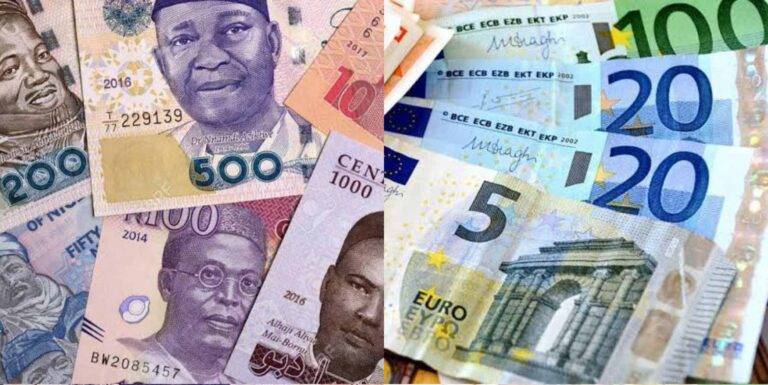
Black Market Rates
₦1388DOLLAR (USD)
₦1815POUND (GBP)
₦1520EURO (EUR)
₦970 CANADIAN DOLLAR (CAD)
₦65 SOUTH AFRICAN RAND (ZAR)
₦350 UAE DIRHAM (AED)
₦190YUAN (CNY)
₦100G.CEDI (GHS)
₦2300CFA F.(XOF)
₦2200CFA (XAF)
₦850 AUSTRALIAN DOLLAR
Official CBN Exchange Rates

DOLLAR (USD) ₦1347.53

POUND (GBP) ₦1790.86

EURO (EUR) ₦1500.34

SWISS FRANC (CHF) ₦1622.74

JAPANESE YEN (JPN) ₦8.53

CFA FRANC (XOF) ₦2.32

WEST AFRICAN UNIT OF ACCOUNT (WAUA) ₦1849.17

CHINESE YUAN (CNY) ₦202.13

SAUDI RIYAL (SAR)₦359.09

SOUTH AFRICAN RAND (ZAR)₦80.86


Nigeria Debt Concerns Mount as Tinubu Seeks Fresh $20.5bn, €1bn Loans

JUST IN: IMO WEST: Uzodinma Loses Senatorial Bid as Court Orders INEC to Publish Okorocha’s Name

Survivors recount horrors as Spain mourns 68 dead victims of trains crash

BREAKING: Lagos Govt Declares Today, Thursday Work-Free to Mark 2026 Ìṣẹ̀ṣe Day

Tech Expert, Zuckerberg trains with UFC champions, Adesanya, Alexander

Organ Trafficking: Ekweremadu bags 10 years in UK prison
-
 Business18 hours ago
Exchange Rates Thursday October 29 2026
-

 Business1 day ago
Investors from 120 countries participate in Dangote Refinery’s IPO
-

 Entertainment1 day ago
Davido, Kirk Franklin, to hit airwaves with new song ‘Hope In You’
-

 Sports1 day ago
Team Nigeria Braces For Historic Dakar 2026 Youth Olympic Games
-

 Entertainment1 day ago
Sultan of Sokoto to Honour Peter Igho as Kakakin Daular Usmaniyya
-

 News2 days ago
FG Approves ₦70k Transport Allowance for Civil Servants
-
 Business1 day ago
MTN Pushes Back Fast Data Depletion Complaints To Subscribers
-

 Sports1 day ago
Nigeria Thrash New Caledonia 7-0 In FIFA U15 World Cup Festival