
Sports
JUST IN: Former Cameroon Football Legend Emmanuel Kunde Dies In His Sleep At 68

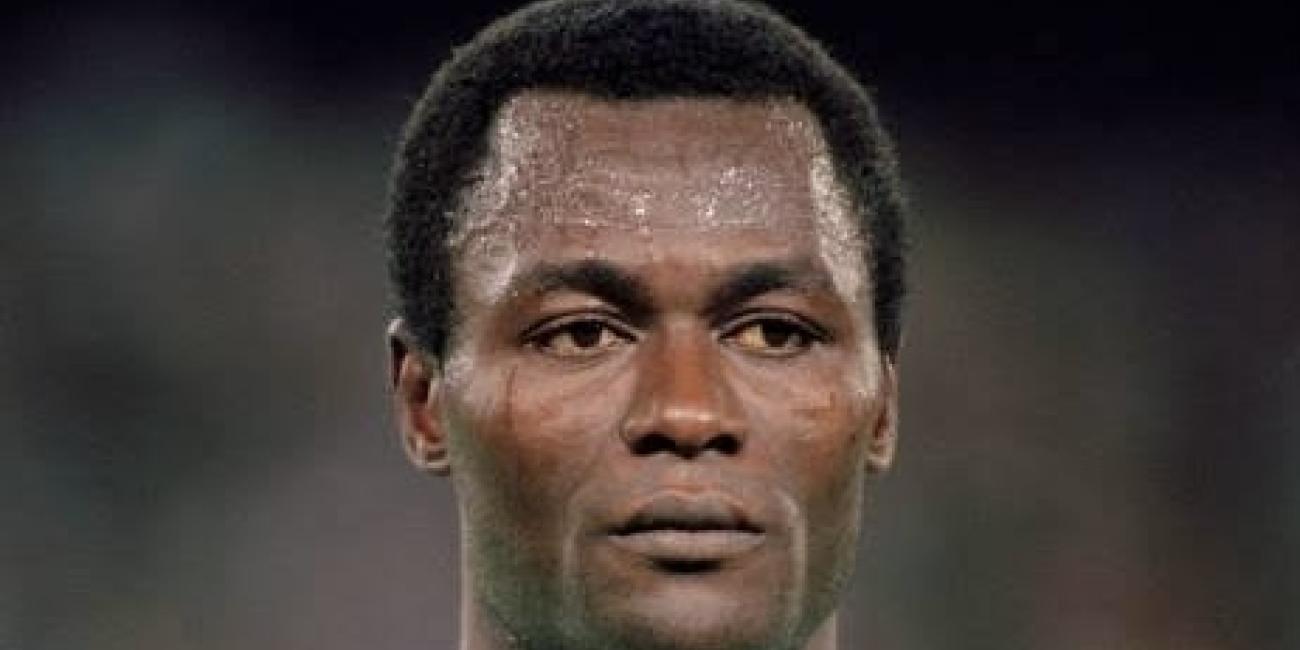
The former Cameroon international died at the age of 68 on Friday, May 16, leaving behind a towering legacy that spanned two golden decades of African football.
African football has been dealt another heartbreaking blow with the passing of Emmanuel Kunde, one of the continent’s most iconic and revered defenders.
The former Cameroon international died at the age of 68 on Friday, May 16, leaving behind a towering legacy that spanned two golden decades of African football.
According to Yen, Kunde went to bed on the evening of Thursday, May 15, and tragically never woke up. His remains have been deposited at the Yaoundé Central Hospital mortuary, with further announcements expected from his family.
Tributes have since poured in from across the footballing world. Cameroon Football Federation President and global football icon, Samuel Eto’o, expressed his sorrow on Instagram, using tearful emojis to mourn the loss.
Eto’o posted, “I’m just learning of the demise of the Elder Emmanuel Jérôme Kundé, an iconic figure in Cameroonian football, who died at the age of 68. Oh the sadness! It is a certain value of our heritage that is thus cruelly taken away from us.
“I keep with him the memory of a discreet and affectionate man, a figure of moderation and consideration.
He was a fantastic footballer, the control tower in the midfield, the defensive wall the opponent crashed into but also a great playmaker when the team had possession.
Individually, it was a fine passer and a gun with phenomenal power and goldsmith precision.
“In fifteen years as a national team (127 selections), he took part in the two legendary epics of the Indomitable Lions in the World Cup (1982 and 1990), twice winner of the CAN (1984 and 1988).
His long career brought him to France (Laval, Reims) and Gabon (US Bitam) as a coach, even though it is in the Canon sportif de Yaoundé that his name and legend will remain associated forever, as a player and as a coach.
“Praying for the great football family to keep him in your thoughts and my deepest condolences to his nuclear family.”
Nigerian journalist Osasu Obayiuwana also reacted with shock, posting: “This is sad to hear.
What happened?” He described Kunde as a player whose intelligence and physical prowess on the pitch made him a nightmare for even the most lethal strikers.
Kunde’s name commands respect across generations — not only for his impressive list of achievements, but also for the commanding presence he brought to the game.
Renowned for his strength, tactical intelligence, and versatility, he excelled primarily as a central defender but was also effective in a defensive midfield role.
Kunde remains Cameroon’s fifth-most capped player and is also among the nation’s top 10 all-time goal scorers — a rare feat for a defender.
His knack for finding the back of the net, particularly from set-pieces, became one of the Indomitable Lions’ most potent weapons.
He was instrumental in Cameroon’s triumphs at the Africa Cup of Nations in 1984 and 1988 and played key roles in the country’s appearances at the 1982 and 1990 FIFA World Cups.
The 1990 tournament saw Cameroon reach the quarter-finals — the first African team to do so — cementing Kunde’s status as a legend of the global game.
Kunde began his professional journey with Mbankomo FC before playing for clubs such as Canon Yaoundé, Tempête de Nanga-Eboko FC, Provenance, and Olympic Mvolyé.
Following his retirement from active football, he transitioned into coaching, taking charge of teams like PWD Bamenda, Canon Yaoundé, and US Bitam during two managerial spells.
Emmanuel Kunde’s death marks the end of an era, but his impact on African football will continue to inspire generations to come.












Sports
National Sports Commission Changes Secretaries
“Let me be clear that no secretary is being removed because he or she has been sacked. They are only being posted to another federation to carry out another assignment,” Olopade said.

The National Sports Commission (NSC) has reshuffled the General Secretaries of several national sports federations in a major administrative shake-up aimed at strengthening operations and improving the performance of the bodies.
The Director-General of the NSC, Bukola Olopade, announced the changes yesterday during a meeting with the General Secretaries of the federations in Abuja.
“Let me be clear that no secretary is being removed because he or she has been sacked. They are only being posted to another federation to carry out another assignment,” Olopade said.
Under the new arrangement, Bunmi Oluode has been appointed the new Secretary-General of the Athletics Federation, replacing Israel Inwang, who has been redeployed to the Padel Federation.
Rita Mosindi will serve as Acting Secretary-General of the Basketball Federation, with her predecessor, Amina Amanchi, moving to the Rowing Federation.
Other appointments saw Tosin Samuel take over as Secretary-General of the Shooting Federation, while Tinuoso Dolapo was appointed Secretary-General of the Karate Federation.
Javan Bennard will head the secretariat of the Fencing Federation, while Dorothy Okpo becomes the new Secretary-General of the Arm Wrestling Federation. Olopade said the reshuffling was not a punishment for any of the affected secretaries but a strategic deployment of their expertise to improve the administration of the federations.
Sports
FIFA to decide 2030 World Cup final venue in 2028 as Morocco, Spain wait
Morocco has made no secret of its ambition to bring the 2030 World Cup final to Benslimane, near Casablanca, where the Hassan II Stadium is under construction.
FIFA is expected to decide the venue for the 2030 World Cup final in 2028, a timeline that keeps Morocco’s push to host the showpiece at the Hassan II Stadium alive.
Spanish outlet Mundo Deportivo reported that sources familiar with the process said FIFA does not plan to announce the final venue before 2028.
The reported timeline mirrors the previous World Cup cycle. FIFA waited until February 2024 to confirm New Jersey’s MetLife Stadium as the venue for the 2026 final.
That means the contest between Morocco and Spain remains open, despite increasingly confident statements from both countries over their preferred venues.
Morocco has made no secret of its ambition to bring the 2030 World Cup final to Benslimane, near Casablanca, where the Hassan II Stadium is under construction.
The stadium is expected to have a capacity of about 115,000. When completed, it would be one of the largest football stadiums in the world.
The project has become the centrepiece of Morocco’s bid to host the tournament’s closing match.
Fouzi Lekjaa, president of the Royal Moroccan Football Federation, has repeatedly backed the ambition.
Sports
NBA closes basketball academy in Africa
The NBA said the decision reflected a shift in global basketball development strategy.
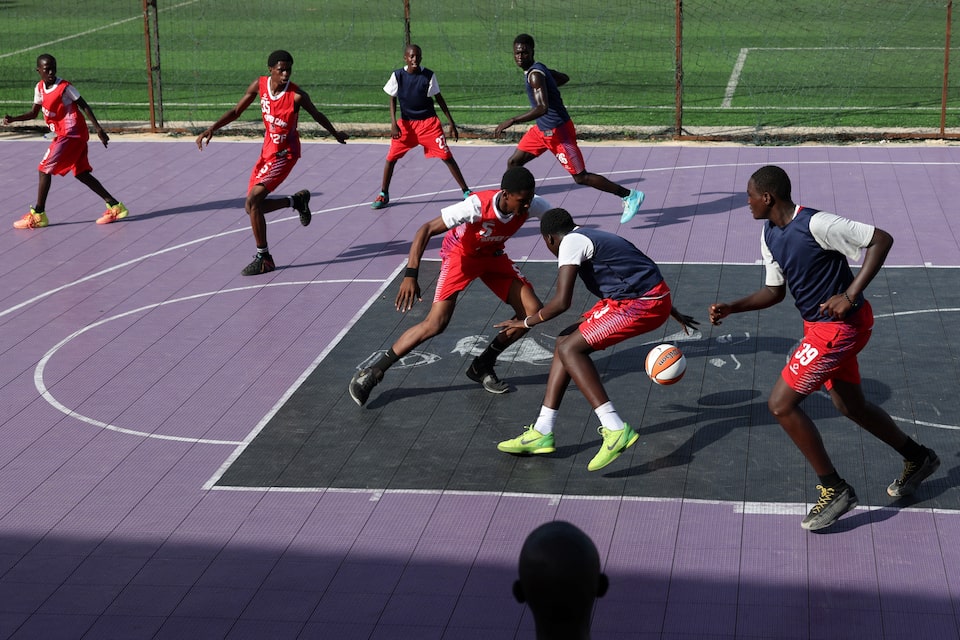
•Basketball players train during the Legacy Summer Camp, organised by SEED Project alumnus Pape Latyr Gnigu, in Dakar, Senegal, September 30, 2026. REUTERS/Misper Apawu.
The National Basketball Association (NBA) has closed its only elite training academy in Africa.
Reuters reported on Thursday that the academy , established less than a decade ago was launched in Senegal to prepare promising young African players for professional leagues in the US and elsewhere.
The decision to close NBA Academy Africa, the league’s first such facility in Africa, was a blow to students and young players across the continent, two former employees said.
Michel Chikwanine, who had been the academy’s performance and lifestyle adviser, said the news discouraged African players just beginning to build confidence.
“From the moment we told them, their confidence waned, their confidence dropped,” he said.
Michael Abbott, former head of academic planning at the academy, said it showed a lack of commitment to the students.
“They weren’t invested in them as kids as much as they were invested in the business model,” he said.
In response to questions from Reuters, the NBA said the decision reflected a shift in global basketball development strategy.
It has previously closed academies in Mexico and Australia. All training will be run out of a new global academy to open soon in the United Arab Emirates’ Abu Dhabi, it said.
In its statement, the NBA added that it is continuing to invest in African talent through other programs and that closing the academy does not signal a diminished commitment to the continent.


Investors Rush For Airtel Money IPO on LSE

JUST IN: NNPC Clarifies Petrol Discount: Relief Initiative, Not Subsidy Restoration

JUST IN: A’Court Stalls SERAP, Oluwadare Defamation Appeals Over Late Briefs

Tech Expert, Zuckerberg trains with UFC champions, Adesanya, Alexander

Organ Trafficking: Ekweremadu bags 10 years in UK prison

SAINT OBI: Between his marriage and his death
-

 News2 days ago
NAF Helicopter Makes Precautionary Landing In Makurdi
-

 Politics3 days ago
BREAKING: APC Chairmen Accused of Leading Armed Attacks on ADC Members in Igueben
-
 News2 days ago
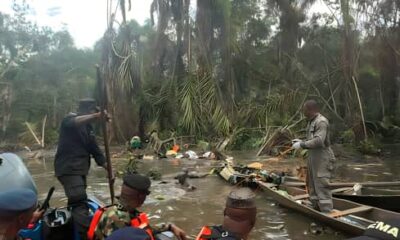
Military Chiefs Visit Ondo Crash Site As Underwater Search Intensifies
-

 Business2 days ago
Naira Today Exchange Rates, Thursday October 8
-

 Business2 days ago
African Union launch continent’s first credit rating agency
-
 News10 hours ago
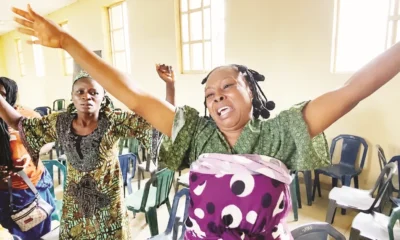
Tears, Embraces as Rescued NYSC Members Reunite with Families in Ibadan
-

 Business2 days ago
Obi advocates policy support for manufacturers
-

 Business12 hours ago
Naira Exchange Rates Friday, October 9