
News
Is It Safe to Invest in Lagos Real Estate? Here’s What You Must Know by Dennis Isong
“Na bush you go buy?”

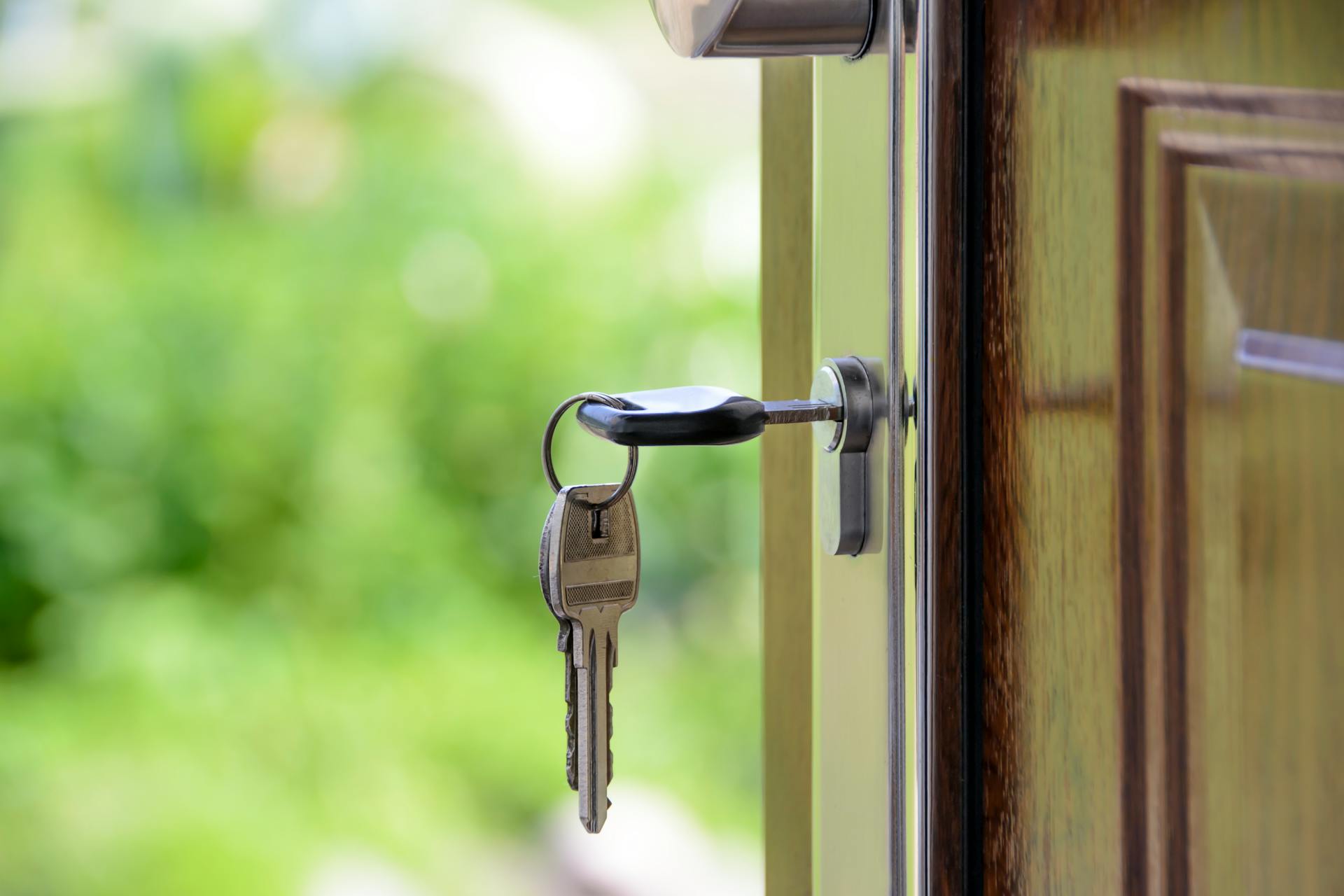
In 2018, Chinedu bought a plot of land in Ibeju-Lekki for ₦600,000. At the time, his friends laughed.
“Na bush you go buy?” they teased. Even Chinedu had doubts, especially after struggling to locate the land twice.
But he had a gut feeling and decided to take the risk.Fast forward to 2024, Chinedu got a call from a developer building around the Lekki Free Trade Zone. They were interested in acquiring his plot.
The offer? ₦8.5 million. He thought it was a joke—until the cheque cleared.“I almost sold that land two years ago for ₦1.2 million because I was broke,” he told me, shaking his head with a smile.
“But something told me to wait.”Today, that same bush has a tarred road, power poles, and new buildings sprouting like mushrooms.
The value keeps rising, and Chinedu is already scouting for his next plot—this time in Epe.
His only regret?“I wish I bought three plots instead of one.”
That’s Lagos real estate for you. It looks like nothing at first—but if you play your cards right, it could be the best decision of your life.
Let’s not beat around the bush—Lagos real estate is hot cake.
Everyone seems to be talking about it, whispering about one land deal in Epe or a smart investment in Ibeju-Lekki.
The conversations are endless, and so are the questions. But the one that keeps bouncing from one corner of the room to another is this:Is it really safe to invest in Lagos real estate?Well, short answer? Yes.But let’s not stop at “yes.”
This is Lagos. Nothing is ever that simple. Before you pull out your wallet or empty your savings app, you need to know a few things that the billboards won’t tell you.
First, Why Is Everyone Rushing to Invest in Lagos Real Estate?
If Lagos were a person, it would be that loud, fast-talking cousin who always seems to have money flowing from one hustle or the other. Lagos is not just a city—it’s a mood, a movement, a madness that somehow makes financial sense.
It’s the commercial heartbeat of Nigeria. And where the heart beats, money flows.
From tech bros in Yaba to deep-pocket oil boys in Lekki, everyone is looking for where to park their money, and land is the new bank.
Real estate in Lagos has become the golden goose for the smart investor. And why not? Land here doesn’t sleep—it appreciates, sometimes with the arrogance of a billionaire who knows he can’t fail.
But Wait—Is It Safe?
Now, this is where it gets interesting. Lagos isn’t Disneyland. It’s not all shiny buildings and smiling agents. The truth is, there are landmines in the system—some figurative, some legal, and some spiritual (ask anyone who’s ever mistakenly bought “Omonile land”).
Yet, thousands of people are making solid money from it. Some have even become landlords from buying land they never visited. How is this possible? It all comes down to how you invest, where you invest, and who you’re dealing with.
The Shaky Past, The Bright Future
Let’s be honest: Lagos has had its fair share of land drama. The tales are plenty—fake documents, family land disputes, sudden demolitions. These stories are scary, yes, but they’re not the full picture.
Over the years, the Lagos real estate sector has matured, especially with government regulations, better documentation processes, and real estate firms who are finally doing things the right way.
This is not 1997 when you could buy land and discover later that the “agent” was actually a carpenter with a borrowed suit.
Today, with a bit of caution and proper due diligence, you can invest in Lagos real estate and sleep well at night—like a baby who just signed a deed of assignment.Lagos Is Expanding—And That’s a Clue.

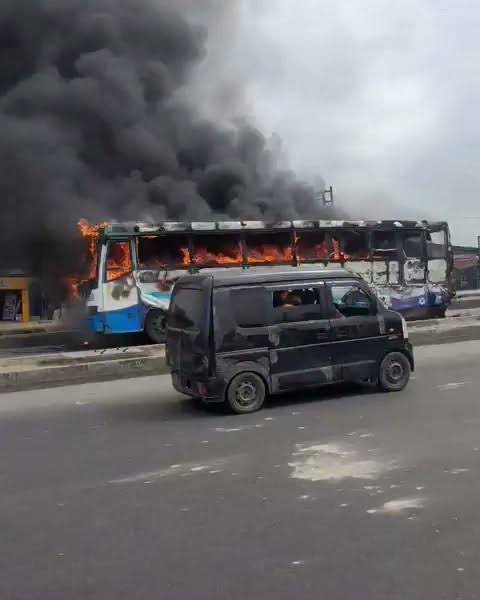
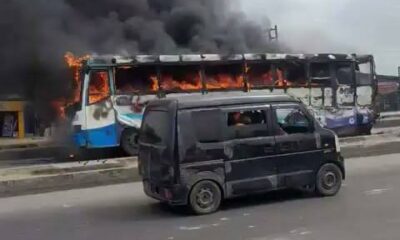
An angry mob has set a Bus Rapid Transit (BRT) bus on fire after it reportedly crushed a commercial motorcyclist to death at Ogolonto Bus Stop along Ikorodu Road in Lagos State.
The incident occurred on Friday, October 16, 2026. Eyewitness accounts and social media reports indicate that the motorcyclist was riding alone along the restricted BRT lane when the collision happened. He died at the scene.
Enraged residents and youths then attacked the bus driver and set the vehicle ablaze. Police officers and officials of the Lagos Neighbourhood Safety Corps (LNSC), who were nearby, intervened promptly and rescued the driver unharmed.
The identity of the deceased motorcyclist and the exact circumstances of the crash had not been officially confirmed at the time of filing this report. It was also unclear whether any arrests had been made in connection with the burning of the bus.
News
ARISE News Wins Seven Honours At Nigerian Broadcasters Merit Awards
The awards recognised the network’s achievements in television journalism and programming, with ARISE News winning the Best TV Channel (Viewer’s Choice) category.
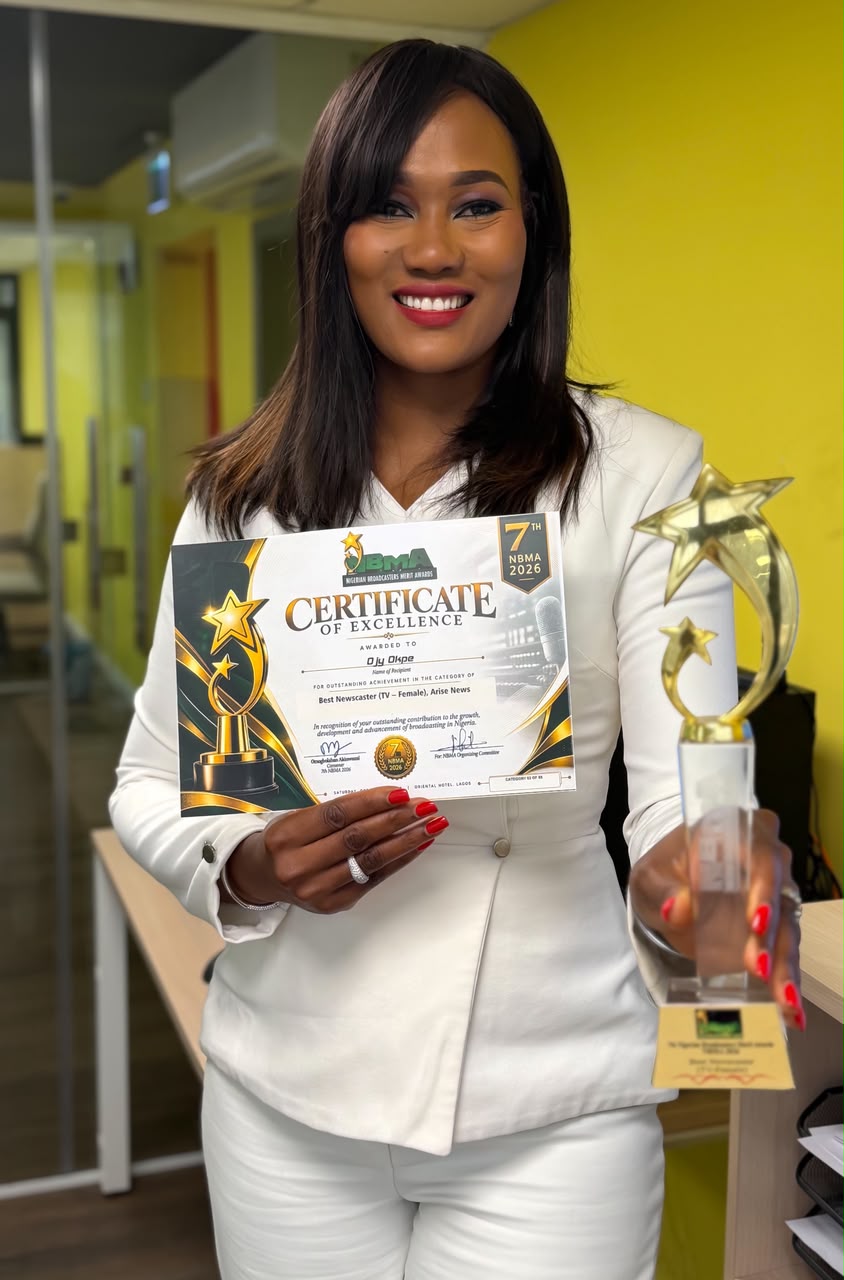
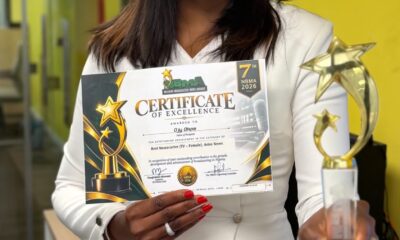
• ARISE News Anchor and host of What’s Trending Ojy Okpe was named Best Newscaster (TV – Female)
ARISE News has emerged as one of the major winners at the just ended Nigerian Broadcasters Merit Awards (NBMA).
ARISE News won seven honours across television broadcasting, news reporting, presentation and production during the ceremony.
The awards recognised the network’s achievements in television journalism and programming, with ARISE News winning the Best TV Channel (Viewer’s Choice) category.
The network’s flagship breakfast programme, The Morning Show, also won the Best TV Talk Show award, further strengthening its recognition in television broadcasting.
ARISE News Anchor and host of What’s Trending Ojy Okpe was named Best Newscaster (TV – Female).
Rufai Oseni was named Nigerian Broadcaster of the Year (Male), while Vimbai Mutinhiri-Ekpeyong received the Nigerian Broadcaster of the Year (Female) award.
The recognition extended to the network’s newsroom, with Ovieteme George winning Best TV News Reporter (Male) for his contributions to television news reporting.
Behind the camera, Sam Adeyemi received the Best Camera Operator/Cinematographer award, recognising his work in television production and visual storytelling.
News
Meta removes 3.7 million accounts in West Africa scam crackdown
The joint operation led to 28 arrests, identified more than 30 suspected scam centres and rescued 117 people allegedly trafficked and forced to work in scam compounds in Ghana.

Meta, the parent company of Facebook and Instagram, has removed more than 3.7 million Facebook and Instagram accounts, pages and groups linked to suspected scam networks operating in West Africa.
The joint operation led to 28 arrests, identified more than 30 suspected scam centres and rescued 117 people allegedly trafficked and forced to work in scam compounds in Ghana.
The company announced the crackdown in a statement on Tuesday, October 13, 2026. It involved 14 technology companies and law enforcement agencies from 10 countries.
The United Kingdom’s National Crime Agency coordinated the operation with the US Department of Justice, the Federal Bureau of Investigation and other agencies. Nigerian authorities were involved.
Other countries included Ghana, Australia, Canada, New Zealand and India.Tech companies that took part included Google, Microsoft, OpenAI, Coinbase, Starlink and Adobe.
Meta said the partnership let participants share intelligence across digital platforms, countries and financial systems to identify criminal networks.


JUST IN: Mob Sets BRT Bus Ablaze After Motorcyclist’s Death in Lagos

BREAKING: DSS Arrests Fugitive Maina Son, Hands Him to EFCC

BREAKING: 5 Arrested Over Imo NYSC Abduction

BREAKING: Lagos Govt Declares Today, Thursday Work-Free to Mark 2026 Ìṣẹ̀ṣe Day

Tech Expert, Zuckerberg trains with UFC champions, Adesanya, Alexander

Organ Trafficking: Ekweremadu bags 10 years in UK prison
-

 Business3 days ago
Naira Exchange Rates Friday, October 16
-
 Crime2 days ago
BREAKING: 5 Arrested Over Imo NYSC Abduction
-

 News3 days ago
Meta removes 3.7 million accounts in West Africa scam crackdown
-
 News3 days ago
ARISE News Wins Seven Honours At Nigerian Broadcasters Merit Awards
-
 Crime2 days ago
BREAKING: DSS Arrests Fugitive Maina Son, Hands Him to EFCC
-
 News2 days ago
JUST IN: Mob Sets BRT Bus Ablaze After Motorcyclist’s Death in Lagos