
Business
IEA ratifies Nigeria as an Association Country
In response, Nigeria’s Minister of State for Petroleum Resources (Gas) Ekperikpe Ekpo, said : “I am elated with the decision of the IEA Members to officially welcome Nigeria to the IEA Family as an Association country;

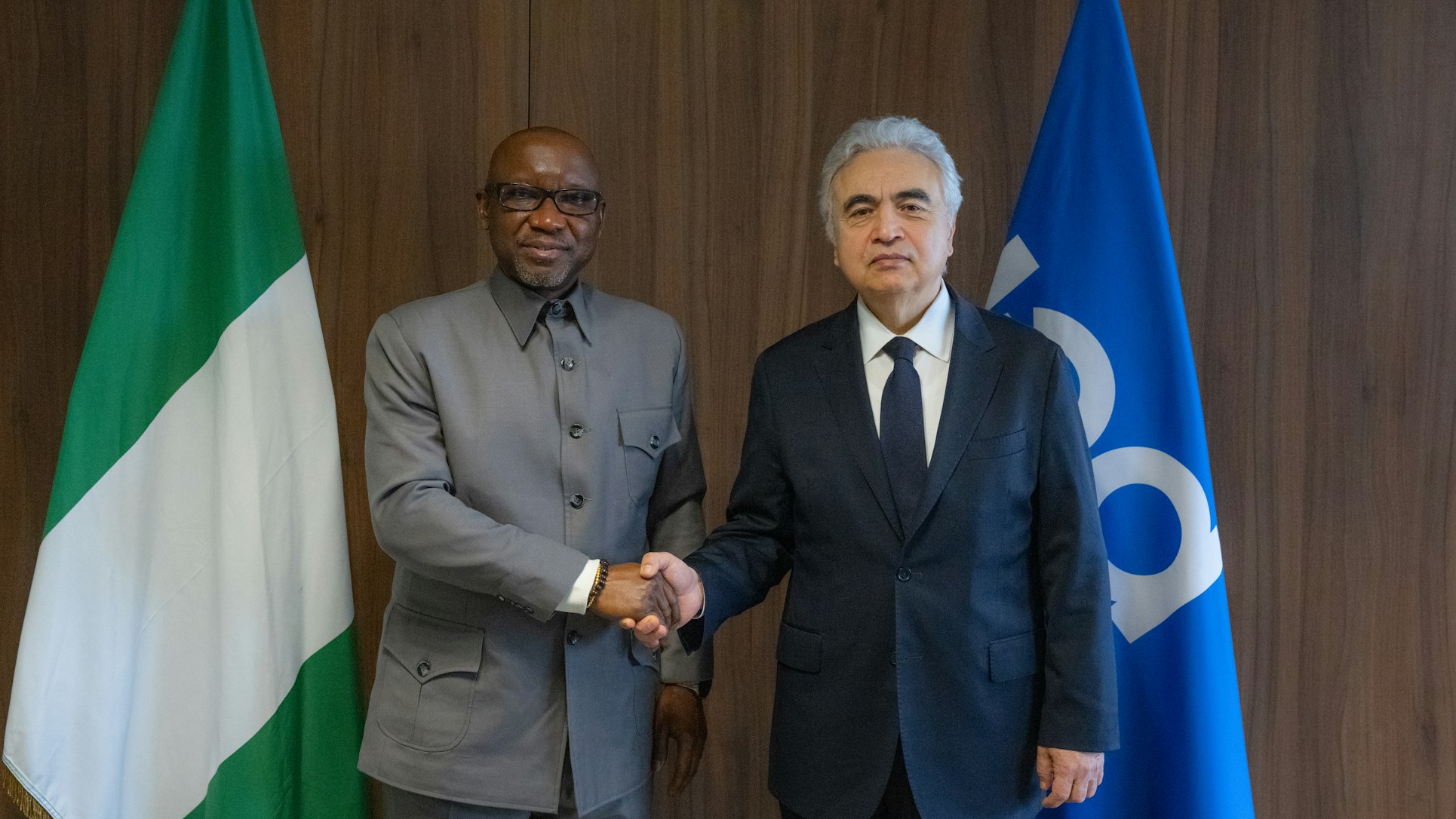
Photo: Nigerian Minister of State for Petroleum Resources ( Gas) Ekperikpe Ekpo (left) and the IEA Executive Director Fatih Birol, at the event. Credit: IEA
The Governing Board of the International Energy Agency (IEA) has unanimously agreed for Nigeria to join the IEA Family as an Association country.
“I am thrilled that Nigeria is joining the IEA – it is Africa’s most populous country and a major international energy player. Nigeria becoming part of the world’s energy authority marks a milestone for global energy governance. I am very thankful to President Tinubu and Minister Ekpo for their trust in the IEA,” said IEA Executive Director Fatih Birol.
Emphasising that Nigeria is home to over 240 million people and one of Africa’s largest economies, Faith Birol acknowledged that Nigeria is a major producer of oil and natural gas and is one of the continent’s most dynamic renewable energy markets.
“As Nigeria works to strengthen energy security, support economic growth and expand energy access, deeper cooperation with the IEA will bring important benefits for both sides. We look forward to building on our already strong partnership and welcoming Nigeria to the IEA, ” he said
In response, Nigeria’s Minister of State for Petroleum Resources (Gas) Ekperikpe Ekpo, said : “I am elated with the decision of the IEA Members to officially welcome Nigeria to the IEA Family as an Association country;
“It is an honour for Nigeria to join this leading energy agency and I will take this opportunity to encourage the African continent to embrace the IEA, as we all work together to achieve key development goals including universal energy access and industrialisation.”
The IEA Governing Board’s decision builds on a strong history of engagement and collaboration between Nigeria and the IEA since 2014.
In September 2025, the IEA, Nigeria’s Minister of Petroleum Resources and the African Energy Commission (AFREC) jointly convened a Regional Roundtable on “Turning Methane Pledges into Action” in Abuja, bringing together energy stakeholders from across the region to advance efforts to reduce methane emissions from the energy sector.
As an Association country, Nigeria and the IEA will work more closely across a wide range of energy issues, including on the Agency’s engagement in sub-Saharan Africa.
Business
African Union launch continent’s first credit rating agency
African leaders have long accused Western ratings agencies including S&P, Moody’s and Fitch of failing to fairly assess the risk of lending to African countries and of moving too quickly to downgrade them during crises such as conflicts and pandemics.
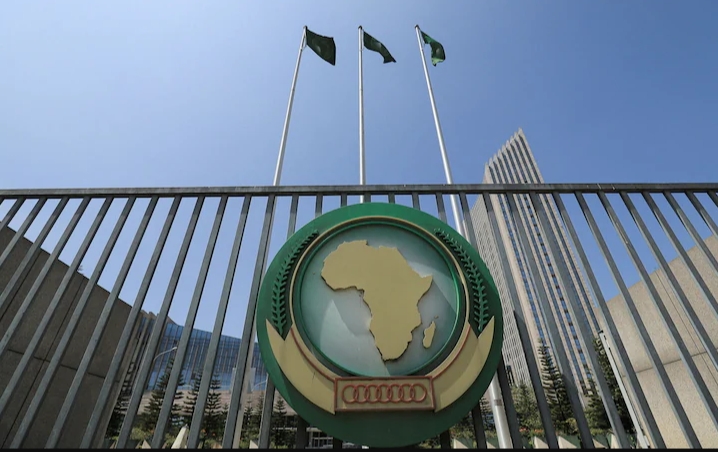
The African Union on Wednesday launched the continent’s first credit rating agency—Africa Credit Rating Agency (AfCRA).
AfCRA, launched in Port Louis, the capital of Mauritius, where it will be based. is seeking to provide an alternative to the “big three” global ratings agencies as debt burdens weigh on many African economies.
“AfCRA complements existing global credit rating agencies by offering a perspective rooted in African data, expertise and realities,” the AU said in a statement.
African leaders have long accused Western ratings agencies including S&P, Moody’s and Fitch of failing to fairly assess the risk of lending to African countries and of moving too quickly to downgrade them during crises such as conflicts and pandemics.
The agencies reject that criticism, saying they apply the same methodologies globally.
Rating experts said the success of the initiative will hinge on the perceived credibility of the new agency, especially in times of crisis.
“A new rating agency begins with a promise while investors ultimately require a track record,” said Dennis Shen, a lecturer in finance at the International School of Management in Berlin and former sovereign analyst at Scope Ratings.
“The hardest test, however, will come when markets are under stress, because a rating agency’s credibility is tested most severely when its conclusions are uncomfortable rather than when it is highly convenient.”
AfCRA may provide a counterweight to established rating agencies, but it must meet global standards, former Nigerian Vice President Yemi Osinbajo said.”It can’t just be a chauvinistic or nationalistic agency,” he said.
AfCRA, which will rate sovereign borrowers, financial institutions and private companies, will operate independently and be funded through shareholder capital and its operations, the AU said.
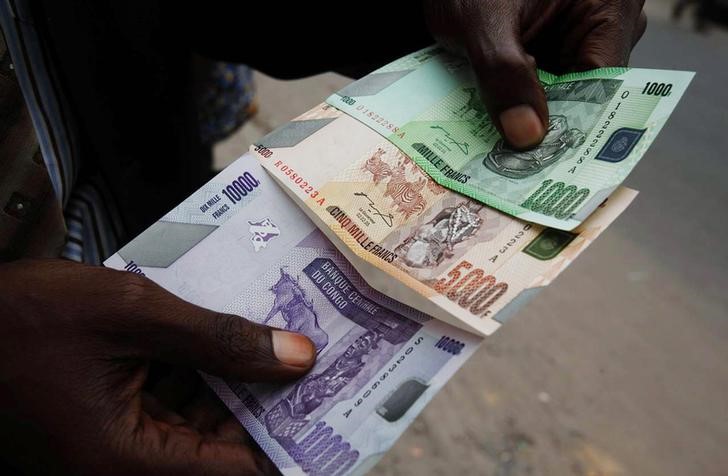
Black Market Exchange Rates
₦1365DOLLAR (USD)
₦1820POUND (GBP)
₦1535EURO (EUR)
₦970 CANADIAN DOLLAR (CAD)
₦65 SOUTH AFRICAN RAND (ZAR)
₦350 UAE DIRHAM (AED)
₦190 CHINESE YUAN (CNY)
₦100 GHANAIAN CEDI (GHS)
West African CFA ₦2300CFA
Central African CFA ₦2200
Australian Dollar currency ₦850AUSSIE (AUD)
Official CBN Exchange Rates
DOLLAR (USD)₦1330.10
POUND (GBP)₦1759.58
EURO (EUR)₦1496.76
SWISS FRANC (CHF)₦1605.62
JAPANESE YEN (JPN)₦8.45
CFA FRANC (XOF)₦2.29
WEST AFRICAN UNIT OF ACCOUNT (WAUA)₦1801.60
CHINESE YUAN (CNY) ₦198.39
SAUDI RIYAL (SAR)₦354.25
SOUTH AFRICAN RAND (ZAR)₦79.91
Business
Diesel Costs Bite: LAMATA Accelerates Shift To CNG, Electric Buses
The move comes as diesel prices have more than doubled, rising from about N950 per litre at the beginning of the year to between N1,950 and N2,100 per litre, depending on the source.
Lagos is accelerating its transition away from diesel-powered public transport as the Lagos Metropolitan Area Transport Authority (LAMATA) begins phasing out diesel buses from its regulated fleet, amid a surge in diesel prices that has pushed operating costs sharply higher.
LAMATA is targeting clean-energy propulsion for 52 per cent of its Bus Rapid Transit (BRT) fleet by 2050, with compressed natural gas (CNG) and electric vehicles (EVs) taking the place of conventional diesel buses under a policy that took effect at the beginning of 2026.
The Managing Director and Chief Executive Officer of LAMATA, Mrs. Abimbola Akinajo, disclosed this weekend, during the handover of 20 additional high-capacity CNG buses under the Presidential Initiative on CNG and EVs.
The latest delivery brings LAMATA’s CNG fleet to about 170 buses, following the deployment of approximately 150 CNG buses before the new vehicles were received.
The authority also operates high-capacity and medium-capacity electric buses.
Akinajo said some of the new CNG buses would be deployed on the busy Ikorodu–Tafawa Balewa Square corridor, where passenger demand remains high.
“We will only work with CNG or EV buses, and this has been the policy since the beginning of the year,” she said.
The move comes as diesel prices have more than doubled, rising from about N950 per litre at the beginning of the year to between N1,950 and N2,100 per litre, depending on the source.
For LAMATA, the shift is therefore not only an environmental policy but also a cost-management strategy aimed at shielding commuters and transport operators from the impact of rising fuel expenses.
Akinajo said regulated public transport fares had not been increased, partly because the lower operating costs of CNG and electric buses were helping to contain the pressure on operators.
“Regulated public transport fares have not increased, and these buses have helped us achieve that,” she said.
Diesel phase-outUnder the new policy, existing diesel-powered buses in the regulated system will be progressively replaced with CNG and electric alternatives.
Akinajo said the long-term direction was for the regulated system to ultimately operate an entirely electric fleet, while the broader clean-energy target provides a pathway towards reducing emissions from Lagos’ transportation sector.
Transportation remains a major source of emissions in the megacity, making the switch to cleaner buses a key component of Lagos State’s long-term ambition of achieving net-zero emissions by 2050.


Breaking: Military rescue 20 corps members, civilian in Imo

African Union launch continent’s first credit rating agency

Military Chiefs Visit Ondo Crash Site As Underwater Search Intensifies

Tech Expert, Zuckerberg trains with UFC champions, Adesanya, Alexander

Organ Trafficking: Ekweremadu bags 10 years in UK prison

SAINT OBI: Between his marriage and his death
-
 Sports3 days ago
FIFA to decide 2030 World Cup final venue in 2028 as Morocco, Spain wait
-

 News3 days ago
NGE Tasks Newsrooms, INEC on Must-Do Measures for Credible 2027 Polls
-

 Entertainment3 days ago
BBNaija season 11: “And The Winner is Temi Nkem”
-
 Business3 days ago
Naira Rates To Dollar , Pound, EURO… Monday, October 5
-

 Politics1 day ago
BREAKING: APC Chairmen Accused of Leading Armed Attacks on ADC Members in Igueben
-
 News2 days ago
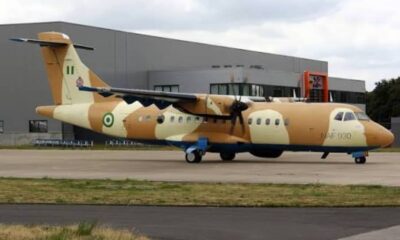
Military Aircraft Crashes Near Ondo Naval Base; 32 On Board
-
 Politics2 days ago
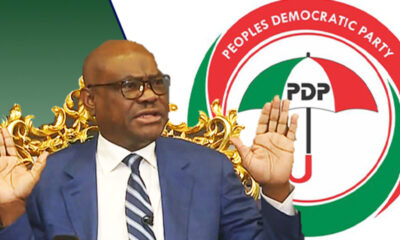
I sleep And Eat Thinking About Tinubu’s Re-Election – Wike
-
 News10 hours ago
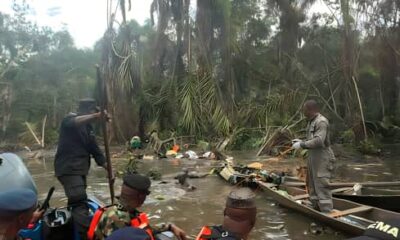
Military Chiefs Visit Ondo Crash Site As Underwater Search Intensifies