
Business
History of Naira Revaluation and Devaluation (1973–2026) (Part 2)
A distinction must be made between a temporary appreciation in the exchange rate and a sustained recovery in the currency’s purchasing power.

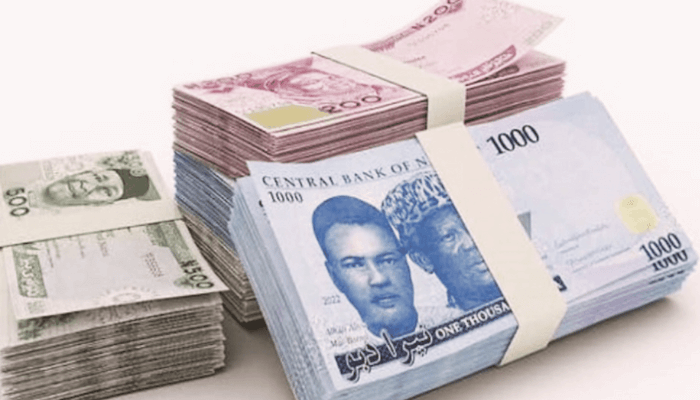
Timeline: 1989-2015
This week, we commenced a focus on the history of the Nigerian currency -the Naira, and why it rises and crashes. Continue reading:
- 1989–1992: Exchange-Rate Liberalisation
- The government continued experimenting with foreign-exchange arrangements.
- In 1989, bureaux de change were introduced to expand access to foreign currency.
- On March 5, 1992, Nigeria unified the official exchange rate with the parallel-market rate, moving the official rate from approximately ₦10.56 to ₦18 per dollar.
- The authorities subsequently moved towards a more fully market-determined exchange rate.
- These changes represented attempts to establish a more realistic exchange rate and narrow the gap between official and parallel-market prices.
- 1993–1995: Exchange-Rate Revaluation and Policy Reversals
- This period illustrates why an official strengthening of the naira does not necessarily mean the currency has recovered its underlying economic strength.
- In 1993, the government returned to a more controlled exchange-rate system.
- An IMF account records that the official rate was pegged at approximately ₦24.90 per dollar before being adjusted to around ₦22 per dollar.
- The naira was subsequently maintained at approximately ₦21.90 per dollar under the administered system.
- Although these changes strengthened the official rate relative to the immediately preceding auction rate, access to foreign currency remained constrained and exchange-rate distortions persisted.
- In 1994, the government further tightened control over foreign exchange and fixed the rate at approximately ₦22 per dollar.
- In 1995, the authorities introduced the Autonomous Foreign Exchange Market (AFEM), returning to a system in which market forces played a greater role in determining the exchange rate.
- Important distinction: An official revaluation can strengthen a published exchange rate without guaranteeing that individuals and businesses can obtain foreign currency at that rate.
1999–2009: Continued Depreciation, With a Temporary Recovery
Nigeria returned to civilian rule in 1999, but the naira continued to face pressure.
According to the CBN’s historical exchange-rate data, the average official exchange rate moved approximately as follows:

Chart: Naira To Dollar Exchange Rate 1999-2009
The naira experienced sustained depreciation during much of this period, although there were episodes of relative stability.
Nigeria’s dependence on crude oil, foreign-exchange demand and the management of external reserves remained important influences on the currency.
A distinction must be made between a temporary appreciation in the exchange rate and a sustained recovery in the currency’s purchasing power.






Business
Kuda to layoff 40% workforce in Nigeria , six other countries
Co-founder and CEO Babs Ogundeyi said the restructuring is needed to improve operational efficiency and position the company for long-term profitability.
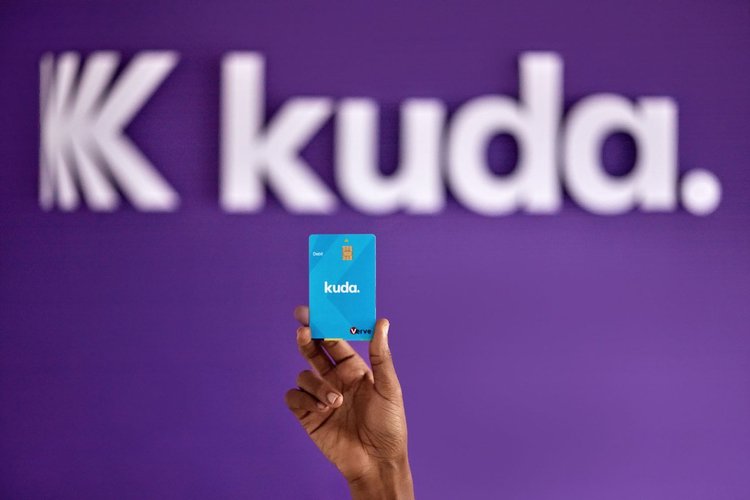
Kuda has announced plans to lay off about 40 employees across seven countries in its second round of job cuts in 2026.
Kuda currently employs about 500 people, with about 40 positions potentially affected. The cuts will affect approximately 7.5% of its workforce.
The countries are Nigeria, the United Kingdom, South Africa, Canada, Tanzania, Uganda and Ghana.
The digital bank is targeting group-wide profitability by 2027 and says customer deposits and services will not be affected.
Co-founder and CEO Babs Ogundeyi said the restructuring is needed to improve operational efficiency and position the company for long-term profitability.
Ogundeyi said investors increasingly expect financial returns rather than continued dependence on external funding.
Kuda’s Nigerian banking operation is already profitable, but the company wants the entire group to be profitable by 2027.
The CEO also linked the decision to higher regulatory capital requirements after the Central Bank of Nigeria approved Kuda’s national microfinance banking licence in January.
The licence requires a minimum paid-up capital of ₦5 billion.
Business
Fidelity Bank Designates Amuchie Next MD/ CEO
Amuchie brings more than 30 years of financial services experience to the role.

Fidelity Bank Plc has confirmed Stanley Chiedoziem Amuchie as its new Managing Director and Chief Executive Officer after the Central Bank of Nigeria approved the appointment.
He will take over on January 1, 2027 from Nneka Onyeali-Ikpe, whose tenure ends on December 31, 2026.
Amuchie currently serves as Executive Director and Chief Operations and Information Officer at the bank.
The handover is set for January 1, 2027.
Board Chairman Amaka Onwughalu said the board was confident in Amuchie’s ability to lead Fidelity Bank.
She pointed to his deep knowledge of the bank’s operations and broader industry experience, adding that his strategic insight would help the lender build on recent achievements and move into its next growth phase.
Onwughalu also paid tribute to outgoing chief executive Onyeali-Ikpe.
She credited her with steering the bank through a period of institutional transformation and improved competitiveness.
The board, she said, would work closely with Amuchie to drive innovation, operational efficiency and long-term sustainable growth.
Amuchie brings more than 30 years of financial services experience to the role.
His expertise covers financial management, treasury operations, capital raising and strategic execution.
He joined Fidelity Bank in January 2022 as Executive Director for Operations and Information Technology.
He contributed to the bank’s digital transformation drive and broader growth strategy.Before joining Fidelity Bank, he built much of his career at Zenith Bank Plc, where he rose to Group Chief Financial Officer.
His notable achievements include supporting Fidelity Bank’s acquisition of Union Bank UK, now rebranded FidBank UK, and playing a central role in the bank’s successful $400 million Eurobond refinancing.
Amuchie holds a First Class degree in Industrial Chemistry and a master’s degree in Corporate Governance.
He is a Fellow of the Institute of Chartered Accountants of Nigeria and an Honorary Senior Member of the Chartered Institute of Bankers of Nigeria.
He is also pursuing a PhD in Management of Technology and Innovation.
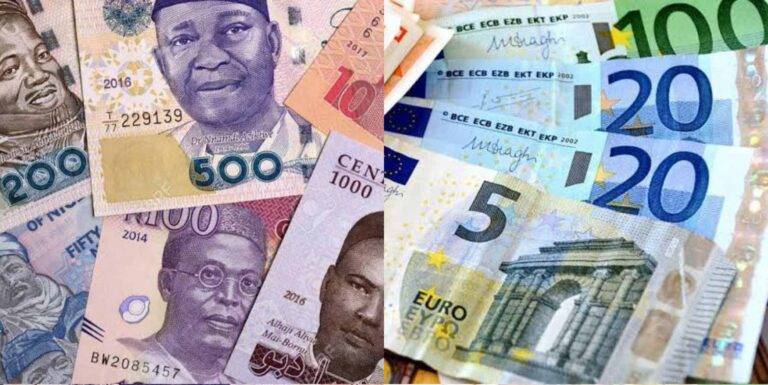
Black Market Rates
₦1465DOLLAR (USD)
₦1860POUND (GBP)
₦1550 EURO (EUR)
₦950 CANADIAN DOLLAR (CAD)
₦70 SOUTH AFRICAN RAND (ZAR)
₦350 UAE DIRHAM (AED)
₦190 CHINESE YUAN (CNY)
₦100 GHANAIAN CEDI (GHS)
₦2240 WEST AFRICAN CFA F.(XOF)
₦2180 CENTRAL AFRICAN CFA F.(XAF)
₦820 AUSTRALIAN DOLLAR (AUD)


Armed Men Attack Fmr. Super Eagles Captain, Segun Odegbami in Abeokuta Residence (Images)

Dr. Victor Okhai Named Dean of the Osiri University School of Business

ESUT to be renamed after Jim Nwobodo – Mbah

BREAKING: Lagos Govt Declares Today, Thursday Work-Free to Mark 2026 Ìṣẹ̀ṣe Day

Tech Expert, Zuckerberg trains with UFC champions, Adesanya, Alexander

Organ Trafficking: Ekweremadu bags 10 years in UK prison
-

 Crime2 days ago
UPDATE: 17 Kidnap Victims Rescued After Forest Gun Battles in Kogi – Police (Images)
-

 News2 days ago
Lockdown on Lagos/Ibadan highway [PHOTOS] motorists spend whole day in traffic
-
 Business2 days ago
Naira Black Market Exchange Rates Thursday, Nov 2026
-
 Business2 days ago
Inflation Retreats, But Has the Cost of Living Fallen?
-

 Politics2 days ago
Soludo Bets on Tinubu – Shettima Winning Second Term
-

 News2 days ago
Tinubu Hails National Assembly For Quick Work on State Police Bill
-
 Politics2 days ago
ADC Crisis: INEC Explains Why Atiku’s Name Remains on Website
-

 Crime2 days ago
JUST IN: Joint Security Team Rescues 15 Kidnap Victims from Kogi Forest (Images)