
International
Good Governance Will Address Military Interventions In West Africa – Tinubu

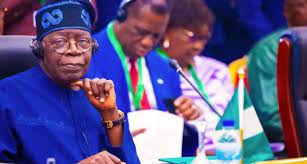
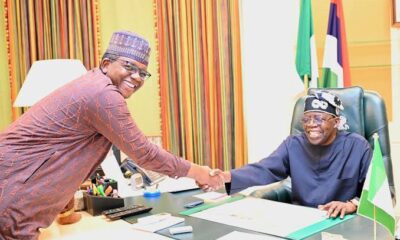
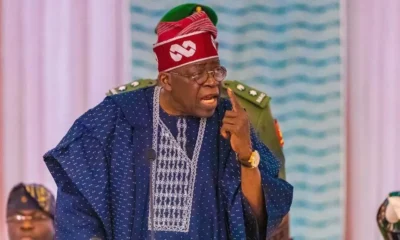
President Bola Tinubu, on Sunday, implored West African leaders to prioritize good governance and collective prosperity as an essential tool to prevent authoritarian takeovers of power and unconstitutional changes of government in the region.
The Nigerian leader, who is also the Chairman of the ECOWAS Authority of Heads of State and Government, said this at the 64th ordinary session of the West African bloc at the State House, Abuja.
Addressing the high-powered regional gathering, the President identified good governance as a key catalyst to secure popular support through the socio-economic transformation and development of West Africa.
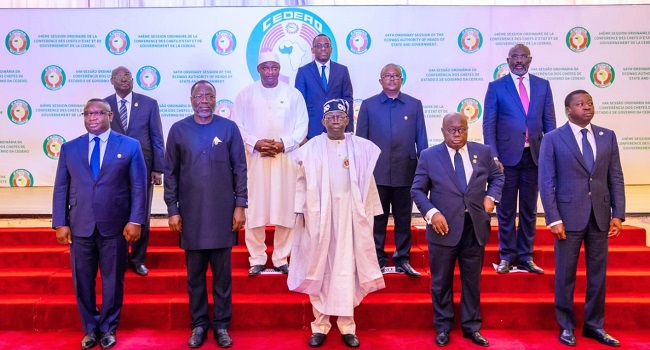
“The delivery of good governance is not just a fundamental commitment; it is also an avenue to address the concerns of our citizens, to improve their quality of life, and create a stable environment conducive to the achievement of sustainable development.
“By providing good governance that tackles the challenges of poverty, inequality and other concerns of the people, we would have succeeded in addressing some of the root causes of military interventions in civilian processes in our region,” a statement from the Presidency quoted Tinubu to have said.
Recounting decisions taken by West African leaders to further strengthen the region’s democratic achievements and uphold the right of the people to elect the leaders of their choice, the President said the bloc has outlined specific measures to be taken against any member state opting for an unconstitutional change of government.
“While the imposition of punitive sanctions may pose challenges, it is important to underscore that the struggle to protect the fundamental liberties of our Community’s Citizens must be upheld and respected.
“To this end, I would like to reiterate the imperative of re-engaging with the countries under military rule on the basis of realistic and short transition plans that can deliver democracy and good governance to the innocent populations in those countries.
“On our part, we should be prepared to provide them with technical and material support, to ensure the achievement of these strategic goals,” he said.
President Tinubu also used the occasion to applaud President George Weah of Liberia for conceding victory and congratulating his opponent during the last presidential election in Liberia.
He invited leaders at the summit and other participants to give a standing ovation to President Weah. He also acknowledged the presence of former President Goodluck Jonathan of Nigeria, who in 2015, displayed a similar commitment to democratic ideals after losing his re-election to the opposition candidate, Muhammadu Buhari.
“I would also like to seize this opportunity to extend my heartfelt congratulations to the people of the Republic of Liberia for the successful conduct of the presidential election, widely adjudged to be free, fair, and credible.
“Let me also commend my brother and colleague, His Excellency George Weah, for his exemplary leadership and conduct throughout the electoral process.
“By accepting defeat and congratulating his opponent, President Weah has left a legacy to be emulated by politicians in our region and beyond,” he said.
President Tinubu also responded to the recent decision by some ECOWAS-member states, under military rule, to float a so-called ‘Alliance of Sahel States’, describing it as distracting and emphasizing the commitment to pursuing ECOWAS integration.
“The phantom pushback Alliance appears intended to divert our attention from our mutual belief in and commitment to democracy and good governance that will impact the lives of our people.
“We refuse to be distracted from pursuing the collective dreams, aspirations, and the noble path of ECOWAS integration as it is laid out in our institutional and legal frameworks.
“I take this opportunity to also emphasize that despite the numerous challenges faced in our region, ECOWAS has achieved significant milestones for the betterment of our community.
“ECOWAS activities have always been people-oriented, with a future of raising the living standard of our people. We have to do that through a relentless focus on qualitative service delivery and good governance,” he added.
On the recent disturbances in Sierra Leone and Guinea Bissau, the ECOWAS Chairman asked fellow leaders to pay attention to protecting democracy, reiterating ECOWAS’ zero tolerance to unconstitutional changes of government.
“I urge all of us to stand strong and be highly committed in the face of any challenge in Sierra Leone and Guinea Bissau. The message must go down clearly that we support a democratically elected government, not an unconstitutional exercise.
“The re-elected president of Sierra Leone is present here. We are saying loud and clear that we are with you.
“Without let or hindrance, democracy will win, if we fight for it, and we will definitely fight for democracy,” the President stated.







International
Child marriage in southern Germany: Over 350 cases recorded, some brides as young as 11
The most recent entries in the overview relate to 2026. They include, among other things, marriages of 16- and 17-year-old girls to adult men.


• Child marriage / UNICEF
In the southwestern German state of Baden-Württemberg, a total of 358 so-called child marriages have been officially recorded since 2012.
Euro News reported that only eight of these forced marriages have so far been legally annulled.
According to authorities, the other 350 cases were brought to an end in other ways.
This alarming finding comes from a response by the Baden-Württemberg state government to a minor inquiry submitted by AfD state parliament members Nikolaos Boutakoglou and Emely Knorr.
The Tübingen regional authority is responsible for recording the data, the answer came from the Ministry of the Interior.
The eight final annulments took place between 2018 and 2024. Among the documented cases was the marriage of an 11-year-old girl from Iraq to a 17-year-old Iraqi, which was annulled in 2020.
As early as 2018, the marriage of a 14-year-old Afghan girl to a 30-year-old man had been ended.
In 2024 two further annulments were added: they concerned a 16-year-old German girl and a 25-year-old Pakistani man and a 16-year-old Syrian girl and a 27-year-old man from the same country.State parliament member Nikolaos Boutakoglou wrote on Facebook that the issue was “really awful” but was being treated as a taboo.
According to its own account, the ministry deals exclusively with such marriages entered into abroad.
Since summer 2017, the Act to Combat Child Marriages has been in force in Germany.
In 2024, the Bundestag adopted new rules to protect minors in marriages concluded abroad.
Hundreds of cases without state intervention
The significantly higher number of cases concluded in other ways raises questions about how these marriages continued.
For the period from 2015 to 2026, the regional authority lists a total of 350 proceedings under the heading “other disposals.”But what became of the other child marriages?
The state government cites, among other things, the death of a spouse, reaching adulthood, a decision not to seek annulment or a new marriage concluded abroad.
In these cases, there was therefore no legally binding annulment.
For 2023, the records include the case of a 12-year-old Afghan girl who was married to a 21-year-old Afghan man. Girls aged 13 and 14 also appear several times in the statistics.
The most recent entries in the overview relate to 2026. They include, among other things, marriages of 16- and 17-year-old girls to adult men.
The statistics record the age of the spouses at the time of marriage and their respective nationalities.
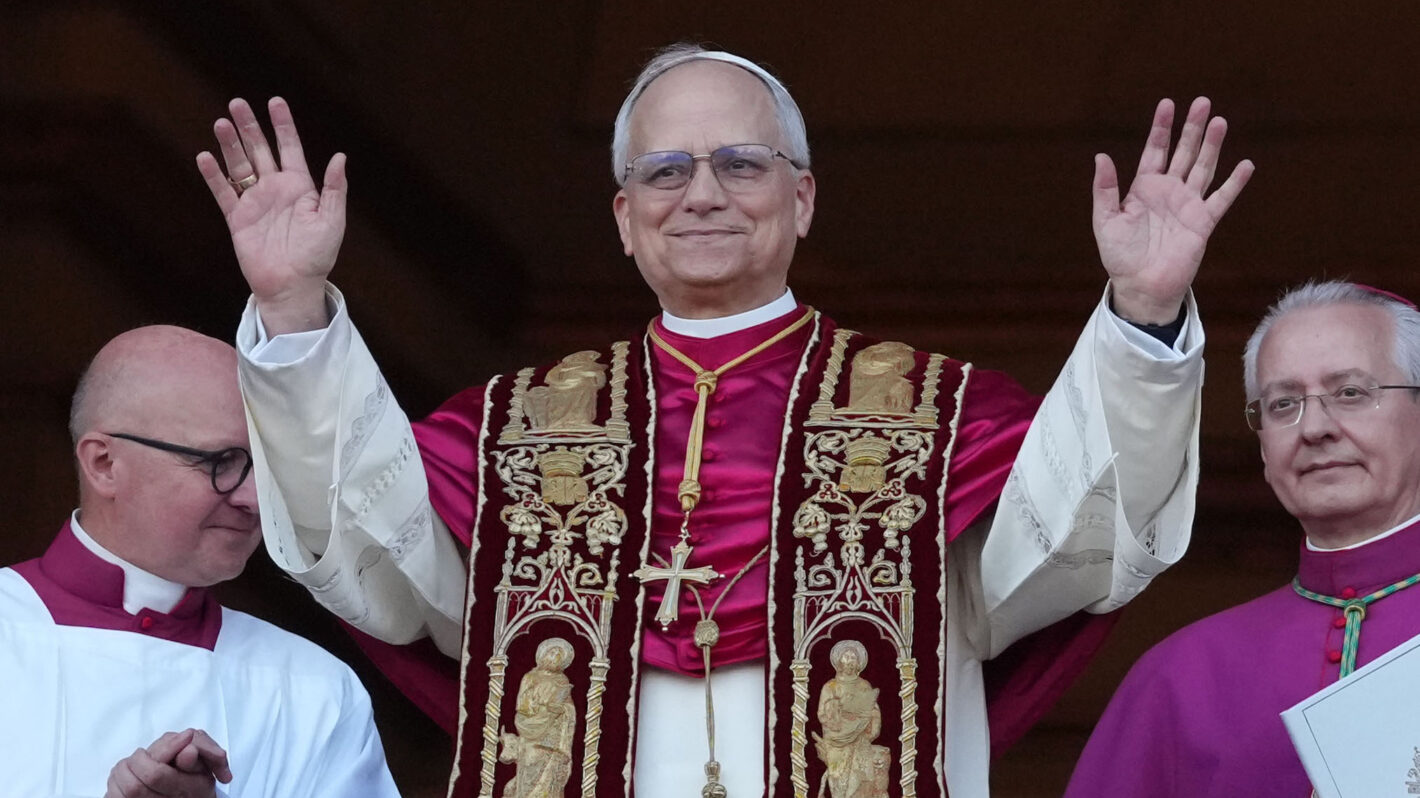
Pope Leo XIV has announced that he will undergo surgery in the coming days to remove a small, localized nodule found on his lung during a recent routine medical checkup.
The 71-year-old pontiff made the disclosure himself during his weekly Angelus prayer in St. Peter’s Square. “Doctors found a localized nodule in my lung,” he said. “It was detected at a very early stage and is well-contained.
The doctors believe it is advisable to intervene, so, following their advice, I have decided to undergo surgery to remove it.”
The Vatican confirmed the operation is scheduled for the first days of this week at Rome’s Gemelli Hospital, which has a dedicated papal suite. Holy See spokesman Matteo Bruni said the Pope is expected to need about a week to recover. On Monday, the Vatican added that Leo will be admitted Tuesday morning.
The nodule’s nature—whether benign or malignant—has not been specified. Medical experts note that most lung nodules are non-cancerous, and early detection generally carries a favorable outlook.
This marks the first significant health issue of Leo’s papacy since his election in May 2025. The American-born pope, known for remaining physically active, has continued his full schedule of audiences and is still expected to proceed with a planned trip to Latin America next month.
International
‘Up to our people’ to pick leader, Zelenskyy responds to Trump’s pledge for new elections in Ukraine
Russia and Ukraine are locked in a long-range aerial war while their armies remain largely deadlocked on the front line, more than four and a half years after Moscow’s full-scale invasion.

• Ukrainian President Volodymyr Zelenskyy
Ukrainian President Volodymyr Zelenskyy said Sunday his country could hold elections if Russia agreed to a 60-day total ceasefire, pushing back against US counterpart Donald Trump’s call for Ukraine to pick a new leader.
“First of all, with all respect to President Trump, it’s up to our society, up to our people to choose one or another leader”, Zelenskyy told ABC News in a televised interview, a day after Trump said Ukraine needed a new president who would agree to end the war.
Zelenskyy said he told Trump’s team that if they really wanted Ukraine to hold elections, “please tell Putin to give us two months, 60 days of total ceasefire, 60 days, and we will organise elections”.
“We want peace, we are ready for a ceasefire, we are ready to begin with any kind of steps of de-escalation”, Zelenskyy told ABC in a TV interview.
“And if the Russians want us not to attack their diesel, their refineries, etc., we are asking President Trump to give them a signal not to attack the energy infrastructure of Ukraine”.
Russia and Ukraine are locked in a long-range aerial war while their armies remain largely deadlocked on the front line, more than four and a half years after Moscow’s full-scale invasion.
Euro News


WEF could appoint Lagarde as its next chair, sources say

Germany plans tax on sugary drinks

ASCON To Be Rebranded “National School Of Government”

Tech Expert, Zuckerberg trains with UFC champions, Adesanya, Alexander

BREAKING: Lagos Govt Declares Today, Thursday Work-Free to Mark 2026 Ìṣẹ̀ṣe Day

Organ Trafficking: Ekweremadu bags 10 years in UK prison
-

 Business2 days ago
Dangote Refinery IPO Attracts N8.61trn in Subscriptions, Four Times Offer
-
Business2 days ago
Top 10 Highest-Paid CEOs in Nigeria
-
 Business2 days ago
Naira Exchange Rates To Dollar , Pound ,Euro, … Tuesday, October 13
-

 Business3 days ago
AI to eliminate 40% of global jobs – IMF boss
-

 Business2 days ago
Global smartphone shipments fall 20% in Q3 2026, lowest in 14 years
-
Sports2 days ago
Rwanda to host F1’s first race in Africa since 1993
-

 International3 days ago
JUST IN: Pope Leo XIV to Undergo Surgery for Early-Stage Lung Nodule
-

 International2 days ago
Child marriage in southern Germany: Over 350 cases recorded, some brides as young as 11