
International
Global Oil Market Report – May 2025 by IEA
Based on the latest plans, OPEC+ will add 310 kb/d of extra supply this year and 150 kb/d in 2026.Refinery throughput forecasts for 2025 and 2026 are broadly unchanged from last month’s Report at 83.2 mb/d and 83.6 mb/d, respectively.


Global oil demand growth is projected to slow from 990 kb/d in 1Q25 to 650 kb/d for the remainder of the year as economic headwinds and record EV sales curb use.
International energy agency, made the disclosure in its Oil Market Report – May 2025
The report reads: ” Demand growth averages 740 kb/d in 2025 and 760 kb/d in 2026, despite accelerating OECD declines of -120 kb/d and -240 kb/d, respectively.
World oil supply looks on track to rise by 1.6 mb/d to 104.6 mb/d on average in 2025, and by an additional 970 kb/d in 2026.
Non-OPEC+ producers are set to add 1.3 mb/d this year and 820 kb/d next year, even as US LTO supply has been reduced.
Based on the latest plans, OPEC+ will add 310 kb/d of extra supply this year and 150 kb/d in 2026.Refinery throughput forecasts for 2025 and 2026 are broadly unchanged from last month’s Report at 83.2 mb/d and 83.6 mb/d, respectively.
Annual gains of around 400 kb/d in both years are driven exclusively by non-OECD regions. Refining margins reached 12-month highs across most regions and configurations in late April, as a discernible shift in crude pricing boosted profitability.Global oil stocks rose by 25.1 mb in March, led by a 57.8 mb increase in crude, but at 7 671 mb remained well below the five-year average (-221 mb).
Total OECD inventories increased by 3.1 mb, while non-OECD stocks rose by 21.3 mb and oil on water was up slightly by 0.7 mb. Preliminary data show global oil inventories built further in April.
Benchmark crude oil prices fell by around $10/bbl over April and into May amid escalating US tariffs and larger-than-expected OPEC+ output hikes.
Bearish sentiment eased somewhat after the US reached a trade deal with the UK on 8 May, and a 90-day accord with China on 12 May. Russian crude prices averaged $55.64/bbl in April with all major export grades below the $60/bbl price cap.
At the time of writing, North Sea Dated was trading at around $66/bbl.
International
Death toll in South Africa bar shooting rises to 18, police say
The motive for the attack was not clear but the area is reportedly gripped by rivalry between gangs involved in illicit mining for gold.

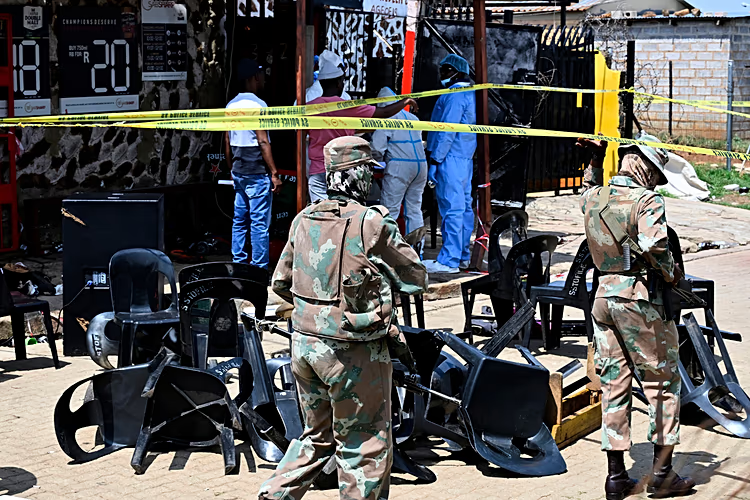
• Forensic officers and the army at the scene of a mass shooting at a bar in Wedela township, 27 September, 2026 AP Photo
The death toll from a mass shooting at a South African tavern has risen to 18 after one person died in hospital, police said on Monday, announcing at least two of the dead were Lesotho nationals.
The shooting west of Johannesburg late on Saturday was part of a bloody weekend in the crime-weary country, with 10 people killed in another mass shooting in Cape Town on Sunday.
Eight gunmen armed with assault rifles stormed the bar in the semi-rural township of Wedela, around 80 kilometres from central Johannesburg, and killed13 men and four women, police said.
“One more victim has died in hospital, bringing the total number of deceased to 18,” they said.
“Only four of the deceased have been identified, two South Africans and two Lesotho nationals.”
The motive for the attack was not clear but the area is reportedly gripped by rivalry between gangs involved in illicit mining for gold.
Thousands of unregistered miners operate in abandoned mining shafts in South Africa, many coming from across southern Africa, including the kingdom of Lesotho which is within South Africa.
International
Congo military plane crash kills 13, including three officers
“All those on board died; 12 were burned beyond recognition, while the pilot’s lifeless body was found outside the aircraft.”
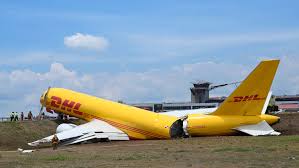
Thirteen people including three army officers were killed on Friday when a military plane crashed in Democratic Republic of Congo, an official said.
Reuters reported that the plane was travelling to the capital, Kinshasa, from the southwestern city of Kikwit when it experienced a technical problem and attempted to land in Kenge, in Kwango province, said Remy Saki Bokinda, the Kwango vice governor.
“With no landing strip available in Kenge, the plane crashed into a residential plot,” he said.
The passengers included General Likulia Bakumi, the army’s auditor general, as well as a major, a captain and other military personnel and civilians, Bokinda said.
“All those on board died; 12 were burned beyond recognition, while the pilot’s lifeless body was found outside the aircraft,” he said.
Congo’s aviation accident investigation authority is launching a probe of the crash, a government statement said.
Congo’s army suffered significant setbacks last year at the hands of Rwanda-backed AFC/M23 rebels who seized large swathes of the east.
International
At UN, 80 countries demand reopening of Hormuz, condemn Iran, Houthi attacks
“Iran’s actions in the Strait of Hormuz continue to threaten international security and navigational rights and freedoms,” said a joint statement read out by Bahrain’s Foreign Minister Abdullatif bin Rashid Al Zayani at the United Nations.

• UN General Assembly
Some 80 countries at the ongoing 81st United Nations General Assembly on Thursday demanded the urgent reopening of the Strait of Hormuz and condemned Iran and its Houthi allies for attacks in the region and disruption to international trade and energy security.
“Iran’s actions in the Strait of Hormuz continue to threaten international security and navigational rights and freedoms,” said a joint statement read out by Bahrain’s Foreign Minister Abdullatif bin Rashid Al Zayani at the United Nations.
“We also strongly condemn the Houthis’ decision to resume conflict in Yemen, their continuous strikes on Saudi Arabia, and their reckless attacks in the Red Sea,” the statement said.
The statement’s backers included Gulf Arab states and major Western powers.
It added that the Houthis’ advance towards Bab el-Mandeb Strait would also only heighten risks to international shipping, maritime security and global trade.
Both Iran and the Houthis frame their actions as defensive.
Credit: REUTERS


BREAKING: Tragic One-Way Crash Claims Tricycle Driver’s Life in Meiran Lagos

BREAKING: AAC sues Tinubu, NASS over Europe vacation

2027: Atiku, ADC Move to Amend Suit Challenging Tinubu’s Eligibility

Tech Expert, Zuckerberg trains with UFC champions, Adesanya, Alexander

Organ Trafficking: Ekweremadu bags 10 years in UK prison

SAINT OBI: Between his marriage and his death
-

 Business19 hours ago
SEC Highlights Focus of National Capital Market Conference 2026
-

 Business19 hours ago
NGX Debuts Invest WhatsApp Channel
-
 Sports18 hours ago
Flamingos win WAFU B U-17 women’s tournament
-
 Business20 hours ago
Naira To Dollar, Pound, Euro …Today, September 28
-
 Business19 hours ago
Ghana Moves to Cut Domestic Airfares as Ticket Prices Stay High
-

 News18 hours ago
Nigeria is 66, Thursday October 1
-
 News11 hours ago
JUST IN: Fire Engulfs Lagos Customs Command Office
-

 Entertainment18 hours ago
Madonna and Taylor Swift win big at the MTV VMAs