
Crime
Finance Investigation: Anambra State High Court Dismisses State Govt’s Suit Challenging Powers Of EFCC


A Federal High Court sitting in Awka, Anambra State, has dismissed a suit filed by the Anambra State Government challenging the Economic and Financial Crimes Commission’s power to investigate its finances, describing it as factually and forensically lacking in merit.
In a statement by the EFCC on Wednesday, the court held that the Commission is well in the rights of its powers under the law to carry out such investigations.
The State government had approached the court presided over by Justice Nnamdi Dimgba to determine whether under the Federal System of Government, with the constitutional doctrine of Separation of Powers, “the appropriation, disbursement and or administration of funds belonging to a State Government is subject to investigation by the EFCC being an agency of the Federal Government”.
In a suit number FHC/ AWK/ CS/ 22/ 2022 filed by Government of Anambra State (1st Plaintiff) and Attorney- General of Anambra State( 2nd Plaintiff) against the EFCC( 1st Defendant) and Attorney – General of the Federation( 2nd Defendant), the Plaintiffs sought resolutions of the following eight questions:
1. Whether under the Federal System of Government established by Section 2 of the 1999 Constitution of the Federal Republic of Nigeria (as amended), and the doctrine of Separation of Powers established and provided by Sections 4, 5 and 6 thereof, the appropriation, disbursement and or administration of funds belonging to the Government of a State is subject to investigation by the 1st Defendant as an agency of the Federal Government.
2. Whether the power of the 1st Defendant, as an agency of the Federal Government, is not restricted to the matters set out in the Exclusive Legislative List contained in Part I of the Second Schedule to the 1999 Constitution of the Federal Republic of Nigeria (as amended).
3. Whether the appropriation, disbursement and or administration of funds belonging to the Government of a State are not matters within the Concurrent Legislative List contained in Part II of the Second Schedule to the 1999 Constitution of the Federal Republic of Nigeria (as amended).
4. Whether from a community reading of Sections 80, 120, 121, 125, 126, 128 and 129 of the 1999 Constitution of the Federal Republic of Nigeria (as amended) the power and function to conduct investigation into the appropriation, disbursement and or administration of the public funds/accounts of the Government of a State is not reserved for the House of Assembly of the State.
5. Whether from a community reading of Sections 80, 120, 121, 125, 126, 128 and 129 of the 1999 Constitution of the Federal Republic of Nigeria (as amended), the 1st Defendant can usurp the constitutional powers and functions of the House of Assembly of a State to conduct investigation into the appropriation, disbursement and or administration/management of the funds of a State Government, including the public funds/accounts of the Government of the State which have been appropriated by the State House of Assembly in exercise of its constitutional mandate.
6. Whether from a community reading of Sections 80, 120, 121, 125, 126, 128 and 129 of the 1999 Constitution of the Federal Republic of Nigeria (as amended), the 2nd Defendant can usurp the constitutional power and function of the House of Assembly of a State to conduct investigation into the appropriation, disbursement and or administration/management of the public funds/accounts of the Government of the State.
7. Whether from a community reading of Sections 80, 120, 121, 125, 126, 128 and 129 of the 1999 Constitution of the Federal Republic of Nigeria (as amended), the 1st Defendant can purport to investigate the appropriation, disbursement and or administration of the public funds/accounts of the Government of a State without any report or input from the House of Assembly of the State.
8. Whether the 1st Defendant acting by itself, its officers, agents, privies or otherwise howsoever can legitimately conduct and or continue with investigation into the public funds of the Anambra State which have been lawfully appropriated by the Anambra State House of Assembly without any report and investigation by the Anambra State House of Assembly.
The suit was a precipitate response to series of letters of invitation by the Commission sent to the Secretary to the State Government (SSG) and the State Attorney- General seeking the release of officials of the state government to offer explanations in an alleged case of fraudulent misappropriation of funds in respect of data collection exercise for the administration of subsidy to smallholder farmers and alleged case of Abuse of Office and Misappropriation of Funds.
In his judgment, Justice Dimgba stated that the EFCC has constitutional powers to investigate any act of economic and financial crime in any part of the country, stressing that neither the authorities of a State’s House of Assembly nor Auditor- General of a State preclude the Commission from performing its mandate as contained in the Constitution.
“In my view, the questions posed is at large… Is the EFCC a federal agency exclusively for all purposes, or is it both a federal agency and a state agency for some other purposes? It all depends on the context to which the question has been posed.
“In the context of the case at hand, which is whether it is legitimate for the EFCC to commence investigative activities against the named officials of Anambra State Government as contained in Exhibit 1 concerning the manner of the management and utilization of the public funds of Anambra State, the question posed must be answered against the Plaintiffs and the corresponding reliefs sought denied”.
” …… binding judicial precedent existing is to the effect that the EFCC is an agency both for the federal government and for state governments as far as the combating of corruption and other economic crimes in Nigeria is concerned”
While agreeing with an earlier judgment that Nigeria practices co-operative federalism, Justice Dimgba said “In the co-operative federalism practiced in Nigeria, the EFCC is a common agency empowered to investigate and prosecute offenders for both the Federal and state economic and financial crimes, and as such it qualifies as ‘any other authority or person’ empowered by Section 211(1)(b) of the Constitution to institute or initiate criminal proceedings”.
The Judge further added that “EFCC is the coordinating agency for the enforcement of the provisions of any other law or regulation on economic and financial crimes, including the Criminal Code and Penal Code. The Commission has powers under Section 13(2) of the EFCC Act to prosecute offences so long as they are financial crimes.”
Continuing, he said, “I have reflected on the Judgments of this Court issued by the Port Harcourt division of this Court in AG Rivers State v EFCC & 3 Ors in Suit No: FHC/PH/CS/78/07, delivered on 20/03/2007, and that by the Ekiti Division of this Court in Suit No: FHC/AD/CS/32/2016; A.G of Ekiti State v. EFCC & 17 Ors both of which have been brought to my attention. Both judgments hold that following the principles of federalism and separation of powers, only a State House of Assembly can investigate the financial administration of a State and that the 1st Defendant, the EFCC, lacks the powers to investigate a state finances”.
“With the greatest deference to my brothers who hold such views, I take a different view, and for the reasons already explained above, I am of the view that it is not a proposition that is borne out from a proper construction of Sections 125 to 129 of the Constitution juxtaposed with the powers of the 1st Defendant under the EFCC Act”.
“Quite apart from the fact that my learned brothers might have arrived at their conclusions in the light of the factual circumstances that they had to confront with and which are different from the facts and circumstances of the present case, there are dangers in holding the general view that for all circumstances only a State House of Assembly, to the exclusion of any other body, including the 1st Defendant (EFCC), can investigate and detect corrupt practices in the financial affairs of a State.
“This Court notes the collaborative and harmonious relationship that exists in most states of the federation between the executive organ who manage the state finances and the legislative organ who are mandated to check them with a view to exposing corruption. This collaborative and harmonious relationship is not always a positive thing but can also be very negative, especially in circumstances where the leadership of the executive organ is very overbearing, or the leadership of both houses are manned or dominated by political allies.
“In that sort of situation, no real independence of the legislature exists and the idea that the state legislature really possesses and can exercise the ability to detect financial crimes in the management of the state resources by the executive government is really more theoretical and academic rather than real.
“For all you know, the legislature may well be deeply involved with the executive in the very ills which they are supposed to be detecting and exposing. It is exactly that state of affairs, a matter of our present reality that makes the existence and intervention of an external force outside of the framework of a state’s governance system, not only inevitable, but also very desirable and necessary.
While dismissing the action, the judge further said, “ I have also noted, and thus hold, that all the addressees of the EFCC letters (Exhibit 1) as fully described above, including all those which the EFCC by the letters referenced, demand that they should be released for interview for the purposes of obtaining the clarification needed for the Commission to establish if the offences which the Commission said it was investigating such as fraudulent misappropriation of funds and the like have been committed, all qualify as “persons” or , “authority” from whom by law, the Commission is entitled to receive information from.
“They are indeed, all subjects of the EFCC’s exercise of its powers under the law”.












The Department of State Services (DSS) has arrested Faisal Abdulrasheed Maina, the fugitive son of former Pension Reform Task Team chairman Abdulrasheed Maina, and handed him over to the Economic and Financial Crimes Commission (EFCC).
Security sources said Faisal, who had been on the run since 2020, was trailed and apprehended by DSS operatives in the Karsana area of Abuja after intelligence indicated he had secretly returned to the country.
Faisal was earlier prosecuted by the EFCC on a three-count charge of money laundering and conspiracy. He jumped bail and fled the country. His trial continued in his absence, and in 2021 Justice Okon Abang convicted and sentenced him to 14 years’ imprisonment.
The court ordered that he be arrested wherever found in Nigeria and remanded in a correctional centre to serve his sentence. It also directed that, if located abroad, the Federal Government should take lawful steps to secure his extradition.
A source said the handover to the EFCC would facilitate enforcement of the court’s judgment and ensure Faisal serves his prison term.

Three others escape with gunshot injuries…..
Operatives of the Department of State Services (DSS), the military and the police have arrested five suspected members of a criminal gang allegedly responsible for the abduction of 20 National Youth Service Corps (NYSC) members in Imo State.
The suspects were apprehended during a series of intelligence-led operations carried out between October 10 and 14 in Port Harcourt, Rivers State, and Aba South Local Government Area of Abia State. Three other suspects escaped during the raids with varying degrees of gunshot injuries.
The 20 corps members were abducted by armed men along the Owerri–Onitsha Expressway in Imo State on October 1, 2026 — Nigeria’s 66th Independence Day — while travelling to their orientation camps in Abia and Akwa Ibom states. They were rescued on October 7 during a joint security operation at Amakohia Ubi Village.
Security sources described the latest arrests as a major breakthrough in the effort to dismantle the network behind the abduction and bring the perpetrators to justice.
“This is a huge sigh of relief. Security agencies have been on a sustained manhunt for the abductors, and we are elated that they have been captured. We strongly believe they will be charged to court by the DSS and the corps members will get justice,” a security source said.
Crime
‘Stop Giving Testimony In Church, And Why’ – Police IRT Commander
The commander cautioned against assuming that everyone attending church had good intentions, urging worshippers to exercise discretion when sharing sensitive personal information in public gatherings.

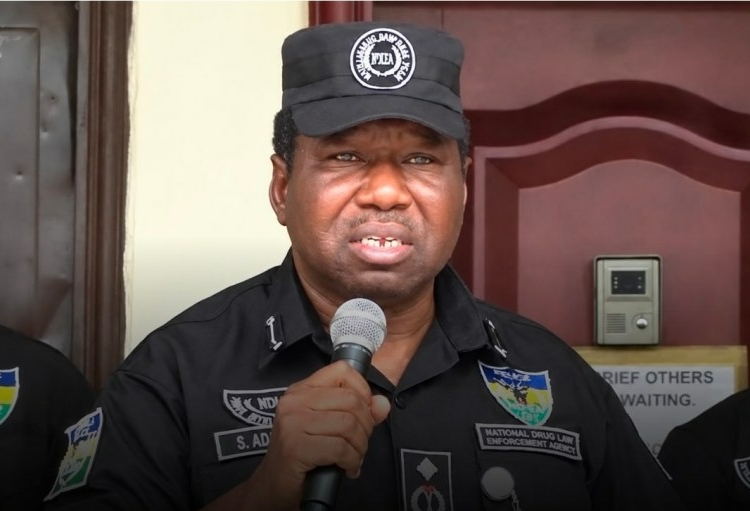
A commander of the Nigeria Police Force Intelligence Response Team (IRT) has cautioned churchgoers against publicly disclosing details of their personal lives and achievements during church services.
The commander gave the warning during an IRT briefing on TV Platinum on Thursday, particularly cautioning worshippers attending evening services at churches on the outskirts of towns.
He said publicly sharing personal achievements before a congregation whose intentions were unknown could make worshippers vulnerable to criminal attacks, particularly when returning home after night services.
“After closing from evening service, such act that they plan will be implemented. You can’t go to a church located on the outskirts, and you go to evening prayer, and close in the evening, coming down to your home, after making testimony of what you have achieved in life,” he said.
The commander cautioned against assuming that everyone attending church had good intentions, urging worshippers to exercise discretion when sharing sensitive personal information in public gatherings.
“It doesn’t conform with common sense and rationality in the midst of gathering of people watching you, thinking that they are all men of God. No. Everybody has his own motive of going to the church,” he said.
The commander further called on churches that hold evening services to strengthen their security arrangements, particularly by monitoring access routes and exits to protect congregants before and after worship.


Ebola In Nigeria: Symptoms, Spread and How To Protect Yourself

NDC Plans Fresh Congresses To Replace Defector Members

RMRDC Taking 2027 Africa Raw Materials Summit To Kenya

BREAKING: Lagos Govt Declares Today, Thursday Work-Free to Mark 2026 Ìṣẹ̀ṣe Day

Tech Expert, Zuckerberg trains with UFC champions, Adesanya, Alexander

Organ Trafficking: Ekweremadu bags 10 years in UK prison
-

 Business4 hours ago
Naira Exchange Rates Wednesday, October 21, 2026
-

 Business4 hours ago
Currency Words You Should Know
-

 News2 days ago
JUST IN: Ex-Delta Gov Uduaghan Dies at 71, Oborevwori Mourns
-

 Sports2 days ago
Ronaldo Gets 30-Day Suspension For Portugal Camp Walkout
-

 Sports2 days ago
Mbappé wins Onze d’Or award for 2025/26 season
-

 Business4 hours ago
NCC, CBN To Warn Companies By Flagging Fraudulent Phone Numbers
-
 Business3 hours ago
JPMorgan Eyeing Entry Into Nigeria’s Banking Industry
-

 Health18 hours ago
BREAKING: Nigeria Confirms First Ebola Case