
Business
FG Warns Advertisers Against Unapproved Ads on Social Media Platforms
The apex regulatory body had noted that the company had run a social media platform advert of Lung Detox Tea, which, it stated, claims the tea makes smoking healthy.


The federal government has called on individuals and organisations to desist from exposing unlawful and unethical advertisements on treatment of a range of ailments on Instagram and Facebook platforms.
The two platforms are owned by Meta Incorporated and represented in Nigeria by Facebook Nigeria Operations Limited.
THISDAY reports that in a statement issued by the Advertising Regulatory Council of Nigeria (ARCON), which was signed by its Director -General, Dr. Olalekan Fadolapo, the government stated that spurious and unsubstantiated claims in advertisements pose serious health risks to Nigerians as they have no clinical or any scientific proof of their efficacies.
The council pointed out that its investigation has revealed that most of the products being exposed illegally are not certified by relevant government agencies and may not be safe for consumption.
It further stated that the the brand owners are taking the loose opportunities offered by online media platforms to expose those unapproved advertisements.
These advertisements with frivolous claims were neither submitted to, nor approved for exposure by the Advertising Standards Panel (ASP) being the statutory Panel established by the Advertising Regulatory Council of Nigeria Act No. 23 of 2022 to ensure that advertisements targeting the Nigerian market conform with advertising ethics as well as the prevailing laws of the Federation,”
Olalekan reveals. ARCON promised to take necessary actions to ensure that the individuals and organizations involved are sanctioned in line with the prevailing laws and the Code of Advertising.
Toward the end of last year, ARCON said it would take all necessary steps to ensure Jols Medix Nigeria Limited was sanctioned for running an online/social media advert, without the authorisation of the council.
The apex regulatory body had noted that the company had run a social media platform advert of Lung Detox Tea, which, it stated, claims the tea makes smoking healthy.
Business
Crude Oil Prices Drop Below $95 After US-Iran Ceasefire
Earlier, crude prices had surged above $110 per barrel amid fears of supply disruptions as tensions escalated in the Middle East.
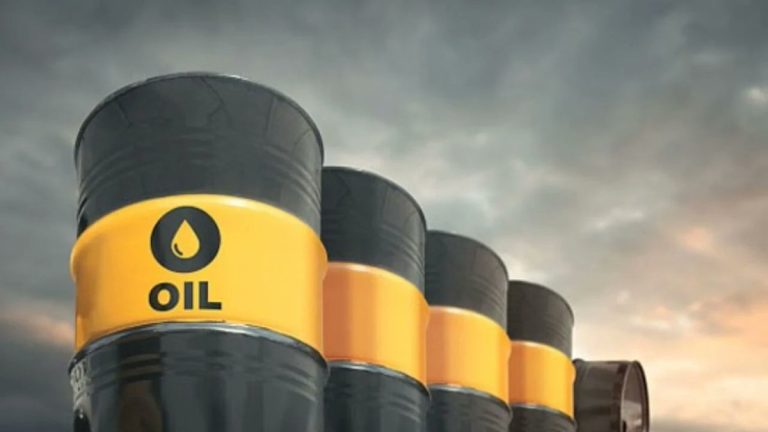
Crude oil prices fell below $95 per barrel in early trading on Wednesday following a ceasefire agreement between the United States and Iran.
The global oil benchmark fell by about 13% to around $94–$95 per barrel, marking one of the steepest single-day declines in recent years after weeks of war-driven price spikes.
The dramatic selloff came after U.S. President Donald Trump announced a conditional two-week ceasefire, pausing military operations in exchange for the reopening of the Strait of Hormuz—a critical route for global oil shipments.
West Texas Intermediate (WTI), the U.S. benchmark, also dropped significantly to around $95–$96 per barrel, reflecting a broad easing of geopolitical tensions and a rapid unwinding of the war risk premium in oil markets.
Earlier, crude prices had surged above $110 per barrel amid fears of supply disruptions as tensions escalated in the Middle East.
However, the ceasefire has restored some confidence that oil flows will resume, triggering a sharp correction in prices.
Business
Afreximbank Avails US$10 billion to insulate African Energy Producers , Exporters from Gulf Crisis
GCRP is designed to, among others sustain essential imports – including fuel, LNG, food, fertiliser, pharmaceuticals – by providing vital short-term Foreign Exchange (FX) and liquidity to support vulnerable member states.
Dr. George Elombi, President and Chairman of the Board of Directors at Afreximbank on Tuesday commended members of the Board for their approval of a US$10 billion Gulf Crisis Response Programme (GCRP) to insulate African and Caribbean economies.
” This crisis response programme is in tune with our DNA. We understand how our economies work and the pain points associated with these transitory crises,” said Elombi.
He emphasised that the intervention will support African countries in adjusting smoothly to the crisis while strengthening their resilience to future shocks through interventions that transform the structure of their economies.
The conflict, which escalated on 28 February 2026, has sent shockwaves through the global economy, with African and Caribbean economies bearing the largest share of the brunt.
Given the significance of the Gulf region as a primary global source of oil, Liquid Nitrogen Gas (LNG), fertilisers, as well as the critical role of the Strait of Hormuz, the outbreak has triggered wider repercussions at a global scale, including adversely affecting African and CARICOM economies.
These impacts specifically affect nations that heavily rely on fuel, fertiliser, and food imports, alongside those exposed to Gulf shipping corridors, investment flows, tourism and remittance inflows.
GCRP is designed to, among others sustain essential imports – including fuel, LNG, food, fertiliser, pharmaceuticals – by providing vital short-term Foreign Exchange (FX) and liquidity to support vulnerable member states.
It further aims to empower African energy and minerals exporters to capitalise on elevated prices and rerouted trade flows, by scaling productive capacity in strategic commodities, through pre-export finance, working capital, and inventory financing.
Additionally, it provides short term relief to African and Caribbean member states whose tourism and aviation industries have been adversely impacted by the crisis.
The programme is also designed to build the medium to long-term resilience of African and Caribbean economies against future shocks by scaling productive capacities for producers and exporters of energy, minerals while accelerating the completion of critical energy, port, and logistics infrastructure projects in African and Caribbean member states, delayed by the conflict.
Business
President Tinubu Approves N3.3Trn Payments Plan To Restore Reliable Electricity
Implementation has begun, with 15 power plants signing settlement agreements totalling ₦2.3 trillion.
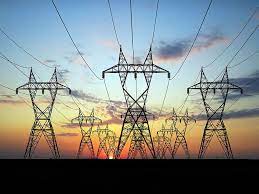
President Bola Tinubu has approved the payment plan to finally settle the outstanding debts under the Presidential Power Sector Financial Reforms Programme.
The debt repayment plan followed the final review of the legacy debts that have beset the power sector for more than a decade.
State House press release signed by Bayo Onanuga Special Adviser to the President(Information and Strategy), said that the long-standing debts accumulated between February 2015 and March 2025.
Following verification, ₦3.3 trillion has been agreed as a full and final settlement, ensuring a fair and transparent resolution.
Implementation has begun, with 15 power plants signing settlement agreements totalling ₦2.3 trillion.
The Federal Government has already raised ₦501 billion to fund these payments.
Out of the amount, N223 billion has been disbursed, with further payments underway.
What this means for Nigerians: With payments reaching the power value chain, generation will be more stable. With power plants supported, electricity reliability will improve.
And as the sector stabilises, more investment, more jobs, and better service will follow. “This programme is not just about settling legacy debts.
It is about restoring confidence across the power sector — ensuring gas suppliers are paid, power plants can keep running, and the system begins to work more reliably”, explained Olu Arowolo-Verheijen, Special Adviser on Energy to President Tinubu.
“It is part of a broader set of reforms already underway — including better metering and service-based tariffs that link what you pay to the quality of electricity you receive.
“The government is also prioritising power supply to businesses, industries, and small enterprises — because reliable electricity is critical to creating jobs, supporting livelihoods, and growing the economy.
“The goal is simple: more reliable power for homes, stronger support for businesses, and a system that works better for all Nigerians”, she added.
President Tinubu has commended all stakeholders who supported efforts to resolve the legacy issues in the power sector.
He has also confirmed that the next phase (Series II) will begin this quarter.


Rep Dasuki Joins ADC, says INEC Chair Becoming Threat to Nigeria’s Multi-party Democracy

Crude Oil Prices Drop Below $95 After US-Iran Ceasefire

Iran reopens Strait of Hormuz following two-week cease-fire agreement with Trump

Tech Expert, Zuckerberg trains with UFC champions, Adesanya, Alexander

Organ Trafficking: Ekweremadu bags 10 years in UK prison

SAINT OBI: Between his marriage and his death
-

 News3 days ago
Kaduna Mando Garage Explosion Not Bomb- Police
-

 News3 days ago
Atiku hires US lobbying firm for $1.2m to boost image – Report
-
 Business3 days ago
President Tinubu Approves N3.3Trn Payments Plan To Restore Reliable Electricity
-
 Politics3 days ago
Obidients mobilise for #OccupyINEC protest
-
 Politics3 days ago
INEC suspends voter revalidation amid rising concerns by Opposition parties
-
 Politics3 days ago
ADC will resist imposing a one-party system on Nigerians – Mark
-

 Sports2 days ago
CAF confirms 16 teams for U-17 AFCON 2026
-

 Entertainment3 days ago
Lagos Fanti carnival holds tomorrow at TBS and environs