
News
Coup Plot Trials: ‘I Was Misled,’ says Umoru
Justice Abdulmalik subsequently adjourned the matter till May 11, 12 and 13 for continuation of trial.

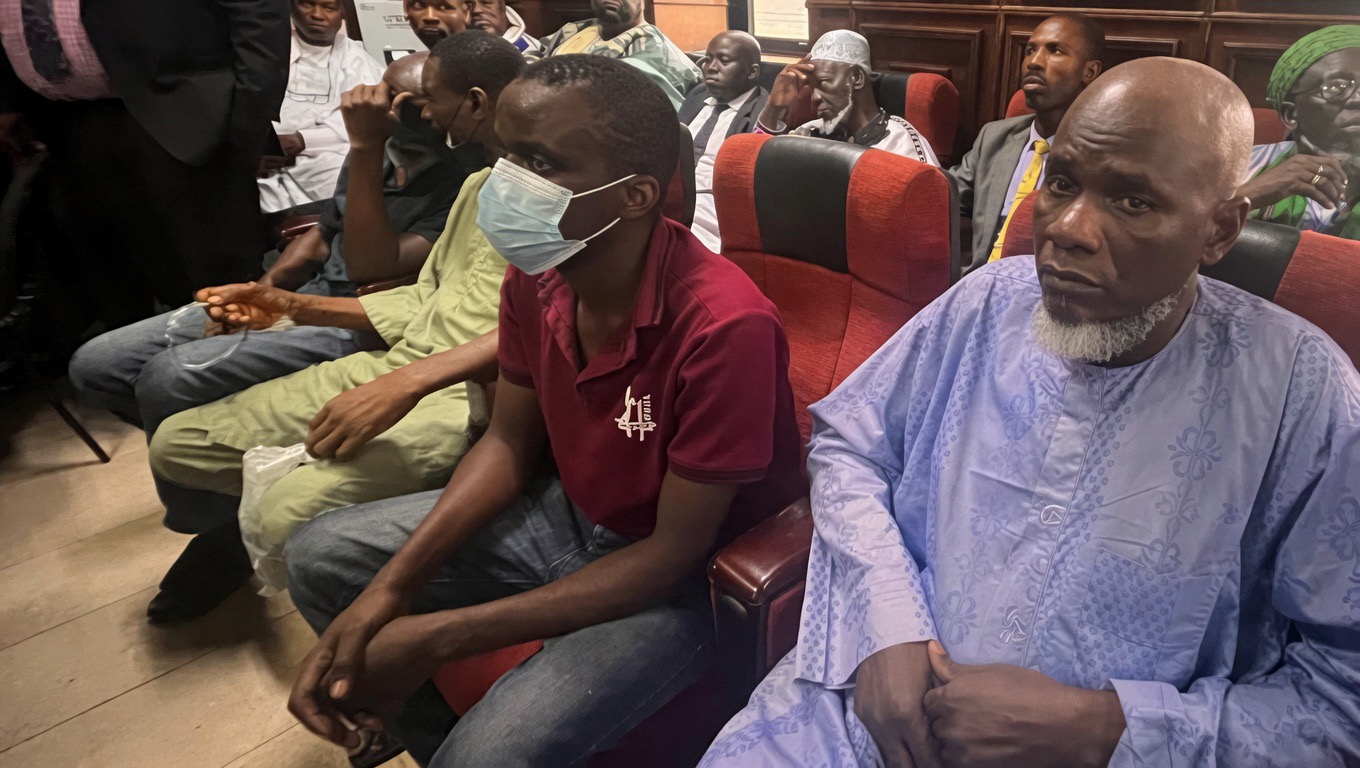
The fourth defendant in the alleged coup plot trial before the Federal High Court in Abuja, Zekeri Umoru, on Tuesday denied knowledge of any plan to overthrow President Bola Tinubu’s government, insisting in a recorded statement played in court that he was “misled.”
Umoru, an employee in the maintenance department of the Presidential Villa working with Julius Berger Nigeria, made the claim in a video recording previewed by the court as part of the prosecution’s evidence against the six defendants standing trial over the alleged plot.
In the video played in open court, Umoru told investigators that he first came in contact with persons linked to the case through the third defendant, Inspector Ahmed Ibrahim, attached to the Presidential Clinic.
He said that Ibrahim introduced him to a man identified as Hassan Mohammed, whom he later discovered was Colonel Mohammed Ma’aji.
According to Umoru, he initially believed Ma’aji was “a civilian businessman” interested in offering him electrical work at a building under construction.
The defendant recounted how he allegedly received several cash payments from Ma’aji during meetings attended by Ibrahim and another associate identified as Usman.
He told investigators that during one gathering at Tiger Bar, Ma’aji allegedly gave “between N100,000 and ₦120,000” to him and his associates after he bought drinks and asked about their professions.
Umoru further stated that on September 24, 2025, Ma’aji allegedly handed him a “Ghana Must Go” bag containing cash.
He said that he deposited the money at a Zenith Bank branch where it was counted and found to be N8.8 million.
According to him, another N2 million was allegedly given the following day during a separate meeting involving Inspector Ibrahim.
The defendant said that he later became uncomfortable with the repeated cash payments and demanded an explanation from Ibrahim.
He alleged that Ibrahim told him Ma’aji was unhappy with the state of the country and planned to “sanitize the government” with support from unnamed associates described as “boys.”
Umoru further claimed that Ibrahim spoke about involving “an ambulance driver” to facilitate access into the Presidential Villa, with expectations of financial reward.
Despite the claims, Umoru repeatedly denied knowledge of any coup plot.
“I was misled,” he said in the video, insisting he would have distanced himself from Ma’aji had he known that he was a military officer or had “any intention beyond business dealings.”
The defendant also admitted escorting Usman into the Presidential Villa, stating that security officials allowed the visitor entry after he indicated the man was there to see him.
He added that he later saw Usman “taking photographs” in his office and warned him against it.
Umoru expressed regret during the interview, apologising to his employers and affirming support for President Tinubu’s administration.
The court also viewed another video involving Islamic cleric, Sheikh Imam Kassim Goni, who denied involvement in the alleged coup plot.
Goni told investigators that monies he received from Ma’aji were strictly for “prayers and charitable purposes,” including spiritual interventions connected to alleged promotion setbacks.
However, investigators pointed to financial records allegedly showing transfers running into millions of naira, including a “₦10m transfer” in October 2024, which they said contradicted aspects of his explanation.
The prosecution further suggested that discussions referenced in the videos, including remarks about gaining access and acquiring “work tools,” raised concerns about a broader scheme, though both individuals denied any knowledge of a coup plot.
Following the preview of the video statement, counsel to the sixth defendant and senior counsel, Michael Numa, told the court he had just received the video exhibits of his client and needed more time to review them.
While the defence counsel argued for an adjournment, prosecution counsel and Director of Public Prosecutions, Rotimi Oyedepo, SAN, urged the court to stand by its earlier order for accelerated hearing of the case.
Justice Abdulmalik subsequently adjourned the matter till May 11, 12 and 13 for continuation of trial.
At an earlier hearing on Monday, the court viewed separate videos in which other defendants allegedly admitted to coded communications, meetings and reconnaissance around the Presidential Villa, but denied participating in any concrete plan to overthrow the government.




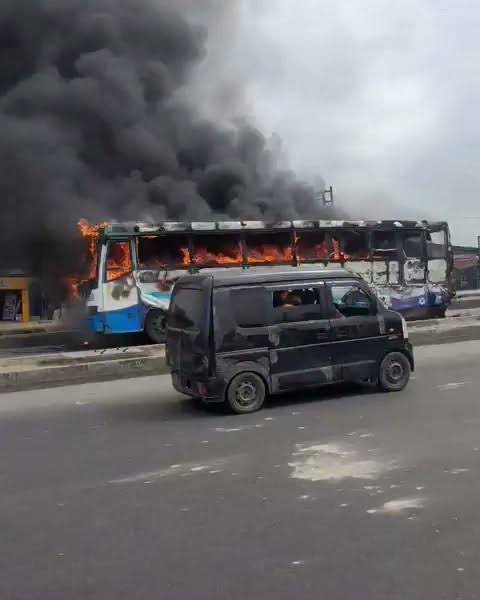
An angry mob has set a Bus Rapid Transit (BRT) bus on fire after it reportedly crushed a commercial motorcyclist to death at Ogolonto Bus Stop along Ikorodu Road in Lagos State.
The incident occurred on Friday, October 16, 2026. Eyewitness accounts and social media reports indicate that the motorcyclist was riding alone along the restricted BRT lane when the collision happened. He died at the scene.
Enraged residents and youths then attacked the bus driver and set the vehicle ablaze. Police officers and officials of the Lagos Neighbourhood Safety Corps (LNSC), who were nearby, intervened promptly and rescued the driver unharmed.
The identity of the deceased motorcyclist and the exact circumstances of the crash had not been officially confirmed at the time of filing this report. It was also unclear whether any arrests had been made in connection with the burning of the bus.
News
ARISE News Wins Seven Honours At Nigerian Broadcasters Merit Awards
The awards recognised the network’s achievements in television journalism and programming, with ARISE News winning the Best TV Channel (Viewer’s Choice) category.

• ARISE News Anchor and host of What’s Trending Ojy Okpe was named Best Newscaster (TV – Female)
ARISE News has emerged as one of the major winners at the just ended Nigerian Broadcasters Merit Awards (NBMA).
ARISE News won seven honours across television broadcasting, news reporting, presentation and production during the ceremony.
The awards recognised the network’s achievements in television journalism and programming, with ARISE News winning the Best TV Channel (Viewer’s Choice) category.
The network’s flagship breakfast programme, The Morning Show, also won the Best TV Talk Show award, further strengthening its recognition in television broadcasting.
ARISE News Anchor and host of What’s Trending Ojy Okpe was named Best Newscaster (TV – Female).
Rufai Oseni was named Nigerian Broadcaster of the Year (Male), while Vimbai Mutinhiri-Ekpeyong received the Nigerian Broadcaster of the Year (Female) award.
The recognition extended to the network’s newsroom, with Ovieteme George winning Best TV News Reporter (Male) for his contributions to television news reporting.
Behind the camera, Sam Adeyemi received the Best Camera Operator/Cinematographer award, recognising his work in television production and visual storytelling.
News
Meta removes 3.7 million accounts in West Africa scam crackdown
The joint operation led to 28 arrests, identified more than 30 suspected scam centres and rescued 117 people allegedly trafficked and forced to work in scam compounds in Ghana.

Meta, the parent company of Facebook and Instagram, has removed more than 3.7 million Facebook and Instagram accounts, pages and groups linked to suspected scam networks operating in West Africa.
The joint operation led to 28 arrests, identified more than 30 suspected scam centres and rescued 117 people allegedly trafficked and forced to work in scam compounds in Ghana.
The company announced the crackdown in a statement on Tuesday, October 13, 2026. It involved 14 technology companies and law enforcement agencies from 10 countries.
The United Kingdom’s National Crime Agency coordinated the operation with the US Department of Justice, the Federal Bureau of Investigation and other agencies. Nigerian authorities were involved.
Other countries included Ghana, Australia, Canada, New Zealand and India.Tech companies that took part included Google, Microsoft, OpenAI, Coinbase, Starlink and Adobe.
Meta said the partnership let participants share intelligence across digital platforms, countries and financial systems to identify criminal networks.


JUST IN: Mob Sets BRT Bus Ablaze After Motorcyclist’s Death in Lagos

BREAKING: DSS Arrests Fugitive Maina Son, Hands Him to EFCC

BREAKING: 5 Arrested Over Imo NYSC Abduction

BREAKING: Lagos Govt Declares Today, Thursday Work-Free to Mark 2026 Ìṣẹ̀ṣe Day

Tech Expert, Zuckerberg trains with UFC champions, Adesanya, Alexander

Organ Trafficking: Ekweremadu bags 10 years in UK prison
-
 Business3 days ago
Naira Exchange Rates For Thursday, October 15
-
 Sports3 days ago
CAF Increases Annual Funding for Member Federations to $700,000
-
 News2 days ago
ASCON To Be Rebranded “National School Of Government”
-

 Business2 days ago
Germany plans tax on sugary drinks
-
 Business2 days ago
WEF could appoint Lagarde as its next chair, sources say
-

 International2 days ago
“Mother of all bombs,” Trump Plans To Hit Iran
-

 Business2 days ago
Naira Exchange Rates Friday, October 16
-
 Crime1 day ago
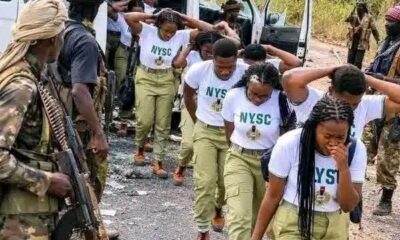
BREAKING: 5 Arrested Over Imo NYSC Abduction