
News
BREAKING: Deadly Outbreak Strikes Nigerian Army Hospital in Kaduna, Prompting Urgent Response

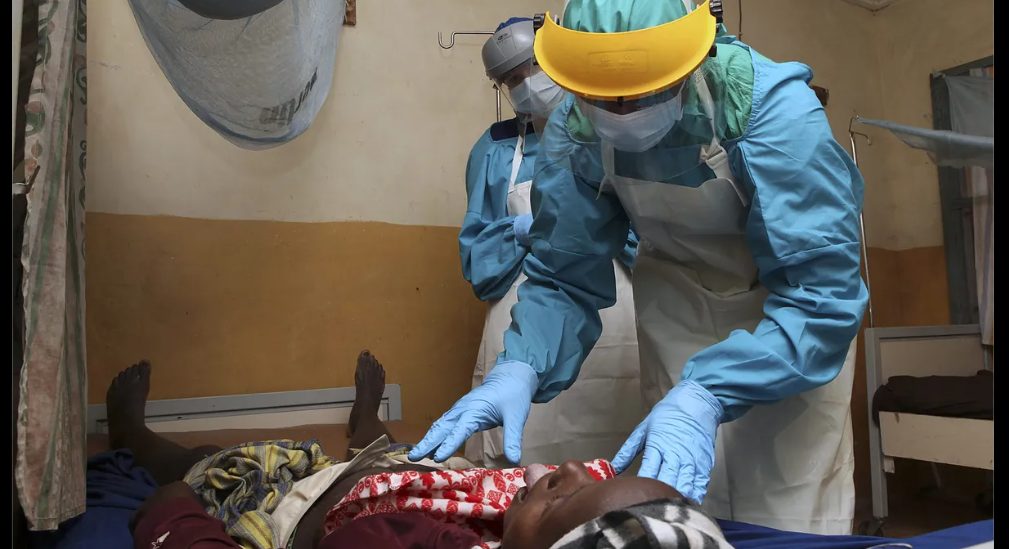
The Accident and Emergency, A&E, Department of 44 Nigerian Army Reference Hospital, Kaduna, has lost three members of staff and a patient suspected to have died from acute Viral Hemorrhagic Fever, VHF.
A statement from Brig Gen. Aso Okoigi, said, “This followed the management of a patient with febrile illness thought to have been the index patient with the disease 10 days ago. The patient also died from the suspected disease condition.”
According to the statement, the common symptoms in those affected include fever, and nonspecific symptoms likened to malaria, saying that the illness is complicated by abnormal liver function, acute kidney failure, encephalopathy, microangiopathy, elevated D-Dimer, among others.
“The Accident and Emergency has been closed for thorough disinfection process and samples have been taken from suspected contacts and the deceased and sent to the Nigeria Centre for Disease Control, NCDC, laboratory in Kano for analysis,” the statement explained.
Similarly, the statement stated that Kaduna State epidemiologists have
been invited to help in unraveling the aetiology of the febrile illness with a view
to curtailing the spread of the disease.
The statement added that in addition to strict disease Infection Prevention and Control, IPC, measures that have been directed, Ribavirin injection (an antiviral agent) has also been commenced on other suspected cases and those identified on contact tracing.
It said the 44 Nigerian Army Reference Hospital has also been directed to suspend accepting new cases from the general public in the interim while the situation is being contained.
It further stated that the significant risk of contracting VHF among healthcare workers underscores the need to strengthen IPC practices across all Nigerian Army health facilities.
According to the statement, prevention remains the best approach in dealing with such outbreak since treatment options are limited against a background of high mortality often recorded as in the current case at 44 NARHK, stressing that it can be achieved by raising the level of hospital preparedness for VHF outbreaks through capacity building and ensuring the use of universal precautions when dealing with all patients.












News
ASCON To Be Rebranded “National School Of Government”
Situated at Topo, Badagry Lagos, President Tinubu said that the proposed institution would serve as a national centre for leadership development, policy delivery and executive capacity building.


President Bola Tinubu has asked the Senate to approve a bill seeking to repeal the Administrative Staff College of Nigeria (ASCON) Act and establish the National School of Government, Nigeria.
Situated at Topo, Badagry Lagos, President Tinubu said that the proposed institution would serve as a national centre for leadership development, policy delivery and executive capacity building.
Senate President Godswill Akpabio read the president’s letter transmitting the National School of Government Bill 2026 to the upper chamber during Wednesday plenary.
In the letter, Tinubu urged the Senate to give the proposed legislation expeditious consideration, stressing the need to establish a dedicated institution to strengthen leadership development and improve the capacity of public officials to deliver government policies.
The president invoked Section 58(2) of the 1999 Constitution, as amended, to formally transmit the bill to the Senate for legislative consideration.“Pursuant to Section 58 (2) of the 1999 Constitution of the Federal Republic of Nigeria, as amended, I forward herewith the National School of Government Bill 2026 for the kind consideration of the Senate,” Tinubu stated in the letter.
He expressed the hope that the lawmakers would give the bill the necessary attention and facilitate its consideration.
According to the president, the proposed institution would serve as a national centre for leadership development, policy delivery and executive capacity building.
News
Sanwo-Olu Appoints Olatunbosun Ogunbanwo, 5 Others as Perm Secs
Ogunbanwo brings nearly three decades of experience in public service, strategic communication, public relations and information management.

•Mr. Olatunbosun Ogunbanwo
Lagos State Governor, Mr. Babajide Sanwo-Olu, has appointed Mr. Olatunbosun Ogunbanwo, Director of Public Affairs at the Lagos State Ministry of Health, as a Permanent Secretary in the State Public Service, alongside five other senior officers.
The five other senior officers appointed as Permanent Secretaries as conveyed by the Head of Service (HOS), Mr. Bode Agoro, in Circular Ref. No. CIR/HOS/’26/071, dated October 13, 2026, are Dr. Olawale Mahadiyu Adegbite, Director of Medical Services, Health Service Commission; Mrs. Folashade Aina Thomas-Orogan and Mr. Adebayo Mubashiru Haroun, both Directors, State Counsel at the Ministry of Justice.
The rest are Mrs. Olayinka Margret Oye-Bamgbose, Director of Administration and Human Resource at the Lagos State University Teaching Hospital (LASUTH) and Mrs. Bilquees Toyin Adekoya, Principal/Director of Education at Education District VI.
The appointments, which take effect from October 13, 2026, were aimed at reinvigorating the State’s policy implementation apparatus and strengthening public service delivery.
Mr. Olatunbosun Ogunbanwo
Ogunbanwo brings nearly three decades of experience in public service, strategic communication, public relations and information management.
Before his appointment, Ogunbanwo served as Director of Public Affairs at the Ministry of Health and previously held the same position at the Ministry of Agriculture.
He also played key communication roles in Lagos State’s responses to public health emergencies, including Ebola, COVID-19, Lassa fever and diphtheria.
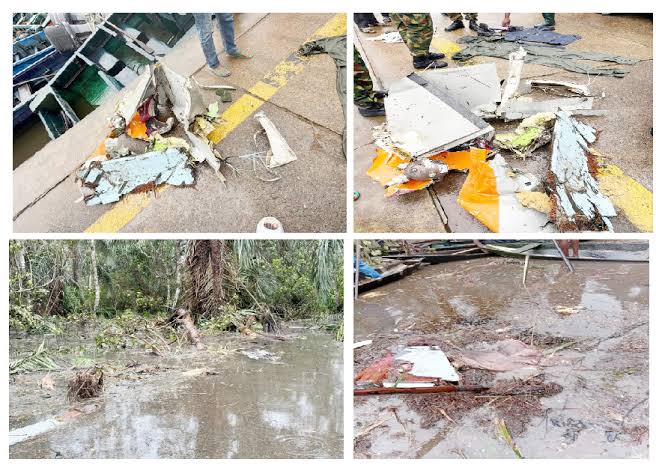
Residents of Igbokoda in Ilaje Local Government Area of Ondo State are grappling with a severe public health and environmental crisis following the crash of a Nigerian Air Force (NAF) ATR-42 aircraft into a swamp near the community.
The aircraft, on a routine mission from Benin City to Lagos, crashed last Monday, killing all 25 people on board. Recovery efforts continue amid difficult swampy terrain, with large sections of the wreckage and human remains still unrecovered.
The traditional ruler of Igbokoda, Oba Afolabi Odidiomo, said residents have been battling an extremely offensive odour caused by decomposing human remains floating in the river. “The odour is extremely offensive. So many parts of the human body are floating around in the river. Some of the bodies have not been recovered. They have decomposed, and it is affecting everything,” he stated.
He warned that the river — the community’s main source of water for drinking, cooking and fishing — has been polluted by the remains and aviation fuel spillage. Residents can no longer safely use the water, raising fears of a disease outbreak.
Ondo State authorities confirmed they are assessing the environmental and public health impact, with plans for decontamination. Recovery teams, including the Navy, Air Force and emergency agencies, are intensifying efforts to retrieve remaining wreckage and remains.


ASCON To Be Rebranded “National School Of Government”

CAF Increases Annual Funding for Member Federations to $700,000

Naira Exchange Rates For Thursday, October 15

Tech Expert, Zuckerberg trains with UFC champions, Adesanya, Alexander

BREAKING: Lagos Govt Declares Today, Thursday Work-Free to Mark 2026 Ìṣẹ̀ṣe Day

Organ Trafficking: Ekweremadu bags 10 years in UK prison
-

 Business2 days ago
Dangote Refinery IPO Attracts N8.61trn in Subscriptions, Four Times Offer
-
Business2 days ago
Top 10 Highest-Paid CEOs in Nigeria
-

 Business3 days ago
AI to eliminate 40% of global jobs – IMF boss
-

 Business2 days ago
Naira Exchange Rates To Dollar , Pound ,Euro, … Tuesday, October 13
-

 News3 days ago
FG Withdraw Charges Against PFIPC DG Adeyemi
-

 Business2 days ago
Global smartphone shipments fall 20% in Q3 2026, lowest in 14 years
-

 International3 days ago
JUST IN: Pope Leo XIV to Undergo Surgery for Early-Stage Lung Nodule
-

 International2 days ago
Child marriage in southern Germany: Over 350 cases recorded, some brides as young as 11