
News
Assault: Alex Ikwechegh May Suffer Double Jeopardy, Says Reps Minority Leader

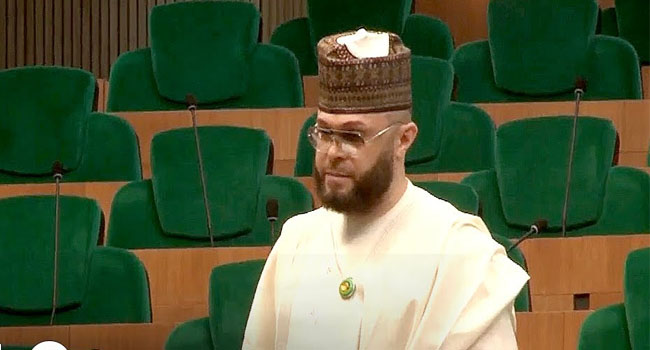
The Minority Leader of the House of Representatives, Kingsley Chinda, says his colleague, Alex Ikwechegh, may suffer “double tragedy” for assaulting an e-hailing driver Stephen Abuwatseya in the nation’s capital Abuja late October.
“Presently, he is being prosecuted. He is at the Magistrate Court.
The House has also sent him to the disciplinary committee on the same issue,” Chinda said on the Sunday edition of Inside Sources with Laolu Akande on Channels Television.
“Perhaps, he might suffer double jeopardy if he is undergoing prosecution and disciplined in the House.
”Chinda said he has spoken with his colleague and he has shown remorse and apologised to Nigerians.
“But in essence, I don’t think anybody will agree that that is a standard for parliamentarians. They call us honourable members so we should be honourable within and outside the parliament.
And people should look up to us. Public office holders are like pastors and Imams and people should look up to you in character and conduct,” he said.
Nigerians were outraged in late October when a video of Ikwechegh assaulting the e-hailing driver in Abuja.
The lawmaker had ordered some snails from a vendor who engaged the services of the e-hailing App driver to deliver the goods.
A heated disagreement ensued when the driver arrived at the lawmaker’s residence and asked to be paid.
Ikwechegh represents Aba North & South Federal Constituency in the Green Chamber on the platform of the All Progressives Grand Alliance (APGA).
A furious Ikwechegh was heard speaking with the vendor on the phone in the presence of the driver.
“How can this stupid idiot come to me and tell me that I am supposed to come and meet him in his car and pick up a snail I am buying from you? I can make this man disappear in the whole of Nigeria and nothing will happen.
” the lawmaker blurted to the speaker on the other side.
After the phone conversation with the snail vendor, Ikwechegh faced Abuwatseya and thudded two slaps on the cheeks of the driver who maintained his composure in the face of the assault.
Many Nigerians had called for justice with the police arresting and prosecuting the lawmaker who has since tendered a public apology to the driver and Nigerians.
Last Wednesday, a Kuje Magistrates’ Court granted bail to Ikwechegh for ₦500,000 after he was arraigned on three counts of abuse of office, assault, and threat to life, to which he pleaded not guilty.
Magistrate Abubakar Umar Sai’id has adjourned the case to November 8 for a hearing.









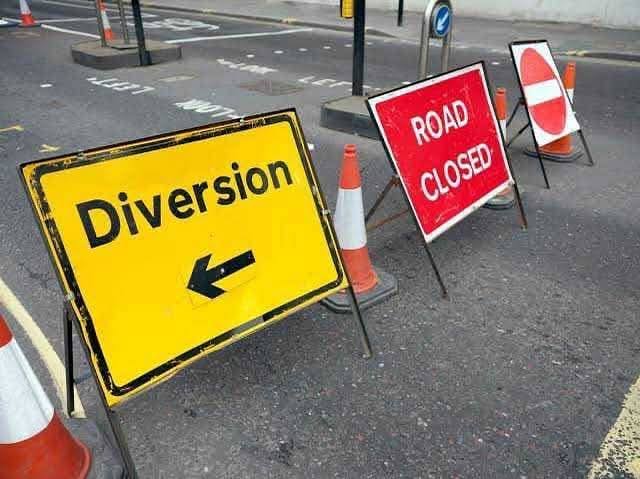
The Lagos State Government has unveiled a comprehensive traffic diversion plan for Wednesday, April 8, and Thursday, April 9, 2026, in preparation for the commissioning of several key infrastructure projects by President Bola Tinubu.
According to the state Ministry of Transportation, partial road closures and diversions will be implemented in affected areas to ensure smooth movement during the events, which include the inauguration of the Ojota-Opebi Link Bridge and other major projects such as the Lagos State Geographic Information Service building in Alausa and the Tolu Schools Complex.
On Wednesday, April 8, diversions will be enforced around venues for the commissioning ceremonies, while on Thursday, April 9, restrictions will apply between 9:00 a.m. and 1:00 p.m. during the Tolu Schools Complex event and additional project unveilings.
Motorists have been advised to use alternative routes and plan their journeys accordingly to avoid delays. The government urged residents and commuters to cooperate with traffic management officials and security personnel deployed to the areas.
The projects form part of ongoing efforts to improve infrastructure and education facilities across the state. Further details on specific diversion routes are expected to be released by the Ministry of Transportation in the coming hours.
Commuters are encouraged to monitor official announcements via Lagos State traffic radio and social media handles for real-time updates.
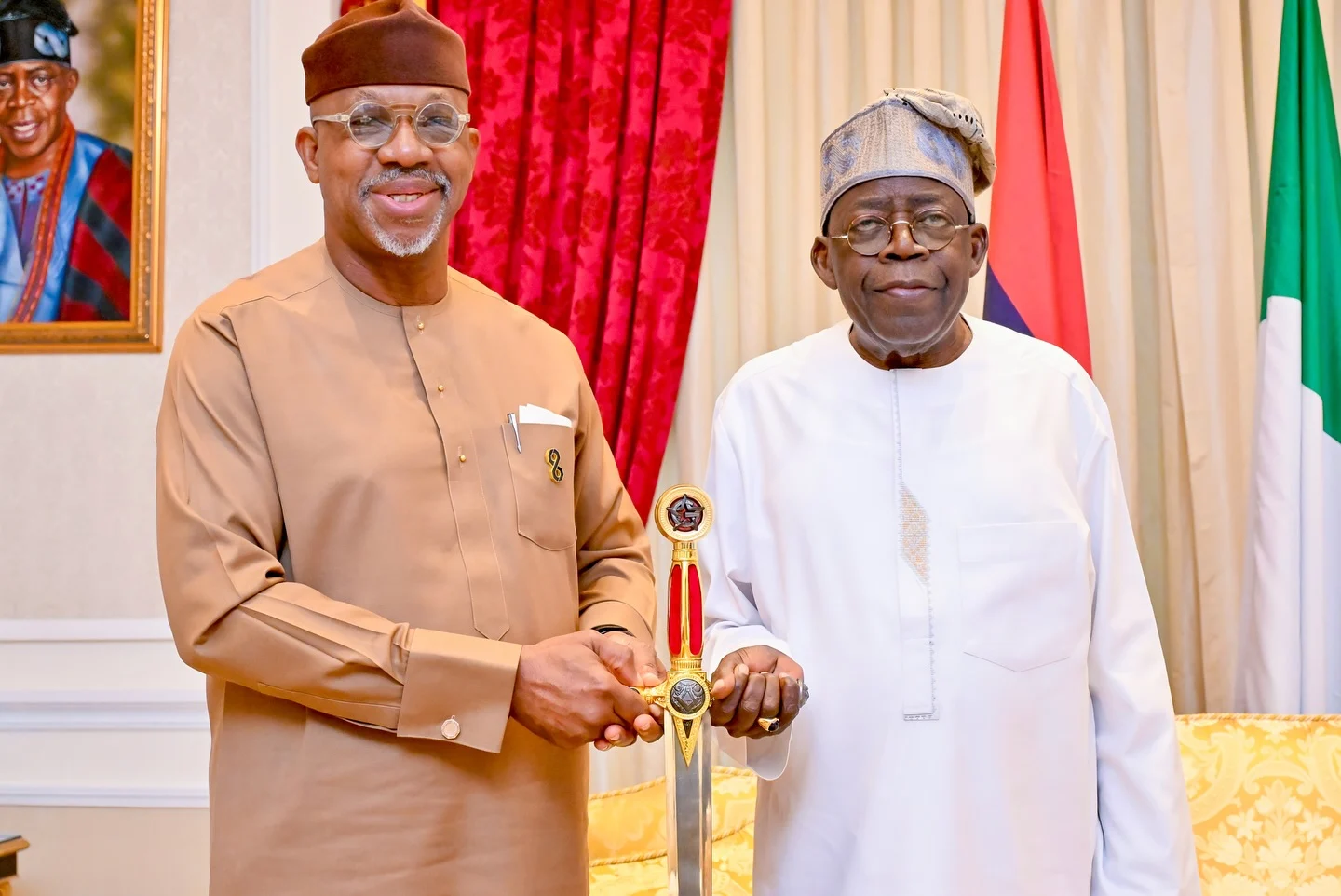
Ogun State Governor Prince Dapo Abiodun has presented a ceremonial sword to President Bola Ahmed Tinubu, symbolically conferring on him the title of “Jagaban” (leader of warriors and conquerors), while calling for continued aggressive action against crime and insecurity across Nigeria.
The presentation took place during President Tinubu’s official visit to Ogun State on Saturday, where he was received warmly by the governor and other dignitaries.
Governor Abiodun described the sword as a mark of appreciation and a charge to the President to press on with his administration’s security efforts.
In his remarks, Abiodun reminded Tinubu of the strong political and personal ties between them, noting that Ogun State was where the President had previously made significant declarations.
He urged Tinubu to maintain the momentum in the war against criminal elements, banditry, and other threats to national peace.
President Tinubu, who has repeatedly vowed to defeat insecurity by mobilising all military and law enforcement assets, received the gift amid smiles and applause. His administration has emphasised reforms in security architecture, including procurement of new equipment for the armed forces and enhanced coordination among agencies.
The event formed part of a broader visit during which the President is expected to commission key infrastructure projects in the state, including developments linked to the Gateway International Airport. Governor Abiodun used the occasion to commend Tinubu’s economic reforms, such as foreign exchange unification and fuel subsidy removal, describing them as necessary steps that are already yielding positive impacts.
Security analysts view the symbolic gesture as a show of solidarity between the state and federal government in tackling Nigeria’s persistent security challenges. The “Jagaban” title, rooted in Yoruba cultural and warrior traditions, underscores expectations of strong, decisive leadership in the ongoing fight against crime.
The Presidency has not issued a detailed official statement on the sword presentation, but sources close to the visit described it as a morale-boosting moment that reinforced the alliance between the two leaders.
This development comes as the federal government continues to prioritise national security, with recent commitments to equip the military and intensify operations against threats in various parts of the country.
News
BudgIT appoints Nigeria Country Director
He brought with him a track record in governance, research, and institutional leadership.

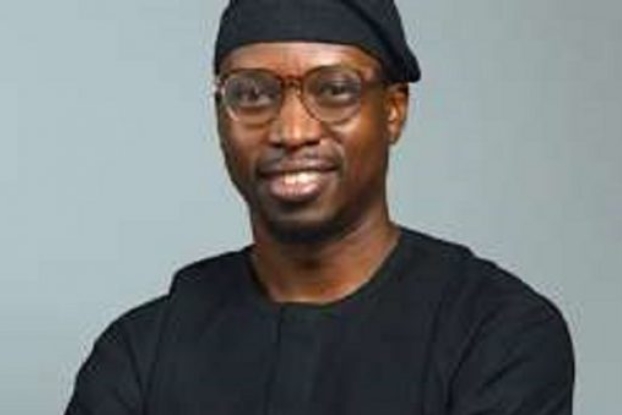
BudgIT has appointed Mr. Vahyala Kwaga as Country Director for Nigeria.
The appointment took effect on April 1, 2026.Kwaga was appointed following a leadership transition within the civic-tech organisation.
He brought with him a track record in governance, research, and institutional leadership.
Since joining BudgIT in 2021, Kwaga has held several leadership roles, including Senior Researcher, Head of the Open Government and Institutional Partnerships (OGIP) Unit, Group Head of Research and OGIP, and Deputy Country Director.
In these positions, he contributed to strengthening BudgIT’s research output, deepening its policy engagement, and improving coordination across programmes.


Rep Dasuki Joins ADC, says INEC Chair Becoming Threat to Nigeria’s Multi-party Democracy

Crude Oil Prices Drop Below $95 After US-Iran Ceasefire

Iran reopens Strait of Hormuz following two-week cease-fire agreement with Trump

Tech Expert, Zuckerberg trains with UFC champions, Adesanya, Alexander

Organ Trafficking: Ekweremadu bags 10 years in UK prison

SAINT OBI: Between his marriage and his death
-
 Business3 days ago
President Tinubu Approves N3.3Trn Payments Plan To Restore Reliable Electricity
-
 Politics3 days ago
Obidients mobilise for #OccupyINEC protest
-
 Politics3 days ago
INEC suspends voter revalidation amid rising concerns by Opposition parties
-
 Politics3 days ago
ADC will resist imposing a one-party system on Nigerians – Mark
-
 Sports2 days ago
CAF confirms 16 teams for U-17 AFCON 2026
-
 News3 days ago
Jega loses wife, Hajiya Hadiza
-
 Sports2 days ago
Seven Eritrean players fail to return home after AFCON qualifier
-
 Politics3 days ago
2027: Atiku Vows To Support Whoever Emerges ADC Presidential Candidate