
News
ADAMS OSHIOMOLE: The Labour Leader Died

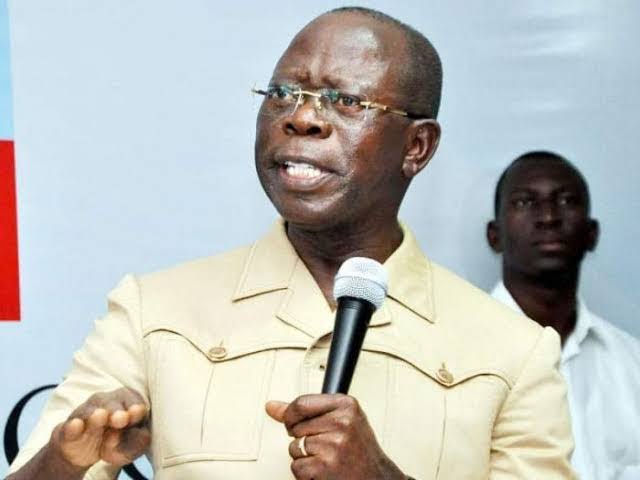
By Babs Daramola
There are moments in a nation’s life when words shock more than bullets. Not because they are violent, but because they are absurd, disconnected and offensive to reality.
When Senator Adams Oshiomhole recently went on national television and declared that Nigerians are now complaining that food is becoming too cheap under President Bola Tinubu, the country did not just hear a statement; it witnessed a rupture in memory, history, and identity.
This was not said by a random politician, or by an out-of-touch technocrat. This was said by Adams Oshiomhole, the one we once knew as the fiery labour leader, street-fighter for the masses; the man who once stood toe-to-toe with power on behalf of the oppressed. And that is what makes it painful.
There was a time when Adams Oshiomhole’s name was synonymous with resistance, courage and labour struggle. He was the voice of the voiceless. He was the man who confronted government with data, with facts, with moral authority. He was a man who spoke the language of the streets because he came from the streets.
This was a man who understood hunger. Who understood inflation. Who understood the cost of survival. So when that same man now looks Nigerians in the face and says food is becoming too cheap, something deeper than politics has gone wrong.
It would be understandable, though still unforgivable, if our distinguished senator now suffers a selective amnesia where facts and data should live. So, let’s help his memory:
In 2022, on a minimum wage of ₦33,000, a Nigerian worker could buy three bags of rice, sometimes even four. Today, with ₦70,000, that same worker struggles to buy one bag of good rice.
In 2022, a full tank of fuel for some cars cost about ₦22,000. Today, an entire minimum wage can’t fill that same tank.A 350g box of cornflakes rose from around ₦600 to ₦3,500 in the same period, while a 900g loaf of bread moved from ₦600 to ₦2,000. A crate of eggs climbed from ₦600 to ₦6,000. These are just scattered samples from a marketplace drowning in inflation.
One then wonders how a man once defined by data and discipline now finds it so convenient to falsify reality on the altar of partisan exuberance, trading truth for loyalty, and conscience for convenience.
So when anyone, especially Adams Oshiomhole, says food is becoming too cheap in Nigeria, it is not just incorrect. It is insulting.
It is one thing to argue that prices may be stabilizing or slowing down compared to last year. It is another thing to claim that food is now cheap. But to say food is becoming too cheap borders on the ludicrous.
That narrative holds neither on the grounds of optimism nor on any known macroeconomic logic. It is pure fiction.People often think poverty destroys reasoning. But Nigerian politicians are daily proving to us that comfort, power and privilege can do the same.
They are letting us know that proximity to authority can breed psychophancy If a man likes Senator Adams Oshiomole can gleefully tell us that food is becoming too cheap under Tinubu’s administration, it only shows one thing: comfort can detach a person from reality; too much power can erase memory, and tha too much politics can rewrite conscience. And that is exactly what we are witnessing.Let’s just pause for a moment.
Imagine the Adams Oshiomhole of the labour movement era leading a union under the current Tinubu administration.
This country would not know peace. Power would not sleep. Policy would be pressured. That Oshiomhole would have shaken this system so badly the government would either be forced to give or go. But that man is gone. What remains is a politician.
Adams Oshiomhole has every right to defend his party. He has every right to defend his political benefactor. He has every right to defend government policies. That is democracy. That is freedom of speech. That is political alignment. But there is a line. And that line is insulting the intelligence and suffering of Nigerians. Defending policy is one thing; manufacturing fantasy is another.
But, honestly, here’s the truth: The real tragedy is not the statement. The tragedy is what it represents. How politics can change people. How power can rewrite identity. How comfort can erase compassion. How partisanship can silence conscience.
Even a deaf and dumb man on the street knows food is not by any means cheap in Nigeria, in relation to available means. The market woman knows it. The bus driver knows it. The mechanic knows it. The teacher knows it. The student knows it. The unemployed youth knows it. Nigeria knows it.
So when a man who once fought for the masses tells the masses that their suffering is imagination, the betrayal is not political; it is moral.
This is not the Adams Oshiomhole we knew. As Professor Wole Soyinka once implied in another context: The man died. True, the labour leader died. What remains is a politician who speaks not from the streets, but from the comfort of power.
And that, more than anything else, is the real tragedy.
Babs Daramola is a Lagos-based broadcast journalist



News
Nigerian Army Debunks Claims of Attack on Bishop Matthew Kukah’s Residence and Sokoto Catholic Cathedral
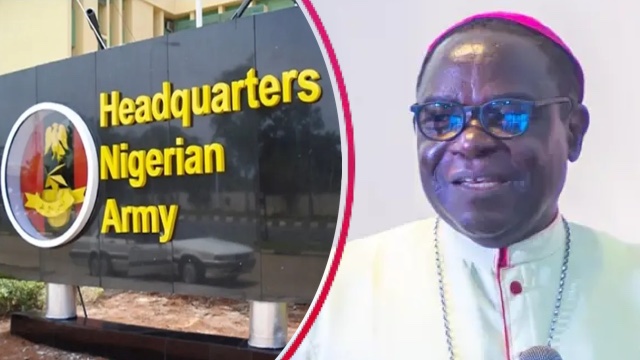
The Nigerian Army has categorically dismissed as false and misleading a viral social media post alleging an armed attack on the residence of Bishop Matthew Kukah, the Catholic Bishop of the Sokoto Diocese, and the Sokoto Catholic Cathedral.
In an official statement issued on Saturday by the 8 Division Nigerian Army and Sector 2 of Operation FANSAN YAMMA, the military said no such incident occurred in Sokoto State. The claim, which circulated on Facebook, was described as unfounded and fabricated.
“The safety and security of Bishop Matthew Kukah and the Sokoto Catholic Cathedral remain intact,” the statement read. It added that the Bishop is currently carrying out his Easter duties without any disruption.
The Army noted that it had taken note of the misleading report and, in collaboration with other security agencies, confirmed there was no attack anywhere in the state.
The Division reaffirmed its commitment to the safety of all residents in Sokoto State and its area of responsibility. “Robust security measures are in place to guarantee a peaceful and secure Easter celebration,” it said.
The statement was signed by Lieutenant Colonel Olaniyi Osoba, Acting Deputy Director, Army Public Relations, 8 Division Nigerian Army / Sector 2 Operation FANSAN YAMMA.
Similar clarifications have also been issued by the Catholic Diocese of Sokoto, which described circulating videos and reports as attempts to cause panic and destabilise peace in the area. Both the Bishop’s residence, the Cathedral, and related facilities remain safe and operational.
Authorities urged the public to disregard the false information and rely on verified sources during the Easter period.
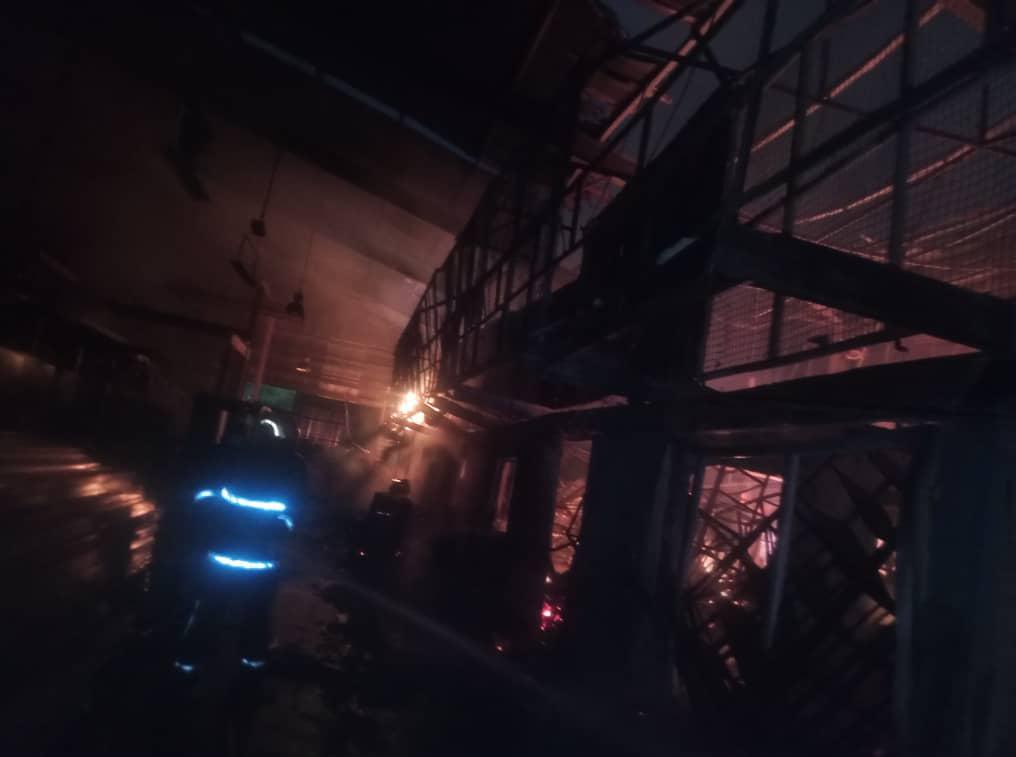
The Lagos State Fire and Rescue Service has confirmed the successful containment of two separate fire incidents that occurred overnight in different parts of the state.
The first incident was reported at 22:46 hours on Saturday at Tower Aluminum Village, along Abeokuta Expressway, Dopemu, Agege.
Fire crews from Ikeja and Agege stations responded promptly to the emergency, effectively dousing the fire which affected multiple offices and stores of varying sizes.
The structures, situated on a land area of approximately 2,592 square meters within a premises spanning about four acres, suffered significant damage to affected sections and their contents.
The second incident occurred in the early hours of Sunday at about 03:15 hours at a three-storey commercial building located on Oyabiyi Street, opposite the NLC Office, Tejuosho, Yaba. The building, which housed shops and stores containing stacked textile materials, was engulfed by fire.
Firefighters from Somolu, Ilupeju, and Sari Iganmu Fire Stations were swiftly mobilized to the scene and successfully contained the blaze, preventing further spread to adjoining properties.
In both incidents, the Lagos State Fire and Rescue Service demonstrated professionalism and rapid response, ensuring that the fires were brought under control without escalation and casualty.
The Controller General of Lagos state fire and rescue reiterates the importance of fire safety precautions and urges members of the public to remain vigilant, especially in commercial areas where flammable materials are stored.
Further investigations into the causes of the fires are ongoing to unravel their causes.
News
Police must pay transport fares, says AIG
” No police officer has the right to enter your vehicle without paying. We should assist one another willingly, not by force,” he said.


• The Assistant Inspector-General of Police(AIG) in charge of Zone 2 Command, Mr Olohundare Jimoh, speaking with transporters at Obalende garage, Lagos State, on Wednesday.
The Assistant Inspector-General of Police, Zone 2 Command, Mr Olohundare Jimoh, has declared that officers must pay fares before boarding commercial vehicles, warning against abuse of authority.
Jimoh spoke on Wednesday at Obalende garage during a sensitisation meeting with drivers and transport workers marking National Police Day 2026.
He stressed that relations between police and the public must be based on partnership, not coercion, urging both sides to support each other voluntarily.
“No police officer has the right to enter your vehicle without paying. We should assist one another willingly, not by force,” he said.
Jimoh called for stronger cooperation to maintain safety and order on roads, insisting there was no conflict between officers and transport unions.
“I don’t collect money from officers. We don’t arrest people arbitrarily. If you have issues with any officer, report directly to me,” he said.
(Vanguard)


Resident Doctors Set to Begin Nationwide Indefinite Strike on April 7 Over Unmet Demands

Nigerian Army Debunks Claims of Attack on Bishop Matthew Kukah’s Residence and Sokoto Catholic Cathedral

JUST IN: Lagos Fire Service Successfully Contains Two Overnight Fire Incidents iin Lagos

Tech Expert, Zuckerberg trains with UFC champions, Adesanya, Alexander

Organ Trafficking: Ekweremadu bags 10 years in UK prison

SAINT OBI: Between his marriage and his death
-

 Health3 days ago
From South Africa to US, ‘Cicada’ COVID-19 variant spreading
-
 Crime3 days ago
Ebonyi: Gunmen Assasinate Another Traditional Ruler
-

 Politics2 days ago
INEC Dismisses Calls for Chairman’s Removal
-

 Crime21 hours ago
Three Killed, One Injured in Fresh Jos Attack (Video)
-

 Politics1 day ago
Labour Party to hold presidential primary April 28
-

 Politics1 day ago
Onyejeocha resigns as Minister of State for Labour
-
 Politics1 day ago
No force can defeat Tinubu in 2027 –Umahi
-
 News19 hours ago
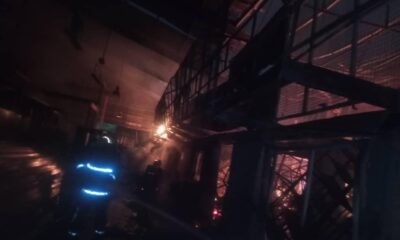
JUST IN: Lagos Fire Service Successfully Contains Two Overnight Fire Incidents iin Lagos