
News
SA to the President on Energy, Olu Verheijen urges investors to seize new opportunities in Nigeria’s energy sector


…Says IOCs invested $82 billion in deepwater outside Nigeria since 2013
The Special Adviser to the President on Energy, Olu Verheijen has urged investors to seize new opportunities in Nigeria’s energy sector, highlighting untapped potential and recent reforms to attract capital.
Speaking to a diverse audience, at the ongoing African Energy Week in Cape Town, South Africa, she underscored the untapped potential within the industry and discussed the recent reforms implemented by the President Bola Tinubu administration to attract investment.
Verheijen noted that the country has historically underperformed in oil and gas production despite Nigeria’s wealth in the oil and gas industry.
She referenced how countries like Brazil that has only 30% of Nigeria’s oil reserves has outperformed by producing 131% more than current production of Nigeria.
“Despite our abundant endowments, we have underperformed against our potential. For example, Brazil holds only 30% of Nigeria’s oil reserves but produces 131% more.
This is largely due to under-investment,” she said. She said that since 2016, Nigeria has attracted only 4% of African oil and gas investments, while investment has surged in other, less resource-rich nations.
“Since 2016, Nigeria has managed to attract only 4 percent of total investments in oil and gas, while less resourced countries in Africa have enjoyed a bigger share.
When we analyzed investment data, we also found that, between 2013, when Nigeria’s last deepwater project reached FID, and now, IOCs operating in Nigeria have committed more than $82 billion in deepwater investments in other countries that they have deemed to be more attractive destinations for their capital.”
Recognizing this trend, the presidential aide highlighted many efforts by President Tinubu’s administration to enact reforms aimed at reshaping Nigeria’s investment landscape.
Among these initiatives, she said the government has introduced fiscal incentives targeting deep offshore and non-associated gas projects, marking the first time Nigeria has outlined a fiscal framework specifically for deepwater gas.
In efforts to enhance the upstream Oil and Gas sector, she said her office has collaborated closely with the office of the National Security Adviser to create and distribute focused Security Directives, leveraging insights garnered from on-ground operators.
Additionally, Verheijen revealed steps to streamline approval processes by clearly defining the regulatory scopes involved.
This initiative, she said, aims to significantly reduce the extended project timelines that have historically plagued the industry, as well as the high-cost premiums associated with operating in Nigeria.
She added, “Our target is to shorten the contracting timelines from an extensive 38 months to just 135 days, while also working to eliminate the 40% cost premium that currently exists within the Nigerian petroleum industry.
The presidential aide also revealed efforts by the current President Tinubu administration to further open up the oil and gas sector for bigger investments with a set of clear fiscal incentives for Non-Associated Gas and Deep offshore Oil & Gas exploration and production.
“This is the first time that Nigeria is outlining a fiscal framework for Deepwater gas since exploration in the basin commenced in 1991,” She said.
According to her, amongst other initiatives, there has been a focus on midstream and downstream investments in Compressed Natural Gas, (CNG), liquefied petroleum gas, and electric vehicles as part of the Presidential Gas for Growth Initiative.
She added that the administration has also worked to streamline regulatory processes, shorten project timelines, and reduce the high-cost premium of operating in Nigeria.
“We have also introduced fiscal incentives to catalyze investments in the midstream and downstream sectors, including, Compressed Natural Gas (CNG), Liquefied Petroleum Gas (LPG), and Mini Liquefied Natural Gas (LNG).
“These align with the broader Presidential Gas for Growth Initiative, which seeks to enable the displacement of PMS and Diesel in three key sectors: heavy transport, decentralised power generation and cooking.
These incentives are also stimulating demand for Electric Vehicles. “Our goal is to eliminate the 40% cost premium within the Nigerian petroleum industry and cut down contracting timelines from 38 months to 135 days,” Verheijen stated.
She said the government has unlocked over $1 billion across the energy value chain, with two more major investment projects expected by mid-2025.
“We are also facilitating the transfer of onshore and shallow water assets to local companies with the capacity to grow production, while supporting the transition of International Oil Companies, with resilient capital, into deep offshore and integrated gas.
We have unlocked over $1 billion in investments across the value chain and by the middle of 2025 we expect to see FID on two more projects, including a multibillion-dollar deepwater exploration project, which will be the first of its kind in Nigeria in over a decade – one of many to come.
Verheijen also addressed efforts by the Tinubu administration to revamp the nation’s power sector, with plans to provide more reliable electricity access for the 86 million Nigerians currently underserved.
She said the scheme aims to improve revenue assurance and collection. Other key measures include tackling legacy debt, deploying seven million smart meters to reduce losses, and expanding off-grid solutions for remote communities.
By 2027, Nigeria aims to ensure 20 hours of electricity daily for consumers in urban areas and industrial hubs.
Highlighting recent macroeconomic reforms such as petrol subsidy removal and foreign exchange liberalization, Verheijen expressed confidence that Nigeria is set for unprecedented growth.
“Under President Tinubu’s leadership, Nigeria is championing reforms to unlock its vast economic potential and create jobs,” she concluded, inviting foreign partners to participate in Nigeria’s next chapter of growth.
Abiodun OladunjoyeDirector of Information State House, AbujaNovember 7, 2024

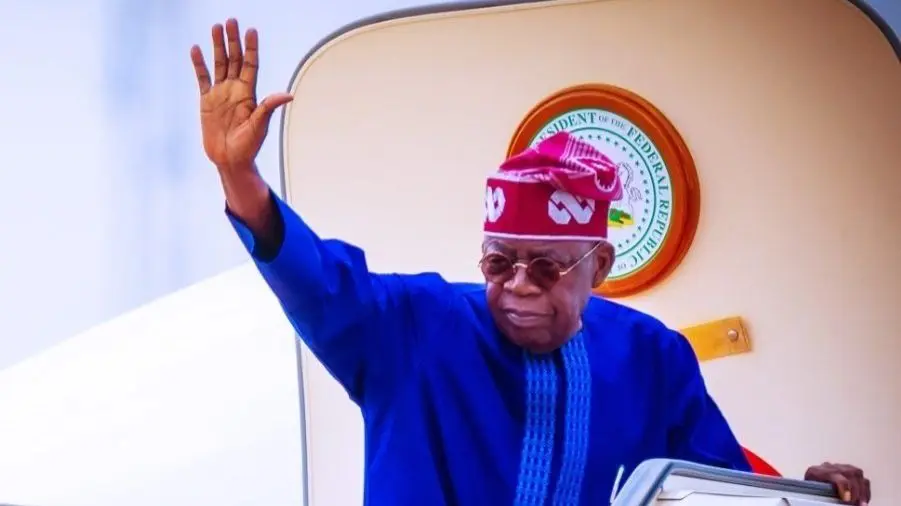
President Bola Tinubu has ended his working vacation in Europe and departed Paris for Nigeria on Tuesday, with his aircraft expected to land at Murtala Muhammed Airport in Lagos later in the evening.
The announcement was made by his Special Adviser on Information and Strategy, Bayo Onanuga. Tinubu left Abuja on August 30 for what was initially billed as a three-week working vacation.
He spent one week in London before proceeding to Paris. The trip was later extended, bringing his total time abroad to about 30 days.
The President chose to return through Lagos rather than Abuja to honour the memory of the late Chief MKO Abiola, the presumed winner of the June 12, 1993 presidential election.
On Independence Day, October 1, he is scheduled to attend the premiere of a movie celebrating Abiola at the Wole Soyinka National Theatre in Iganmu, Lagos.
While in Lagos, Tinubu will hold strategic meetings with political leaders and associates over several days as preparations for the 2027 general elections intensify. He is expected to return to Abuja after those engagements.
During his stay in Paris, the President attended a private dinner with French President Emmanuel Macron and held meetings with business leaders, including Vincent Bolloré of the Bolloré Group.
He also met with First Holdings Chairman Femi Otedola and witnessed the signing of a Memorandum of Understanding between the Ogun State Government and DP World for a deep seaport and Blue Marine Economic Zone.

The National Assembly plans to translate Nigerian laws into Igbo, Hausa, Yoruba and other indigenous languages as part of a broader effort to digitise parliamentary records and make legislation more accessible to citizens.
Henry Nwawuba, Executive Secretary of the National Assembly Library Trust Fund, announced the initiative on Monday in Abuja while declaring open the 2026 National Assembly Library Week. The event was themed “Parliamentary Memory: Connecting Records, Legislation and the People.”
Nwawuba said the translation would help more Nigerians, especially those not proficient in English, understand the laws that affect their daily lives. He described the library as the knowledge infrastructure of the legislature and a repository of its institutional memory.
The move forms part of a digital overhaul that includes upgrading the e-library, creating electronic repositories, developing a National Assembly Library mobile application, and introducing a Bills Tracker to allow the public to monitor the progress of proposed laws in real time.
The library will also produce infographics, audiovisual materials and short video explainers to simplify bills, Acts and legislative procedures. Officials said the upgrades would help curb the spread of fake or unverified legislative documents online.
Senate President Godswill Akpabio, represented by Senator Osita Ngwu, and Speaker of the House of Representatives Abbas Tajudeen, represented by Professor Julius Ihonvbere, both stressed the need for lawmakers to use the digital tools while prioritising cybersecurity.
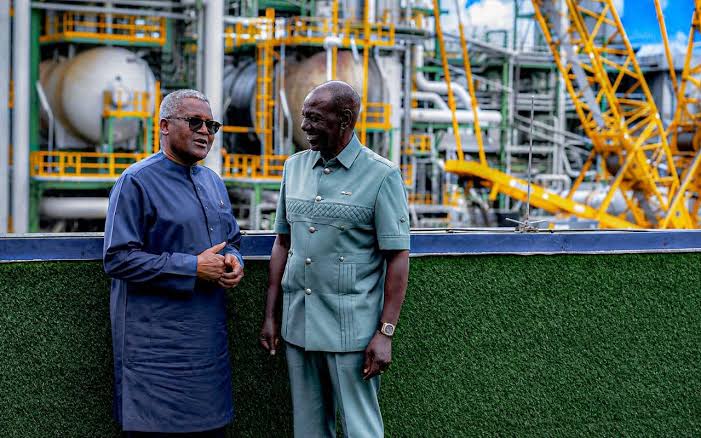
A Kenyan court order requiring parties to maintain the status quo on disputed land has cast uncertainty over the planned groundbreaking of Aliko Dangote’s multi-billion-dollar oil refinery in Lamu, scheduled for Wednesday, September 30.
The Malindi Environment and Land Court, in an order dated September 25 and made public this week, directed that the existing situation on Land Reference No. 13061 in the Hindi/Manda Magogoni area be preserved until a hearing on October 14. The order followed a petition by 133 residents of Chandavai in Lamu County, who claim the land is ancestral property their families have occupied, farmed and developed for generations. They allege inadequate recognition, compensation and resettlement in the acquisition process.
Judge Jane Onyango declined to certify the application as fully urgent in a way that would explicitly cancel the ceremony and refused a separate request to restrain the Office of the President, Dangote Industries, the Lamu County Government and other respondents from proceeding with the groundbreaking. However, the status quo directive bars clearing, excavation, fencing, demolition, construction or other interference with occupied portions of the land in the interim.
Dangote Group said the ruling has not halted the groundbreaking ceremony itself. “The court has not halted the groundbreaking ceremony of the refinery at this stage. However, activities at the site may be affected by the ruling as both parties are required not to carry activities until the case is heard on 14th October,” the company stated.
Energy and Petroleum Cabinet Secretary Opiyo Wandayi confirmed the ceremony would proceed as planned. Africa’s richest man, Aliko Dangote, downplayed the development while speaking to investors in Nairobi, describing such legal challenges as “normal for us in Africa” and comparing it to past disputes elsewhere on the continent. He insisted the project would continue.
The proposed facility is a 700,000-barrel-per-day greenfield oil refinery and petrochemical complex estimated to cost $15–16 billion (roughly Ksh2 trillion). It is intended to process crude from Kenya’s Lokichar fields and other East African sources, reduce the region’s heavy reliance on imported fuels, create jobs and support industrialisation. President William Ruto is expected to attend the ceremony alongside Dangote. Heavy equipment has already begun arriving at the Port of Lamu.
The case returns to court on October 14, when respondents will have the opportunity to file responses and the matter will be heard inter partes. Until then, the legal constraint on site activities remains in force even as organisers press ahead with the ceremonial launch.


UPDATE: Malindi Court Declines to Halt Dangote Refinery Launch in Lamu

JUST IN: Tinubu Departs Paris for Nigeria After Extended Vacation

National Assembly Plans to Translate Laws into Igbo, Hausa, Yoruba

Tech Expert, Zuckerberg trains with UFC champions, Adesanya, Alexander

Organ Trafficking: Ekweremadu bags 10 years in UK prison

SAINT OBI: Between his marriage and his death
-
 Business2 days ago
SEC Highlights Focus of National Capital Market Conference 2026
-
 Business2 days ago
NGX Debuts Invest WhatsApp Channel
-
 Sports2 days ago
Flamingos win WAFU B U-17 women’s tournament
-

 Business2 days ago
Naira To Dollar, Pound, Euro …Today, September 28
-
 News2 days ago
Nigeria is 66, Thursday October 1
-

 Entertainment2 days ago
Madonna and Taylor Swift win big at the MTV VMAs
-

 News2 days ago
JUST IN: Fire Engulfs Lagos Customs Command Office
-

 Business2 days ago
Ghana Moves to Cut Domestic Airfares as Ticket Prices Stay High