
Business
FG Exempts Farmers, Manufacturers, SMEs From Paying Withholding Tax


Recently, the Federal Government of Nigeria has implemented significant changes to the withholding tax regime, exempting certain categories of entities to foster a more favorable business environment. This development was confirmed by Taiwo Oyedele, Chairman of the Presidential Committee on Fiscal Policy and Tax Reforms, in a post on social media.
According to Oyedele, the reforms aim to address various challenges and introduce exemptions and reduced rates under the new withholding tax regime. Key highlights include:
- Exemption for Small Businesses: Small businesses are now exempted from withholding tax compliance, which simplifies their tax obligations and reduces administrative burdens.
- Reduced Rates for Low-margin Businesses: Businesses with low profit margins will benefit from reduced withholding tax rates, acknowledging their financial constraints.
- Exemptions for Manufacturers and Farmers: Manufacturers and producers, such as farmers, are also exempted from withholding tax. This exemption aims to support these sectors crucial to economic growth.
- Measures Against Evasion: The reforms include measures to curb tax evasion and minimize tax avoidance, ensuring more effective revenue collection for the government.
- Ease of Credit and Utilization: The reforms facilitate easier access to credit and the utilization of tax deducted at source, enhancing liquidity for businesses.
Oyedele highlighted that these changes reflect emerging issues and adopt global best practices in tax administration. The new regulations are expected to be officially published in the gazette soon, providing clarity on the timing of deductions and defining key terms related to withholding tax.
Withholding tax, introduced in Nigeria in 1977, serves as an advance payment of income tax on specified transactions. Its primary objectives are to provide regular revenue to the government and combat tax evasion by ensuring taxes are deducted at the source of income.
Overall, these reforms mark a proactive step by the Nigerian government towards creating a more simplified and business-friendly tax environment, supporting economic activities across various sectors and promoting sustainable growth.










Business
Meta set to charge WhatsApp Business messages from October 1
For example, a Nigerian fintech company sending 500,000 chargeable utility messages could incur about $5,050 in fees from Meta alone, excluding charges that may come from third-party providers or software platforms used to manage the messaging service.

Businesses using Meta’s WhatsApp Business Platform will begin paying for certain messages sent to customers from October 1, 2026, under a new pricing structure announced by the company.
The change applies to organisations that use the WhatsApp Business Platform, formerly known as the WhatsApp Business API, to manage customer communication on a large scale.
Regular WhatsApp users and small businesses using the standard WhatsApp Business app are not the main targets of the new charges.
Under the revised system, the amount businesses pay will depend on the type of message being sent.
Utility messages, including payment alerts, order confirmations and other service-related updates, will cost about $0.0101 per message, while marketing messages will attract a higher fee of approximately $0.062 each.
Although the individual charges appear relatively small, companies that send large volumes of messages could see their communication expenses rise significantly.
For example, a Nigerian fintech company sending 500,000 chargeable utility messages could incur about $5,050 in fees from Meta alone, excluding charges that may come from third-party providers or software platforms used to manage the messaging service.
Business
Dangote Refinery Suspends Petrol Sales To Lagos Depots
Dangote Refinery is prioritising markets where imported products are either unavailable or less dominant, rather than adding more supply to Lagos, which receives substantial volumes of imported petrol.

Dangote Petroleum Refinery has suspended coastal sales of Premium Motor Spirit (PMS) to depot owners and importers in Lagos.
People familiar with the refinery’s operations said that the move is deliberate, aimed at redirecting locally refined petrol to areas where imported supply is scarce.
The suspension is ongoing. A source said: “The suspension of coastal sales to Lagos is still ongoing. It is aimed at redirecting products to locations where imported products are unavailable. Lagos has quite some imported petrol.”
Dangote Refinery is prioritising markets where imported products are either unavailable or less dominant, rather than adding more supply to Lagos, which receives substantial volumes of imported petrol.
The strategy is intended to ensure locally refined petrol reaches areas where it is most needed.
The decision comes amid concerns at the refinery over the volume of imported petrol entering Nigeria.
According to data available to the refinery, imported PMS accounted for about 43 per cent of total petrol supplied into Nigeria in July
Business
Naira Exchange Rates Friday, August 28
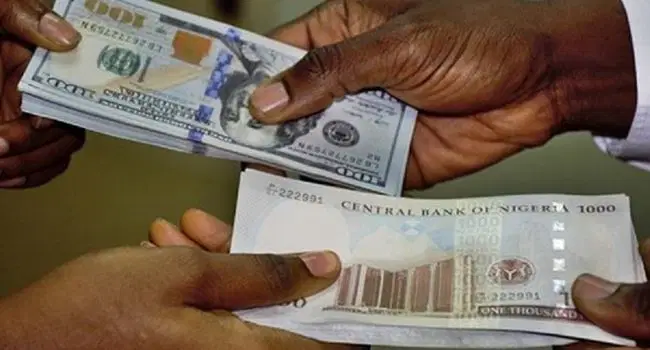
Today, the Naira Black Market exchange rate for 1 Great British Pound (GBP) is 1900 Naira. This means that you can get 1900 Naira for every 1 Pound that you exchange.
How much is 100 pounds in naira today?
At the current black market rate of 1900 per pound, 100 British Pounds = 190,000 Naira.
BLACK MARKET RATES
US Dollar (USD) Buy ₦1,405 Sell ₦1,410
Great British Pound(GBP) Buy ₦1,900 Sell: ₦1,920
EURO (EUR) Buy ₦1,595 Sell ₦1,615
Canadian Dollar (CAD) Buy ₦1,020 Sell ₦1,080
South African Rand (ZAR) Buy ₦75 Sell ₦90
Ghana CEDI (GHS) Buy ₦95 Sell ₦110
West African CFA Buy ₦2, 300 Sell ₦2, 400
CENTRAL AFRICAN CFA Buy ₦2,150 Sell 2,250
CBN Exchange Rates
US Dollar (USD) ₦1,338.59
Great British Pound (GBP) ₦1,820.34
EURO (EUR) ₦1,560.12
Swiss Franc (CHF) ₦1,664 91
Chinese Yuan (CNY) ₦199.19
Japanese Yen (Yen) ₦8.40
West African CFA (XOF) ₦2.39
West African Unit Account (WAUA) ₦1,843.17
Saudi Riyal (SAR) ₦356 51
South African Rand (ZAR) ₦83.72


Police confirm Kogi APC Chairman’s Murder by Bandits

President Tinubu Orders Comprehensive Forensic Audits of MDAs, IPPIS

Wushishi, National Population Commission’s Chairman, Dies

Tech Expert, Zuckerberg trains with UFC champions, Adesanya, Alexander

Organ Trafficking: Ekweremadu bags 10 years in UK prison

SAINT OBI: Between his marriage and his death
-
 Business3 days ago
Meta U.S. agrees to pay $18bn lawsuits over children’s social media addiction
-

 Business3 days ago
Naira Exchange Rates Thursday, August 27
-

 Sports3 days ago
NFF President Gusau, other board members resign Over DSS Probe
-
 News3 days ago
NIGCOMSAT To Procure Two New Communication Satellites
-
 News3 days ago
Gunmen abduct Dangote Cement senior driver in Ogun
-

 News3 days ago
Troops Resist Terrorists At Sokoto Barracks
-

 News3 days ago
FG commissions 37 electric buses for civil servants
-

 Crime2 days ago
JUST IN: Terrorists kill 4, abduct others in Gorau after boat tragedy