I have witnessed many elections since 1979 and I can say without any equivocation that the 2023 election was the best, the most free and fair, the most transparent.
Those who are pillorying the election and INEC, the electoral umpire are simply saying so because the outcome of the election, especially the presidential election did not match their expectation.
May God forgive them, especially the men in cassocks, who in their hallucination, had prophesied victory for their favourite candidate, claiming it was a message from God.
It must be clear to Nigerians that those clerics were not in any conclave with the Almighty God. Their prediction was their personal desires, which went unfulfilled by God.
God surely has other plans for our country and instead chose a man, who has the best leadership pedigree and espouses the best vision to pilot our affairs from 29 May.
Man indeed proposes, God disposes. Our clergymen, not satisfied with the divine and INEC verdict have been all out disparaging the election. The latest of them was Cardinal John Onaiyekan of the Catholic Church.
News reports said the Octogenarian claimed that the election was rigged. He accused some unidentified people of masterminding the rigging and claimed that God knows those riggers.
To Onaiyekan, the alleged machination of ‘those riggers’ made impossible the manifestation of the ‘people’s will’ in the outcome announced by INEC. This lie, nay a malicious propaganda, has been told repeatedly by the opposition parties and their supporters since 1 March when Asiwaju Bola Tinubu was declared as President-elect.
The lie has been sold abroad to people who do not have a first-hand information on how INEC conducted the poll.
The lie is simply vicious. It must stop. It is a lie for which the purveyors, no matter their status, ought to earn the wrath of God on earth and in heaven. It is not true.
Without holding brief for INEC, which has filed its defence at the Tribunal, which begins sitting on 8 May, I repeat again that the 2023 election was the best since the return to democracy in 1999. It was miles ahead of the heavily compromised 2007 election conducted by President Olusegun Obasanjo, wherein the beneficiary of the electoral heist, Umaru Yar’Adua apologised for the embarrassment.
Yar’Adua atoned for Obasanjo’s sin by setting up the Justice Uwais Commission to sanitise our election process.
Since then, our elections have gotten better, election cycle after election cycle.
The introduction of BVAS made a significant difference and made the 2023 election, the most technologically driven poll ever conducted in our country. And the best. BVAS made it impossible for parties to record outlandish numbers in their strongholds. It ensured that only the accredited voters voted. INEC deserves praise not ridicule.
All the critics of INEC, on account of the non-transmission of the results recorded at the 176,000 polling units are purely doing so for mischief.
The criticism is most misplaced as the so-called result transmission was additional to what happened at the polling unit. It is superfluous.
In the presidential and National Assembly elections, all polling units tallied votes cast and each party polling agent was given a copy of Form EC8. Collation of polling unit results was done at the ward level and from there to the council level and then the state level. Political parties usually know how they fared in the election by the time votes are tallied at ward or council level.
Parties do not need to wait for INEC upload of polling unit results on its portal to know the entire result of the election. They do not also need to wait for the results announced at the Abuja Collation Centre. In 2015, President Goodluck Jonathan conceded to President Muhammad Buhari before INEC’s announcement, because he and his agents had the figures from all the states. He conceded because he knew the election was already lost to Buhari.
In a development that is extremely strange to our politics, the Labour Party and the PDP initially sponsored calls for an interim government. When that did not get traction, they mounted vicious attacks on INEC for not uploading the results on time, using this lapse to vilify an election that was the best in our country. It’s like condemning your bank for not printing a receipt for a credit payment, when the money is already sitting pretty in your account and you have received the alert.
The Labour Party and the PDP and their surrogates, some of them lawyers, clerics and some ethnic groups have also mounted desperate campaign for the postponement of the inauguration of the President-elect Bola Ahmed Tinubu on 29 May. Some other groups, including the leading labour and partisan unions, the NLC and TUC, in league with some equally partisan civil society organisations are blackmailing the judges that will handle the petitions against Tinubu’e election.
We have never had such post-poll desperation, except this time that we have a Peter Obi on the ballot and an Atiku that is cocksure he has lost his last chance to gun for the nation’s No. 1 seat. Since 1999, every election held has always been disputed by losers.
The winners are allowed to be sworn in, while litigation goes on. This was the case in all elections. This is also the trend in the states. This has been the convention. It was the convention when Labour Party Vice presidential candidate, Datti Baba-Ahmed became a senator, representing Kaduna North in 2011 under the platform of Congress for Progressive Change. His challenger went to court. Baba-Ahmed’s victory was upturned, after some months, when he had been sworn in as senator.
We cannot change the convention now because some people believe that the men who came second and third in the poll, are pursuing cases in court. They should exercise patience for the judiciary to decide whether they have any strong case to invalidate Tinubu’s victory. The judiciary has always supported litigants when they have ‘substantial’ proof that they were rigged out of an election. As the tribunal begins sitting today, let Labour and its senior partner, the PDP stop further blackmail of the judiciary.
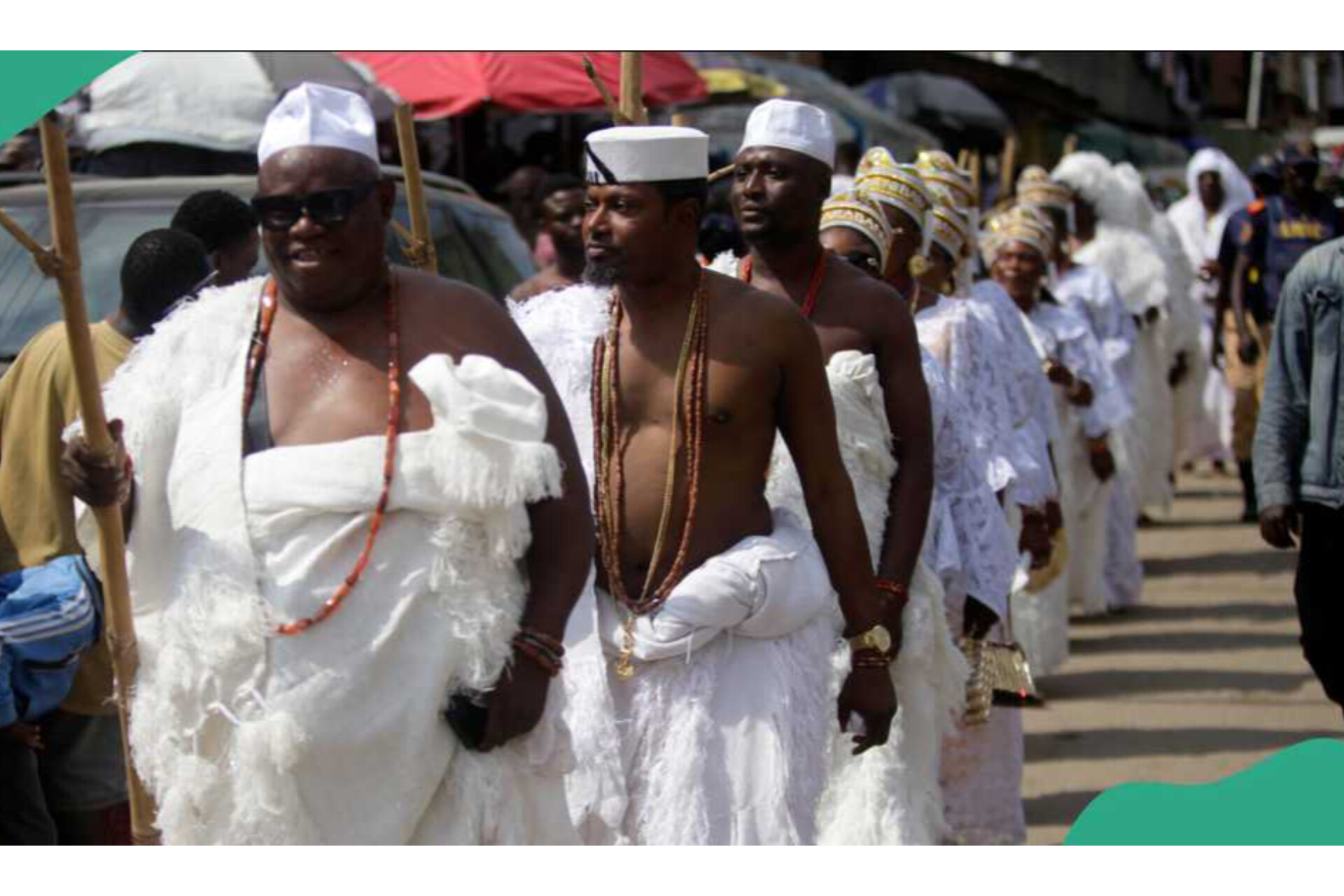
The Lagos State Government has declared Thursday, August 20, 2026, a work-free day for public servants, political appointees and others to mark this year’s Ìṣẹ̀ṣe Day celebration.
The announcement was made by the Special Adviser to the Governor on Tourism, Arts and Culture, Idris Aregbe, in a statement on Wednesday. He described Ìṣẹ̀ṣe as “not a relic” but “a living expression of our traditions and a celebration of Yoruba spirituality as an important part of Nigeria’s cultural and religious landscape.”
Authorities expect the event to draw more than three million residents and traditional worshippers in what is billed as one of the largest gatherings of its kind. Celebrations will feature prayers, rituals, processions, drumming and cultural displays dedicated to the Òrìṣà, coordinated by the Association of African Traditional Religion Nigeria and Overseas.
Ìṣẹ̀ṣe Day has been observed as a work-free day in Lagos since 2023, following a request by the Lagos State Council of Obas and Chiefs. Governor Babajide Sanwo-Olu has maintained the practice annually as part of the administration’s commitment to indigenous values and religious inclusiveness under the THEMES+ Agenda.
Normal government activities are expected to resume on Friday, August 21. Residents have been urged to celebrate peacefully and respectfully.
Remi Tinubu and the Road to the President’s Re-election, By Dr Dayo Israel
Over the past three years, the Renewed Hope Initiative associated with the First Lady has become a significant platform for interventions touching women’s empowerment, education, health, humanitarian support and social welfare.
Every political journey has its visible protagonists.
History of political spouses
There is the candidate, the campaign, the crowds, the rallies and, ultimately, the votes. But behind many historic political journeys are people whose contributions are less easily captured in campaign posters or ballot papers.
Among them are the spouses who choose, despite the pressures of public life, to stand beside their partners when the road becomes difficult. It is an often underestimated role.
The Constitution may define the powers of a President, but it does not define the emotional architecture that sustains a person carrying the weight of a nation.
It does not describe the person who listens when the cameras are switched off, who understands the pressure behind the public smile, who watches a spouse become the subject of national controversy, or who must decide whether to retreat into private life or step forward into the political storm.
Around the world, First Ladies and First Spouses have answered that question differently. Michelle Obama became one of the most compelling modern examples of a First Lady who embraced public life as a platform for service.
She developed causes and initiatives of her own, travelled extensively, spoke directly to citizens and became a powerful communicator of the Obama administration’s broader values, while remaining an important partner to Barack Obama through the demands of his presidency and political career.
Her model demonstrated that a First Lady need not be a ceremonial appendage to the President; she can become a force multiplier, using access and visibility to strengthen causes, communities and the broader social mission surrounding an administration.
But the history of political spouses also reminds us that there is no single template for standing beside a political leader.
Melania Trump offered a strikingly different model during Donald Trump’s 2024 return to the presidential campaign.
She was largely absent from the campaign trail, appearing selectively rather than becoming a constant presence at rallies and political events.
Her public role was shaped by a preference for privacy and selectivity, and although she eventually made appearances in support of her husband, including a surprise appearance at Madison Square Garden shortly before the election, she largely remained away from the daily theatre of the campaign. Reports also indicated that her influence did not disappear simply because her public appearances were limited; she remained a private sounding board for her husband.
Her example is important because it demonstrates that there are different ways of being a political spouse.
Public political conversation
One may support privately, advise quietly and appear selectively, or one may choose the more demanding route of visibility, travelling, speaking, mobilising, meeting people and allowing one’s own reputation to become part of the public political conversation.
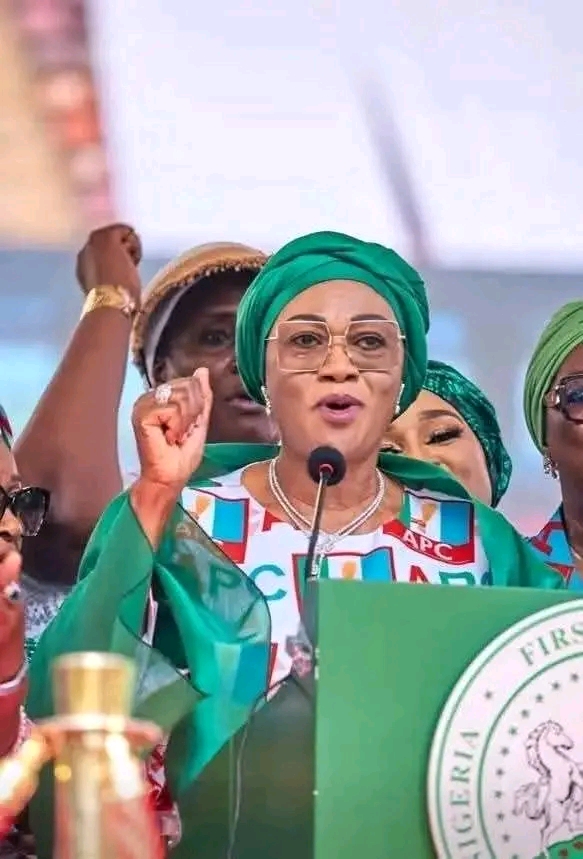
Senator Oluremi Tinubu has unmistakably chosen the latter.To describe her simply as the wife of President Bola Ahmed Tinubu would be to miss much of the story.
Before she became Nigeria’s First Lady, Senator Oluremi Tinubu had already lived a substantial public life of her own. She served in the Senate, participated in Nigeria’s political life and developed her own convictions and public identity.
The presidency expanded her platform, but it did not create her. The more interesting question is what she has chosen to do with that platform, and over the last several months the answer has become increasingly visible.
She has travelled across the country, engaged women and communities, spoken to young people, participated in political and social initiatives and increasingly placed herself in the difficult space where national leadership, grassroots mobilisation and public communication intersect. She has chosen not to remain at the edge of the political conversation, but to enter it.
That choice comes with a cost. Public visibility creates exposure, and exposure creates vulnerability. In the age of instant headlines, social media clips and political polarisation, the distance between what a public figure says and what the public believes she said can sometimes be measured in seconds.
Senator Tinubu has had her share of this experience.
She has been criticised, scrutinised and, on occasions, had her words interpreted through partisan lenses or separated from the context in which they were delivered.
Controversy and Clarification
Some of her remarks have generated controversy and required explanation or clarification.
But perhaps the more revealing part of the story is not that she has escaped controversy; she plainly has not. It is that controversy has not driven her out of the arena.
She has continued to show up. That matters because courage in public life is not the absence of criticism. It is the ability to continue fulfilling one’s responsibilities when criticism arrives.
It is easy to stand beside power when the crowd is applauding; it requires a different kind of conviction to remain visible when applause becomes argument.
This is where Senator Oluremi Tinubu’s story becomes more than a story about political loyalty. It becomes a story about partnership, public service and the practical use of influence.
Renewed Hope Initiative
Over the past three years, the Renewed Hope Initiative associated with the First Lady has become a significant platform for interventions touching women’s empowerment, education, health, humanitarian support and social welfare.
A review published earlier this year reported that the initiative had mobilised and disbursed more than ₦100 billion over its first three years through direct interventions, donations and multi-year commitments.
The number is significant, but numbers alone do not tell the human story. The more important question is what influence enables other people to do.
A speech may inspire someone for an afternoon; a resource can enable that person to do something tomorrow.
That is why some of Senator Tinubu’s recent interventions deserve to be considered through the lens of capacity rather than simply generosity.
Provision of vehicles to APC women leaders
In June 2026, for instance, she announced the provision of vehicles to APC women leaders in Abia, Anambra, Bauchi, Osun and Oyo, particularly women working in states where the APC does not control the governorship.
The significance goes beyond the vehicles themselves. Grassroots politics, like grassroots development, requires infrastructure.
A woman leader cannot reach communities she cannot travel to.
A political structure can possess passion, commitment and people, but without the tools to activate that commitment, enthusiasm can eventually become exhaustion. Mobility creates access, access creates connection, connection creates organisation, and organisation creates participation.
What appears on the surface to be a simple donation can therefore become an investment in the ability of people to do the work they have been asked to do.
APC National Youth Wing
That same logic is visible in the recent intervention that is particularly close to me: the presentation of nine buses to the APC National Youth Wing.
I received those buses on Friday, and therefore I do not speak about them merely as an observer reading a press statement.
I saw what the intervention means to a youth structure that has carried enormous responsibilities while often contending with logistical limitations and the weariness that comes when young people are expected to carry national responsibilities without adequate institutional support. Nine buses do not solve every problem, but they solve one important problem: movement.
They give young leaders greater capacity to travel into communities, support programmes across states, connect with young Nigerians beyond the familiar centres of political activity and take national engagement closer to the grassroots. In that sense, the buses are more than vehicles.
They are organisational infrastructure. They carry people, but they also carry ideas, programmes, conversations and possibilities.The same philosophy extends beyond the immediate political environment.
INSPIRE, the Inclusive Network for Supporting Progressive Leadership
In May, Senator Tinubu launched INSPIRE, the Inclusive Network for Supporting Progressive Leadership, Innovation, Reform and Equity for Women, aimed at strengthening women’s leadership, inclusion and professional advancement within Nigeria’s Federal Civil Service.
That intervention is important because it illustrates another dimension of her public role: influence is not necessarily most valuable when it is used to make oneself more prominent; it is most valuable when it makes other people more capable.
The legacy of a First Lady should therefore not be measured only by rallies attended or political structures mobilised.
It can also be measured by the women whose confidence grows, the young people who become more engaged, the institutions that become better equipped and the citizens who discover that their participation matters.
And perhaps that is the most interesting measure of Senator Oluremi Tinubu’s influence: not simply what she does herself, but what her example causes other people to do.
Mummy’s Men (and Women) Movement
This is where the emergence of the Mummy’s Men (and Women) Movement becomes particularly intriguing.
The idea began with a simple question: if Mummy is doing her part, what should her followers be doing? It is a question that captures something larger than the creation of another political support group. It speaks to the multiplier effect of example.
One person acts, another observes, inspiration follows, and inspiration eventually becomes organisation and participation.
If Mummy is walking the road, there should be followers and fans willing to walk it with her too.
That is the most compelling way to understand Mummy’s Men Movement. It is not simply about praising the First Lady. It is about responding to example with action.
If a woman can travel across the country, invest her time, strengthen structures, support women, empower young people and continue to participate despite the inevitable criticism that accompanies public life, then perhaps the appropriate response from men who admire that example is not merely applause but contribution.
Admiration watches; influence moves
And perhaps Senator Oluremi Tinubu’s most enduring contribution at this stage of her public journey may eventually be found not only in the things she personally accomplished, but in the number of people she inspired to decide that they too should carry some weight on the road.It is important, however, not to reduce her story to loyalty to her husband.
That would diminish both the woman and the office she occupies. Senator Tinubu is entitled to be understood as a public figure in her own right, with her own political history, interests, convictions and record of service. Nor should the contrast with Melania Trump be interpreted as a judgement about which model is superior.
Melania exercised her agency through a largely private and selective role, maintaining influence without embracing the daily visibility of the campaign trail. Senator Oluremi Tinubu has exercised hers differently.
She has chosen to be visible, to travel, to engage, to mobilise and to place her reputation into the public arena. Both approaches demonstrate that there is no single way for a political spouse to support a partner.
What makes Senator Tinubu’s choice distinctive is the scale of her public participation and her willingness to remain present even when that visibility exposes her to criticism.That willingness deserves to be understood in its proper context.
The road to an election will ultimately be measured in votes, and those votes belong to Nigerians. But political journeys are made long before Election Day.
Standing beside a political leader does not mean declaring that he is beyond criticism, nor does it require a spouse to surrender her individuality. Political support and democratic accountability can exist together.
A healthy democracy requires scrutiny, disagreement and the freedom to question those in power. But within that democratic space, a spouse can still decide that she will stand with her husband, contribute to the work around him and use the access that comes with her position to strengthen people and institutions.
The President carries the constitutional burden of governing the country; the First Lady does not share that constitutional mandate. Yet she can help strengthen the social, humanitarian, political and human ecosystem around the presidency.
That is a legitimate form of public service.Perhaps this is what makes the present chapter of Senator Oluremi Tinubu’s public life so compelling.
She has accepted the paradox of being a First Lady: she occupies an office that is not constitutionally defined in the same way as elected political offices, yet she possesses a platform powerful enough to shape public conversation; she does not sit in the President’s chair, yet she can strengthen the people and structures around him; she is not the principal actor in the electoral contest, yet her visibility can affect the political atmosphere in which that contest takes place. She has chosen to embrace rather than avoid that paradox. And with that choice has come scrutiny.
It has brought applause in some places and criticism in others, moments of celebration and moments of controversy. But there is something dignified about the decision to remain present when disappearing would be easier.
The public sees the President at the podium, the campaign, the crowds and the speeches.
What it does not see is the invisible architecture of political life: the private conversations, the counsel, the emotional support, the family pressures and the people who decide, in their own way, whether to carry some part of the burden.
Senator Oluremi Tinubu has chosen to carry some of it in public.
The road to an election will ultimately be measured in votes, and those votes belong to Nigerians. But political journeys are made long before Election Day.
They are made in conversations across states, in meetings with women, in youth engagements, in community visits, in the strengthening of grassroots structures and in the countless acts of support that make participation possible.
They are made when a woman leader receives the means to reach communities that were previously difficult to access; when a young organiser is given the mobility to travel; when a civil servant sees a pathway to leadership; and when men who have watched the First Lady’s example decide that they too should become participants rather than spectators.
That, perhaps, is the deeper story behind Remi Tinubu and the road to the President’s re-election. It is not simply the story of a woman accompanying her husband on a political journey.
It is the story of a woman who has increasingly chosen to make that journey visible, to turn influence into practical support and to inspire others to contribute their own weight to the road.
She has not been a woman without critics, nor has she been a woman who has never been misunderstood.
She has been tested by the peculiar pressures of public life, yet she has continued to show up.History will eventually judge the Tinubu presidency by its policies, outcomes, successes, failures and the lived experiences of Nigerians. The electorate will make its decision in accordance with its convictions.
That is the proper order of democracy. But alongside that history, there will also be the quieter story of those who walked the road with the principal actor, strengthened the people around him and chose not to retreat when the journey became difficult.
Senator Oluremi Tinubu has chosen to walk.
And perhaps that is what courage sometimes looks like: not the absence of noise, not the certainty that everyone will understand you, not a life without criticism, but the quiet determination to keep moving when the road becomes difficult.
If Mummy is walking the road, perhaps the most fitting response from those inspired by her is not simply to watch.It is to walk too.
∆ Dayo Israel is the National Youth Leader of the APC and the Convenor of the Mummy’s Men Movement, and he writes from Abuja.
One of our Sudanese brothers once shared a deeply touching story titled “Am I a Thief?”—and honestly, it’s not just a story… it’s a mirror to the soul.
He spoke of two moments that seemed small on the surface, yet carried profound weight.
He had traveled to Ireland for a medical exam. The fee was £309, but without change, he paid £310. It felt insignificant—just £1 extra. He completed his exams and eventually returned to Sudan, probably never thinking about it again.
But then… a letter arrived.
Inside was a check for £1, with a message that pierced deeper than the money itself:
“You made a mistake when paying your exam fees. The fee was £309, but you paid £310. This is your £1… we do not take more than what is rightfully ours.”
Pause for a moment and let that sink in…
The envelope, the stamp, the process—it all costs more than £1. Yet, integrity was not measured by cost, but by principle.
It wasn’t about the money. It was about doing what is right… even when no one is watching, even when it doesn’t “make sense.”
The second moment:
On his daily route between college and home, he would stop by a small grocery shop run by a woman and buy chocolate for 18 pence.
One day, he noticed something different. The same chocolate—same size, same quality—but now there were two prices: 18 pence and 20 pence.
Curious, he asked why.
She calmly explained: “There were issues in Nigeria, where we get cocoa. Prices have gone up. The new stock is 20 pence, but the old one remains 18.”
He thought logically, like many of us would: “Then people will only buy the 18 until it finishes, before moving to 20.”
She nodded, “Yes, I know.”
So he suggested what seemed like a “smart” solution: “Why not mix them together and sell everything at 20? No one will know the difference.”
She leaned closer… lowered her voice… and asked a question that struck like lightning:
“Are you a thief??”
He was stunned. Speechless.
He walked away—but that question followed him… echoed within him… refused to let him go:
“Am I a thief??!!”
Sometimes, we think being a thief is only about taking what is not ours in obvious ways.
But this story challenges something deeper.
It asks: What do we do with the little things? The unnoticed moments?
The quiet opportunities to bend the truth… just a little?
Because integrity is not proven in grand gestures.
It is revealed in the smallest decisions—when profit is possible, when shortcuts are easy, when no one would ever know.
And perhaps the real question is not what others call us…but what our conscience whispers when we are alone.












 News3 days ago
 Opinions2 days ago
 News3 days ago
 News3 days ago
 News3 days ago
 News2 days ago
 Politics3 days ago
 International2 days ago