
News
NBC code violates freedom of expression – ECOWAS court

The Court of the Economic Community of West African States sitting in Abuja had declared that the Nigerian Broadcasting Code used by the National Broadcasting Commission to impose sanctions and fines on broadcast stations violates freedom of expression.
The ECOWAS court made the declaration on October 23, in a judgment delivered in a suit filed by a non-governmental organisation, Expression Now Human Rights Initiative, against the Federal Republic of Nigeria.
The court held that the Nigerian government had failed in its responsibility to align its domestic legislation with its international obligations.
The applicant had challenged the use of the NBC Code by the Nigerian government to arbitrarily impose sanctions including fines against broadcast stations.
The court presided by Justice Dupe Atoki observed that in enacting laws “member states must give due consideration to its alignment with international guarantees and obligations like those under the African Charter on Human and People’s Rights.”
The applicant, represented by Solomon Okedara & Co, specifically challenged Articles 3 (1) (1), 3(1) 2), 15(2) (1) of the Nigeria Broadcasting Code (6th Edition) and Article 15 (5) (1) of the Amendments to the Nigeria Broadcasting Code (6th Edition) that they contravene the principle of freedom of expression.
In its judgment, the court noted that Article 3(1) (1) of the Code is infinite in scope and therefore violates the provision of Article 9(1) and (2) of the African Charter on Human and People’s Rights. The court noted that the provisions of Article 3(1) (2) of the Code are too ambiguous and vague and can “lead to curtailment of the right to freedom of expression.”
The court also ordered that the Nigerian government aligns Articles 3 (1) (1), 3(1) (2), 15(2) (1) of the Nigeria Broadcasting Code (6th Edition) and Article 15 (5) (1) of the Amendments to the Nigeria Broadcasting Code (6th Edition) in line with its obligations under Article 1 of the ACHPR and to cease giving effect to the provisions until it has aligned the same as ordered.
In May 2023, the Nigerian Guild of Editors commended the Federal High Court Abuja, for making an order of perpetual injunctions restraining the National Broadcasting Commission from imposing fines on broadcast stations in the country.
The court, in a judgment in May by Justice James Omotosho, held that not being a court of law, NBC had no power to impose sanctions as punishment on broadcast stations.









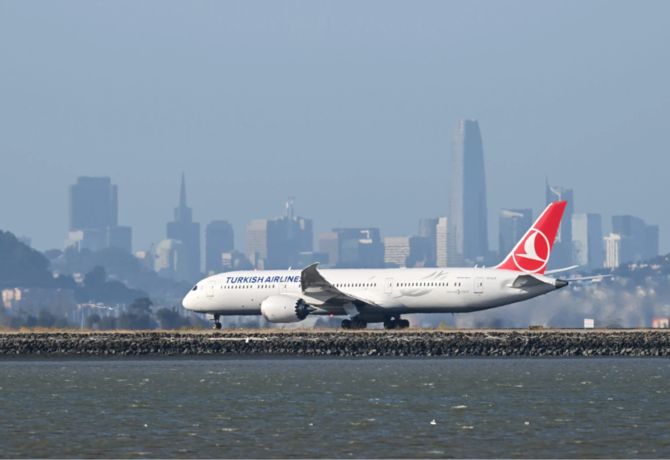
Airlines operating in Nigeria have issued a stern warning of an indefinite shutdown of flights if ongoing disruptions by aviation unions are not urgently resolved.
Industry operators cited repeated industrial actions, including strikes and work-to-rule tactics by union members, as severely impacting flight schedules, passenger movements, and operational costs. The threatened action could ground both domestic and international flights across major airports, including Lagos and Abuja.
Airline representatives stated that prolonged union-related interruptions have already caused significant financial losses and eroded passenger confidence. They called on the federal government and relevant labour authorities to intervene immediately to prevent a total collapse of commercial air travel.
No specific deadline for the proposed shutdown has been publicly announced, but stakeholders described the situation as “critical.” Passengers have been advised to monitor airline communications closely for any developments.
Authorities and union leaders have yet to issue detailed responses. Further updates are expected as talks continue.

A fire has broken out at the Lagos Customs Command office, officials confirmed early Monday.
Emergency services were dispatched to the scene as thick smoke rose from the building.
The cause of the blaze and the extent of the damage remain under investigation.
No immediate reports of casualties have been released. Authorities have urged the public to avoid the area while firefighters work to contain the flames.
Further updates are expected as the situation develops.
News
Nigeria is 66, Thursday October 1
The citizens are expecting the details of the anniversary events by the Federal Government, through the Minister of Interior, Olubunmi Tunji-Ojo.

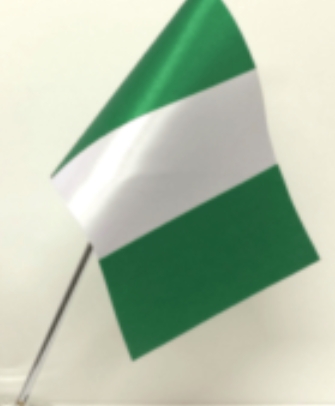
Since Nigeria gained independence on October 1, 1960, the country will mark its 66th Independence Anniversary on Thursday, October 1, 2026.
The citizens are expecting the details of the anniversary events by the Federal Government, through the Minister of Interior, Olubunmi Tunji-Ojo.


2027: Atiku, ADC Move to Amend Suit Challenging Tinubu’s Eligibility

BREAKING: Nigerian Airlines Threaten Indefinite Shutdown Over Union Disruptions

JUST IN: Fire Engulfs Lagos Customs Command Office

Tech Expert, Zuckerberg trains with UFC champions, Adesanya, Alexander

Organ Trafficking: Ekweremadu bags 10 years in UK prison

SAINT OBI: Between his marriage and his death
-

 Business8 hours ago
SEC Highlights Focus of National Capital Market Conference 2026
-
 Business8 hours ago
NGX Debuts Invest WhatsApp Channel
-
 Sports8 hours ago
Flamingos win WAFU B U-17 women’s tournament
-

 Business9 hours ago
Naira To Dollar, Pound, Euro …Today, September 28
-
 Sports3 days ago
Manchester City Faces Expulsion For Breaching 114 EPL Financial Rules
-
 International3 days ago
Congo military plane crash kills 13, including three officers
-
 Business9 hours ago
Ghana Moves to Cut Domestic Airfares as Ticket Prices Stay High
-

 News8 hours ago
Nigeria is 66, Thursday October 1