
Business
IEA Cushions Global Oil Supply By 290 Million Barrels March -July
Ultimately, a full and unconditional reopening of the Strait of Hormuz remains essential to avoid a further deterioration in global energy security.


Image credit : IEA Oil Market Report
The International Energy Agency (IEA) said that its member countries had so far released 290 million barrels of oil available to the market.
IEA Executive Director, Dr Fatih Birol confirmed,in a statement posted on the website, Monday.
” Since the announcement on 11 March of the IEA collective action to make 400 million barrels of oil available to the market, around 290 million barrels have been released by IEA Member countries, with more continuing to flow to the market.”
Birol said that IEA countries still hold a substantial volume of emergency stocks in reserve, including over 1 billion barrels of government-controlled stocks.
He emphasised that, for the moment, crude oil and gas markets have continued to benefit from several cushioning factors.
These include significant supplies from Gulf producers – notably through major efforts by Saudi Arabia and the United Arab Emirates – that have continued to reach global markets via various routes. In addition, oil producers in other regions – notably the United States, Brazil, Venezuela and Kazakhstan – have increased exports, helping offset some of the supply losses.
On the demand side, China has played an important role in stabilising markets by reducing its crude oil imports by nearly 50% compared with pre-war levels. is closely monitoring the situation in oil markets following recent developments in the conflict in the Middle East – with the escalation in hostilities affecting the Strait of Hormuz and energy infrastructure in the region increasing security of supply concerns and casting greater uncertainty over the market outlook.
Threats to the Bab el-Mandeb Strait, an increasingly important alternative shipping route for bypassing Hormuz, are adding to those concerns.
Dr Birol emphasised that there is no room for complacency on oil security amid the escalation in hostilities and drawing down of available commercial inventories.
Refinery activity and product supplies have not picked up as much as crude deliveries, meaning that markets for refined oil products, including diesel and gasoline, are considerably tighter than those for crude.
Ultimately, a full and unconditional reopening of the Strait of Hormuz remains essential to avoid a further deterioration in global energy security.
For natural gas, a large majority of the liquefied natural gas (LNG) supply lost due to the Hormuz disruptions has been offset by LNG flows from other markets, led by the United States.
But further delays in resuming Gulf exports risk keeping global LNG markets tighter for longer, Dr Birol warned.
Business
Obi Sees Something Good in Tinubu’s “Naira Float Policy ‘
The policy was introduced by the Tinubu administration in June 2023 as part of wider foreign exchange reforms.
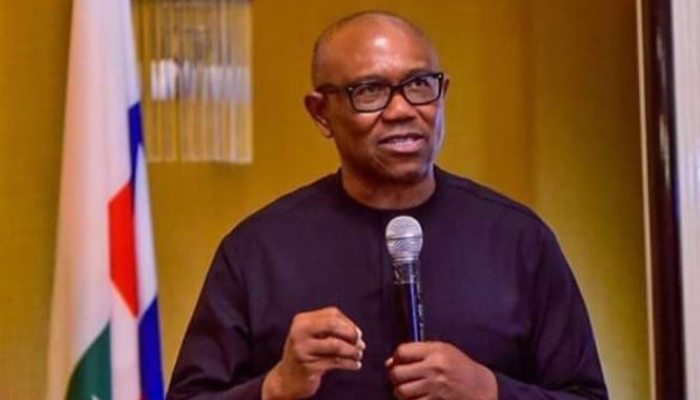
The presidential candidate of the National Democratic Congress (NDC) for the 2027 election, Peter Obi, has said he would retain President Bola Ahmed Tinubu’s naira float policy if elected president.
The policy was introduced by the Tinubu administration in June 2023 as part of wider foreign exchange reforms.
The Central Bank of Nigeria removed restrictions at the Investors and Exporters foreign exchange window, allowing the naira to trade more freely against the dollar and other major currencies
Obi made the disclosure in a public statement on air, emphasising that his administration would seek to strengthen the currency by prioritising productivity and increasing economic output rather than reversing the floating exchange-rate framework.
Asked to identify one policy of the Tinubu administration he would keep if elected, Obi said, “There’s one – the floating of the Naira. I’m not going to defend it. But I’m going to put productivity to make it more valuable to the people.”
His position means he would maintain the floating exchange-rate system while seeking to change the economic conditions that determine the strength and value of the naira.
Business
Dangote Refinery Buys 16m Barrels Of Nigerian Crude For October
The October supply is equivalent to about 520,000 barrels per day, representing most of the refinery’s 700,000 barrels-per-day processing capacity.

Dangote Refinery has bought at least 16 million barrels of Nigerian crude oil for delivery in October.
Reuters reported that the 16 million barrels comprise monthly crude allocations from the Nigerian National Petroleum Company and additional volumes purchased through a tender.
The October supply is equivalent to about 520,000 barrels per day, representing most of the refinery’s 700,000 barrels-per-day processing capacity.
The increased crude purchases highlight the refinery’s rising demand for feedstock as it expands operations and moves closer to operating at a larger share of its installed capacity.
Business
Brent crude slid to around $106 per barrel
Top US officials reportedly warned President Donald Trump that the war could continue through the remainder of his term, which ends in January 2029.
Brent crude slid to around $106 per barrel on Friday in a likely technical correction, but was still set to end the week sharply higher as the escalating conflict between the US and Iran fueled concerns over prolonged disruptions to global energy supplies.
Top US officials reportedly warned President Donald Trump that the war could continue through the remainder of his term, which ends in January 2029.
Meanwhile, Iranian leaders are reportedly determined to continue fighting despite mounting economic costs, viewing the conflict as an existential threat.
They also claim that Tehran has managed to rebuild its missile capabilities and could intensify attacks on US and Gulf assets if Washington escalates its own strikes.
Fighting has intensified over the past two weeks, with the US targeting Iranian oil tankers while Iran launched missiles at US warships and tankers in the Persian Gulf, as well as American assets in neighboring countries.


Bamanga Tukur, former Adamawa gov, ex-PDP Chair dies at 90

Bayelsa deploying 19 doctors, 210 nurses to strengthen primary healthcare centres

Albert Horsfall, Ex-SSS Director-General dies

Tech Expert, Zuckerberg trains with UFC champions, Adesanya, Alexander

Organ Trafficking: Ekweremadu bags 10 years in UK prison

SAINT OBI: Between his marriage and his death
-
 Politics3 days ago
Benue Politician,Terhemba Shija Vows To Bring Back Home Over 900,000 in IDP Camps
-

 News3 days ago
Police arrest 46 for obstruction of Obi’s convoy in Benue
-

 News2 days ago
JUST IN: One Dead, Many Feared Trapped as Two-Storey Building Collapses in Lagos
-

 News3 days ago
Lagos Confirms 6 Diphtheria Cases, Says no Outbreak
-

 Entertainment3 days ago
Rema to release new single ‘Oh No’ Friday
-

 Business2 days ago
Elumelu shares inspiring story of his beginning as a “young, hungry sales rep”
-

 Business2 days ago
Brent Holds Above $101bp
-
 Politics2 days ago
Trump promises $5,000 ‘dividend’ to U.S. citizens if Republicans win midterms