
Business
Nigerian Exchange Emerges Top In Africa By Dollar Values
By comparison, Zimbabwe Stock Exchange, trails Nigeria when returns are converted into dollars, underscoring how currency movements can significantly alter relative market standings from a global investment perspective.


The Nigerian equities market has emerged Africa’s strongest performer in U.S. dollar terms with a 68.2 percent Year- till-Date (YtD) return in the first seven months of 2026.
The bourse performance between January and July 24, 2026 outpaced other continental stock markets helped by investors confidence on the back of reforms by the Nigerian government.
The strong performance in dollar terms highlights the impact of exchange rate dynamics and renewed foreign portfolio participation.
By comparison, Zimbabwe Stock Exchange, trails Nigeria when returns are converted into dollars, underscoring how currency movements can significantly alter relative market standings from a global investment perspective.
Source: ThisDay
Business
Filling Stations Selling Petrol, Diesel Higher Driven By Global Crude Prices
The development is expected to raise transportation costs and household expenses, while increasing operating costs for businesses that depend on fuel for logistics, power generation and other activities.
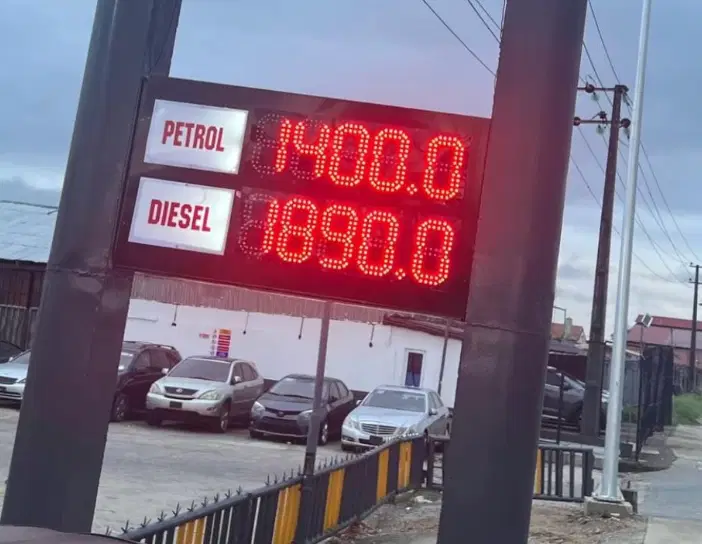
The surge in international crude oil prices above $100 per barrel is pushing up petrol prices across Nigeria.
While the government-owned filling stations operated by NNPC Limited have raised their pump price to N1,375 per litre from N1,275, some independent marketers have increased their prices to N1,400 from about N1,360 per litre.
For instance, MRS filling stations have increased their petrol price to N1,400 per litre from N1,300, representing a N100, or 7.7 per cent, increase in Lagos and its environs.
The latest increases followed the rise in the gantry price of petrol by Dangote Petroleum Refinery to N1,350 per litre, reflecting the impact of higher crude oil prices and rising costs across the petroleum supply chains.
The development is expected to raise transportation costs and household expenses, while increasing operating costs for businesses that depend on fuel for logistics, power generation and other activities.
Business
Obi Sees Something Good in Tinubu’s “Naira Float Policy ‘
The policy was introduced by the Tinubu administration in June 2023 as part of wider foreign exchange reforms.

The presidential candidate of the National Democratic Congress (NDC) for the 2027 election, Peter Obi, has said he would retain President Bola Ahmed Tinubu’s naira float policy if elected president.
The policy was introduced by the Tinubu administration in June 2023 as part of wider foreign exchange reforms.
The Central Bank of Nigeria removed restrictions at the Investors and Exporters foreign exchange window, allowing the naira to trade more freely against the dollar and other major currencies
Obi made the disclosure in a public statement on air, emphasising that his administration would seek to strengthen the currency by prioritising productivity and increasing economic output rather than reversing the floating exchange-rate framework.
Asked to identify one policy of the Tinubu administration he would keep if elected, Obi said, “There’s one – the floating of the Naira. I’m not going to defend it. But I’m going to put productivity to make it more valuable to the people.”
His position means he would maintain the floating exchange-rate system while seeking to change the economic conditions that determine the strength and value of the naira.
Business
Dangote Refinery Buys 16m Barrels Of Nigerian Crude For October
The October supply is equivalent to about 520,000 barrels per day, representing most of the refinery’s 700,000 barrels-per-day processing capacity.

Dangote Refinery has bought at least 16 million barrels of Nigerian crude oil for delivery in October.
Reuters reported that the 16 million barrels comprise monthly crude allocations from the Nigerian National Petroleum Company and additional volumes purchased through a tender.
The October supply is equivalent to about 520,000 barrels per day, representing most of the refinery’s 700,000 barrels-per-day processing capacity.
The increased crude purchases highlight the refinery’s rising demand for feedstock as it expands operations and moves closer to operating at a larger share of its installed capacity.


Filling Stations Selling Petrol, Diesel Higher Driven By Global Crude Prices

Bamanga Tukur, former Adamawa gov, ex-PDP Chair dies at 90

Bayelsa deploying 19 doctors, 210 nurses to strengthen primary healthcare centres

Tech Expert, Zuckerberg trains with UFC champions, Adesanya, Alexander

Organ Trafficking: Ekweremadu bags 10 years in UK prison

SAINT OBI: Between his marriage and his death
-

 Business3 days ago
Brent crude slid to around $106 per barrel
-

 Business3 days ago
Dangote Refinery Buys 16m Barrels Of Nigerian Crude For October
-

 News3 days ago
Albert Horsfall, Ex-SSS Director-General dies
-

 Business3 days ago
Obi Sees Something Good in Tinubu’s “Naira Float Policy ‘
-
 Health3 days ago
Bayelsa deploying 19 doctors, 210 nurses to strengthen primary healthcare centres
-
 News2 days ago
Bamanga Tukur, former Adamawa gov, ex-PDP Chair dies at 90
-
 Business8 minutes ago
Filling Stations Selling Petrol, Diesel Higher Driven By Global Crude Prices