
News
FG Launches One Million Tree Campaign at NDA to Combat Climate Change

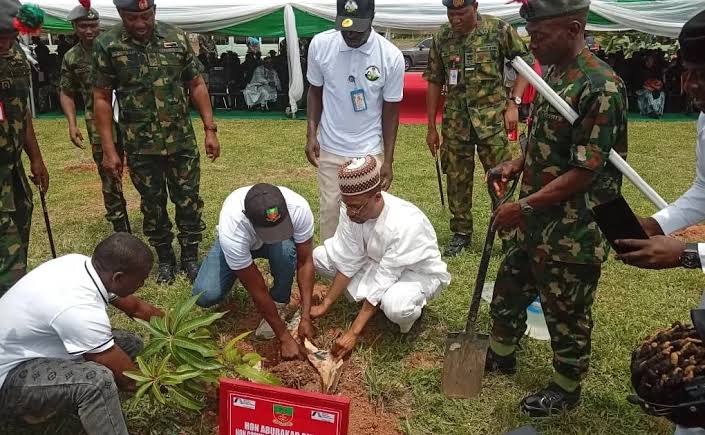
The Federal Government has launched a one million tree planting campaign at the Nigerian Defence Academy, NDA, Kaduna, as part of efforts to address the growing threats of climate change, desertification, deforestation and biodiversity loss across the country.
The initiative comes at a time when Northern Nigeria is experiencing increasing environmental degradation, with desert encroachment, shrinking forest cover and declining biodiversity posing serious threats to agriculture, water resources and rural livelihoods.
Representing the Minister of Environment, the Kaduna State Commissioner for Environment, Abubakar Buba, described the project as a strategic intervention aimed at strengthening climate resilience and environmental sustainability.
He noted that establishing the project within the Academy underscores the growing recognition of the link between environmental protection and national security, particularly as future military leaders are trained at the institution.
The minister added that the one million trees will help restore degraded land, improve air quality, reduce erosion, enhance biodiversity and create a more sustainable environment for military training and research.
The President and Chief Executive Officer of the Africa Finance Corporation, Samaila Zubairu, described the initiative as a long-term investment in environmental sustainability and national development.
He stressed the need to integrate climate action into security planning, education and economic development strategies, noting that environmental stewardship is critical to the nation’s future.
In his remarks, the Commandant of the Nigerian Defence Academy, Major General Oluyemi Olatoye, linked environmental degradation directly to national security challenges.
He warned that environmental decline can fuel instability and threaten sustainable development, adding that the NDA has incorporated environmental conservation into its training programmes through the Biodiversity Conservation Centre.
The Kaduna State Government, the Nigerian Defence Academy, Africa Finance Corporation and Fifth Chukker also signed a Memorandum of Understanding to formalise the partnership and ensure the successful implementation and sustainability of the project.
Representing Governor Uba Sani, the Commissioner for Local Government and Chieftaincy Affairs, Ibrahim Tanko, commended the initiative, describing it as a significant step towards environmental restoration and climate adaptation.
Stakeholders say the initiative will transform parts of the NDA into a sustainable green zone while supporting climate action, environmental research, biodiversity conservation and national security objectives.



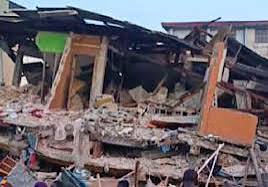
A two-storey residential building has collapsed along Baale Road (also referred to as Baale Street) near Ajuwon Bus Stop in Ajuwon/Akute, Ifo Local Government Area of Ogun State, on Monday, 27 July 2026, leaving several occupants feared trapped under the rubble.
The incident, which occurred in the Lagos-Ogun border community, triggered panic among residents and passers-by as the structure gave way unexpectedly. Crowds quickly gathered at the scene while waiting for emergency responders. Eyewitnesses described chaotic scenes of people attempting to dig through the debris by hand.
According to one eyewitness identified as Anthony, only a single male occupant managed to escape before the building became completely inaccessible. The survivor reportedly told those at the scene that his wife and children remained trapped inside.
Preliminary reports indicate that at least three people — including a grandmother, her toddler grandchild, and another man — have been rescued from the rubble and taken to hospital. Several others are still feared trapped. The exact number of people affected, including any injuries or fatalities, has not been officially confirmed by authorities at the time of reporting.
The Executive Chairman of Ifo Local Government, Hon. Idris Kusimo, has arrived at the scene and is coordinating with residents and responders. Rescue operations involving locals and emergency personnel are ongoing.
Urgent Appeal
An urgent call has gone out to the Ogun State Government, Ogun State Emergency Management Agency, relevant state fire and rescue services, the National Emergency Management Agency (NEMA), and all other emergency responders to immediately mobilise fully equipped teams to the location to rescue those still trapped beneath the debris.
Further updates will follow as official information becomes available. Residents in the area are advised to stay clear of the site to allow unhindered access for rescue teams.
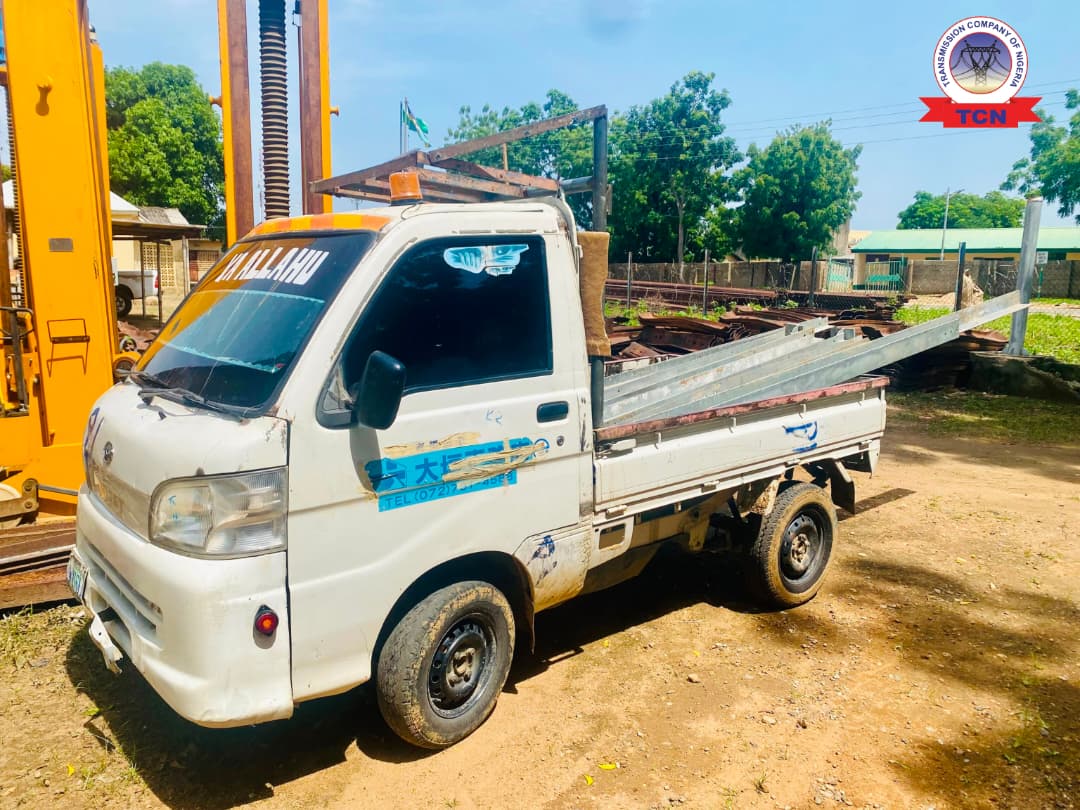
The Transmission Company of Nigeria, TCN, foiled an attempted theft at its 330/132kV transmission substation in Bauchi on Friday, July 24, 2026, at about 9:34pm.
Security personnel at the substation intercepted suspected vandals attempting to remove critical tower members. The suspects fled the scene on sighting the guards.

An inspection of the area led to the recovery of 12 transmission tower angle irons, one heavy-duty metal measuring scale, and a white pickup truck believed to have been used for the operation.
The recovered items and the vehicle have been handed over to the Railway Division Police Station, Bauchi, for further investigation.
No equipment was carted away and no injuries were recorded during the incident.
TCN commends the prompt response of its security team, whose vigilance prevented the theft of or damage to critical transmission infrastructure.
TCN reiterates the need for host communities to report suspicious activities around power installations to security agencies or the nearest TCN office.
News
ISWAP Finance Chief Surrender To Nigeria Military
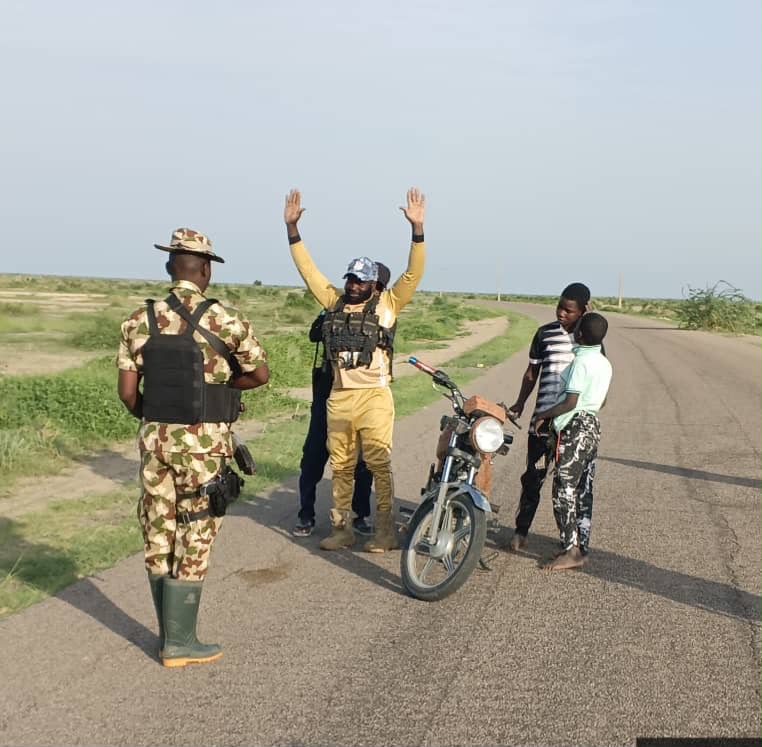
The senior operative surrendered to troops of 3 Battalion under 24 Task Force Brigade at about 06:45 WAT on 25 July along the Ladari-Jegarawa-Tunokalia axis of the Gamboru-Wulgo Main Supply Route. He arrived with two male children, voluntarily laying down his arms before the troops.

Credit: Operation HADIN KAI
Military authorities confirmed on Monday a senior Islamic State West Africa Province (ISWAP) finance operative, has surrendered to Operation HADIN KAI in Nigeria’s North-East.
Acting Military Information Officer, Headquarters Joint Task Force (North East) Operates HADIN KAI, Captain Mohammed Goni, disclosed this in a statement, emphasising that the surrender followed coordinated land and air offensives that have intensified pressure on terrorist enclaves, contributing to a growing wave of defections.
The senior operative surrendered to troops of 3 Battalion under 24 Task Force Brigade at about 06:45 WAT on 25 July along the Ladari-Jegarawa-Tunokalia axis of the Gamboru-Wulgo Main Supply Route.
He arrived with two male children, voluntarily laying down his arms before the troops.
Preliminary profiling by the Theatre Command identified the individual as the chief finance operative of the ISWAP enclave at Jubillaram, where he reportedly managed the terrorist group’s financial activities and logistics support.
Military authorities further disclosed that about 46 terrorists and their family members have voluntarily surrendered in recent days, suggesting that the combination of kinetic operations and intelligence-led campaigns is steadily weakening ISWAP’s cohesion and sustainment capabilities.


BREAKING: Two-Storey Building Collapses in Ajuwon, Residents Feared Trapped

IEA Cushions Global Oil Supply By 290 Million Barrels March -July

Ex-Int’l Football Player Bag 24 Years Jail Term for Cocaine Importation

Tech Expert, Zuckerberg trains with UFC champions, Adesanya, Alexander

Organ Trafficking: Ekweremadu bags 10 years in UK prison

SAINT OBI: Between his marriage and his death
-

 Business21 hours ago
Naira Exchange Rates To Foreign Currencies Monday, July 27
-

 Business20 hours ago
Phillips Consulting Report Ranks Enugu Nigeria’s Fastest Improving State
-

 News2 days ago
Zamfara LG Chairman Abduction: Security operatives intensify rescue efforts
-

 Sports20 hours ago
Saudi’s Club Al-Ittihad Table €10.5m Bid For Super Eagles Captain Ndidi
-

 Business19 hours ago
Nigerian Exchange Emerges Top In Africa By Dollar Values
-
 Politics19 hours ago
Why I committed to one term presidency – Peter Obi
-
 Business21 hours ago
Rural Electrification Agency targets 3.7GW solar manufacturing to close Nigeria’s power gap
-
 Business21 hours ago
IMF Warns of AI Financial Shocks Across Institutions, Markets