
Business
Unctad says GDP is not enough to tell if people are better off
The report proposes 31 indicators built around four areas: Peace, human rights and respect for the planet; current well-being; equity and inclusion; and sustainability and resilience.


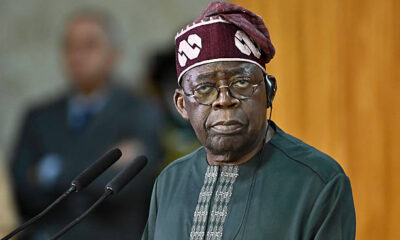
Image:UNCTAD Acting Secretary-General Pedro Manuel Moreno
Pedro Manuel Moreno, Deputy Secretary-General and Acting Secretary-General of UN Trade and Development (UNCTAD) stated that Gross domestic product, or GDP, is not enough if people are better off in an economy.
“GDP measures the value of goods and services produced in an economy. It has long been treated as the world’s scoreboard for progress. But a growing economy can still leave people poorer in security, trust, opportunity and hope,” Moreno said in a report on the unctad website.
The report argues that governments need a broader way to judge whether development is working. It does not call for replacing GDP. It calls for complementing it with a practical dashboard that captures what GDP misses: well-being, equity, sustainability and resilience.
Growth is not the whole story
Between 1980 and 2025, global economic activity contracted only twice: During the 2009 financial crisis and the COVID-19 pandemic in 2020. By GDP’s measure, the world has rarely been richer.
Yet trust in institutions has eroded, inequality has widened in many places and environmental pressures have intensified.
In some wealthy countries, young people report high levels of anxiety and isolation. The gap between economic output and lived experience is becoming harder to ignore.
“What we measure shapes what we value. That is the question this work now places squarely on the international agenda, ”said Moreno.
A dashboard for the real economy
The report proposes 31 indicators built around four areas: Peace, human rights and respect for the planet; current well-being; equity and inclusion; and sustainability and resilience.
The dashboard would track material conditions, health, education, social cohesion, institutional quality, environmental conditions, poverty, inequality and the assets societies pass to future generations – including produced, human, social, institutional and natural capital.
It is designed to be country-owned, so governments can adapt it to national priorities and capacities.
Close to half of the indicators are drawn from the Sustainable Development Goals, meaning many countries already have data systems in place.
Why it matters now
Unlike earlier Beyond GDP efforts, this report comes with a political track.
It was produced in response to a direct request from Member States under the Pact for the Future and will now move into an intergovernmental process at the General Assembly, led by Spain and Guyana.It also recognizes that progress does not stop at borders.
One country’s well-being can be shaped by decisions made elsewhere — through emissions, trade, finance, technology and supply chains.
UNCTAD, together with the UN Development Programme and partners across the UN system, will support countries that choose to begin testing the framework.
“GDP tells us how fast an economy is growing. It does not tell us where we are headed, what we pass on the way, or what we leave behind for the next generation,” Mr Moreno said.







Business
CBN Pledges Policy Consistency Into 2027
The single-digit inflation target remains the anchor.

The Central Bank of Nigeria says that it will keep a consistent monetary policy direction in 2027, as it pursues the single-digit inflation target.
The stance puts policy continuity at the centre of the CBN’s inflation fight.
The bank is tying its inflation goal to consistency in monetary policy rather than a change in direction.
The single-digit inflation target remains the anchor.
The CBN’s message is that the target still stands and that policy will stay consistent in 2027.
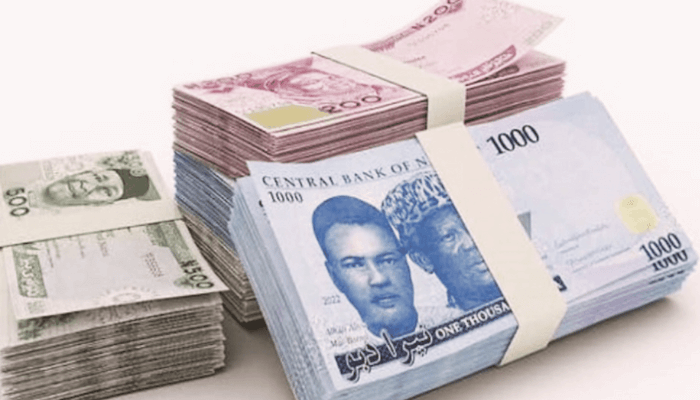
₦1450 DOLLAR (USD)
₦1875POUND (GBP)
₦1575EURO (EUR)
₦950 CANADIAN DOLLAR (CAD)
₦70 SOUTH AFRICAN RAND (ZAR)
₦350 UAE DIRHAM (AED)
₦190 CHINESE YUAN (CNY)
₦100 GHANAIAN CEDI (GHS)
₦2240 WEST AFRICAN CFA F.(XOF)
₦2180 CENTRAL AFRICAN CFA F.(XAF)
₦820 AUSTRALIAN DOLLAR (AUD)
Business
MAN Seeks Tobacco Exclusion From NAFDAC Bills Over Regulatory Overlap
The association further maintained that the existing regulatory framework, administered through the Federal Ministry of Health and Social Welfare and the Federal Ministry of Industry, Trade and Investment, already provides for the regulation of the legal tobacco sector.
The Manufacturers Association of Nigeria (MAN) has called on the National Assembly for explicit tobacco products exclusion from two proposed bills seeking to repeal and reenact the laws establishing the National Agency for Food and Drug Administration and Control (NAFDAC), warning that their passage could create overlapping regulatory responsibilities and increase compliance costs for manufacturers.
The bills are the National Agency for Food and Drug Administration and Control (Repeal and Enactment) Bill, 2026 (SB. 940) and the Food, Medical Products and Related Products (Registration, Etc.) Bill, 2026 (SB. 952).
The Director-General of MAN, Segun Ajayi-Kadir, therefore urged the lawmakers to remove all references to tobacco from both bills, including relevant definitions, schedules and consequential provisions.
It also called for an explicit exclusion clause to prevent tobacco products from subsequently being brought under the proposed legislation through administrative instruments.
According to the association, such a provision would preserve clarity in institutional mandates and regulatory responsibilities while preventing unnecessary regulatory overlaps.
MAN maintained that regulatory reforms should strengthen public-health protection, address demonstrable regulatory gaps and improve compliance without creating additional administrative burdens for legitimate businesses.
It argued that clear institutional mandates, proportionate enforcement and effective inter-agency coordination were essential to achieving these objectives while supporting manufacturing, employment and investment.
The association further maintained that the existing regulatory framework, administered through the Federal Ministry of Health and Social Welfare and the Federal Ministry of Industry, Trade and Investment, already provides for the regulation of the legal tobacco sector.
MAN reaffirmed its readiness to engage constructively with the National Assembly and relevant government institutions, particularly the two federal ministries, to ensure that the proposed legislation delivers effective regulation without unnecessary duplication, conflicting institutional mandates or regulatory uncertainty.


CBN Pledges Policy Consistency Into 2027

Naira Exchange Rates, Thursday,26 Nov

MAN Seeks Tobacco Exclusion From NAFDAC Bills Over Regulatory Overlap

BREAKING: Lagos Govt Declares Today, Thursday Work-Free to Mark 2026 Ìṣẹ̀ṣe Day

Tech Expert, Zuckerberg trains with UFC champions, Adesanya, Alexander

Why we Increase the 2025 Budget by ₦700bn – Bichi
-

 Entertainment2 days ago
BREAKING: Veteran Nollywood Actor Chief Pete Edochie Dies at 79
-

 News2 days ago
Katsina Suspends Emir of Daura Over Sexual Allegations By Polish Tourist
-
 News2 days ago
“We’ve Lost a Titan, Legend, an Icon,” Gov Mbah Mourns Edochi
-

 News2 days ago
Arise TV Obaigbena Denies Police Invitation, Calls Declaration ‘Smear Campaign’
-
 Business1 day ago
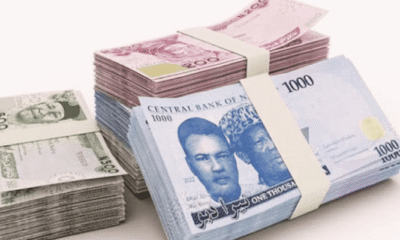
Naira Exchange Rates, Thursday,26 Nov
-

 News2 days ago
Mother, daughter crushed to death by truck in Abuja
-
Business2 days ago
Naira Exchange Rates, Wednesday, 25 Nov 2026
-

 Business2 days ago
Cardoso : Pressure on The Naira Is Seasonal Factors- It won’t last