
Health
Pharmacists body urges FG to establish presidential committee for sector
The association noted that local drug production currently accounts for just over 38 percent of national demand, far below the 70 percent target set in the National Drug Policy 2021.

The Association of Community Pharmacists of Nigeria (ACPN) urges the Federal Government to establish a presidential committee dedicated to the pharmaceutical sector, implementing the National Drug Distribution Guidelines, and strengthening existing laws against fake drugs.
ACPN made the call while reacting to the government’s recent ban on imported drugs, describing the move as a strategic step toward strengthening local pharmaceutical manufacturing and conserving foreign exchange.
In a statement jointly signed by its National Chairman, Ambrose Ezeh and National Secretary, Omokhafe Ashore, the association said the updated prohibition schedule covering drugs under HS Codes 3003.10.00.00 through 3004.90.00 signals renewed commitment to protecting domestic industry players.
The ACPN specifically highlighted the ban on the importation of commonly used medicines such as paracetamol tablets and syrups, metronidazole, clotrimazole, chloroquine, multivitamins, aspirin and folic acid, as well as topical preparations like penicillin and gentamycin ointments.
It described the development as a “step in the right direction” that would boost investor confidence in Nigeria’s pharmaceutical sector.
The association noted that local drug production currently accounts for just over 38 percent of national demand, far below the 70 percent target set in the National Drug Policy 2021.
It attributed this gap partly to continued dependence on imports, especially from China and India, which it said accounts for about 65 per cent of drug supply in the country.
It also urged reforms in pharmaceutical education and training to expand the pool of skilled professionals across industry, clinical, hospital and community practice.





The Nigeria Centre for Disease Control and Prevention (NCDC) has confirmed that Lassa fever has claimed 259 lives and infected 1,086 people across 24 states and 118 local government areas so far in 2026.
In its latest Lassa Fever Situation Report for epidemiological week 36 (August 31 to September 6), the agency said the figures represent a case fatality rate of 23.9 percent — significantly higher than the 18.6 percent recorded during the same period in 2025.
Twelve new confirmed cases were recorded in week 36, a decline from the 18 cases reported the previous week. The fresh infections were detected in Ondo, Edo and Kogi states.
Five states continue to bear the heaviest burden, accounting for 87 percent of all confirmed cases this year: Bauchi, Ondo, Taraba, Benue and Edo. People aged 21 to 30 remain the most affected age group.
The NCDC noted that no new infections among healthcare workers were recorded during the latest reporting week. The agency continues to urge the public to maintain hygiene, avoid contact with rodents and their droppings, and seek early medical care if symptoms appear.
Health
Nigerian hospital successfully performs kidney cancer surgery via tele-robotic
The development could reduce the need for Nigerians to travel abroad for specialised medical treatment, thereby reducing expenditure on international travel, accommodation and medical services.
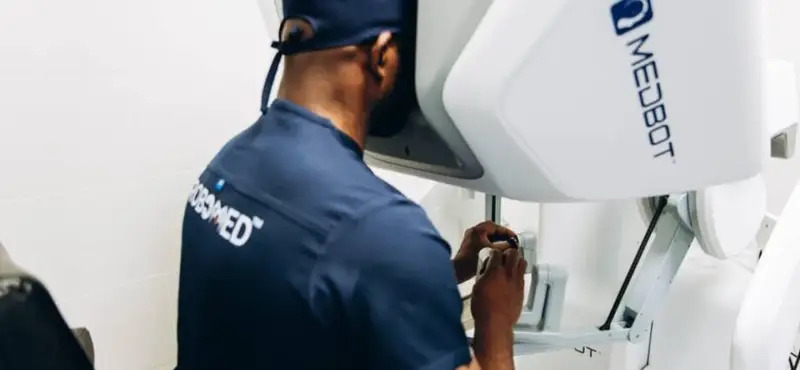
• A surgeon performing tele-robotic surgery.
Nisa Premier Hospital, Abuja, has partnered with RoboMed Global and The Redeemer’s Health Village (RHV) to successfully perform what the hospital described as the first tele-robotic surgery in Nigeria and West Africa.
The landmark kidney cancer surgery was performed on a patient at Nisa Premier Hospital, Abuja, while the surgeon, Professor Obi Ekwenna-Davis, remotely controlled the robotic surgical platform from Redeemer’s Health Village in Lagos.
The procedure, which lasted approximately three hours, was performed to remove a kidney affected by a cancerous tumour.
The hospital said the patient had been discharged following the successful procedure, although details about the patient’s identity and condition were withheld for privacy reasons.
Speaking during an event to mark the milestone, the Chief Executive Officer of Nisa Premier Hospital, Dr Ibrahim Wada, said the development demonstrated the potential of tele-robotic surgery to connect specialist surgical expertise with patients across Nigeria.
Wada said the procedure was carried out using the MicroPort robotic surgical platform installed at Nisa Premier Hospital, with the remote surgeon controlling the system from Lagos.
He said the development could reduce the need for Nigerians to travel abroad for specialised medical treatment, thereby reducing expenditure on international travel, accommodation and medical services.
According to him, the technology also creates an opportunity for Nigerians to access specialised expertise from doctors located in other parts of the world without requiring the doctors to travel physically to Nigeria.
Source: Daily Trust
Health
Ondo ‘Monkey Tail’ herbal drink kills 49
The Commissioner for Health in the State, Dr Banji Ajaka, who disclosed this on Wednesday night, said the number of affected persons has now climbed to 170.

A locally produced herbal concoctions known as ‘Monkey Tail’ in Ondo State has killed 49 people .
The Commissioner for Health in the State, Dr Banji Ajaka, who disclosed this on Wednesday night, said the number of affected persons has now climbed to 170.
He explained that the latest deaths were recorded in Irele Local Government Area of the state, where eight persons have died from suspected poisoning.
Ajaka disclosed that health authorities had deployed response teams to Irele LGA and other affected communities to conduct surveillance, manage cases and trace the source of the suspected toxic substance.


Nollywood actor Cjay Nwokafor dies

WhatsApp introduces parental controls for teens

Obasanjo: “Aliko Embarrass Me”

Tech Expert, Zuckerberg trains with UFC champions, Adesanya, Alexander

Organ Trafficking: Ekweremadu bags 10 years in UK prison

SAINT OBI: Between his marriage and his death
-

 Business7 hours ago
Naira To Dollar, Pound, Euro… Rates Friday, October 1
-

 News7 hours ago
Nigeria @ 66: President Tinubu says next phase of reforms’ll cut cost of living
-

 Politics3 days ago
BREAKING: AAC sues Tinubu, NASS over Europe vacation
-

 News2 days ago
BREAKING: Court Order Threatens Dangote Kenya Refinery Launch
-

 Business6 hours ago
Court orders NMDPRA to continue issuing fuel import licences to Matrix Energy, AA Rano, AYM Shafa
-

 News1 day ago
FG Declares October 1 Public Holiday to Mark Independence Day Anniversary
-

 Crime3 days ago
BREAKING: Tragic One-Way Crash Claims Tricycle Driver’s Life in Meiran Lagos
-
 News6 hours ago
FG launches new digital postcodes