
Health
2026 World Malaria Day: WHO lists 5 steps to eliminate malaria by 2030
World Malaria Day 2026 is observed on April 25th under the theme “Driven to End Malaria: Now We Can. Now We Must”

The World Health Organization (WHO) has listed five priority steps that could be taken by malaria-endemic countries especially in Africa to achieve the 2030 global target of eliminating malaria.
WHO emphasises the need for global malaria eradication marking the 2026 World Malaria Day with the theme: “Driven to End Malaria: Now We Can. Now We Must”
World Malaria Day 2026 is observed on April 25th under the theme “Driven to End Malaria: Now We Can. Now We Must”.
It highlights the potential to eliminate malaria in our lifetime, supported by new vaccines and next-generation nets, while urging immediate, accelerated action to address rising threats.
First, WHO said that countries must lead the malaria response with strong national ownership. It noted that when governments prioritize malaria as a dividend of national development and mobilize domestic resources, they lay the foundation for sustainable impact.
Second, it suggested a strategic intelligence action. It noted that robust surveillance systems, improved use of evidence and data analytics allow countries to anticipate threats, deploy interventions more effectively and ensure that resources are used where they can achieve the greatest impact.
Third, it highlighted that innovation must be accelerated and scaled equitably.
WHO said the introduction of malaria vaccines, new vector control tools, and improved treatment strategies represents a major step forward.
At the same time, strengthening Africa’s research capacity and regional manufacturing can help ensure that innovation benefits those who need it most.
Fourth, it insisted that Primary Health Care (PHC) centres must remain at the center of the malaria response. And that people-centered health services delivered through strong community platforms enable early diagnosis, timely treatment and sustained prevention.
And fifth, WHO noted that ending malaria requires a whole-of-society effort. Environmental, social and economic factors shape malaria transmission.

Health
Nairobi Hospital Beckoning Nigerians Seeking Treatment Abroad
The hospital also holds internationally recognised certifications in pathology, laboratory medicine, cardiac care and stroke services.

A report by Aga Khan University Hospital, Nairobi (AKUH), has disclosed that Africa loses an estimated $7 billion every year as patients travel abroad for medical treatment, with more than 300,000 Africans travelling to India alone yearly in search of specialist care.
The hospital disclosed this at a media roundtable in Lagos, where it called for a stronger investment in Africa’s healthcare systems, while positioning its Nairobi facility as an alternative destination for Nigerians who currently seek treatment in Europe, Asia and the Americas.
Chief Operating Officer of the hospital, Khurram Jamal, attributed the continued outflow of patients and healthcare spending to shortages of specialist services, inconsistent quality standards, fragmented medical travel pathways and the perception that quality healthcare was only available outside Africa.
According to him, reversing the trend requires building healthcare systems that inspire confidence rather than relying on appeals to patriotism.
He maintained that patients would only choose African hospitals if they consistently met international standards.
Jamal said Aga Khan University Hospital was the first in the region to attain Joint Commission International (JCI) accreditation and has maintained the certification through successive reaccreditations.
He added that the hospital also holds internationally recognised certifications in pathology, laboratory medicine, cardiac care and stroke services.
Health
[UPDATES ] Nurse Mary Habila : Umahi clarifies possible cause of death
The lady in question was like a daughter to me. She had stayed with me for three years. She was a staff of the Federal Medical University. She was a nurse and not a physiotherapist,” Umahi said.

Minister of Works, Engr. David Umahi, on Thursday said that Miss Mary Habila, the nurse who died at a guest house within his residence in Uburu, Ebonyi State, spoke with her boyfriend on the night before her death and complained of a nosebleed.
Umahi, who addressed journalists for the first time since the incident, described the late Habila as “like a daughter” to him and called for an autopsy to determine the actual cause of her death.
Habila, a nurse with the David Umahi Federal University of Medical Sciences, Uburu, died on June 27, 2026, in a guest house located within the minister’s residence in Umunaga, Uburu.
The minister clarified that the deceased was a nurse and not a physiotherapist, as had been reported in some media outlets.
” The lady in question was like a daughter to me. She had stayed with me for three years. She was a staff of the Federal Medical University. She was a nurse and not a physiotherapist,” Umahi said.
Narrating the events leading to her death, Umahi said Habila spoke with her boyfriend on the night before she was found dead and informed him that she was experiencing a nosebleed.
She told the boyfriend she was bleeding from the nose. The boyfriend advised her to report it to her boss. She later told him the bleeding had stopped.
“He then said he would end the call so she could rest. She pleaded with him not to end the conversation, but he did.
About three minutes later, he called back and she was no longer answering her phone,” the minister said.
He further disclosed that Habila had been receiving treatment for an undisclosed medical condition at Turkish Hospital in Abuja, with the medical expenses paid by his family.
Health
Sokoto upgrades 92 PHCs to national compliance standards
The upgraded facilities now operate in line with the standards of the National Primary Health Care Development Agency, with skilled birth attendants, functional labour wards, essential drugs, medical equipment and improved infrastructure.
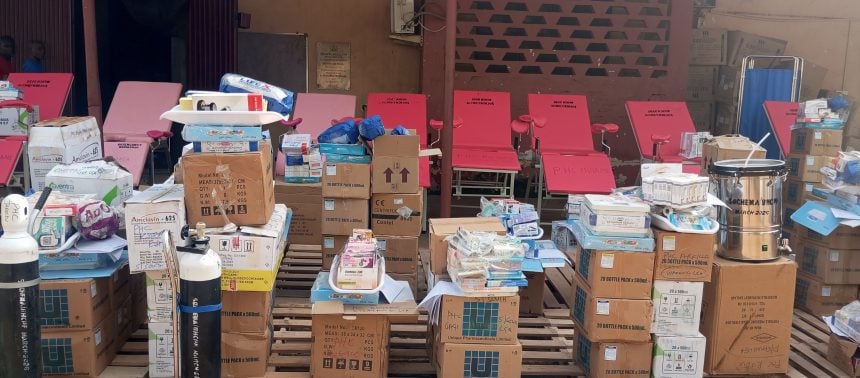
The Sokoto State Government said on Thursday 92 Primary Healthcare Centres (PHCs) across the state’s 23 local government areas have attained national compliance standards under the Safe Delivery Initiative (SDI).
In a statement the government assured that all 244 designated facilities would be upgraded before the end of 2026.
Speaking at the flag-off ceremony in Sokoto, the Commissioner for Health, Dr Faruk Umar Abubakar, said that the initiative was transforming primary healthcare through improved infrastructure, skilled manpower, essential medicines and stronger accountability.
“Today, we are launching the third phase of the Safe Delivery Initiative with 75 facilities that have fulfilled all the national requirements. Together with those completed in the earlier phases, we now have 92 functional and compliant primary healthcare centres,” he said.
He said the upgraded facilities now operate in line with the standards of the National Primary Health Care Development Agency, with skilled birth attendants, functional labour wards, essential drugs, medical equipment and improved infrastructure.


Wanted Soldier Arrested for Supplying Military Gear to Terrorists

Security Forces Rescue 9, Neutralise Terrorist in Kwara

Nigeria’s Enang Presents Credentials to German President Steinmeier (Images)

Tech Expert, Zuckerberg trains with UFC champions, Adesanya, Alexander

Organ Trafficking: Ekweremadu bags 10 years in UK prison

SAINT OBI: Between his marriage and his death
-

 Business3 days ago
Naira Exchange Rates Across Black Market, CBN, Commercial Banks Friday, July 24
-

 News3 days ago
Eleven poets jostle for $100,000, ‘Nigeria Prize for Literature 2026’
-

 Business3 days ago
MTN Nigeria asks customers to trade old SIM packs for prizes
-

 Business3 days ago
US subjects imports from Nigeria to 12.5% tariff
-

 News3 days ago
Petrol hits N1,400/l as Brent Surges To $100
-

 News3 days ago
Army declares soldier wanted for alleged sale of military uniforms to terrorists
-

 News3 days ago
Amupitan wants INEC to be funded directly from federation’s account
-

 News3 days ago
IGP declares operation 14-day to flush out criminals in Benue