
News
SERAP Seeks Spending Details Of N400bn Fuel Subsidy Savings from Tinubu

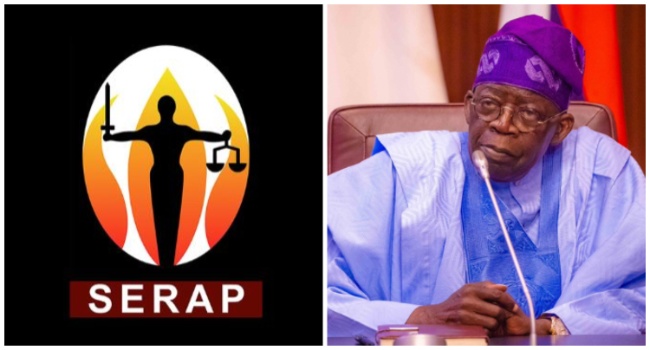
The Socio-Economic Rights and Accountability Project (SERAP) has urged President Bola Ahmed Tinubu to use his good offices and leadership position to “urgently publish details of spending of about N400bn so far saved as a result of the removal of subsidy on Premium Motor Spirit (PMS) popularly called petrol.”
SERAP urged him to “provide details of the plans on how subsequent savings from the removal of subsidy on petrol, including specific projects on which the funds would be spent, and the mechanisms that have been put in place to ensure that any such savings are not embezzled, misappropriated or diverted into private pockets.”
According to reports, the Federal Government has saved N400bn within the four weeks following the implementation of the policy on the removal of payment of subsidy on petrol.
In the letter dated 1 July 2023 and signed by SERAP deputy director Kolawole Oluwadare, the organisation said: “Your government has a legal responsibility to ensure that the savings from the removal of subsidy on petrol are spent solely for the benefit of the 137 million poor Nigerians who are bearing the brunt of the removal.”
SERAP said, “Prevention of corruption in the spending of savings from the removal of subsidy on petrol and preventing and addressing the challenges caused by the removal are serious and legitimate public interests.”
According to SERAP, “Nigerians have the right to know how the savings are spent. Publishing the details of the spending of the savings would promote transparency, accountability, and reduce the risks of corruption in the spending of the funds.”
The letter, read in part: “SERAP is concerned that the savings from subsidy removal may be embezzled, misappropriated or diverted into private pockets.”
“Opacity in the spending of the savings from subsidy removal would have negative impacts on the fundamental interests of the citizens and the public interest.”
“We would be grateful if the recommended measures are taken within 7 days of the receipt and/or publication of this letter. If we have not heard from you by then, SERAP shall consider appropriate legal actions to compel your government to comply with our request in the public interest.”
“Unless the government is transparent and accountable to Nigerians in how it spends the savings from the removal of subsidy on petrol, the removal will continue to undermine the rights of Nigerians, and increase their vulnerability to poverty and social deprivation.”
“Transparency would ensure that the funds saved from the removal of subsidy are not diverted into private pockets, and increase public trust and confidence that these savings would be used to benefit Nigerians.”
“The implementation of the National Social Safety Net Programme (NASSP) and spending on the programme have been mostly shrouded in secrecy.”
“Publishing the details of the spending of the N400bn and other savings from the removal of subsidy would also ensure that persons with public responsibilities are answerable to the people for the performance of their duties including the management of the funds.”
“Transparency and accountability in the spending details of the N400bn saved as a result of the removal of subsidy on petrol, and on the spending of subsequent savings from the removal would mean that the savings can help poor Nigerians to overcome the effects of such removal.”
“It would also help to avoid a morally repugnant result of double jeopardy on poor and socially and economically vulnerable Nigerians.”
The lack of transparency and accountability in the spending of savings from the removal of subsidy on petrol and the resulting human costs would directly threaten fundamental human rights that your government has an obligation to protect.”
“Your government has the legal obligations to address the effects of subsidy removal on the human rights of 137 million poor Nigerians, and to prevent and address some of the direst consequences that the removal may reap on human rights, especially given the disproportionate impact on these Nigerians.”
“SERAP also urges you to promptly instruct Independent Corrupt Practices and Other Related Offences Commission (ICPC) and Economic and Financial Crimes Commission (EFCC) to monitor the spending of all savings from subsidy removal.”
“SERAP notes that the removal of subsidy on petrol continues to negatively and disproportionately affect poor Nigerians, undermining their right to adequate standard of living.”
“Your government has a positive obligation to protect individuals against the threat posed to human rights by the removal of subsidy on petrol. Your government also has legal obligations to effectively address the aftermath of subsidy removal.”
“SERAP is seriously concerned that years of allegations of corruption and mismanagement in the spending of public funds and entrenched impunity of perpetrators have undermined public trust and confidence in governments at all levels.”
“The Freedom of Information Act, Section 39 of the Nigerian Constitution, article 9 of the African Charter on Human and Peoples’ Rights and article 19 of the International Covenant on Civil and Political Rights guarantee to everyone the right to information, including the details of how the N400bn and other savings from the removal of subsidy on petrol would be spent.”
“By the combined reading of the provisions of the Nigerian Constitution 1999 [as amended], the Freedom of Information Act 2011, and the African Charter on Human and Peoples’ Rights, there are transparency obligations imposed on your government to widely publish the details of how the N400bn and other savings from the removal of subsidy on petrol are spent.”
“The Nigerian Constitution, Freedom of Information Act, and the country’s anti-corruption and human rights obligations rest on the principle that citizens should have access to information regarding their government’s activities.”
“Section 13 of the Nigerian Constitution imposes clear responsibility on your government to conform to, observe and apply the provisions of Chapter 2 of the constitution. Section 15(5) imposes the responsibility on your government to “abolish all corrupt practices and abuse of power” in the country.”
“Under Section 16(1) of the Constitution, your government has a responsibility to ‘secure the maximum welfare, freedom and happiness of every citizen on the basis of social justice and equality of status and opportunity.’”
“Section 16(2) further provides that, ‘the material resources of the nation are harnessed and distributed as best as possible to serve the common good.’”
“Similarly, articles 5 and 9 of the UN Convention against Corruption also impose legal obligations on your government to ensure proper management of public affairs and public funds, and to promote sound and transparent administration of public affairs.”






News
South Africans Begin Another ‘Operations Flush Out Nigerians’ Protest
Fani-Kayode described those behind xenophobic attacks as a tiny minority who should not be allowed to define the character of the country’s population.

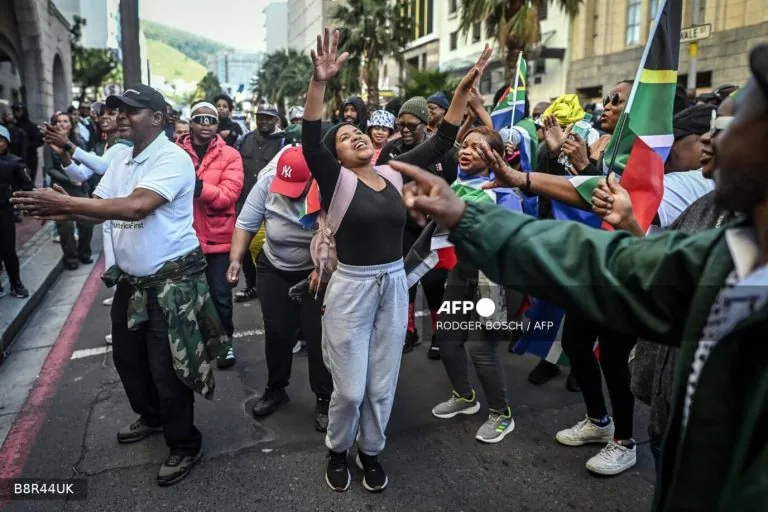
Nigeria’s High Commissioner to South Africa, Femi Fani-Kayode, is sweating to protect Nigerians and Nigeria’s image as protesters, operating under the March and March movement launched a fresh anti-Nigerian campaign, ” The state must ban Nigerians from South Africa. They must ban Nigerians until they stop selling drugs to our people. The rest of Africa, we are fine, but we do not want Nigerians in South Africa anymore. That is what we are saying.”
The protesters on Wednesday led by the group’s leader, Jacinta Ngobese-Zuma, took a particularly confrontational turn in Sunnyside, a Pretoria suburb popularly associated with a sizeable Nigerian community and sometimes described as ‘Little Lagos.
They specifically accused Nigerians of engaging in drug trafficking and contributing to social problems in South African communities.
The demonstration, .Challenging Nigerian residents to explain their presence and influence in the neighbourhood, Ngobese-Zuma questioned how the area acquired the nickname.
“I am being told here that we’ve entered Sunnyside, the home of Nigerians. I am inviting Nigerians to come out, let’s talk to each other. We want to know who gave you this place and called it Nigeria. Who gave you permission to call this place Lagos or whatever you call it?” she asked.She further questioned who had authorised Nigerians to identify parts of South African territory with their home country.
The remarks point to the increasingly hostile rhetoric directed at the immigrant community.
Ngobese-Zuma described the convention as “not sustainable and not feasible”.
She alleged that the presence of migrants was placing additional pressure on public resources and aggravating the frustrations of South African citizens.
The movement said it was taking its grievances to the Department of Home Affairs, where it intended to formally present its demands for tougher immigration controls, restrictions on refugee admissions and accelerated deportation of undocumented foreign nationals.
For his part, the group’s legal representative, Xolani Zuma, went further by demanding an outright prohibition on Nigerians entering South Africa.
The latest demonstration comes amid growing strain in relations between Nigeria and South Africa over recurring xenophobic hostility, the safety of Nigerian nationals and disagreements surrounding the diplomatic representation of both countries.
Only last week, Fani-Kayode, and the South African Presidency were involved in a diplomatic exchange following the exclusion of his prepared speech during the presentation of his credentials.
Fani-Kayode had described the omission as disrespectful to Nigeria.
Although he subsequently said the disagreement had been resolved following the intervention of South African President Cyril Ramaphosa and an invitation from the country’s Department of International Relations and Cooperation.
The envoy also disclosed that he had begun addressing concerns affecting Nigerians in South Africa since assuming office.
Fani-Kayode described those behind xenophobic attacks as a tiny minority who should not be allowed to define the character of the country’s population.
He maintained that the majority of South Africans were decent and accommodating.
He expressed confidence that the two countries could overcome their differences without severing longstanding diplomatic relations.
However, Fani-Kayode had warned that patience was running thin within Nigeria’s corridors of power over repeated attacks on its citizens.He insisted that the country would not abandon its nationals to xenophobic violence.
Traffic
News
Tinubu Hails National Assembly For Quick Work on State Police Bill
He emphasised that President Tinubu will review the Constitution Alteration Bill in consultation with the Attorney-General of the Federation.Thereafter, he will assent to the Bill at a formal signing ceremony.
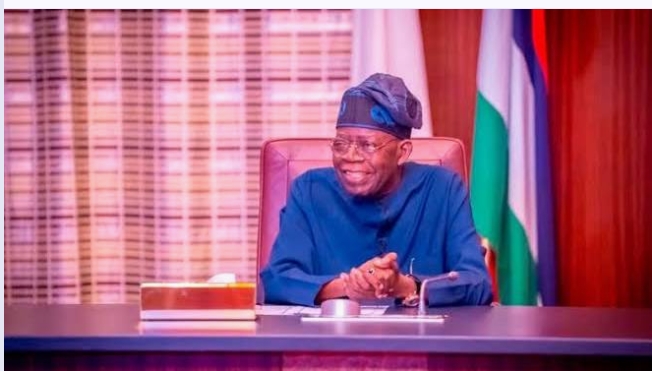
President Tinubu expresses his appreciation to the President of the Senate, the Speaker of the House of Representatives, members of the National Assembly, the Clerk to the National Assembly, the 36 State Governors, the State Houses of Assembly, and all Nigerians who have demonstrated a shared commitment to addressing the nation’s security challenges.
Chief of Staff to the President / Chairman, Presidential Working Group on State Police , Femi Gbajabiamila, disclosed this on Thursday, confirming that President Bola Ahmed Tinubu has received the Constitution (Sixth Alteration) Bill.
In a statement, Gbaja said the Bill was formally transmitted to him today by his Special Advisers on Senate and House of Representatives Matters, Senator Basheer Lado and Dr. Wasiu Olanrewaju-Smart.
All 36 State Houses of Assembly have approved the Bill, exceeding the constitutional requirement of at least 24 States, representing two-thirds of the 36 States, as stipulated in Section 9(2) of the Constitution.
He emphasised that President Tinubu will review the Constitution Alteration Bill in consultation with the Attorney-General of the Federation.Thereafter, he will assent to the Bill at a formal signing ceremony.
Meanwhile, the Presidential Working Group on State Police, which I chair, with the support of the Policy Advisory Committee, has undertaken extensive stakeholder engagement and nationwide consultations towards developing a draft National Policing Bill.
The draft Bill has been submitted to the Federal Ministry of Justice for legislative drafting validation.
Upon receipt of the validated version, the Working Group will review it and present it, alongside its report, to Mr President for consideration.


South Africans Begin Another ‘Operations Flush Out Nigerians’ Protest

Soludo Bets on Tinubu – Shettima Winning Second Term

UPDATE: 17 Kidnap Victims Rescued After Forest Gun Battles in Kogi – Police (Images)

BREAKING: Lagos Govt Declares Today, Thursday Work-Free to Mark 2026 Ìṣẹ̀ṣe Day

Tech Expert, Zuckerberg trains with UFC champions, Adesanya, Alexander

Organ Trafficking: Ekweremadu bags 10 years in UK prison
-
 Business3 days ago
Naira Exchange Rates Tuesday, 17 Nov 2026
-
 Business3 days ago
NGX Acquires 10% Stake in Nairobi Securities Exchange
-
 News3 days ago
Kano Gov Yusuf Divorcing Wife Zainab
-
 News3 days ago
Vanguard’s Online Editor, Femi Ajasa, dies at 44
-
 Crime13 hours ago
UPDATE: 17 Kidnap Victims Rescued After Forest Gun Battles in Kogi – Police (Images)
-
 Business3 days ago
Why Onion is expensive – Producers
-

 News2 days ago
British Airways Flight to Lagos Loses Nose Gear on Heathrow Runway (Video)
-

 News1 day ago
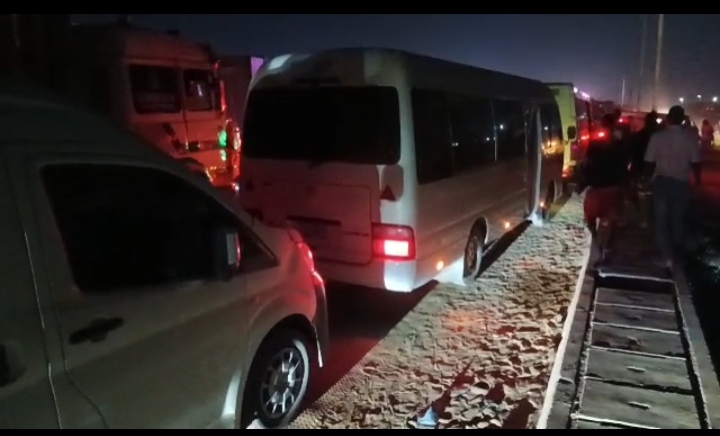
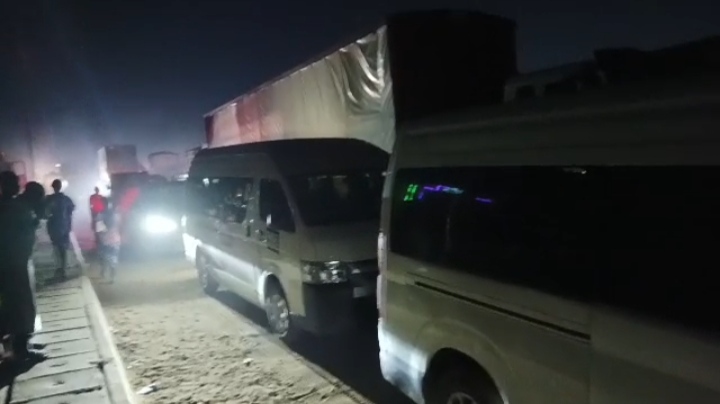
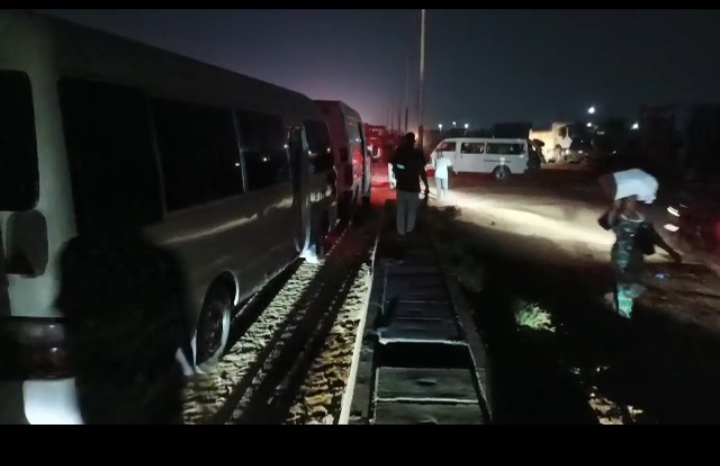
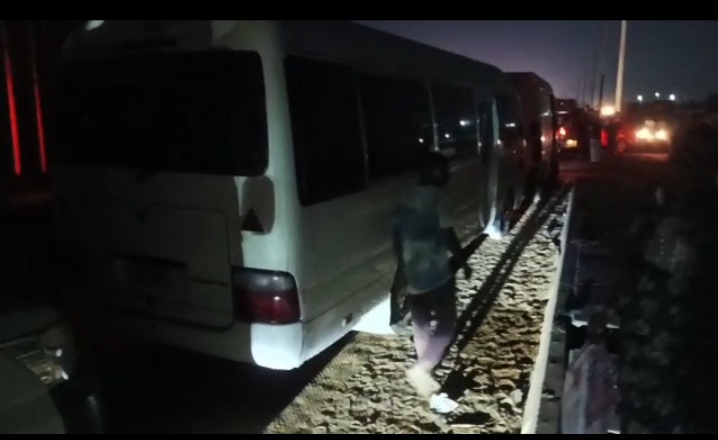
Lockdown on Lagos/Ibadan highway [PHOTOS] motorists spend whole day in traffic