
Business
Dangote Expanding Investment To Burundi
Our focus really is investing heavily in the African continent, not anywhere else, and so Burundi is part and parcel of that African region,” Dangote stated…

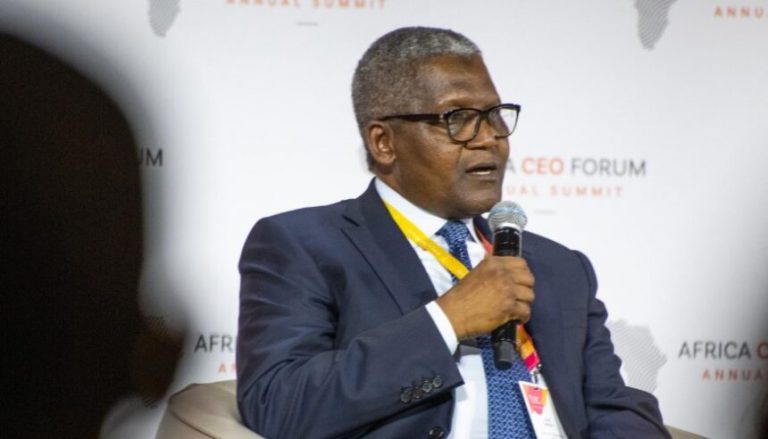
Africa’s richest man, Aliko Dangote, is in Burundi to explore new investment opportunities and cemented plans to expand the Dangote Group’s presence across the continent.
The visit included high-level talks with President Evariste Ndayishimiye at the presidential palace.
Accompanied by former Nigerian President Olusegun Obasanjo, Dangote described the mission as both diplomatic and economic in scope.
He revealed that two dedicated technical teams—one representing Burundi and the other the Dangote Group—have been constituted to identify priority sectors and develop viable investment projects. “Our focus really is investing heavily in the African continent, not anywhere else, and so Burundi is part and parcel of that African region,” Dangote stated after the meeting.
” Our focus really is investing heavily in the African continent, not anywhere else, and so Burundi is part and parcel of that African region,” Dangote stated after the meeting.
He pointed to strong potential in solid minerals, power generation, agriculture, cement production, and infrastructure development, emphasising that the goal is to build a mutually beneficial partnership that drives shared prosperity.
According to official sources, discussions centered on strategic cooperation in infrastructure, logistics, industrialization, and energy—areas the Burundian government considers essential to its long-term economic transformation.
The engagement aligns with Burundi’s broader ambition to attract large-scale private sector investment and strengthen ties with leading African industrial players.
Observers widely view the engagement as a landmark moment—one that positions Burundi as a credible destination for African mega-investors and integrates the country more firmly into Dangote’s continental expansion strategy.

BLACK MARKET RATES
US Dollar (USD) ₦1395
Great British Pound(GBP) ₦1,890
EURO (EUR) ₦1,590
Canadian Dollar (CAD) ₦1,020
South African Rand (ZAR) ₦75
Ghana CEDI (GHS) ₦95
West African CFA Buy ₦2, 300
CENTRAL AFRICAN CFA Buy ₦2,150
CBN Exchange Rates
DOLLAR (USD) ₦1315.67
Great British Pound (GBP) ₦1778.66
EURO (EUR) ₦1,529 .60
Swiss Franc (CHF) ₦1,629.92
Chinese Yuan (CNY) ₦195.85
Japanese Yen (Yen) ₦8.46
West African CFA (XOF) ₦2.35
West African Unit Account (WAUA) ₦1,818.45
Saudi Riyal (SAR) ₦350.37 South African Rand (ZAR) ₦82.32
Business
Entrepreneurship: “How I Made N10m Monthly From Akara Burger” – Gov Eno
The business attracted strong patronage from workers, especially those heading to ExxonMobil in the morning.

Governor Umo Eno of Akwa Ibom State has revealed that a food business he started with akara and bread was generating at least N10 million monthly before he ventured into politics.
Eno said his experience in the business demonstrated how a modest venture could be developed into a substantial enterprise through innovation and patronage.
The governor’s disclosure during the state’s monthly covenant prayer service, was triggered by comments from First Lady Oluremi Tinubu, who had encouraged Nigerians to consider petty businesses, including akara, roasted corn and kuli kuli, as avenues for improving livelihoods.
Gov Eno , reflecting on his entrepreneurial experience before he entered public office, said that he initially sold akara and bread, which he branded “Akara Burger”, before expanding the venture into a coffee shop.
According to him, the business attracted strong patronage from workers, especially those heading to ExxonMobil in the morning.
He said customers would buy the akara and bread combination alongside coffee before proceeding to work, helping the business grow into a major source of income.
“At a point, that business was making not less than N10 million every month,” Eno said.
Business
Forest Sector Employs 42m People Globally – FAO
According to the report, the 42 million jobs are distributed across Africa, the Americas, Asia, Europe and Oceania, highlighting the forest sector’s significant contribution to global employment and livelihoods.
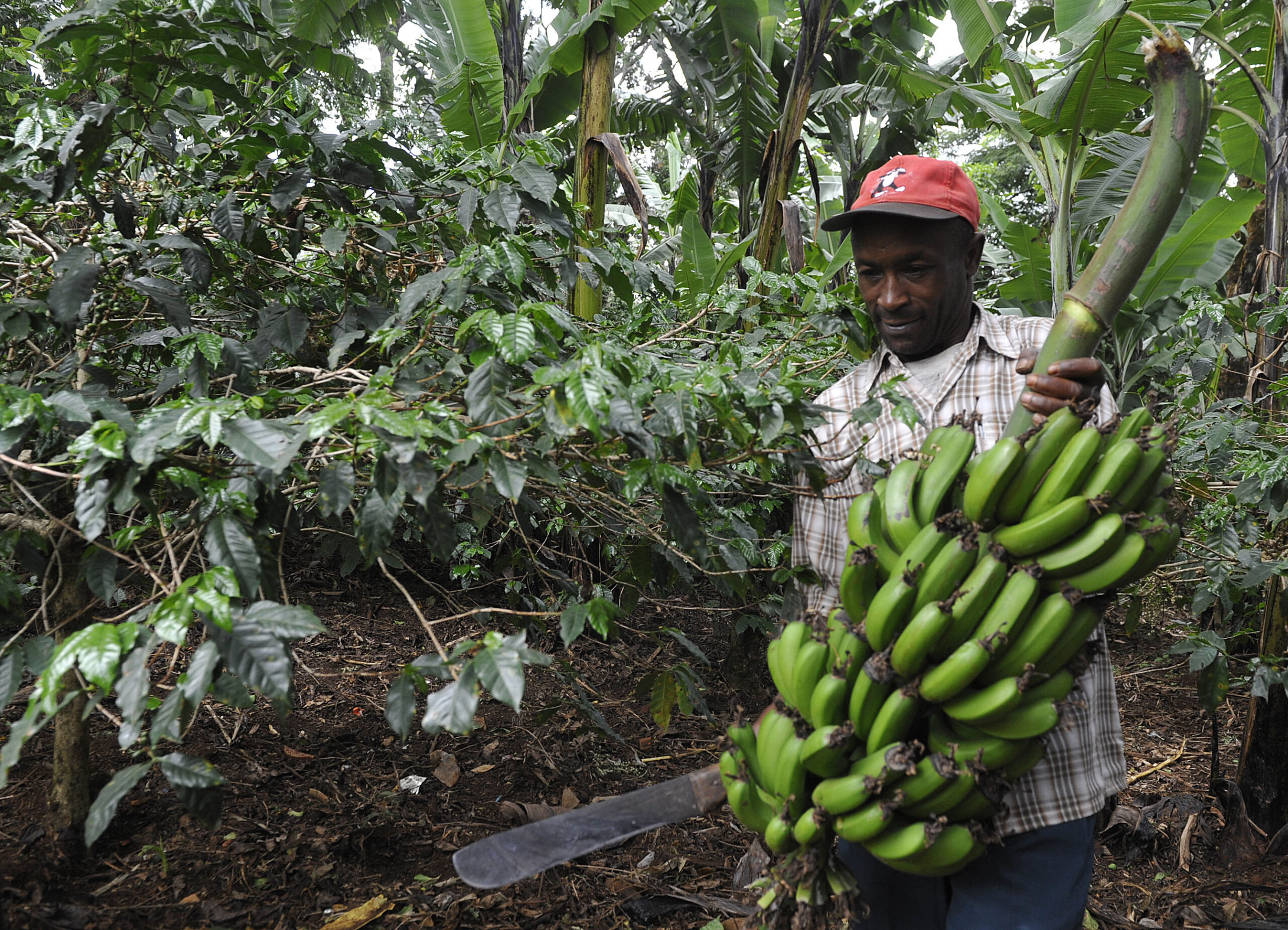
• A farmer carrying harvested banana / FAO
The global forest sector provides employment for approximately 42 million people, spanning activities within forests as well as industries, services and supply chains dependent on forest resources, a new international study has revealed.
The study was jointly conducted by the Food and Agriculture Organization of the United Nations (FAO), the International Labour Organization (ILO) and the Thünen Institute of Forestry of Germany.
According to the report, the 42 million jobs are distributed across Africa, the Americas, Asia, Europe and Oceania, highlighting the forest sector’s significant contribution to global employment and livelihoods.
FAO said the new data provides an important basis for understanding the human dimension of forests, noting that previous estimates were hampered by fragmented data and incomplete country coverage.
“Until now, however, fragmented data and incomplete country coverage have left significant gaps in the global picture – and no breakdown by gender,” FAO said.
The organisation noted that discussions about forests often focus on their products and environmental benefits, while their role as workplaces and sources of livelihoods receives comparatively less attention.
“When we talk about forests, we tend to focus on what they provide – wood, non-wood forest products, raw materials, and the foundation of a sustainable bioeconomy. Rarely do we talk about them as workplaces. And rarer still do we ask who, exactly, works in them,” FAO stated.
The agency stressed that reliable employment data is critical to the development of policies aimed at building a sustainable and inclusive green economy.
It said internationally comparable data on forest-sector employment would enable governments and policymakers to better understand the people whose livelihoods depend on forests and develop policies that protect both workers and forest resources.
Beyond employment, forests provide ecosystem services that are vital to environmental sustainability and economic development. They also supply renewable resources that form the foundation of emerging sustainable bioeconomies.


FG Announces Two Weeks Closure of First Niger Bridge for Repairs

Nduka Obaigbena Challenges Tinubu, Atiku, Obi on 2027 election campaigns

Toxic fumes kill 37 in Okrika oil tragedy

Tech Expert, Zuckerberg trains with UFC champions, Adesanya, Alexander

Organ Trafficking: Ekweremadu bags 10 years in UK prison

SAINT OBI: Between his marriage and his death
-

 Business3 days ago
Dangote, NMDPRA Clash Over Refinery’s Free Zone Status
-

 Business2 days ago
Naira Exchange Rates Wednesday, September 2
-

 News3 days ago
Death Toll in Nepal Floods Exceed 1,000
-

 News3 days ago
Edo Influential Politician, Daniel Orbih, dies at 64 •Obaseki mourns
-

 News3 days ago
IGP Disu Launches Nigeria Police Force Vigilant App, for Tracking Crimes
-

 News2 days ago
Eko Electricity blames Lekki-Ajah power outages on feeders disruption
-

 Business2 days ago
BREAKING: Uber winds down operations in Nigeria, effective September 2
-

 Entertainment3 days ago
Nollywood actress Atinuke Kareem dies of breast cancer