
Business
Senate dispatches five MDAs to handle Ogijo lead poisoning crisis
The motion, jointly sponsored by Mukhail Adetokunbo Abiru (Lagos East) and Gbenga Daniel (Ogun East), was brought under Matters of Urgent Public Importance pursuant to Orders 41 and 51 of the Senate Standing Orders, 2023 (as amended).


The Senate has mandated the Federal Ministry of Health, the Federal Ministry of Environment; the Nigeria Centre for Disease Control (NCDC) including the NESREA and the Federal Ministry of Solid Minerals to quickly look into the lead poisoning crisis at Ogijo community in Ogun State and report back to the Chamber within six weeks.
The motion, jointly sponsored by Mukhail Adetokunbo Abiru (Lagos East) and Gbenga Daniel (Ogun East), was brought under Matters of Urgent Public Importance pursuant to Orders 41 and 51 of the Senate Standing Orders, 2023 (as amended).
During the plenary on Thursday , the lawmakers expressed grave concerns over the reported fast-spreading lead-poisoning crisis in Ogijo, describing it as a full-blown environmental and public-health emergency that threatened thousands of lives.
Lawmakers cited scientifically verified reports of extreme lead contamination linked to a cluster of used lead-acid battery recycling factories operating in the area for years.
According to the Senate, the crisis had left residents battling persistent headaches, abdominal pain, memory loss, seizures, and developmental delays in children, symptoms strongly associated with chronic lead exposure.
The Senate acknowledges and commends the proactive efforts of the Lagos and Ogun State Governments and their relevant ministries and agencies for conducting early inspections, raising community awareness and working with federal authorities to contain the exposure.
The chamber noted with concern that the Federal Government had already begun clampdowns, with the Minister of State for Labour and Employment, Nkeiruka Onyejeocha, shutting down seven battery-recycling factories and ordering a temporary halt to lead-ingot exportation pending safety investigations.
Senators said they were “alarmed that residents have for several years complained of persistent headaches, abdominal pains, loss of memory, seizures, cognitive decline, and developmental delays in children, symptoms strongly associated with chronic lead exposure.”
Despite years of community protests, the smelters allegedly continued operating openly, releasing toxic fumes and particulate dust into surrounding homes, markets and playgrounds.
Some environmental samples, senators noted, showed lead levels “up to 186 times the global maximum safety threshold.”
A major dimension of the scandal, lawmakers said, was that lead processed in Ogijo had already been traced into international supply chains, reaching global battery and automobile manufacturers who either did not address the findings or relied solely on assurances from Nigerian suppliers.
Following the extensive deliberations, the chamber mandated the Federal Ministry of Health and the Nigeria Centre for Disease Control (NCDC) to deploy emergency medical teams to Ogijo to provide free toxicology screenings, blood-lead management, chelation therapy, and ongoing treatment for affected children and adults.
Simultaneously, the Federal Ministry of Environment and NESREA were directed to carry out comprehensive environmental remediation, mapping soil, groundwater, air, and household dust contamination.
The Senate also called on the Federal Ministry of Solid Minerals and relevant regulatory agencies to enforce strict compliance standards for battery-recycling and lead-processing operations nationwide.
Additionally, it recommended establishing a National Lead Poisoning Response and Remediation Task Force within NEMA and directed the Committee on Legislative Compliance to monitor progress and report back within six weeks.
Business
Dangote exports N757bn jet fuel to Europe in June
The report stated that flows of jet fuel from Nigeria to Europe rose from 232,000 metric tonnes in May to 466,000 metric tonnes in June, the highest volume exported from the country to Europe since Nigeria became a net exporter of jet fuel in 2024, when the Dangote Refinery commenced aviation fuel production.

Latest data from the S&P Global Commodity Insights, indicates that Dangote Petroleum Refinery exported about 466,000 metric tonnes of jet fuel to Europe in June, valued at an estimated N757 billion.
According to the market report, the refinery’s exports came as the European jet fuel market turned increasingly bearish following a sharp decline in prices from the highs recorded during the Middle East conflict.
The report stated that flows of jet fuel from Nigeria to Europe rose from 232,000 metric tonnes in May to 466,000 metric tonnes in June, the highest volume exported from the country to Europe since Nigeria became a net exporter of jet fuel in 2024, when the Dangote Refinery commenced aviation fuel production.
The June export volume is equivalent to about 582.5 million litres of jet fuel. At an estimated domestic value of N1,300 per litre, the shipment is worth about N757.25 billion.
On the other hand, aviation fuel exports from the United States fell sharply in the past months.
The report showed that jet fuel exports from the United States to Europe declined steadily over the same period, falling from a record 818,000 metric tonnes in April to 560,000 metric tonnes in May and further to 399,000 metric tonnes in June, leaving Nigeria as a bigger supplier to Europe during the month.
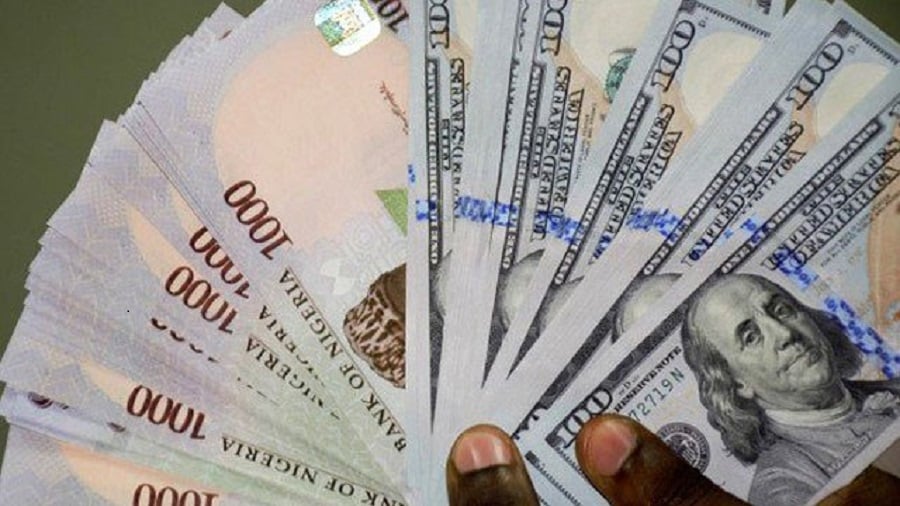
BLACK MARKET RATES
US DOLLAR (USD) Buy ₦1, 400 Sell ₦1,410
GREAT BRITISH POUND (GBP) Buy ₦1,860 Sell: ₦1,885
EURO (EUR) Buy ₦1, 570 Sell ₦1,590
CANADIAN DOLLAR (CAD) Buy ₦1,030 Sell ₦1,100
SOUTH AFRICAN RAND (ZAR) Buy ₦75 Sell ₦90
UAE DIRHAM Buy ₦350 Sell ₦370
CHINESE YUAN Buy ₦180 Sell ₦200
GHANA CEDI (GHS) Buy ₦95 Sell ₦110
WEST AFRICAN CFA Buy ₦2, 380 Sell ₦2, 460
CENTRAL AFRICAN CFA Buy ₦2, 220 Sell 2,300
AUSTRALIAN DOLLAR Buy ₦800 Sell ₦900
CBN EXCHANGE RATES
US DOLLAR (USD) ₦1,370.19
GREAT BRITISH POUND (GBP) ₦1,829. 89
EURO (EUR) ₦1,568.32
SWISS FRANC (CHF) ₦1,1706.13
JAPANESE YEN (JPN) ₦8.50
CHINESE YUAN (CNY) ₦202. 06
WEST AFRICAN CFA (XOF) ₦2.38
WEST AFRICAN UNIT ACCOUNT (WAUA) ₦1,859. 48
SAUDI RIYAL (SAR) ₦364.93
SOUTH AFRICAN RAND (ZAR) ₦84. 46
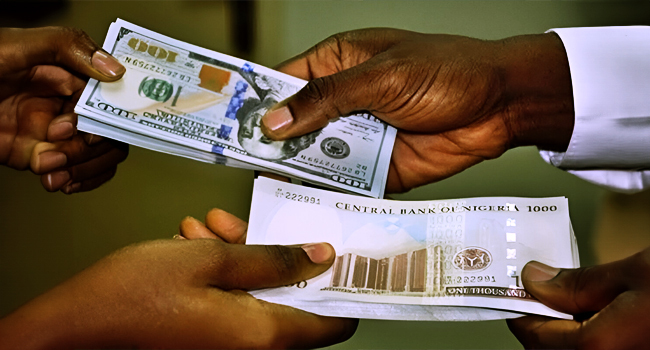
BLACK MARKET RATES
US DOLLAR (USD) Buy ₦1, 397 Sell ₦1,405
GREAT BRITISH POUND (GBP) Buy ₦1,850 Sell: ₦1,865
EURO (EUR) Buy ₦1, 580 Sell ₦1,600
CANADIAN DOLLAR (CAD) Buy ₦1,030 Sell ₦1,100
SOUTH AFRICAN RAND (ZAR) Buy ₦75 Sell ₦90
UAE DIRHAM Buy ₦350 Sell ₦370
CHINESE YUAN Buy ₦180 Sell ₦200
GHANA CEDI (GHS) Buy ₦95 Sell ₦110
WEST AFRICAN CFA Buy ₦2, 380 Sell ₦2, 460
CENTRAL AFRICAN CFA Buy ₦2, 220 Sell 2,300
AUSTRALIAN DOLLAR Buy ₦800 Sell ₦900
CBN OFFICIAL EXCHANGE RATES
US DOLLAR (USD) ₦1,370.15
GREAT BRITISH POUND (GBP) ₦1,832.17
EURO (EUR) ₦1,568.28
SWISS FRANC (CHF) ₦1,1705.44
JAPANESE YEN (JPN) ₦8. 51
CHINESE YUAN (CNY) ₦201. 80
WEST AFRICAN CFA (XOF) ₦2.38
WEST AFRICAN UNIT ACCOUNT (WAUA) ₦1,859. 98
SAUDI RIYAL (SAR) ₦364.91
SOUTH AFRICAN RAND (ZAR) ₦84. 32


Anambra State Introduces 12-Point Development Agenda

Dangote exports N757bn jet fuel to Europe in June

Naira Exchange Rates To Foreign Currencies Today, Monday, 6July 2026

Tech Expert, Zuckerberg trains with UFC champions, Adesanya, Alexander

Organ Trafficking: Ekweremadu bags 10 years in UK prison

SAINT OBI: Between his marriage and his death
-

 Sports3 days ago
Cape Verde faces defending world cup champions , Argentina today
-
 International3 days ago
General Hydrocarbons Floors FBN as S’Court Sets Aside Appeal Court Ruling
-
 Business3 days ago
Naira Exchange Rates Friday, 3 July 2026
-

 News3 days ago
US ends military operations in Nigeria, withdraws 200 soldiers
-

 News3 days ago
NDC calls for Gbajabiamila sack over fake agency scandal
-

 News3 days ago
FG slams 8-count charges on Adeyemi over fake agency ” I’m not a criminal”, he defends
-
 Business1 hour ago
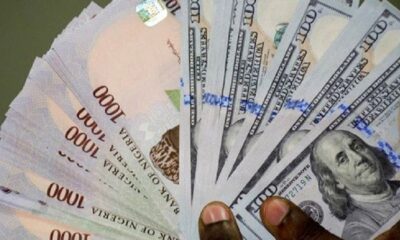
Naira Exchange Rates To Foreign Currencies Today, Monday, 6July 2026
-
 Business40 minutes ago
Dangote exports N757bn jet fuel to Europe in June