
Business
CPPE Spots Flaws in RMRDC Raw Materials Bill, Calling for its Withdrawal
Dr Muda Yusuf, the Director/ CEO of CPPE, said: ” The RMRDC involvement in trade policy matters is an aberration. Besides, the bill has a very weak value proposition.

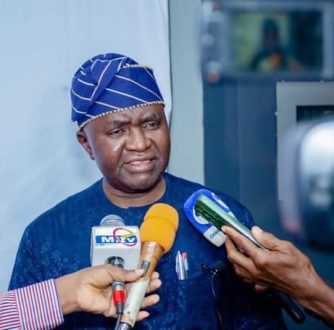
The Centre for the Promotion of Private Enterprise (CPPE) has critiqued the Raw Materials Research and Development Council [RMRDC] Bill in the National Assembly, calling for its withdrawal.
The RMRDC Bill proposed by Senator Peter Onyekachi Nwaebonyi, which aims to ensure local processing of at least 30 percent of Nigeria’s raw materials before exportation, has received overwhelming support from the Manufacturers Association of Nigeria, and other stakeholders during the public hearing organized by the Senate Committee on Science and Technology, held on Wednesday, March 5, 2025.
However, Dr Muda Yusuf, the Director/ CEO of CPPE, said: ” The RMRDC involvement in trade policy matters is an aberration. Besides, the bill has a very weak value proposition.
The CPPE advises the RMRDC to withdraw the bill.
Dr Yusuf urged the National Assembly to encourage the RMRDC to focus on its core mandate of raw materials research to offer the most cost-effective raw materials option for manufacturers.
Dr Yusuf explained that the RMRDC Bill currently before the National Assembly has the prospect of creating significant adverse and unintended consequences for Nigerian exporters and manufacturers.
What study has been done to determine the local processing capacity for each category of primary products currently being exported?
What metrics would be used to determine raw materials that manufacturers would be allowed to import into the country?
What is the effective time frame for implementation?Is it within the mandate of the RMRDC to promote the ban on exports or imports?
The position of the CPPE is that this bill raises more questions than answers.
It is a very simplistic proposition that has not taken into account the critical challenges of manufacturing, processing,, and value addition in the Nigerian economy. “



Business
Cardoso Urges Banks To Lend Out Idle Funds With CBN * Retains MPR at 26.5%
Cardoso made the call on Tuesday after the 306th Monetary Policy Committee (MPC) meeting held in Abuja from July 20 to July 21.
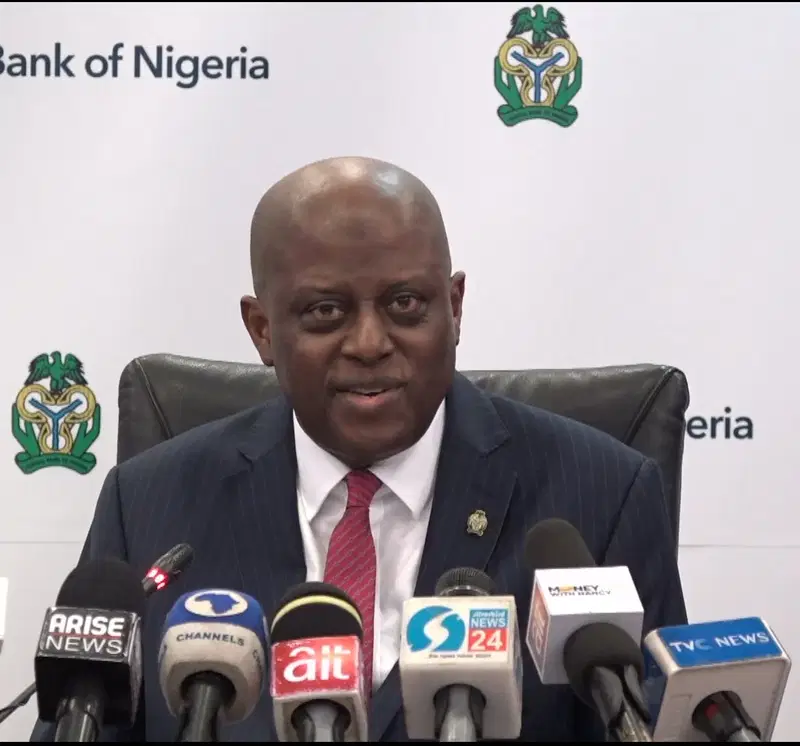
The Central Bank of Nigeria (CBN) Governor, Olayemi Cardoso , urged banks from keeping idle funds with the apex bank and encouraging increased lending into the economy.
Cardoso made the call on Tuesday after the 306th Monetary Policy Committee (MPC) meeting held in Abuja from July 20 to July 21.
The apex bank retained the Monetary Policy Rate (MPR), also known as benchmark interest rate, at 26. 5 percent.
This decision marks the second consecutive retention of the MPR at 26.5 per cent, following a 50-basis-point reduction in February from 27 per cent.
“The committee’s decision to maintain the current policy stand follows a thorough assessment of the balance of risk,” said Cardoso.
He emphasised that although headline inflation moderated marginally in June 2026, global uncertainties have heightened due mainly to the renewed hostilities in the Middle East.
The MPC also adjusted the asymmetric facilities corridor around the MPR to +50/-450 basis points—a move aimed at discouraging banks from keeping idle fund with CBN.
Furthermore, the committee maintained the Cash Reserve Ratio (CRR) for commercial banks at 45 per cent, retained the rate for merchant banks at 16 per cent, and kept the CRR on non-TSA public-sector deposits at 75 per cent for liquidity management considerations.
Cardoso said despite the global uncertainties, the Nigerian economy has “remained largely resilient to the external shocks”.
Business
CBN admits it opened domiciliary accounts for PFIPC agency
Represented by the Director of its Banking Services Department, Hamisu Ibrahim, the CBN said that the accounts are one in US dollars, the other in British pounds sterling, were opened following a mandate received from the Office of the Accountant-General of the Federation.
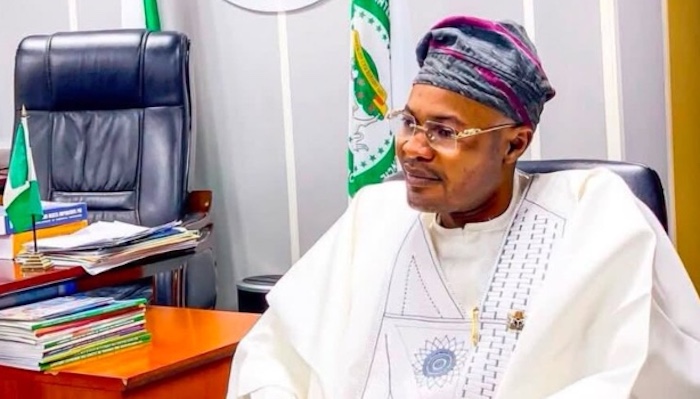
File photo : PFIPC agency DG, Adeniyi Adeyemi
The Central Bank of Nigeria had admitted that it opened two foreign-currency domiciliary accounts for the controversial Presidential Foreign Investment Promotion Council (PFIPC).
The apex bank made the confirmation, yesterday, during the public hearing convened at the National Assembly Complex by the House of Representatives Ad-hoc Committee investigating the existence and operations of the PFIPC, chaired by Yusuf Gagdi and inaugurated by Speaker Tajudeen Abbas.
Represented by the Director of its Banking Services Department, Hamisu Ibrahim, the CBN said that the accounts are one in US dollars, the other in British pounds sterling, were opened following a mandate received from the Office of the Accountant-General of the Federation.
He explained that on July 30, 2025, CBN received a mandate dated July 29, 2025 from the Office of the Accountant-General.
“We received the mandate to authorise two accounts, one a US dollar domiciliary account, the other a pound domiciliary account, for the Presidential Economic Advisory Council/Presidential Foreign Investment Promotion Council,” Ibrahim told the committee.
He explained the CBN’s verification process, “The process of opening an account requires a mandate from the Office of the Accountant-General of the Federation.
“Once we receive that mandate, we perform all the necessary verifications to confirm that this mandate is actually coming from that office.
The department that handles the mandate is different from the department that actually does the account opening,” he said.
Nevertheless, he noted that no one came to activate the accounts after they were opened.“We did not receive any correspondence, mandate, signature or mandate cards. We were not introduced to the authorising or approving officers.“Based on that, those accounts remain inactive, with zero balance. There have been no foreign exchange allocations.
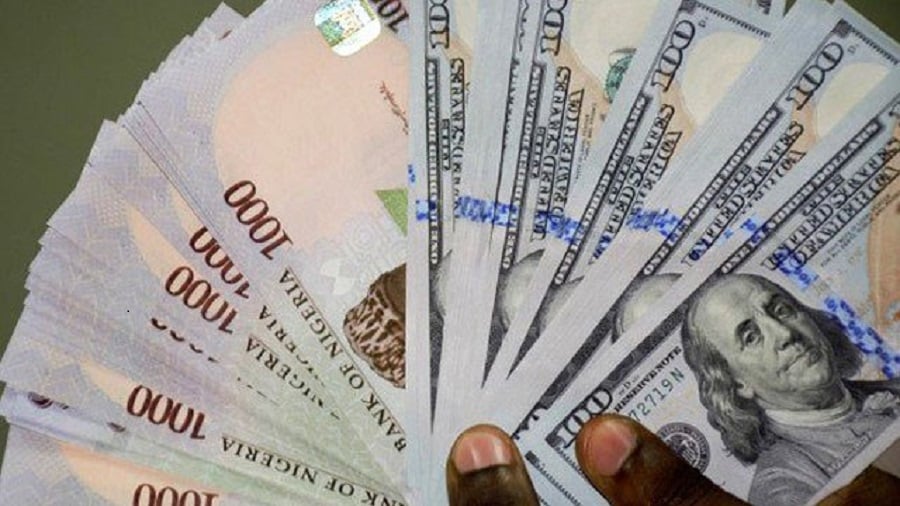
BLACK MARKET RATES
US DOLLAR (USD) Buy ₦1, 410 Sell ₦1,415
GREAT BRITISH POUND (GBP) Buy ₦1,890 Sell: ₦1,910
EURO (EUR) Buy ₦1,580 Sell ₦1,600
CANADIAN DOLLAR (CAD) Buy ₦1,020 Sell ₦1,080
SOUTH AFRICAN RAND (ZAR) Buy ₦75 Sell ₦90
UAE DIRHAM Buy ₦350 Sell ₦370 CHINESE YUAN Buy ₦190 Sell ₦205
GHANA CEDI (GHS) Buy ₦95 Sell ₦110
WEST AFRICAN CFA Buy ₦2, 300 Sell ₦2, 400
CENTRAL AFRICAN CFA Buy ₦2,150 Sell 2,250
AUSTRALIAN DOLLAR Buy ₦800 Sell ₦900
CBN OFFICIAL EXCHANGE RATES
US DOLLAR (USD) ₦1,380.11
GREAT BRITISH POUND (GBP) ₦1,857.35
EURO (EUR) ₦1,575.95
SWISS FRANC (CHF) ₦1,705. 31
JAPANESE YEN (JPN) ₦8.50
CHINESE YUAN (CNY) ₦203.94
WEST AFRICAN CFA (XOF) ₦2.40
WEST AFRICAN UNIT ACCOUNT (WAUA) ₦1,874. 32
SAUDI RIYAL (SAR) ₦367.49
SOUTH AFRICAN RAND (ZAR) ₦83.69


Achimugu Seeks National, Global Protection Over Threats To Her Life and Businesses

Katsina Flood Sweeps Away Siblings Returning From Islamiyya School

An alleged fake university discover in Lagos

Tech Expert, Zuckerberg trains with UFC champions, Adesanya, Alexander

Organ Trafficking: Ekweremadu bags 10 years in UK prison

SAINT OBI: Between his marriage and his death
-

 News2 days ago
BIJAMIC College Charges Class of 2026 Graduates to Embrace Resilience, Learn from Thomas Edison
-
 Sports3 days ago
Who made the FIFA World Cup trophy?
-

 News2 days ago
Badejo-Okusanya Emerges NBA National President (2026-2028)
-

 Crime2 days ago
Students Killed as Troops Foil ISWAP Abduction Bid in Borno
-

 News2 days ago
Senegal President, Faye elected new ECOWAS chairman
-

 Sports2 days ago
FIFA To Review Hydration Breaks After World Cup Final – Wenger
-

 Sports2 days ago
England beat France 6-4 to claim World Cup third place
-
 News2 days ago
Abbas inaugurating today committee to investigate illegal PFIPC agency