
Business
WTO slashes 2025 trade growth forecast, warns of deeper slump
“I’m very concerned, the contraction in global merchandise trade growth is of big concern,” WTO Director General Ngozi Okonjo-Iweala told reporters in Geneva.


(Reuters): The World Trade Organization sharply cut its forecast for global merchandise trade from solid growth to a decline on Wednesday, saying further U.S. tariffs and spillover effects could lead to the heaviest slump since the height of the COVID pandemic.
The WTO said it expected trade in goods to fall by 0.2% this year, down from its expectation in October of 3.0% expansion.
It said its new estimate was based on measures in place at the start of this week.
“I’m very concerned, the contraction in global merchandise trade growth is of big concern,” WTO Director General Ngozi Okonjo-Iweala told reporters in Geneva.
U.S. President Donald Trump imposed extra duties on steel and car imports as well as more sweeping global tariffs before unexpectedly pausing higher duties on a dozen economies.
His trade war with China has also intensified with tit-for-tat exchanges pushing levies on each other’s imports beyond 100%.
The WTO said that, if Trump reintroduced the full rates of his broader tariffs that would reduce goods trade growth by 0.6 percentage points, with another 0.8 point cut due to spillover effects beyond U.S.-linked trade.
The Presidency says the bodies allegedly used by Adeyemi—including the so-called Presidential Economic Advisory Council, Presidential Foreign Investment Promotion Council, and Presidential Foreign Intervention Promotion Council—do not exist as government agencies.
The Presidency says a man identified as Prince Adeniyi Adeyemi Matthew allegedly created and operated fake government agencies, forged appointment letters, and falsely claimed to have been appointed by Femi Gbajabiamila.
According to the statement:
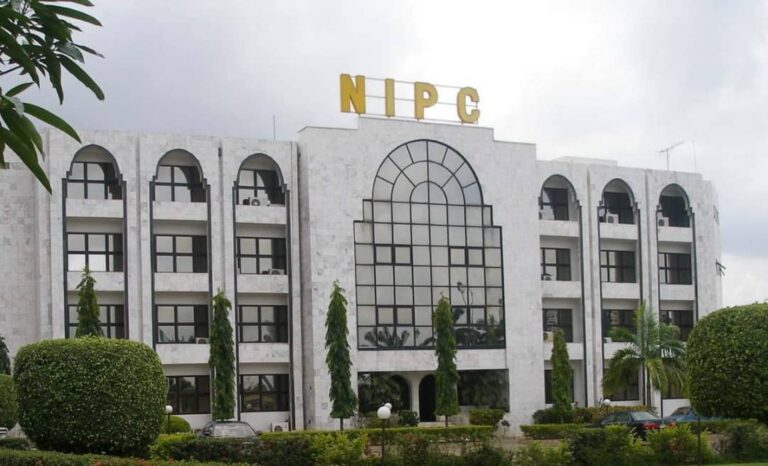
The Office of the Chief of Staff discovered the alleged scheme after complaints from the Nigerian Investment Promotion Commission (NIPC) that an unauthorized body was operating in a way that conflicted with its functions.
The Chief of Staff petitioned the Department of State Services and the Nigeria Police Force in October 2025 to investigate alleged forged appointment letters.
The Presidency says the bodies allegedly used by Adeyemi—including the so-called Presidential Economic Advisory Council, Presidential Foreign Investment Promotion Council, and Presidential Foreign Intervention Promotion Council—do not exist as government agencies.
Investigators allege Adeyemi operated from an office in the Federal Secretariat Complex, held meetings with diplomats, and sought diplomatic support to obtain U.S. visas for members of the alleged organization.
Police reportedly recovered forged documents and other exhibits during searches of his office and residence.
The investigation allegedly found that Adeyemi operated 34 bank accounts, including several in the names of fictitious organizations, and used forged documents to open a Central Bank of Nigeria account.
The Presidency says no government funds were paid into that account.
Police charged Adeyemi and two others before the Federal High Court on multiple counts, including forgery, impersonation, and obtaining by false pretence. The case is scheduled for hearing on July 27.
The Presidency also denied claims that Gbajabiamila appointed Adeyemi, stating that appointments to federal offices are issued through the Office of the Secretary to the Government of the Federation, not the Office of the Chief of Staff.
Current status
The Presidency maintains that:
the agencies in question are fictitious,
the appointment letter was forged,
Adeyemi is an impostor,
and the allegations against him should be resolved by the court.
As the case is pending before the court, the allegations remain subject to judicial determination.
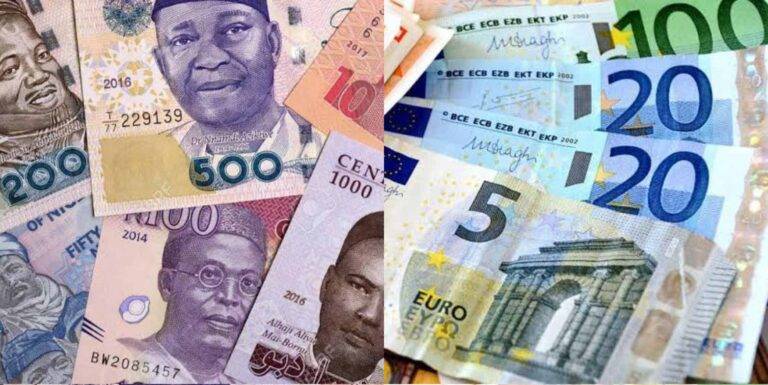
BLACK MARKET RATES
US DOLLAR (USD) Buy ₦1, 395 Sell ₦1, 403
GREAT BRITISH POUND (GBP) Buy ₦1,845 Sell: ₦1,865
EURO (EUR) Buy ₦1, 585 Sell ₦1,600
CANADIAN DOLLAR (CAD) Buy ₦1,030 Sell ₦1,100
SOUTH AFRICAN RAND (ZAR) Buy ₦75 Sell ₦90
UAE DIRHAM Buy ₦350 Sell ₦370CHINESE YUAN Buy ₦180 Sell ₦200
GHANA CEDI (GHS) Buy ₦95 Sell ₦110
WEST AFRICAN CFA Buy ₦2, 380 Sell ₦2, 460
CENTRAL AFRICAN CFA Buy ₦2, 220 Sell 2,300
AUSTRALIAN DOLLAR Buy ₦800 Sell ₦900
CBN OFFICIAL EXCHANGE RATES
US DOLLAR (USD) ₦1,372.41
GREAT BRITISH POUND (GBP) ₦1,821.73
EURO (EUR) ₦1,565.37
SWISS FRANC (CHF) ₦1,695.42
JAPANESE YEN (JPN) ₦8.45
CHINESE YUAN (CNY) ₦201.98
WEST AFRICAN CFA (XOF) ₦2.40
WEST AFRICAN UNITACCOUNT (WAUA) ₦1,870. 31
SAUDI RIYAL (SAR) ₦365.45
SOUTH AFRICAN RAND (ZAR) ₦83.80
Business
CBN revokes 46 MFBs’ licences
According to the revocation order, the action became necessary because of one or more of: insufficient assets to meet liabilities; closure of operations without the CBN approval; and inactivity and cessation of financial intermediation.

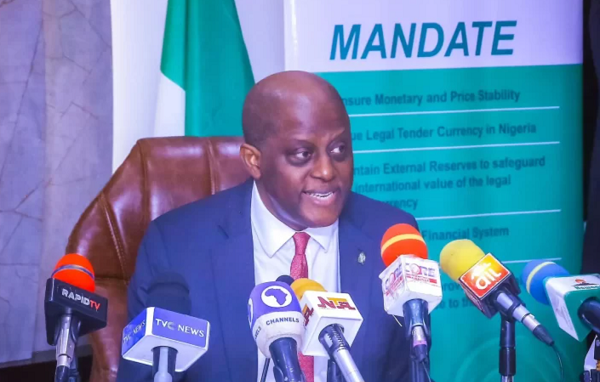
The Central Bank of Nigeria (CBN) has revoked the operating licences of 46 Microfinance Banks (MFBs).
CBN’s Ag. Director of Communications, Mrs. Hakama Sidi-Ali disclosed that the revocation becomes effective today.
She emphasised that the revocation was in accordance with its powers under Sections 12 and 13 of the Banks and Other Financial Institutions Act (BOFIA), 2020.
“The revocation was approved by the Governor of the Central Bank of Nigeria, Mr. OlayemiCardoso, following the banks’ failure to meet the regulatory requirements for continued operation as licensed financial institutions,” she said.
According to the revocation order, the action became necessary because of one or more of: insufficient assets to meet liabilities; closure of operations without the CBN approval; and inactivity and cessation of financial intermediation.
Others were: failure to commence operations within 12 months of licence approval, and failure to maintain minimum capital funds unimpaired by losses.


Burna Boy Overtakes Tyla as Africa’s Most Streamed Artist on Spotify

JUST IN: Supreme Court Introduces Digital System to End Manual Processes

JUST IN: Adire Fabric to Replace Khaki as New NYSC Uniform – Minister

Tech Expert, Zuckerberg trains with UFC champions, Adesanya, Alexander

Organ Trafficking: Ekweremadu bags 10 years in UK prison

SAINT OBI: Between his marriage and his death
-
 Business2 days ago
BUA Group Denies Reports of Bid to Acquire Stake in Kano Pillars Football Club
-
 Politics3 days ago
JUST IN: Adeboye says he Admires Trump, declaring “He is the best politician I’ve met’
-
 Business2 days ago
Naira Exchange Rates Tuesday, 30 June 2026
-
 Business2 days ago
Nigeria’s oil minister orders marketers to reduce fuel price
-

 News3 days ago
16-Year-Old Osasere Okundaye Becomes Nigeria’s Youngest Chartered Accountant
-
 Business1 day ago
BOI names Kuramo Capital Fund Manager for $170.6m iDICE
-
 News2 days ago
Insecurity: NSCIA fumes “Enough is Enough” over attacks on Islam and Muslims in Nigeria
-
 News3 days ago
JUST IN: Vigilante Groups Rescue Kidnapped NECO Students in Borno State