
News
‘He stopped picking my calls’ – Dele Momodu explains why he fell out with Wike

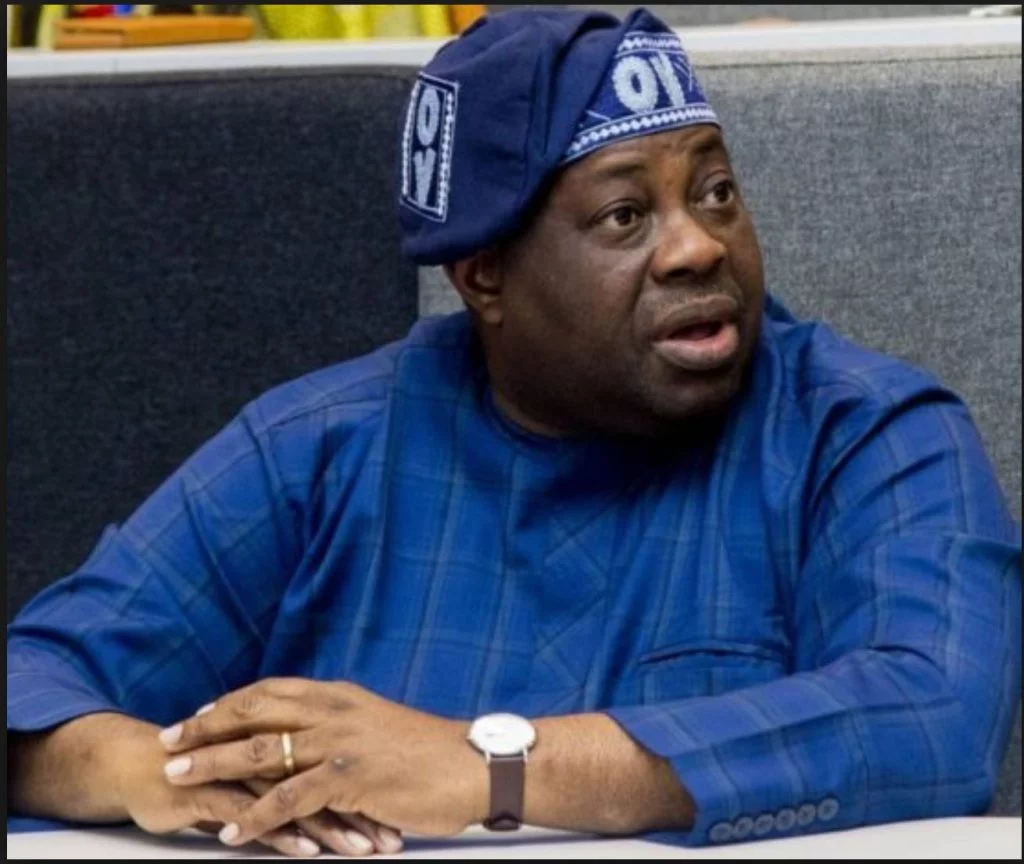
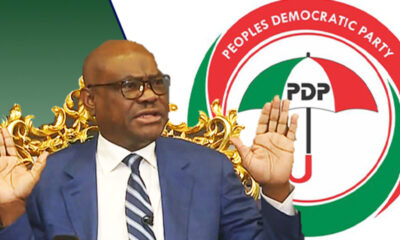
A journalist-cum politician, Dele Momodu, has explained why he fell out with the Minister of the Federal Capital Territory, Nyesom Wike.
He said he was a close friend to Wike but their relationship became strained after he informed the former Rivers State governor of his intention to contest for president.
He explained that Wike, who was also secretly nursing his own presidential ambition then, was angered by the information and stopped picking his calls.
Speaking in a recent episode of The Honest Bunch podcast, Momodu said, “I was very close to [Nyesom] Wike.
We are no longer close. Troubles started the moment I declared interest in the presidential election.
“He had not told anybody he wanted to contest but I was suspecting because of the branding and how much he was spending on journalists. He had PR deals with many media houses.
“Those things are not cheap but he was getting good results; everybody was talking about him.
“So, I met him and informed him that I would be contesting for the presidency and I would need his support.
And before then, I had consulted nationwide, I had met Emirs, the Sultan and everybody.
“The general impression I was getting was that if Wike wants to run, he would have problems, especially in the North. The Northerners would support anybody but not Wike.
“I tried to tell him that this is what I had picked up and in case you are unable to run, would you kindly support me? What’s the crime in that?
“I already considered you my friend. He stopped picking my calls, he told people even live on Channels, when an interviewer asked for his opinions on new entrances like Dele Momodu, he said, ‘Which Dele Momodu? Get serious!’
“I was shocked. Wike that told me that he used to watch myself and his boss, [Rotimi] Ameachi when we are flying helicopters, he would be down saying, ‘See these people, they’re enjoying o!,’ is now disrespecting me simply because he has now made money, and power.”
Reacting to former president Ibrahim Babangida’s admission of regret for annulling the June 12 elections in 1993 during his book launch titled, “A Journey of Service” in Abuja last week.
Momodu said he believes that a sincere and “unconditional apology” from the former president was all that was needed to acknowledge the injustice and fully heal the nation.
“I was hoping that we would be able to bring some form of closure to the June 12 crisis. All that we needed to do that day was to get a full unconditional apology for what happened,” Momodu stated.
“The moment I started hearing excuses about how we did it in the national interest, we did it so our democracy could survive. I don’t think what we have today is a proper democracy,” he noted.
Momodu criticised the current political landscape, arguing that it has strayed from true democratic values, pointing out that governments at all levels manipulate elections, leaving no room for real competition.
“It’s become a sham where the federal government wants to win every election, the state government wants to win every election, the local government is in disarray. So at the end of the day, what have we gained?” he asked.
Watch full interview below at Glitch Africa Studio: “The Honest Bunch”
Video credit: Honest Bunch






News
Presidency Loses Media Aide, Onwubuariri
Onwubuariri, a veteran journalist and staff member of the News Agency of Nigeria, died at the age of 48, according to his wife, Catherine Ezinna Onwubuariri.

•Peter Onwubuariri
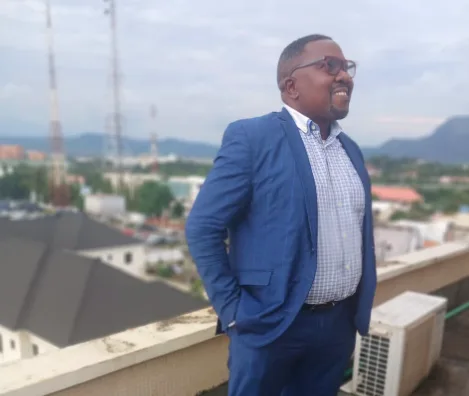
Assistant Director, Media, at the Presidential Villa, Peter Onwubuariri, has died in Kano after a prolonged illness.
Onwubuariri, a veteran journalist and staff member of the News Agency of Nigeria, died at the age of 48, according to his wife, Catherine Ezinna Onwubuariri.
He reportedly died on Monday after receiving treatment for about a month at the Kano Cancer Hospital under the state government’s treatment authorisation.
His remains were released from the Aminu Kano Teaching Hospital on Tuesday for burial in Owerri, Imo State.
The corpse was handed over to Deputy Director, Information and Public Relations, State House, Oche Egwa, on behalf of the Special Adviser to the President on Information and Strategy, Bayo Onanuga.
News
Political Thugs Block Obi‘s Convoy During Visit To Benue
Speaking at the scene, Obi said he was informed that youths allegedly sponsored by the state governor had blocked the road and were preventing him from proceeding.
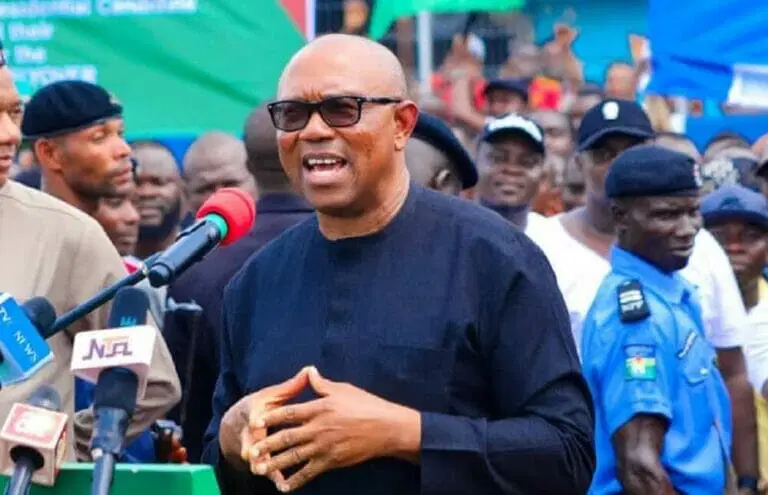
Presidential candidate of the Nigeria Democratic Congress (NDC), Peter Obi, has condemned the alleged obstruction of his convoy on Tuesday by suspected political thugs and security operatives in Benue State.
Obi’s convoy was blocked along Boko Road, near the Air Force Base, shortly after arriving in Benue.
Obi, who was in the state to commiserate with communities affected by recent killings, said that his team was stopped from gaining access to the area where he intended to pay a condolence visit.
Speaking at the scene, Obi said he was informed that youths allegedly sponsored by the state governor had blocked the road and were preventing him from proceeding.
“I am here in a place where people have been killed. I am here to commiserate with them, but now I have been told that youths sponsored by the governor have blocked the road and made sure I do not go in,” Obi said.
He noted that he remained at the location for some time and questioned the circumstances surrounding the alleged blockade.
“I have been standing here since. We cannot have a country like this. It does not make sense to me. The rascality is totally unacceptable,” he said.
Obi expressed concern over the spate of killings in Benue, saying people who wanted to visit affected communities and show solidarity should be allowed to do so.
“People are being killed every day in Benue. People want to condole them and show that they are with them. I came here only to be told we cannot go in,” he said.
News
Judiciary Staff Union Confirms Journalist General Secretary
The appointment marks a notable transition for Akwashiki, who spent more than 15 years reporting on organised labour, industrial relations, trade unions and workers’ issues before moving into union administration.
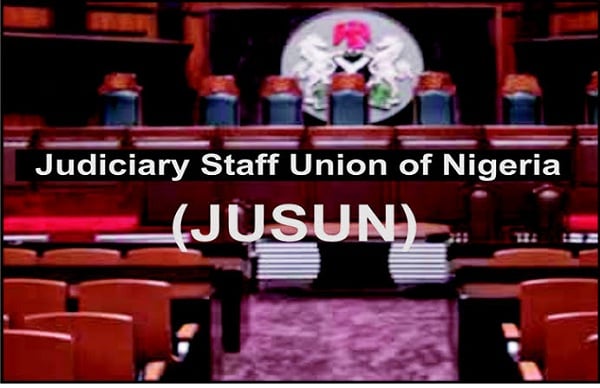
The Judiciary Staff Union of Nigeria (JUSUN) has confirmed veteran labour journalist, Comrade Moses John Akwashiki as its substantive General Secretary.
Akwashiki’s appointment was approved by the National Working Committee of the union and took effect from September 5, following his stint as Acting General Secretary.
The appointment marks a notable transition for Akwashiki, who spent more than 15 years reporting on organised labour, industrial relations, trade unions and workers’ issues before moving into union administration.
In a letter conveying the approval, JUSUN national president, Comrade Marwan Mustapha Adamu, congratulated Akwashiki, and urged him to discharge his responsibilities in accordance with the union’s Constitution and Code of Conduct.
The letter, titled “Confirmation of Appointment as Substantive General Secretary of Judiciary Staff Union of Nigeria”, stated that the National Working Committee had approved his appointment with effect from September 5.
• TRIBUNE


INEC fixes Sept 19 for by-elections in 4 states

Eguavoen appointed interim Super Falcons coach ahead of 2028 Olympic qualifiers

Global media leader Annecchino dies at 55

Tech Expert, Zuckerberg trains with UFC champions, Adesanya, Alexander

Organ Trafficking: Ekweremadu bags 10 years in UK prison

SAINT OBI: Between his marriage and his death
-

 Business1 day ago
NAFDAC Goes After Chinese Logistics Firms Over Products Counterfeiting
-
 Politics2 days ago
Obidient Connect Texas Plans Grand Rally for Obi-kwakwanso October 10
-

 Business2 days ago
Dangote Refinery Signs IPO Document Today
-
 News2 days ago
FG announces two-week traffic delays on Kara–Berger Bridge for repairs
-
 Politics2 days ago
Nigerians better off under military than democracy – Duke
-
 News1 day ago
JUST IN: Traffic Chaos Expected on Lagos-Ibadan Expressway From Tuesday
-
 Sports2 days ago
Infantino To Seek Re-Election As FIFA President In 2027
-
 Business1 day ago
Dangote woos ordinary Nigerians to own shares in oil refinery as IPO opens September 14