
Business
Dangote Peugeot begins 3008 GT assembly in Kaduna, unveils Landmark pickup

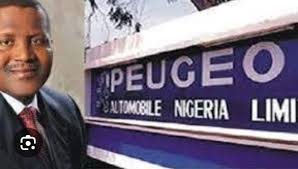
The official manufacturer and marketer of the Peugeot brand of vehicles in Nigeria, Dangote Peugeot Automobiles Nigeria Limited (DPAN), has taken another bold step towards regaining its leadership position in the auto market.
This time, DPAN has commenced the assembly of the GT model of the wave-making Peugeot 3008, which has hit commercial success and won awards with its different variants in various markets across the world.
With its 1.6 litre high performance turbo engine, Peugeot 3008 GT has expanded the existing line-up of vehicles from the assembly lines of the modern plant that opened some years ago in Kaduna.
The new 3008 GT is joining the existing ‘Made-in-Nigeria Peugeot’ range that includes the popular 301 sedan, and the 5008 (a large, seven-seater known for its spacious interior, stylish design, and modern technology features).
Get behind the steering and fall in love with the driver lumbar adjustment and massage seat. And, ready to go? Just push the start button, and you will hear the gentle hum of the engine that is mated to an Automatic Transmission system.
You will find the Bluetooth telephony very useful – keeping you clear of ‘phoning-while-driving’ infraction, which is one of the most violated traffic offences in Nigeria according to the Federal Road Safety Corps (FRSC).
For a long-distance drive on the highway, the vehicle’s cruise control enables the driver to maintain a preset speed without having the need to press the accelerator pedal.
A premium trim level of the Peugeot 3008 SUV, the new GT model being assembled by DPAN features auto headlights, fog lamps, day running lights, sunroof with sliding function and covering, and 17-inch alloy wheels.
Just as In its older siblings, safety, whether active or passive, has not been compromised in the 3008 produced with the needs of the Nigerian market and motoring environment in mind.
Some of the salient safety features are at least eight airbags ensuring comprehensive protection for all occupants, including the driver and front seat passenger; lane departure warning; electric child safety system; as well as graphic and audible rear parking assistance.
The vehicle is also endowed with Anti-lock Braking System (ABS) which obviates locking of the wheels during braking; Electronic Stability Programme (ESP) that prevents skidding and loss of control; and Electronic Brake-force Distribution (EBFD).
Working in tandem with the ABS during braking, EBFD distributes braking force to each wheel based on the vehicle’s weight distribution.
As in most class-beating Peugeot vehicles, 3008 GT flaunts the brand’s I-Cockpit, which interfaces with the driver through the 12.3” head-up display, the 8-inch touchscreen, and and a multifunction steering wheel.
The comfortable ambience of the interior is enhanced by the auto dual zone air-conditioner, cooling glove box, top quality CD/MP3 sound system with aux plug and HP pack, as well as rear power windows.
Dangote Peugeot Chief Commercial Officer, Umar Isa -Kaita, confirmed recently, that the automaker is also set to introduce into the light commercial segment of the market the Peugeot Landtrek 4×2 – a pickup truck with a rear-wheel drive system.
A 2.4 litre engine work horse, the vehicle is part of the Peugeot Landtrek pick-up truck range with a reputation for ruggedness.
Another member of the family is the 4×4 version (which DPAN may consider introducing later).
Isa-Kaita also disclosed that DPAN has been holding discussions with some auto companies towards expanding the Peugeot sales and after-sales network by accrediting dealerships in parts of Nigeria.
Apart from enhancing the visibility and availability of the new generation vehicles in all parts of the country, increased number of dealerships is expected to ensure satisfactory after-sales support for Peugeot owners nationwide.
Dangote Peugeot Automobiles Nigeria Limited is jointly owned by billionaire businessman and mega industrialist, Alhaji Aliko Dangote, through his Dangote Industries Limited; Kaduna, Plateau and Kebbi State Governments; and the technical partner (Stellantis Group, the parent company of Peugeot).
The addition of the 3008 GT to the ‘Assembled-in-Nigeria’ and the introduction of the Landtrek, were in fulfillment of the promise made by the company during the roll-out of the 301 in January, 2022.
The Managing Director, Ibrahim Isa Gachi, had assured that the Landtrek, 3008, 5008 and the new 508, would later be introduced into the market to follow the trail blazed by the 301.
An engineer with a wealth of experience in Nigeria’s auto sector, Isa Gachi is confident that with the capacity to assemble 120 sundry Peugeot vehicles a day (running two shifts), DPAN would gradually return the Peugeot brand to the forefront of the Nigerian auto market.
The roaring French lion emblem was the flagship brand of the Nigerian auto industry from the 80s to the early 90s until unfavourable economic atmosphere and policy inconsistency paved the way for the invasion of fully built-up vehicles with Asian DNAs.
Business
Exchange Rates Today Friday, 12 June
Black Market Rates
US Dollar (USD) ₦1,397
Great British Pound (GBP) ₦1,850


Official CBN Exchange Rates
US Dollar (USD) ₦1,363. 83
Great British Pound (GBP) ₦1,821. 25
EURO (EUR) ₦1,572. 90
SWISS FRANC (CHF) ₦1,706. 49
JAPANESE YEN (JPN) ₦8.50
CHINESE YUAN (CNY) ₦201.20
West African CFA (XOF) ₦2.40
West African Unit Account (WAUA) ₦1,857. 45
SAUDI RIYAL (SAR) ₦363. 29
SOUTH AFRICAN RAND (ZAR) ₦82.61
Black Market Rates
US Dollar (USD) Buy ₦1,397 Sell ₦1,405
Great British Pound (GBP) Buy ₦1,850 Sell: ₦1,870
EURO (EUR) Buy ₦1,587 Sell ₦1, 607
Canadian Dollar (CAD) Buy ₦1,030 Sell ₦1,100
South African Rand (ZAR) Buy ₦75 Sell ₦90
UAE Dirham Buy ₦350 Sell ₦370
Chinese Yuan Buy ₦180 Sell ₦200
Ghana Cedi (GHS) Buy ₦95 Sell ₦110
West African CFA Buy ₦2, 380 Sell ₦2, 460
Central African CFA Buy ₦2, 220 Sell 2,300
Australian Dollar Buy ₦800 Sell ₦900
Business
Airtel launches data calculator to counter depletion complaints
Commenting on the significance of the launch, Dinesh Balsingh, Chief Executive Officer, Airtel Nigeria, said that the company remains focused on building a network and customer experience ecosystem anchored on trust, transparency and continuous improvement.

Airtel Nigeria has launched the Airtel Web Data Calculator, a new digital tool designed to help customers estimate and better understand their internet data consumption based on real-life usage patterns.
Available through Airtel’s website, the calculator enables customers to estimate data usage across common digital activities such as video streaming, social media engagement, voice and video calls, and everyday web browsing.
Speaking on the launch, Oladokun Oye, Customer Experience Director, Airtel Nigeria, said that the initiative reflects Airtel’s commitment to customer empowerment and service transparency.
“As Nigerians become increasingly dependent on digital services for work, education, entertainment and communication, it is important that customers have clear visibility into how their data is consumed.
The Airtel Web Data Calculator was developed to help our customers understand their usage patterns better, make informed choices, and enjoy greater confidence in their digital experience,” he said.
Commenting on the significance of the launch, Dinesh Balsingh, Chief Executive Officer, Airtel Nigeria, said the company remains focused on building a network and customer experience ecosystem anchored on trust, transparency and continuous improvement.
“The future of telecommunications will be defined not only by network investments but also by how effectively operators help customers understand and manage their digital lives. The Airtel Web Data Calculator represents a practical innovation that places more information and control directly in the hands of our customers.” He said.
Business
Kingsley Moghalu chairs Bluecode Africa subsidiary in Nigeria
Moghalu served as Deputy Governor of the Central Bank of Nigeria from 2009 to 2014, heading the Financial System Stability and Operations Directorates at different periods.
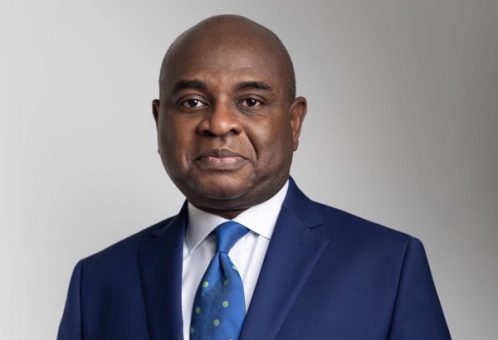
Bluecode Africa, the European payments infrastructure operator backed by leading US and European institutional investors, has named Prof Kingsley Chiedu Moghalu as Chairman of the Advisory Board of its Nigerian subsidiary, Bluecode Payments Nigeria Limited as the company formally enters the Nigerian market.
The appointment was jointly announced by Chris Pirkner, Founder of Bluecode, and Odin Krismayr, Managing Director of Bluecode Africa, who described it as a foundational governance decision for the company’s Nigerian and continental operations.
Moghalu served as Deputy Governor of the Central Bank of Nigeria from 2009 to 2014, heading the Financial System Stability and Operations Directorates at different periods.
He led the team that introduced the unique-identifier Bank Verification Number (BVN), enrolling 50 million banking users, simplifying Know Your Customer (KYC) procedures, and doubled Nigeria’s financial inclusion rate from 33 to 60 per cent.


BREAKING: Retired General Dies in Kidnappers’ Captivity, Demand Release of Gang Members

Bandits Kill 19 Farmers, Injure 12 Others in Fresh Attack in Zamfara

FIFA World Cup Day 2: Canada holds 1-1 Bosnia-Herzegovina

Tech Expert, Zuckerberg trains with UFC champions, Adesanya, Alexander

Organ Trafficking: Ekweremadu bags 10 years in UK prison

SAINT OBI: Between his marriage and his death
-

 Business2 days ago
Exchange Rates Thursday,11June 2026
-

 News2 days ago
JUST IN: Nigerians evacuated from South Africa arrives Lagos
-

 Sports2 days ago
Davido uses W’Cup stage to demand action for abducted Nigerian pupils
-

 Opinions2 days ago
Nigeria Cannot Build Flood Resilience While Destroying Its Wetlands
-

 Crime2 days ago
Nigerian Army Contains Unauthorised Cameroonian Military Incursion in Cross River Border
-

 News2 days ago
NLC President Joe Ajaero wins Arthur Svensson International award for worker’s rights
-

 Business2 days ago
Kingsley Moghalu chairs Bluecode Africa subsidiary in Nigeria
-

 News2 days ago
BREAKING: House of Reps Unveils New Minority Leader