
Business
11 New NNPC Limited Board Members (Full List)


President Bola Ahmed Tinubu has reconstituted the board of the Nigerian National Petroleum Company (NNPC) Limited, dismissing Chairman Chief Pius Akinyelure and Group Chief Executive Officer Malam Mele Kyari.
A statement by Bayo Onanuga, Special Adviser to the President on Information and Strategy, indicated that the President removed all other board members appointed with Akinyelure and Kyari in November 2023.
The new 11-man board has Bashir Bayo Ojulari as the Group CEO and Ahmadu Musa Kida as non-executive chairman.
1. Ahmadu Musa Kida – Non-Executive Chairman
2. Bashir Bayo Ojulari – Group Chief Executive Officer (GCEO)
3. Adedapo Segun – Chief Financial Officer (CFO)
4. Bello Rabiu – Non-Executive Director (North West)
5. Yusuf Usman – Non-Executive Director (North East)
6. Babs Omotowa – Non-Executive Director (North Central)
7. Austin Avuru – Non-Executive Director (South-South)
8. David Ige – Non-Executive Director (South West)
9. Henry Obih – Non-Executive Director (South East)
10. Mrs. Lydia Shehu Jafiya – Representative of the Federal Ministry of Finance
11. Aminu Said Ahmed – Representative of the Ministry of Petroleum Resources
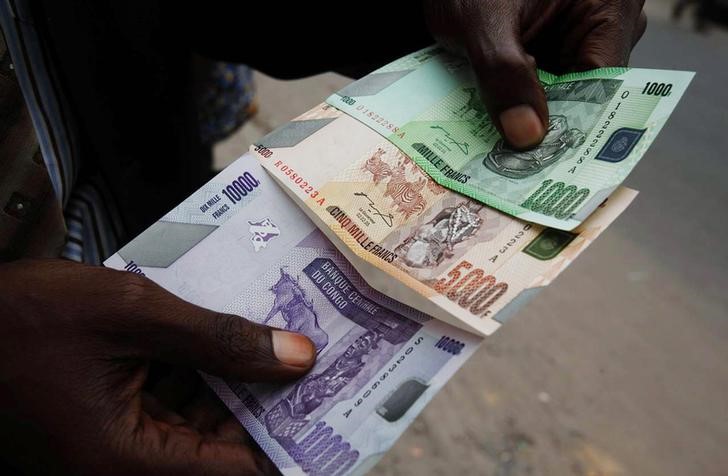
The Central Bank of the Democratic Republic of Congo (BCC) has announced plans to prohibit cash transactions in foreign currencies, including the US dollar, starting April 9, 2027, in a fresh attempt to promote the use of the local Congolese franc (CDF) and reduce dollarisation in the economy.
In a statement issued on Thursday, April 9, 2026, the BCC declared that from the effective date, “no person will be authorised to carry out cash transactions in foreign currencies,” and commercial banks will no longer be allowed to import or distribute physical foreign banknotes.
Under the new measure, payments in dollars, euros or other foreign currencies will still be permitted, but only through electronic means such as bank transfers, cards, or mobile money platforms. Cash dealings must be conducted exclusively in Congolese francs.
The BCC’s move aims to strengthen the national currency, enhance monetary sovereignty, and curb the widespread use of the US dollar, which dominates many business transactions in the country despite official policies favouring the CDF.
The Congolese economy has long been heavily dollarised, with foreign currency widely accepted even in everyday dealings.
This is not the first attempt by the BCC to limit dollar use. Previous efforts to ban or restrict foreign currency have largely failed to take full effect, as the dollar remains deeply entrenched in commerce, mining, and daily life across the vast Central African nation.
The announcement comes amid broader initiatives by the central bank, including interventions in the foreign exchange market and efforts to build gold reserves, to support the Congolese franc and reduce reliance on the US dollar.
Analysts and businesses are watching closely to see how the policy will be enforced, given past challenges in implementing similar restrictions in a country where cash remains king and banking penetration is relatively low.
The BCC has urged the public and financial institutions to prepare for the transition and to rely increasingly on formal banking and electronic payment systems.
Further details on implementation guidelines and penalties for non-compliance are expected in the coming months. The public is advised to monitor official communications from the Banque Centrale du Congo for updates.
Business
Crude Oil Prices Drop Below $95 After US-Iran Ceasefire
Earlier, crude prices had surged above $110 per barrel amid fears of supply disruptions as tensions escalated in the Middle East.


Crude oil prices fell below $95 per barrel in early trading on Wednesday following a ceasefire agreement between the United States and Iran.
The global oil benchmark fell by about 13% to around $94–$95 per barrel, marking one of the steepest single-day declines in recent years after weeks of war-driven price spikes.
The dramatic selloff came after U.S. President Donald Trump announced a conditional two-week ceasefire, pausing military operations in exchange for the reopening of the Strait of Hormuz—a critical route for global oil shipments.
West Texas Intermediate (WTI), the U.S. benchmark, also dropped significantly to around $95–$96 per barrel, reflecting a broad easing of geopolitical tensions and a rapid unwinding of the war risk premium in oil markets.
Earlier, crude prices had surged above $110 per barrel amid fears of supply disruptions as tensions escalated in the Middle East.
However, the ceasefire has restored some confidence that oil flows will resume, triggering a sharp correction in prices.
Business
Afreximbank Avails US$10 billion to insulate African Energy Producers , Exporters from Gulf Crisis
GCRP is designed to, among others sustain essential imports – including fuel, LNG, food, fertiliser, pharmaceuticals – by providing vital short-term Foreign Exchange (FX) and liquidity to support vulnerable member states.
Dr. George Elombi, President and Chairman of the Board of Directors at Afreximbank on Tuesday commended members of the Board for their approval of a US$10 billion Gulf Crisis Response Programme (GCRP) to insulate African and Caribbean economies.
” This crisis response programme is in tune with our DNA. We understand how our economies work and the pain points associated with these transitory crises,” said Elombi.
He emphasised that the intervention will support African countries in adjusting smoothly to the crisis while strengthening their resilience to future shocks through interventions that transform the structure of their economies.
The conflict, which escalated on 28 February 2026, has sent shockwaves through the global economy, with African and Caribbean economies bearing the largest share of the brunt.
Given the significance of the Gulf region as a primary global source of oil, Liquid Nitrogen Gas (LNG), fertilisers, as well as the critical role of the Strait of Hormuz, the outbreak has triggered wider repercussions at a global scale, including adversely affecting African and CARICOM economies.
These impacts specifically affect nations that heavily rely on fuel, fertiliser, and food imports, alongside those exposed to Gulf shipping corridors, investment flows, tourism and remittance inflows.
GCRP is designed to, among others sustain essential imports – including fuel, LNG, food, fertiliser, pharmaceuticals – by providing vital short-term Foreign Exchange (FX) and liquidity to support vulnerable member states.
It further aims to empower African energy and minerals exporters to capitalise on elevated prices and rerouted trade flows, by scaling productive capacity in strategic commodities, through pre-export finance, working capital, and inventory financing.
Additionally, it provides short term relief to African and Caribbean member states whose tourism and aviation industries have been adversely impacted by the crisis.
The programme is also designed to build the medium to long-term resilience of African and Caribbean economies against future shocks by scaling productive capacities for producers and exporters of energy, minerals while accelerating the completion of critical energy, port, and logistics infrastructure projects in African and Caribbean member states, delayed by the conflict.


2027: Bode George warns INEC, Judiciary Drifting Nigeria Towards ” One Party Rule”

DR Congo Central Bank Announces Ban on Foreign Currency Cash Transactions from 2027

CBN Debunks Viral Fake News of ₦5,000 Banknote Featuring President Tinubu’s Image

Tech Expert, Zuckerberg trains with UFC champions, Adesanya, Alexander

Organ Trafficking: Ekweremadu bags 10 years in UK prison

SAINT OBI: Between his marriage and his death
-
 International3 days ago
Oil Prices Rise, Stocks Fall as Trump’s Iran Deadline Looms
-

 Entertainment3 days ago
The New Masquerade’s actor ‘Clarus’ is dead
-

 News3 days ago
Abiodun Presents Ceremonial Sword to Tinubu, Urges Sustained War on Crime
-
 Politics2 days ago
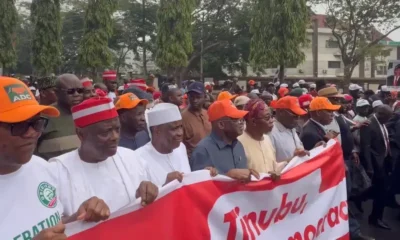
Atiku, Obi, Kwankwaso, Aregbesola, Storm INEC Hqtrs in Protests
-
 Politics3 days ago
JUST IN: ADC Faces Fresh Crisis as New Faction Emerges, rejects David Mark-led coalition
-
 Politics3 days ago
Gbenga Hashim resigns from PDP, citing “Things Fall Apart, the center can’t hold”
-

 Business3 days ago
Afreximbank Avails US$10 billion to insulate African Energy Producers , Exporters from Gulf Crisis
-

 News3 days ago
Lagos Announces Traffic Diversions for Wednesday and Thursday Project Commissionings