
News
JUST IN: Supreme Court dismisses states’ suit challenging constitutionality of EFCC, others


….. Strikes out FG’s preliminary objections
The Supreme Court of Nigeria on Friday dismissed a suit filed by 19 states challenging the constitutionality of the acts establishing the Economic and Financial Crimes Commission (EFCC) and two other anti-corruption agencies.
The suit, which was instituted against the Attorney-General of the Federation (AGF), argued that the establishment of these agencies was unconstitutional and infringed upon the powers of the states.
The plaintiffs had argued that the Supreme Court, in Dr Joseph Nwobike Vs Federal Republic of Nigeria, had held that it was a UN Convention against corruption that was reduced into the EFCC Establishment Act and that in enacting this law in 2004, the provision of Section 12 of the 1999 Constitution, as amended, was not followed.
They argued that, in bringing a convention into the Nigerian law, the provision of Section 12 must be complied with.
According to them, the provision of the Constitution necessitated the majority of the states’ Houses of Assembly agreeing to bringing the convention in before passing the EFCC Act and others, which was allegedly never done.
While delivering judgement on Friday, Justice Uwani Abba-Aji, who led a seven-member panel of justices, ruled that “the EFCC Act, which is not a treaty but a convention does not need the ratification of the houses of assembly.”
“Let me first look at the constitutional provision. The plaintiffs rely on Section 12 of the constitution in their argument. Treaty is an agreement reached by two or more countries which has to be ratified.
“Convention: Conventions are agreed by a larger number of nations. Conventions only come into force when a larger number of countries agree.
“Therefore, the EFCC Act, which is not a treaty but a convention does not need the ratification of the houses of assembly.
A convention would have been ratified by members state and the NASS can make laws from it, which will be binding on all the states in Nigeria as it is the case of EFCC Establishment Act,” the Judge said.
The Supreme Court dismissed the suit in its entirety and resolved the case against the plaintiffs.
“In a country like Nigeria, the federating units do not have absolute power. The NFIU guideline is to present a benchmark and not to control the funds.
“Where an Act of law is made by NASS like the NFIU and its guideline, it is binding on all. Any act that has been competently enacted by the NASS cannot be said to be inconsistent.
“Where the NASS has enecated several laws on corruption, money laundering, etc, no state has the right to make law to compete with it.
The investigative power of the EFCC cannot be said to be in conflict with legislative powers of the state assembly.
“I must agree with the AGF that the plaintiffs’ argument, that is, the houses of assembly of the plaintiffs states is not tenable in law,” the Supreme Court added.
The Court ruled that the NFIU guideline had not contravened the provision of the constitution to manage the funds of their states and resolve the issues against the plaintiffs.
All other judges agreed with the lead judgment, saying all the issues raised in the states’ suit had no merit “and are accordingly dismissed.
“The Court had earlier dismissed all objections of the Federal Government to the suit filed by the states.
Justice Abba-Aji said the plaintiffs case was against the Attorney-General of the Federation and not any of the agencies mentioned, hence, the Supreme Court has jurisdiction to determine it.
“Since the AGF is assumed to be the chief law officer of the federation, he is by all means the proper and necessary party.
“The AGF has locus standi to institute action against any oneAnd the AGF can be sued in any civil matter against the government.
“It is clear that the Federal Government has legal tussle with the states based on the directive of the NFIU which the states are contending.
The preliminary objection is hereby dismissed,” he ruled. Reacting, the Counsel to Kogi State, Abdulwahab Mohammed, SAN, said, “This is an issue we have raised before the FHC, it was not addressed.
We raised it at the Appeal Court and was not addressed.
This is going to enrich our jurisprudence. We thank your lordship for hearing us out.
“Representative of the AGF, Rotimi Oyedepo, SAN, said, “We convey our gratitude to the court for your wisdom.
Your lordship has permanently settled the legality of the anti-corruption agency in fighting corruption.”




News
Police must pay transport fares, says AIG
” No police officer has the right to enter your vehicle without paying. We should assist one another willingly, not by force,” he said.


• The Assistant Inspector-General of Police(AIG) in charge of Zone 2 Command, Mr Olohundare Jimoh, speaking with transporters at Obalende garage, Lagos State, on Wednesday.
The Assistant Inspector-General of Police, Zone 2 Command, Mr Olohundare Jimoh, has declared that officers must pay fares before boarding commercial vehicles, warning against abuse of authority.
Jimoh spoke on Wednesday at Obalende garage during a sensitisation meeting with drivers and transport workers marking National Police Day 2026.
He stressed that relations between police and the public must be based on partnership, not coercion, urging both sides to support each other voluntarily.
“No police officer has the right to enter your vehicle without paying. We should assist one another willingly, not by force,” he said.
Jimoh called for stronger cooperation to maintain safety and order on roads, insisting there was no conflict between officers and transport unions.
“I don’t collect money from officers. We don’t arrest people arbitrarily. If you have issues with any officer, report directly to me,” he said.
(Vanguard)
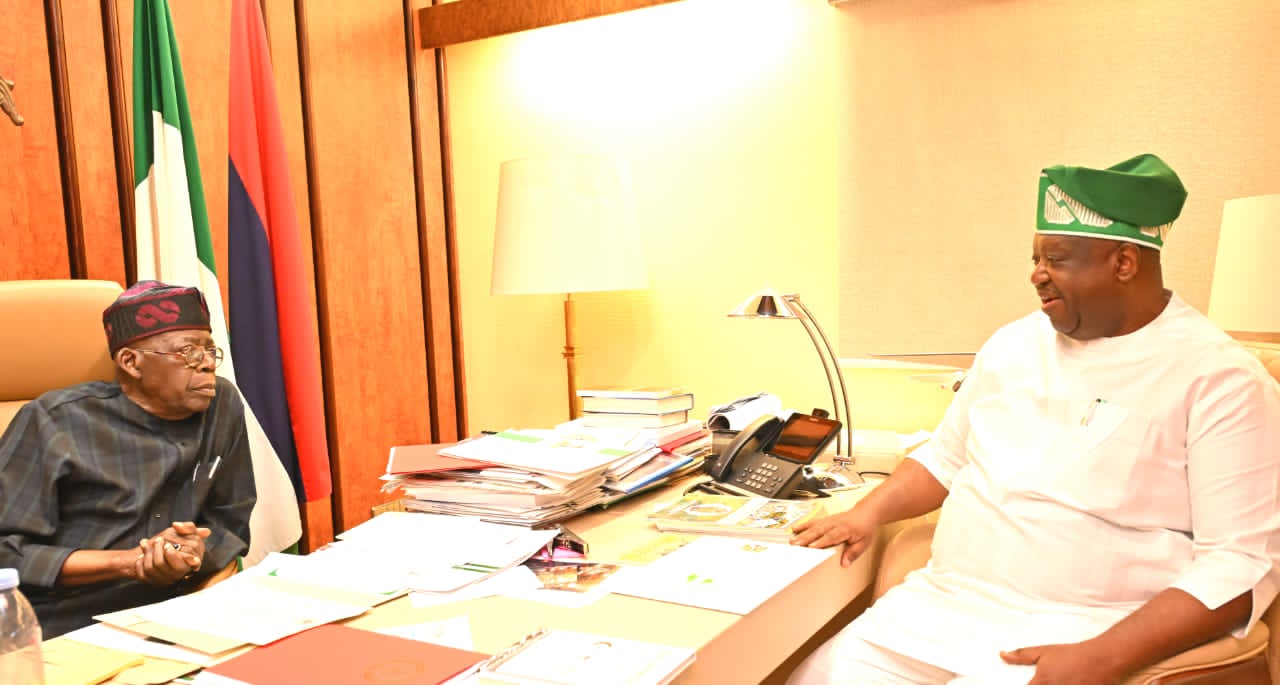
President Bola Ahmed Tinubu will leave for Jos tomorrow to commiserate with the state government and residents over recent deadly gun attacks that lefts dozens dead.
This was following Governor Caleb Mutfwang’s security briefing to the President on the recent violent attack in Angwan Rukuba, Plateau State.
During the meeting on Wednesday at the presidential villa in Abuja, Governor Caleb Mutfwang told Mr President that although security forces have restored calm after fresh disturbances involving looters on Wednesday morning, following the deadly Palm Sunday attack that left more than a dozen dead and many others injured.
He said that investigations are continuing to determine the identities or motives of the attackers who are yet to be apprehended .
Presidency source said that President Tinubu was initially scheduled for a planned trip to Ogun State to flag off operations at the Gateway International Cargo Airport on Thursday.
From Jos, the President will travel to Lagos to observe Good Friday.
On Saturday, April 4, he will visit Ogun State to commission projects including the cargo airport.
He will then return to Lagos during the Easter holiday to commission several state infrastructure projects, including the Ojota/Opebi Link Bridge.
Before heading back to Abuja, the president will visit Bayelsa State on April 10 to commission projects completed under Governor Duoye Diri.
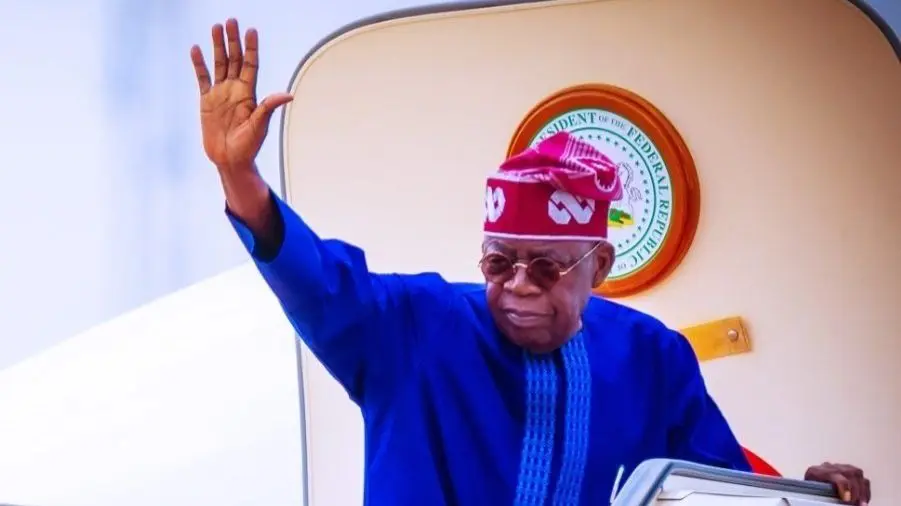
President Bola Ahmed Tinubu will tomorrow embark on a visit to Jos, Plateau State, as the first leg of a five-state tour across the country.
The Presidency announced that the President has postponed his scheduled trip to Ogun State to enable him to commence the series of official visits.
Details of the remaining four states in the tour are expected to be released by the Presidency in due course.
The development comes as President Tinubu continues nationwide engagements aimed at assessing development projects, interacting with stakeholders, and addressing key national issues in the respective states.
Further updates on the itinerary will be communicated as the visits progress.


Onyejeocha resigns as Minister of State for Labour

No force can defeat Tinubu in 2027 –Umahi

Labour Party to hold presidential primary April 28

Tech Expert, Zuckerberg trains with UFC champions, Adesanya, Alexander

Organ Trafficking: Ekweremadu bags 10 years in UK prison

SAINT OBI: Between his marriage and his death
-
 Business3 days ago
33 Nigerian Banks Beat CBN’s Recapialisation with ₦4.65trn Combined Capital Base
-

 Sports3 days ago
FirstBank Sponsors Samuel Okwaraji U-16 Football Championship 2026
-
 Politics2 days ago
BREAKING: INEC Withdraws Recognition of David Mark’s ADC
-
 News2 days ago
JUST IN: Tinubu Heads to Jos Tomorrow, Postpones Ogun Trip for 5-State Visits
-

 Entertainment3 days ago
Super Eagles Iwobi to launch music album ‘More To Life’
-
 News3 days ago
Easter: FG declares Friday, Monday public holidays
-

 Politics3 days ago
Arise News Anchor Ikokwu in Political Race for Reps Seat
-
 News2 days ago
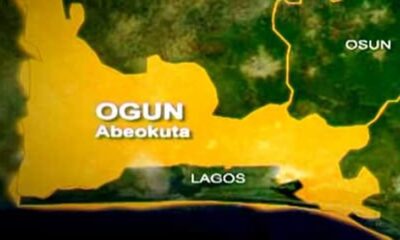
Gas Leak in Ogun School: 30 Students, Teacher Hospitalised