Connect with us

News

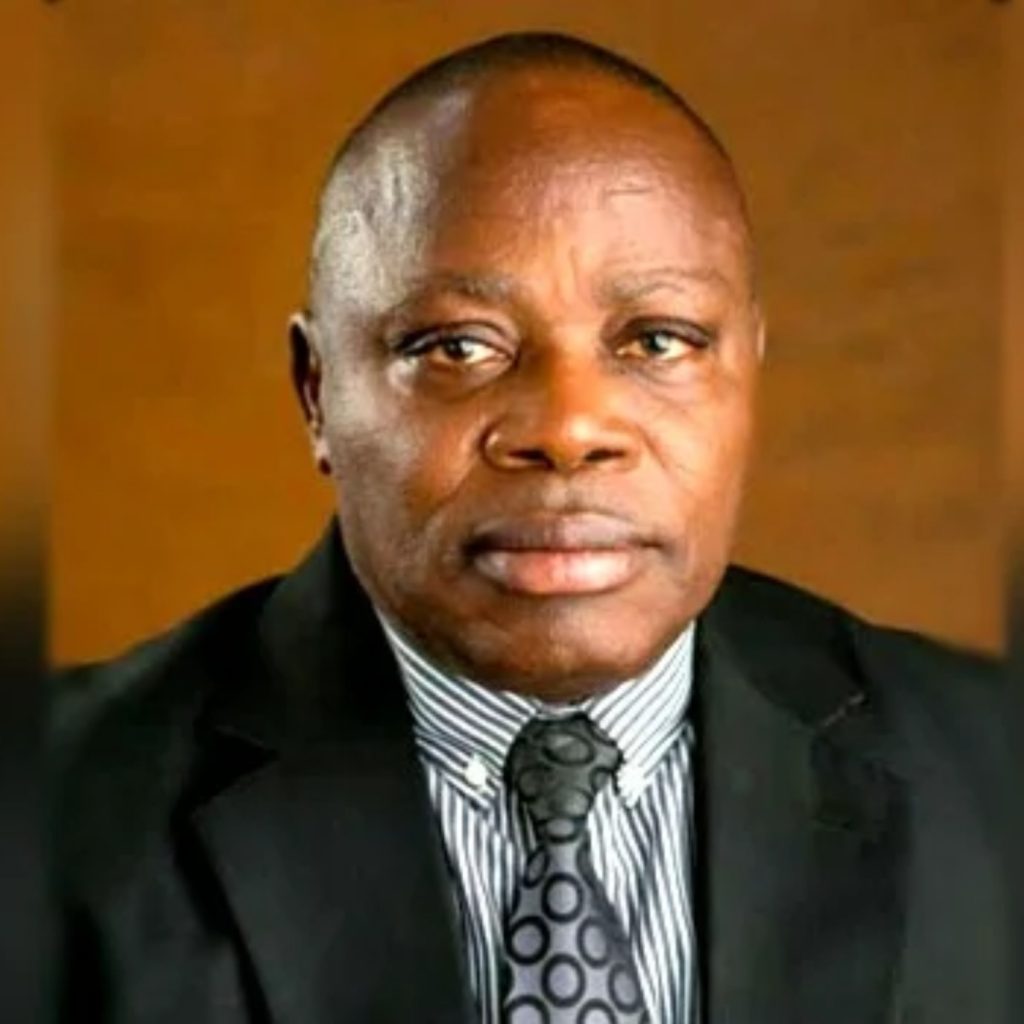
BREAKING: Rivers Assembly moves to probe Chief Judge over alleged age falsification

Published

on

385 Views

The Rivers State House of Assembly has set plans in motion to investigate the state Chief Judge, Justice Simeon Amadi, for alleged falsification of age.

The development comes amid ongoing political crisis in the state.

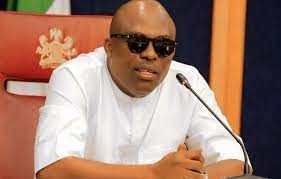
Recall that the Minister of the FCT, Nyesom Wike and Governor Similayi Fubara have been engaged in a political rivalry over who controls the oil rich state.

Details later….

News

NUC issues new rules on honorary doctorates

The guidelines limit honorary awards to a maximum of three recipients per convocation and require that the degrees carry the designation “Honoris Causa,” such as Doctor of Science (D.Sc. h.c.) or Doctor of Law (LL.D. h.c.).

Published

on

By

9 Views

The National Universities Commission (NUC) on Thursday, released fresh guidelines regulating the award and use of honorary doctorate degrees in Nigeria.

Honorary doctorate degrees are non-earned distinctions granted honoris causa to recognise distinguished merit, public service, scholarly impact, creative achievement or other significant contributions aligned with the values of the awarding institution.

In a public notice shared on its official X page, the Commission found widespread misuse of honorary degrees, with 32 entities among 61 institutions and professional bodies identified as operating as honorary degree mills — including unaccredited foreign universities, unlicensed local institutions and organisations without degree-awarding powers. Some were also found issuing fake professorships.

Consequently, the Executive Secretary of the Commission, Abdullahi Yusufu Ribadu, said that the new guidelines were developed in line with established academic traditions and resolutions of the Association of Vice-Chancellors of Nigerian Universities, including the Keffi Declaration of 2012, alongside inputs from universities submitted in December 2025.

NUC said that the new rules are designed to standardise the conferment process, protect academic integrity and safeguard the credibility and global reputation of Nigeria’s university system. Universities and other degree-awarding institutions were directed to strictly comply, with sanctions promised for violations.

Under the new rules, only approved universities that have graduated their first set of PhD students are eligible to award honorary doctorates. The purpose, criteria and selection procedures must be clearly defined and publicly accessible, while nominations must pass through statutory committees and receive approval from both the University Senate and Governing Council.

The guidelines limit honorary awards to a maximum of three recipients per convocation and require that the degrees carry the designation “Honoris Causa,” such as Doctor of Science (D.Sc. h.c.) or Doctor of Law (LL.D. h.c.).

Awards must be conferred in person, except in exceptional circumstances where they may be given virtually, in absentia or posthumously.

The Commission stressed that honorary doctorates must be granted free of charge and recipients must not present the honour as an earned academic qualification.

NUC specifically warned that recipients cannot use the “Dr.” — which is reserved for holders of earned doctoral or medical degrees — nor use the award to supervise research, practise as scholars or manage academic units.

Universities are also required to provide recipients with orientation on the proper use of the honour, publish lists of awardees on their websites to promote transparency and establish clear mechanisms for revoking awards if recipients are convicted of fraud or engage in unethical conduct.

The NUC said all eligible universities must comply strictly with the framework, reiterating that regulatory sanctions will apply to institutions that confer honorary doctorates in breach of the new guidelines.

Continue Reading

News

Kogi Govt Lauds Tinubu’s Commitment To Making State Police A Reality

As a government, we fully align with Mr President’s position and assure him, as well as the leadership of the National Assembly, of our readiness to cooperate with all relevant authorities to make the State Police a reality.

Published

on

By

17 Views

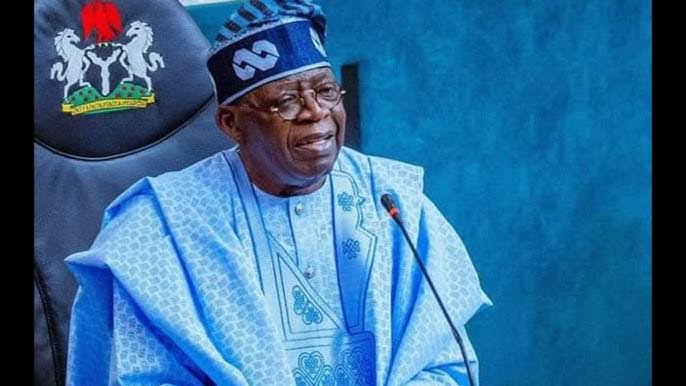
• Governor Usman Ododo and President Bola Tinubu [State House Photo]

The Kogi State Government has lauded President Bola Ahmed Tinubu’s commitment towards making the establishment of State Police a reality.

In a statement issued on Thursday by the State Commissioner for Information and Communications, Kingsley Fanwo, the State Government asserted that the reform will fundamentally transform Nigeria’s security architecture.

President Tinubu the previous day, reaffirmed his administration’s resolve to decentralise policing during a high-level engagement with governors at the Presidential Villa, Abuja.

The President stressed that State Police has become imperative in confronting the country’s evolving security challenges, noting that decentralised law enforcement would enhance community-based responses, improve intelligence gathering, and strengthen internal security across the federation.

The Kogi State Government noted that the President’s position comes as the National Assembly continues deliberations on the constitutional and legislative frameworks required to establish State Police, describing the move as a bold and strategic step toward long-term national stability.

The Commissioner for Information and Communications, Kingsley Femi Fanwo, said the administration of Governor Ahmed Usman Ododo fully aligns with the President’s vision and remains committed to supporting reforms that bring security closer to the grassroots.

He stated that the State Police initiative represents a decisive intervention capable of significantly dismantling insecurity in Nigeria, commending President Tinubu for ongoing economic and financial sector reforms and describing the proposed decentralisation of policing as a natural progression in the administration’s broader national renewal agenda.

“As a government, we fully align with Mr President’s position and assure him, as well as the leadership of the National Assembly, of our readiness to cooperate with all relevant authorities to make the State Police a reality,” the statement said.

The Kogi State Government maintained that sustained collaboration between federal and state authorities would not only address immediate threats but also lay the foundation for enduring peace, security, and development across the country.

Continue Reading

News

[For The Record]: Acting IGP Disu Unveils His Plans for NPF, Citizens

The road ahead is not smooth,” he said, emphasising:” there will be resistance and hard choices, but my commitment to transforming this Service into one every citizen can trust will not waver.

Published

on

By

21 Views

Tunji Disu during his decoration today as Inspector General of police, by President Bola Tinubu on February 25,2026, at the Presidential Villa, Abuja.

The newly appointed Acting Inspector-General of Police, Olatunji Disu, on Wednesday formally assumed office, pledging sweeping reforms anchored on professionalism, accountability, and community partnership to restore public confidence in the Nigeria Police Force.

He also acknowledged the contributions of past Inspectors-General, pledging to build on the foundations they laid while steering the force toward reform.

“The road ahead is not smooth,” he said, emphasising:” there will be resistance and hard choices, but my commitment to transforming this Service into one every citizen can trust will not waver.”

Disu took over from his predecessor, Olukayode Egbetokun, during a handover ceremony, declaring that his tenure would be guided by three core pillars: professionalism and modernisation, accountability and integrity, and community partnership and public trust.

He acknowledged that existing challenges within the force, including a trust deficit with communities, outdated systems, resource gaps, and misconduct in some quarters, describe them as “uncomfortable truths” that must be confronted.“These are truths we must face with resolve to reposition the Nigeria Police as a trusted, people-oriented institution,” he said.

Reform Pillars

Disu said the police would embrace intelligence-led policing, forensic investigations, and digital tools, stressing that modern methods—not intimidation or abuse of authority—would define operations.

On accountability, he warned that impunity would no longer be tolerated.

“The badge is a symbol of public trust. Anyone who treats it otherwise will face the full consequences of our disciplinary processes,” he stated, adding that oversight mechanisms would be strengthened and processes made more transparent.

He also emphasised community policing as a philosophy rather than a programme, pledging to deepen engagement with citizens through town halls, markets, schools, and neighbourhood interactions.

Addressing officers, Disu promised to prioritise their welfare and working conditions while demanding integrity, compassion, and courage in service.To citizens, he called for cooperation, urging Nigerians to report crime, engage local officers, and hold the police accountable.

To citizens, he called for cooperation, urging Nigerians to report crime, engage local officers, and hold the police accountable.

“We are not your adversaries. We are your neighbours in uniform, and your safety is the only measure of our success,” he said.

Disu thanked Bola Tinubu for the confidence reposed in him, describing his appointment as a heavy responsibility rather than a moment for celebration.

He also acknowledged the contributions of past Inspectors-General, pledging to build on the foundations they laid while steering the force toward reform.

“The road ahead is not smooth,” he noted. “There will be resistance and hard choices, but my commitment to transforming this Service into one every citizen can trust will not waver.

Continue Reading

Trending