
News
[BREAKING] Strike: NLC, TUC summon ‘extraordinary’ NEC meeting

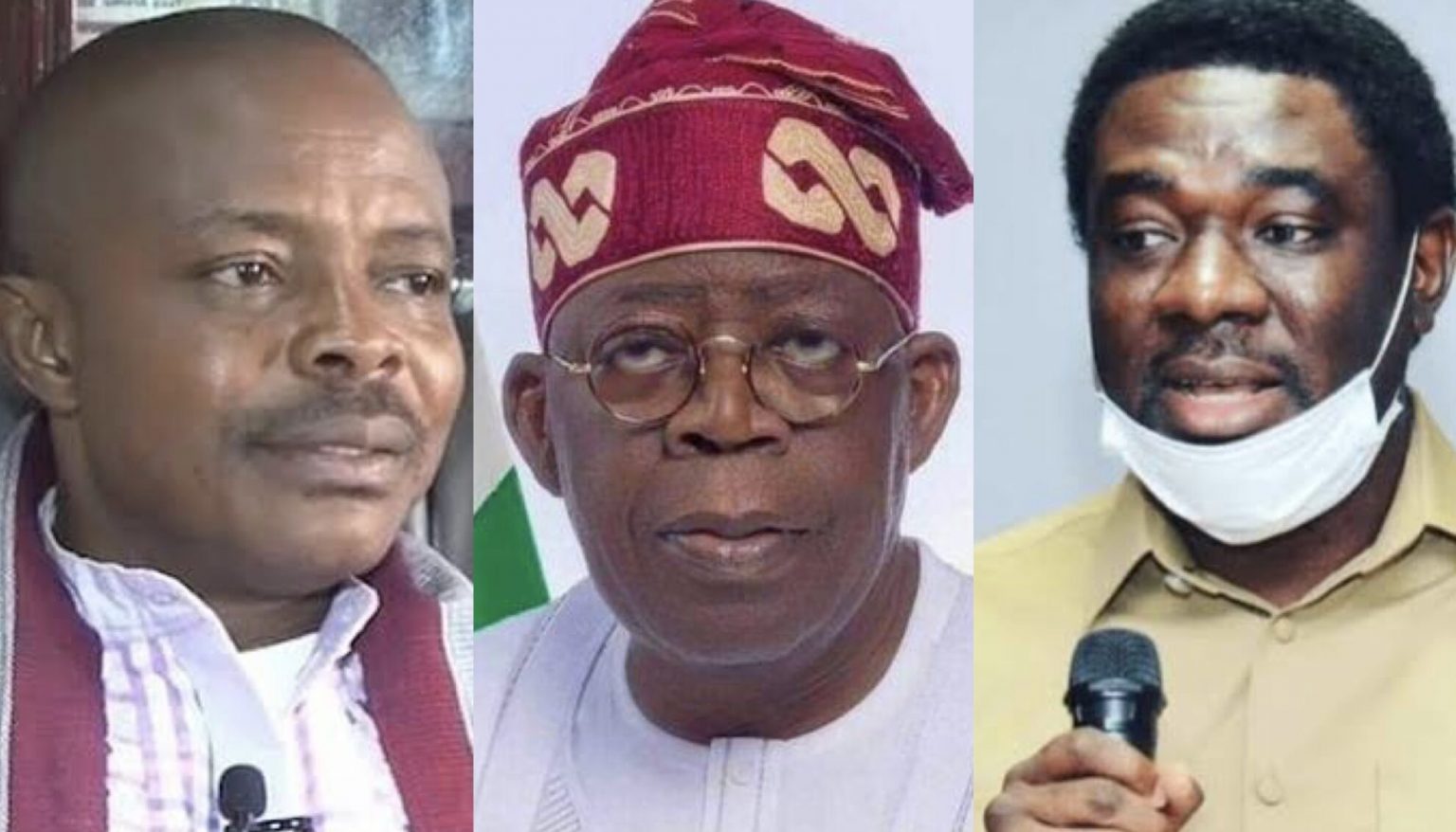
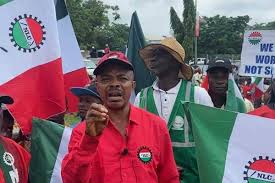
The leadership of the Nigeria Labour Congress and the Trade Union Congress have summoned what the unions described as an extraordinary National Executive Council meeting.
The National Vice-President of the TUC, Tommy Etim, made this known in an interview on Tuesday afternoon.
The aim of the meeting, according to him, is to review the modalities of the planned strike following the brutalisation of the National President of the NLC, Joe Ajaero, review the Memorandum of Understanding signed between the Federal Government and the Organized Labour on October 2, 2023, following the removal of the subsidy on Premium Motor Spirit which the Labour centres said has caused “untold hardship” to Nigerians.
He stated, “We will be holding an extraordinary NEC meeting any moment from now. The modalities include the injustice meted upon comrade Ajaero, the planned strike and the MOU signed with the Federal Government. More details will be revealed after the meeting.”
The organised labour, comprising the Nigeria Labour Congress and the Trade Union Congress, on Friday, issued a five-day ultimatum over the earlier arrest of the National President of the NLC, Joe Ajaero, by the police in Owerri, Imo State, on Wednesday.
The labour centres demanded the redeployment of the commissioner of police in the state and the arrest and prosecution of the aide of the government who was alleged to have perpetrated the attack.
The unions also threatened to embark on a nationwide industrial action if their demands were not met in five days from Friday.
Ajaero was arrested by the police ahead of the state-wide protest in Imo on Wednesday. This was disclosed by the NLC’s Head of Information, Benson Upah.
Although the police denied arresting Ajaero, stating that he was merely taken into protective custody to prevent a mob attack, the Imo State Governor, Hope Uzodimma, accused the labour leader of meddling in the political affairs of the state.
The attack on the labour leader has been condemned by many prominent Nigerians and civil society organisations, including the presidential candidate of the Labour Party in the 2023 elections, Peter Obi, and human rights lawyer, Mr Femi Falana (SAN).






News
Judiciary Staff Union Confirms Journalist General Secretary
The appointment marks a notable transition for Akwashiki, who spent more than 15 years reporting on organised labour, industrial relations, trade unions and workers’ issues before moving into union administration.

The Judiciary Staff Union of Nigeria (JUSUN) has confirmed veteran labour journalist, Comrade Moses John Akwashiki as its substantive General Secretary.
Akwashiki’s appointment was approved by the National Working Committee of the union and took effect from September 5, following his stint as Acting General Secretary.
The appointment marks a notable transition for Akwashiki, who spent more than 15 years reporting on organised labour, industrial relations, trade unions and workers’ issues before moving into union administration.
In a letter conveying the approval, JUSUN national president, Comrade Marwan Mustapha Adamu, congratulated Akwashiki, and urged him to discharge his responsibilities in accordance with the union’s Constitution and Code of Conduct.
The letter, titled “Confirmation of Appointment as Substantive General Secretary of Judiciary Staff Union of Nigeria”, stated that the National Working Committee had approved his appointment with effect from September 5.
• TRIBUNE
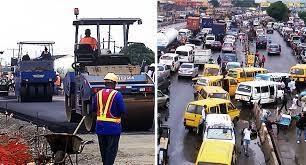
….as FG starts two-week Kara Bridge repairs tomorrow
Motorists face severe traffic disruptions on the Lagos-Ibadan Expressway starting Tuesday as the Federal Government begins a two-week repair of the Kara Bridge.
The Federal Ministry of Works has scheduled the rehabilitation works to commence tomorrow, with the project expected to last 14 days. The repairs aim to address structural issues on the critical bridge, a major link for commuters and heavy-duty vehicles between Lagos and Ogun states.
Authorities have advised road users to explore alternative routes or adjust travel times to avoid prolonged delays during the construction period. Traffic management measures are expected to be put in place, though details on lane closures or diversions have yet to be fully released.
News
FG announces two-week traffic delays on Kara–Berger Bridge for repairs
The TRACE Acting Commander, Mr A. Ojerinde, stated that a multi-agency operation including TRACE, the Federal Road Safety Corps, FRSC, Lagos State Traffic Management Authority, LASTMA, and the Nigeria Police Force will be deployed along the corridor to enforce traffic control.
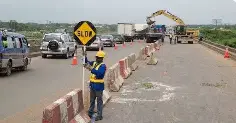
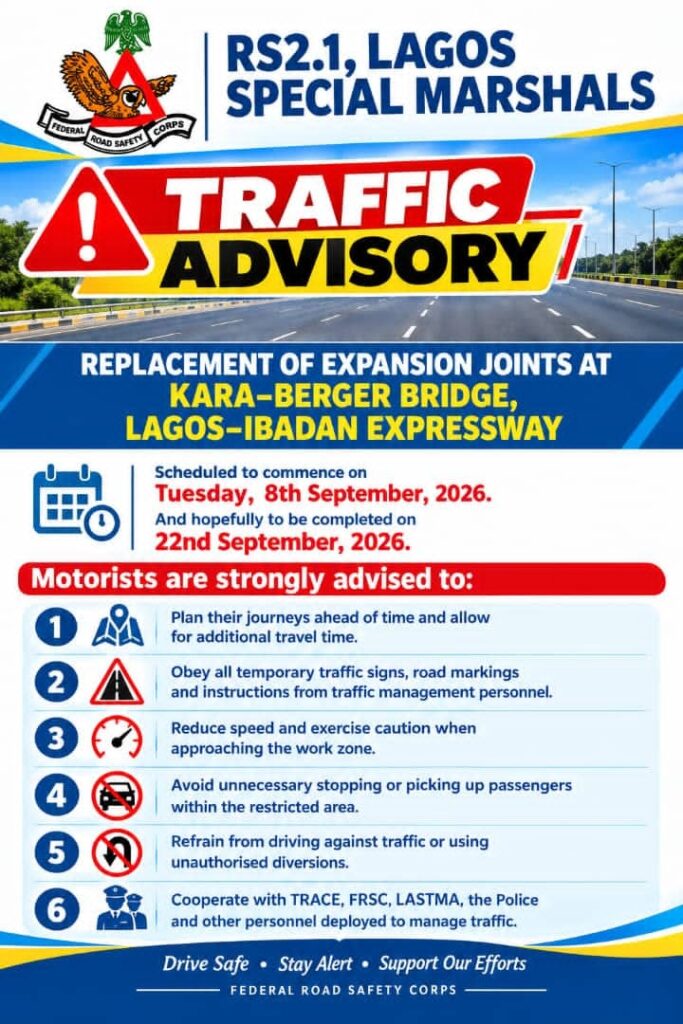
THE Federal Government has alerts motorists and commuters on the Lagos–Ibadan Expressway of possible travel delays, starting Tuesday September 8 for two weeks repair works on the Kara–Berger Bridge
The project, earlier slated to commence in August 2026, was suspended for traffic review following public outcry over short notice and the need for effective traffic management.
The two-week rehabilitation project, directed by the Minister of Works, Senator David Umahi, involves the replacement of deteriorating expansion joints to improve road safety, structural integrity, and long-term traffic flow on the busy corridor.
The project is expected to run through September 22, 2026.
The Ogun State Traffic Compliance and Enforcement Agency, TRACE, alongside the Federal Ministry of Works and key stakeholders, in a statement, warned motorists to prepare for lane restrictions, particularly during peak commuting hours.
The TRACE Acting Commander, Mr A. Ojerinde, stated that a multi-agency operation including TRACE, the Federal Road Safety Corps, FRSC, Lagos State Traffic Management Authority, LASTMA, and the Nigeria Police Force will be deployed along the corridor to enforce traffic control.
Ojerinde, who urged road users to plan ahead, said “Leave earlier than usual to accommodate expected travel delays.


Judiciary Staff Union Confirms Journalist General Secretary

Five killed as Amazon cargo plane crashes at Miami airport

After South Africa, Kenya Cracks Down on Foreign Traders, Retailers

Tech Expert, Zuckerberg trains with UFC champions, Adesanya, Alexander

Organ Trafficking: Ekweremadu bags 10 years in UK prison

SAINT OBI: Between his marriage and his death
-

 News3 days ago
Arise TV Deputy Head of News Ohi Odiai and Wife Celebrate 17th Wedding Anniversary
-
 International3 days ago
Trump sends envoys to Russia, Ukraine with new peace plan
-
 Politics22 hours ago
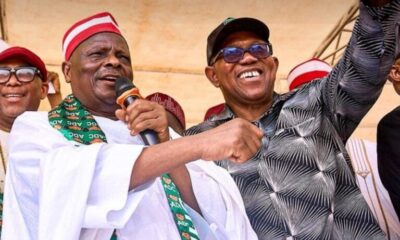
Obidient Connect Texas Plans Grand Rally for Obi-kwakwanso October 10
-
 News3 days ago
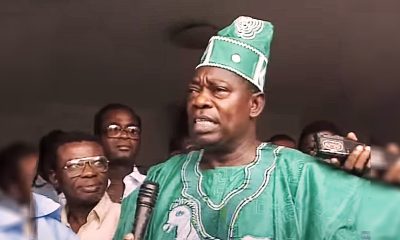
MKO Abiola’s Documentary to hit Cinemas in October
-

 Business22 hours ago
Dangote Refinery Signs IPO Document Today
-

 Business4 hours ago
NAFDAC Goes After Chinese Logistics Firms Over Products Counterfeiting
-
 News3 days ago
BREAKING: JAMB releases underage UTME results, clarifies admission conditions
-
 News23 hours ago
FG announces two-week traffic delays on Kara–Berger Bridge for repairs