
Opinions
SIRA: Celebrating African Excellence, Preserving Our Stories and Inspiring Generations
In 2027, the fourth installment of the awards will cross the Atlantic to Lagos, Nigeria, under the evocative theme ÀPÉJỌ: The Convergence.

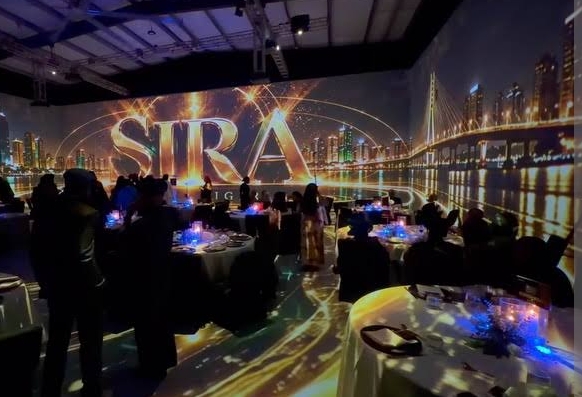
Image: SIRA hosted its third edition, themed EKETA (The Third), on October 17, 2026, at The Luxtrium in Houston, Texas.
Long before modern borders were drawn or contemporary global institutions were conceived, Africa stood as the cradle of human civilization.
From the architectural precision of the pyramids at Giza and the scholarly libraries of Timbuktu to the complex governance systems of ancient kingdoms and the artistic mastery of Benin, African ingenuity laid the foundational stones of human progress.
For millennia, Africans have pioneered advancements in mathematics, medicine, philosophy, agriculture, and governance, shaping the trajectory of the world.
Yet, across recent centuries, dominant global narratives have frequently sidelined these foundational truths, too often reducing a vast, dynamic continent to stories of struggle rather than triumph.
To reclaim this legacy, celebrating Africa and its global diaspora is not merely an act of cultural pride; it is a historical imperative. It is a necessary reclamation of narrative authority.
Leading this charge is Ayodeji Agod Savage, popularly known as AGOD, the Founder and Chief Executive Officer of Savvy Initiative, the United States-based nonprofit organization behind the Savvy Initiative Recognition Awards (SIRA).
A multidisciplinary leader whose career spans project management, organizational transformation, strategic leadership, technology, entrepreneurship, and nonprofit advocacy, Savage embodies the very spirit of African innovation he seeks to champion.
Driven by a deep passion for community development and mentorship, he established SIRA as an international platform dedicated to identifying, recognizing, and celebrating Africans and people of African descent making exceptional contributions to society.
At the heart of this movement lies a simple yet profound guiding philosophy: “We See You.”
Challenging the Narrative of External Validation
The genesis of SIRA stemmed from a sobering observation. Across every corner of the globe—from Silicon Valley boardrooms and medical research laboratories to grassroots community centers—Africans are solving complex global problems, building enduring institutions, and transforming lives.
However, these extraordinary accomplishments frequently go unheralded within African communities themselves.
“Too often, we wait for external institutions to validate African excellence before we acknowledge it ourselves,” Savage notes.
SIRA was created to dismantle this dependency. By establishing a credible, African-led institution capable of documenting and honoring its own trailblazers, the initiative shifts the locus of validation back to where it belongs.
As Savage emphatically states, “We should not have to wait for the world to tell us which Africans are extraordinary. We must learn to recognize and celebrate our own.”
This shift is especially critical for younger generations. Many young Africans grow up inundated with headlines detailing the continent’s socio-economic challenges, while remaining largely unaware of the brilliant minds who share their heritage and are actively reshaping the world. SIRA bridges this visibility gap.
By spotlighting positive African role models, the platform demonstrates what is possible, instilling a sense of belonging, dignity, and collective pride.
When one African is celebrated on a global stage, it sends an unmistakable message to millions of others that their aspirations are valid and achievable.
As Savage emphatically states, “We should not have to wait for the world to tell us which Africans are extraordinary. We must learn to recognize and celebrate our own.”
Integrity Over Influence: A Merit-Based StandardIn an era where commercialized awards and pay-to-play accolades have diluted the meaning of public recognition, SIRA distinguishes itself through uncompromising integrity.
“SIRA awards are not for sale,” Savage asserts.
The organization neither collects payments for its honors nor requests anything in return from its recipients. Financial wealth, celebrity status, social media reach, and personal connections play no role in determining who stands on the SIRA stage. Instead, “At SIRA, you do not pay to be seen. Your impact speaks for you.”
To uphold this standard, SIRA utilizes a rigorous, multi-tiered selection process.
Potential honorees—ranging from educators, scientists, and innovators to philanthropists, entertainers, community organizers, and young changemakers—are sourced through public nominations, community recommendations, professional networks, and independent research.
Even dedicated allies who have demonstrated exceptional commitment to advancing African communities are considered.
Once nominated, candidates undergo evaluation by a network of over 30 trained professionals drawn from diverse industries and walks of life.
Crucially, this evaluation operates under strict anonymity: the evaluators do not know the identities of their fellow evaluators.
Working independently, each panelist conducts deep-dive research into the nominees, assessing them across six core pillars which are: achievement and impact, leadership, innovation and creativity, community engagement, advocacy and representation, as well as resilience.
Furthermore, individual rankings are subsequently aggregated to determine the final honorees.
By eliminating groupthink, peer pressure, and personal bias, SIRA ensures that every accolade is earned strictly through merit and measurable societal contribution.
A Curated Celebration of Heritage and Intellect
The culmination of this rigorous process is the annual SIRA international awards gala—an event designed not as a conventional ceremony, but as an immersive cultural and storytelling experience.
Following its inaugural edition in Las Vegas, Nevada, in 2024, and its second installment in Chicago, Illinois, in 2025, SIRA hosted its third edition, themed EKETA (The Third), on October 17, 2026, at The Luxtrium in Houston, Texas.
At SIRA, “Africa is not merely the theme of our event. Africa is the reason the event exists.”
Every element of the gala is intentionally curated to honor the continent’s grandeur and intellectual depth.
Rather than generic trophies, award categories bear the names of iconic African landmarks, natural wonders, and philosophical concepts: including: Kilimanjaro, the Nile, Giza, Serengeti, Baobab, Iroko, Kalahari, and Umoja.
Each honoree’s journey is immortalized through documentary-style films, ensuring their sacrifices and triumphs are preserved as part of a living historical archive.
Beyond glamour, music, fashion, and artistic performances, SIRA prioritizes intellectual engagement.
The gala serves as a forum for urgent conversations regarding African identity and future-readiness.
At the 2026 Houston edition, for instance, a featured panel explored the critical question: “Who Owns Our History in the Age of AI? Preserving African Truth, Memory&Identity in a Digital World.”
By pairing cultural celebration with forward-looking dialogue, SIRA ensures attendees leave with both heightened cultural confidence and a renewed commitment to collective progress.
Coming Home: Lagos 2027 and the Global Future
After three successful editions in the United States, SIRA is preparing for a historic milestone. In 2027, the fourth installment of the awards will cross the Atlantic to Lagos, Nigeria, under the evocative theme ÀPÉJỌ: The Convergence.
For Savage, bringing SIRA to Nigeria carries profound personal and symbolic weight.
As his country of origin, Nigeria represents an undeniable powerhouse of entrepreneurial grit, creative energy, and global cultural influence.
Yet, the vision for Lagos 2027 transcends national borders.
ÀPÉJỌ symbolizes the gathering of the global African family—uniting continental trailblazers and diaspora leaders across generations, disciplines, and nations.
As Savage declares, “It is Africa’s turn to celebrate Africans in Africa.”This homecoming aligns with a broader strategic blueprint for how Nigeria and the wider African continent can project their influence globally.
According to Savage, unlocking Africa’s full potential requires deliberate action across several fronts:Narrative Ownership: Investing in African-owned media, documentaries, and storytelling platforms to present authentic achievements to the world.
Institutional Excellence: Building credible recognition platforms, research bodies, and professional networks that operate to the highest international standards.
Cultural Diplomacy: Leveraging Africa’s booming music, film, fashion, literature, and languages as potent instruments of global soft power.
Diaspora-Continent Synergy: Creating intentional pathways—through conferences, exhibitions, and investment forums—that link global African success directly to local economic development, tourism, and knowledge transfer.
Building an Enduring Legacy
Ultimately, Savage views SIRA as far more than an annual celebration; it is a catalyst for sustained empowerment. Under the broader umbrella of Savvy Initiative, recognition is paired with practical action through youth-focused programs such as EmpowHER, Youth Tech Connect, and eMentor.
These initiatives equip young people with the digital skills, mentorship, and confidence required to become the next generation of innovators and leaders.
“Africa does not lack extraordinary people,” Savage reflects. “What we need are stronger systems to identify them, connect them, celebrate them, and preserve their stories.”
By building an institution designed to outlive its founder, Ayodeji Agod Savage is ensuring that future generations will never have to look outside their heritage to find examples of greatness. Through SIRA, the message to every African innovator, builder, and dreamer across the globe is clear and unwavering: We see your work, we honor your sacrifice, and your story will be remembered.”

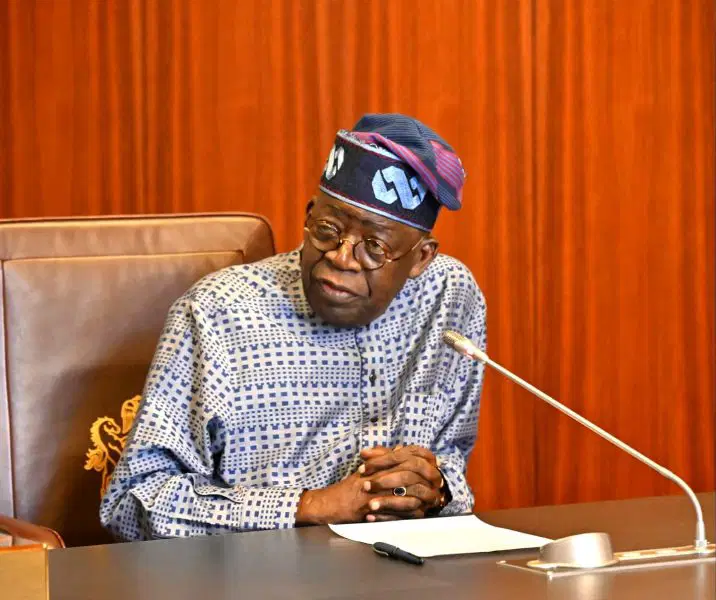
The African Democratic Congress Presidential Campaign Council (ADC-PCC) has described as an insult to Nigerians the statement credited to President Bola Ahmed Tinubu, through his Special Adviser on Information and Strategy, Bayo Onanuga, declaring that “The Question Is What We Build, Not How Much We Borrow.”
In a statement issued in Abuja by its Director of Media and Publicity, Kola Ologbondiyan, the ADC-PCC challenged President Tinubu to identify what his administration has actually built with the mountain of loans accumulated since assuming office in 2023. The council insisted that Nigerians have seen little or no tangible returns on the country’s growing debt burden.
Ologbondiyan said it was particularly disturbing that Mr Onanuga would attempt to dress the President in borrowed garments by speaking about infrastructure and development when the administration has failed to demonstrate commensurate achievements despite unprecedented borrowing.
He alleged that the only visible project associated with the administration’s concern for electricity is a solar farm installed to guarantee power supply within the comfort of the Presidential Villa, while millions of Nigerians continue to grapple with unreliable electricity.
“For three and a half wasted years, the Tinubu government has borrowed without restraint and built nothing. No value, no legacy, no impact,” Ologbondiyan stated.
“Except for projects inherited from the late President Muhammadu Buhari, many of the projects being advertised by the Tinubu administration are nothing but audio projects. They exist only on paper, as conceptual designs or as announcements on newspaper pages and television screens. Under Tinubu, virtually every project exists in a press statement.
“Where is the Lagos-Calabar Coastal Highway? Audio. Where is the Sokoto-Badagry Superhighway? Audio. Where is the Trans-Sahara Superhighway? Audio. Where are the promised electricity grid upgrades? All propaganda, no commensurate progress, just media hype from Bayo Onanuga and his team.
“Even the Abuja-Kaduna-Kano Highway, awarded more than eight years ago, remains a source of concern to motorists. Its prolonged construction and delays tell the story of APC governance.
“Mr President must wake up and confront the reality facing Nigerians, if there is still time left between now and January 16. Citizens are hungry and enduring excruciating hardship. People are dying from hunger, insecurity and deprivation, while the government remains preoccupied with propaganda and self-congratulatory statements. These are the real signposts of what the Tinubu administration has built in almost four years.
“Today, ministries are barely functioning, agencies are struggling, and critical directorates are failing to deliver. Nigeria is practically comatose.
“The Tinubu Presidency came into power without a convincing blueprint or workable ideas and, after almost four years, has offered Nigerians little beyond failure, hardship, poverty and insecurity.
“If borrowing is truly for development, let President Tinubu show Nigerians one tangible project his administration has delivered with its trillions of naira in loans, beyond the solar farm in the Presidential Villa. The only thing this administration has successfully built is hardship.
“We appeal to international donors, development partners and financial institutions to exercise greater scrutiny and insist on accountability, transparency and prudence before extending further loans to Nigeria.
“Borrowing is not inherently wrong when the benefits translate into improved living conditions for citizens. What is unacceptable is a situation in which the country continues to accumulate debts without corresponding benefits for the people.
“Nigerians must not be compelled to continue financing the luxury, profligacy and privileged lifestyle of those in power while ordinary citizens wallow in poverty. Future generations should not be burdened with debts incurred without demonstrable benefits to them.
“The National Assembly must rise to its constitutional responsibility and save the country from being mortgaged through indiscriminate borrowings. It must stop acting as a rubber stamp for every loan request and defend the economic future of Nigeria.
“History will not forgive the 10th National Assembly if it stands by while the country is plunged deeper into a cycle of unsustainable indebtedness.”
Opinions
Human Capital Africa Statement For International Day of the Girl Child 2026
UNICEFs 2026 estimates show that about one in five girls worldwide is married before 18.
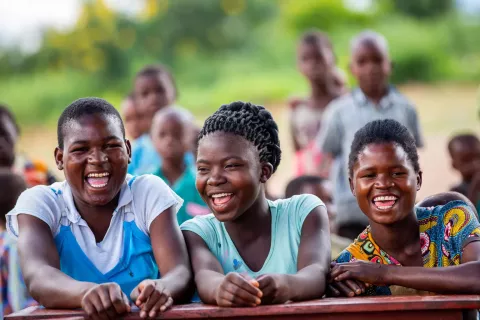
Image credit : UN
By Obiageli ObyEzekwesili
A girl who learns is a girl who is not a bride.
Today the world is asked to end child marriage and invest in girls rights.
I join that call wearing three hats: as a member of the advisory council behind Columbia University’s report Accelerating Efforts to End Child Marriage; as Civil Society Representative on the Steering Committee of the African Unions Decade of Accelerated Action for the Transformation of Education and Skills Development in Africa (20252034); and as the leader of Human Capital Africa, an organisation that has spent years arguing that Africas human capital crisis begins in the early-grade classroom.
The numbers are clear.
UNICEFs 2026 estimates show that about one in five girls worldwide is married before 18.
That adds up to roughly 650 million women and girls alive today who were married as children.
More than 12 million girls are still married each year, about one every three seconds, and sub-Saharan Africa has the highest prevalence at 31 per cent
.In Nigeria, 23.6 million women and girls were married before 18, the largest number in West and Central Africa.
In parts of the North the situation is a national emergency: in Jigawa, 78 per cent of women were first married before 18, and 63 per cent of women left school to marry.
The cost of inaction is high. Our Columbia report includes new analysis by the Center for Global Development.
It estimates losses of up to $175 billion a year, or almost $2.5 trillion by 2040, from lost productivity and higher health risks caused by child marriage.
The report also warns that aid cuts, weakening global commitment to womens rights, and rising conflict could slow or reverse progress.
Child marriage is not a side issue in development. It drains a nations human capital directly.Progress is possible.
An estimated 68 million child marriages have been averted over the past 25 years, through girls education, legal reform and social protection.
In parts of the North the situation is a national emergency: in Jigawa, 78 per cent of women were first married before 18, and 63 per cent of women left school to marry.
The evidence on what works is strong: Each year of secondary education lowers a girls chance of marrying before 18 by five percentage points or more.
In Niger, when the government removed the direct costs of middle school for rural girls, each additional year in secondary school was associated with a 19 percentage point lower probability of marriage.
If every African girl completed secondary education, child marriage could be almost eliminated.
Where HCAs mission and this campaign meet.
A girl cannot stay in secondary school if she never learned to read.
Today, 89 per cent of children in sub-Saharan Africa are in learning poverty, unable to read and understand a simple text by age ten.
A girl who cannot read by ten falls behind, then drops out.
Once she is out of school, she is at the greatest risk of marriage. That is why we say schooling is not learning.
Foundational literacy and numeracy are the first and cheapest protection a girl has.
At the Columbia launch I said that community programmes and advocacy are not enough on their own. Governments must lead.
On this Day of the Girl, Human Capital Africa calls on African governments to:
1. Make foundational learning a girl-protection policy. Every girl should be reading with comprehension by age ten, using proven methods such as structured pedagogy and Teaching at the Right Level.
2. Guarantee the move into secondary school. Remove fees, uniform and transport costs for girls, especially in rural communities with high rates of child marriage.
3. Enforce 18 as the minimum age of marriage in law and in practice, in every state and every community, with traditional and religious leaders as partners.
4. Fund this domestically. As foreign aid shrinks, African budgets and African philanthropy must take over.
5. Measure and publish.
Track girls learning, their transition to secondary school, and child marriage rates in national accountability systems.
The AU Decade of Education gives Africa ten years and a continental mandate.
As a member of its Steering Committee, I will press for girlslearning and retention to be at the centre of how the Decades success is measured.
A Decade that does not end child marriage will not have transformed African education.
The Columbia report sets a realistic target: cutting child marriage prevalence from one in five to one in seven within five years.
Africa can lead the way to that target, but only if we treat every girls classroom as the place where her childhood is protected.
Any girl-child should be a student, not a bride. She should learn, then lead.
• Obiageli ObyEzekwesiliFounder, Human Capital Africa | Former Nigeria’s Minister of Education and Vice President for Africa Region, World Bank.
Opinions
The Girl Who Was Almost Married at 10 Is Taking Her Story to the United Nations
On September 4 this week…Sierra Leone’s First Lady is expected to stand before the United Nations General Assembly with a proposal aimed at protecting millions of girls from the same fate.

• Sierra Leone’s First Lady, Fatima Maada Bio
By Ahmed Sahid Nasralla (De Monk)
AT about 10 years old, Fatima Maada Bio already knew who she was expected to marry.
She was a child, but an adult decision had been made about the direction her life should take. Somehow, she escaped that future.
On September 4 this week, many, many years after that little girl could have been sent into a marriage she did not choose, Sierra Leone’s First Lady is expected to stand before the United Nations General Assembly with a proposal aimed at protecting millions of girls from the same fate.
She is expected to present a draft resolution seeking the proclamation of November 27 as an ‘International Day for the Elimination of Child, Early and Forced Marriage’. The proposal is new.
The date is not yet an official UN observance. It is a call for the international community to give the issue a permanent place on its calendar and, with it, sustained attention and action.
There is something deeply personal about that journey.
According to briefing material from the Office of the First Lady of Sierra Leone, she knew at around the age of 10 who she was expected to marry and narrowly escaped child marriage.
That experience did not become a footnote in her life. It became part of the reason she has spent years speaking about the rights and protection of women and girls.
The First Lady’s public advocacy has taken her from communities in Sierra Leone to some of the world’s most important international forums.
Her flagship ‘Hands Off Our Girls’ campaign has focused on ending rape, early marriage and violence against women and girls, while her work has also extended into girls’ education, women’s health and other issues affecting vulnerable communities.
However, her return to the United Nations this time carries a particularly personal weight.
She is taking a subject that could have defined her own childhood and asking the international community to give it greater and lasting attention.
It is not her first attempt to put child protection on the UN agenda.
In 2022, she spearheaded the effort that led the General Assembly to proclaim November 18 as the ‘World Day for the Prevention of and Healing from Child Sexual Exploitation, Abuse and Violence’.
“She is expected to present a draft resolution seeking the proclamation of November 27 as an ‘International Day for the Elimination of Child, Early and Forced Marriage’. The proposal is new.”
UNAIDS describes her as having championed the adoption of that first-ever World Day.
The United Nations has also continued to strengthen its attention to child, early and forced marriage.
In December 2024, the General Assembly adopted a resolution addressing the issue.
Sierra Leone has been moving on the national front too. The country enacted legislation in 2024 prohibiting marriage involving anyone under 18.
So when Fatima Maada Bio walks into the General Assembly this week, she will be carrying a story that has travelled through several stages: from the experience of a young girl, to a national campaign, to legislation, and now to another attempt to secure a place for the issue on the global calendar.
The numbers behind the issue are sobering.
The United Nations and other international organisations have consistently described child marriage as a major barrier to girls’ education, health, economic opportunity and personal autonomy.
Behind every statistic, though, there is a girl whose childhood is being shortened.
There is a school she may leave, friends she may lose, choices she may never get to make, and a future that may be decided for her before she is old enough to understand what that future means. That is why the personal history of the woman making this proposal is important.
Fatima Maada Bio knows what it means for adults to imagine a future for a girl before she has had the opportunity to imagine one for herself. She also knows what it means to get away.
That gives her advocacy a particular human quality. The issue is something she encountered as a child and has carried into her public life as an adult.
The fight has also taken her beyond child marriage. Last week, OncoDaily named her among its 100 Influential Women in Oncology for 2026, recognising her work in women’s health and cancer prevention.
The publication highlighted her partnership with the Merck Foundation, which has supported specialist medical training in Sierra Leone, including scholarships that contributed to the development of the country’s cancer-care workforce.
It also noted her advocacy for breast cancer awareness and early detection and her participation in discussions around the WHO Global Breast Cancer Initiative.
It is another part of a public role that has increasingly stretched beyond the traditional image of a First Lady.
Then there is child protection, and women’s health.
There is girls’ education, and the wider question of how countries protect women and children who often have the least power over decisions affecting their lives.
The international recognition in oncology is significant for another reason.
It shows that her advocacy is being noticed in fields far removed from the political spotlight in which First Ladies are usually seen.
Nonetheless, the child-marriage campaign remains different. It brings her public work unusually close to her own childhood.
Sierra Leone, as a country, has its own reason to pay attention to what happens in New York this week.
The country has already taken the important step of outlawing marriage involving children under 18.
The First Lady has been one of the most visible voices pushing the protection of girls into the national conversation.
Her campaign has also received international recognition, including her appointment by UNAIDS as a champion for the empowerment and engagement of adolescent girls and young women.
Now she is taking the conversation back to the United Nations. The proposed international day would not, by itself, end child marriage.
A date on the UN calendar cannot keep a girl in school, or protect her from an abusive household or change the circumstances that make families vulnerable to marrying off their daughters.
Those things require laws, enforcement, education, economic opportunity, social protection and changes in attitudes that can take generations.But international days can keep issues alive.
They create opportunities for governments, schools, civil society organisations, communities and international agencies to return to a problem every year, measure progress and remind themselves of what remains unfinished. That is the opportunity behind November 27.
This may also be the reason why the story of the little girl who nearly became a child bride is worth remembering when Fatima Maada Bio enters the General Assembly. She is no longer that girl.
She got education and became a journalist, an actress, an advocate, a mother, and Sierra Leone’s First Lady. She also became the President of the Organisation of African First Ladies for Development.
She is now asking the world to give millions of girls something she was fortunate enough to have: the chance to grow up and become all of that and even more before someone else decides what their lives should become.
That is what, on behalf of Sierra Leone and the world, she is carrying into the United Nations on September 4.
Not a speech or a title. She is carrying a powerful story the General Assembly should listen and act on.
• Ahmed Sahid Nasralla is the Ex-Officio and Immediate Past President of the Sierra Leone Association of Journalists (SLAJ), and the Chairman of the Federation of African Journalists (FAJ) Working Group on Climate Change.


SIRA: Celebrating African Excellence, Preserving Our Stories and Inspiring Generations

Argentine footballer Abel Núñez dies of head injury

‘Attempted Coup’: Israeli Opposition Chiefs Denounce Prime Minister Netanyahu

BREAKING: Lagos Govt Declares Today, Thursday Work-Free to Mark 2026 Ìṣẹ̀ṣe Day

Tech Expert, Zuckerberg trains with UFC champions, Adesanya, Alexander

Organ Trafficking: Ekweremadu bags 10 years in UK prison
-

 News1 day ago
Lagos Debunks N700m Billboard Fee Claim, Clarifies N7M Registration Cost
-

 Politics3 days ago
ADC-PCC Urges Tinubu To Restrain APC governors and party officials against campaigns violence
-

 Politics3 days ago
Tinubu Condemns Attack on Opposition Campaigners
-

 News1 day ago
FG Issues Travel Alert After 16 Nigerians Die in Ethiopia
-
 International7 hours ago
‘Attempted Coup’: Israeli Opposition Chiefs Denounce Prime Minister Netanyahu
-
 Business7 hours ago
Food Price Is Declining Nationwide – NBS
-

 News7 hours ago
BREAKING: Schoolchildren Escape Stray Bullets in Lagos Customs-Smugglers Shootout
-
 Sports3 hours ago
Argentine footballer Abel Núñez dies of head injury