
Business
Who Owns Temu? Inside PDD Holdings and Its Business
The “Shop Like a Billionaire” slogan promotes affordable abundance, but the practical distinction is simple: The platform owner and the seller of a particular product aren’t necessarily the same company.

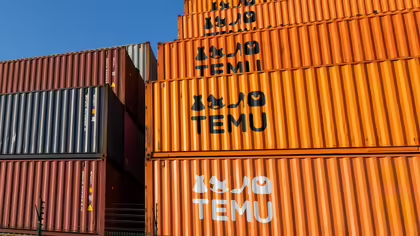
If you’re wondering who owns Temu, the answer is PDD Holdings Inc., the parent company behind both Temu and Pinduoduo.
But that doesn’t mean one person owns the shopping platform outright: PDD Holdings is a publicly traded company with many shareholders.
Howstuffworks reported that the corporate ownership becomes clearer when you separate three things: the shopping brand, the companies operating it and the holding company above them.
How PDD Holdings Owns Temu
Think of PDD Holdings as the corporate umbrella.
Temu and Pinduoduo are separate e-commerce platforms within that group, not two names for the same storefront. Pinduoduo serves the Chinese market, while Temu targets shoppers internationally.
The parent completed its initial public offering in July 2018 as Pinduoduo Inc. It changed its name to PDD Holdings Inc. in February 2023.
Today, PDD stock trades on Nasdaq under the ticker PDD; the U.S.-listed securities are American depositary shares, each representing four Class A ordinary shares.
Buying those securities gives investors an interest in the parent, not a separately listed Temu business.
To understand major shareholders, institutional investors and voting rights, consult the company’s SEC filings.
Share ownership and voting power aren’t necessarily identical.
Where Colin Huang Fits In
Colin Huang, also known as Huang Zheng, founded Pinduoduo in 2015.
The company founder stepped down as chief executive officer in July 2020, when Chen Lei succeeded him, and left the chairman’s role in March 2021. Both departures came before PDD Holdings introduced Temu in September 2022.
That timing matters: Huang founded the business from which the group developed, but describing him as Temu’s sole owner confuses company history with corporate ownership.
Why Temu Has Several Geographic Connections
The corporate structure spans several jurisdictions. PDD Holdings has Cayman Islands incorporation, while its 2024 annual report identifies its principal executive offices in Dublin, Ireland. A legal home and company headquarters can be different places.
Whaleco Inc., a Delaware-incorporated subsidiary within the group, operates Temu in the United States.
Temu has described Boston, Massachusetts, as its base. Whaleco Technology Limited, an Irish group company, operates Temu in certain other markets.
None of those addresses erases the group’s Chinese roots. They describe different pieces of an international business, rather than competing answers to who owns it.
What Temu’s Marketplace Actually Does
Temu’s 2022 U.S. launch began its global expansion. Its business model centers on an online marketplace connecting shoppers with third-party sellers, including Chinese manufacturers and merchants, rather than manufacturing everything itself. Cross-border e-commerce — selling goods across national borders — helped underpin that growth.
The “Shop Like a Billionaire” slogan promotes affordable abundance, but the practical distinction is simple: The platform owner and the seller of a particular product aren’t necessarily the same company.
Source: Howstuffworks
Business
Trustfund rebranding to PT Pensions
“While our name is set to change, our commitment to you remains steadfast,” said the statement.

Trustfund Pensions Limited and Premium Pensions Limited have approached the final stages of their merger and integration, as Premium Trustfund Pensions Limited (PT Pensions).
This is disclosed in its latest Newsletter emailed to its customers across the country .
” While our name is set to change, our commitment to you remains steadfast,” said the statement.
Business
Crypto giant Binance hit by $6.3bn hack
Blockchain intelligence firm TRM Labs says several elements of the Binance attack resemble earlier North Korean-linked incidents, including last year’s $1.5bn Bybit hack.

Binance, the world’s biggest crypto exchange, says it has suffered a $6.3bn (£4.7bn) hack.
The cryptocurrency giant says about half the assets have been frozen but many remain in the hands of the hackers.
Two analytics firms have attributed the incident to a North Korean hacking unit, though no one has claimed responsibility.
Blockchain intelligence firm TRM Labs says several elements of the Binance attack resemble earlier North Korean-linked incidents, including last year’s $1.5bn Bybit hack.
The company also says this latest hack could be the largest in history.
Binance didn’t directly respond to questions about the incident’s potential links to North Korea, but has said:
“We are working closely with our law enforcement partners to confirm the identity of these criminals and bring them to justice”
Source: BBC
Business
OTL Africa Downstream Conference project Nigeria’s modular refineries to 83,000 bpd 2027
If all seven become operational, Nigeria’s combined modular refining capacity could reach 115,000 barrels daily.

Seven modular refineries are expected to begin operations in 2027 and add a combined 83,000 barrels per day (bpd) to Nigeria’s refining capacity.
According to recent reports on Nigeria’s modular refining industry, the following are seven notable modular refinery operators and projects:
Aradel Holdings (Ogbele Refinery) – Rivers State.
Waltersmith Refining and Petrochemical Company – Imo State.
Duport Midstream Company – Edo State.
Edo Refinery and Petrochemicals Company – Edo State.
OPAC Refineries – Delta State.
Azikel Petroleum Limited – Bayelsa State.
Excel Exploration and Production Company – Bayelsa State.
George Maher-Bonnett of Argus Media gave the projection at the OTL Africa Downstream Conference in Lagos.
He said that the new plants would strengthen local fuel supply.
They would also sit beside the 700,000 bpd Dangote Petroleum Refinery, which Maher-Bonnett said is operating at a high rate and producing petrol steadily.
Existing modular capacity
Nigeria had four operational modular refineries in September, with combined processing capacity of 32,000 barrels daily.
The seven additional facilities are scheduled to start next year.
Their 83,000 bpd capacity is more than two and a half times the combined capacity of the four existing plants.
If all seven become operational, Nigeria’s combined modular refining capacity could reach 115,000 barrels daily.


Trustfund rebranding to PT Pensions

Who Owns Temu? Inside PDD Holdings and Its Business

President Tinubu Performing Umrah

BREAKING: Lagos Govt Declares Today, Thursday Work-Free to Mark 2026 Ìṣẹ̀ṣe Day

Tech Expert, Zuckerberg trains with UFC champions, Adesanya, Alexander

Organ Trafficking: Ekweremadu bags 10 years in UK prison
-

 Business1 day ago
Exchange Rates Thursday October 29 2026
-

 Entertainment2 days ago
Davido, Kirk Franklin, to hit airwaves with new song ‘Hope In You’
-

 News3 days ago
FG Approves ₦70k Transport Allowance for Civil Servants
-

 Business2 days ago
Investors from 120 countries participate in Dangote Refinery’s IPO
-

 Sports2 days ago
Team Nigeria Braces For Historic Dakar 2026 Youth Olympic Games
-

 Sports2 days ago
Nigeria Thrash New Caledonia 7-0 In FIFA U15 World Cup Festival
-

 Entertainment2 days ago
Sultan of Sokoto to Honour Peter Igho as Kakakin Daular Usmaniyya
-

 International2 days ago
Luxury cruise passengers stranded in Cambodia due to soaring fuel costs