
Crime
Fuel smuggling persists in borders despite subsidy removal – Customs boss

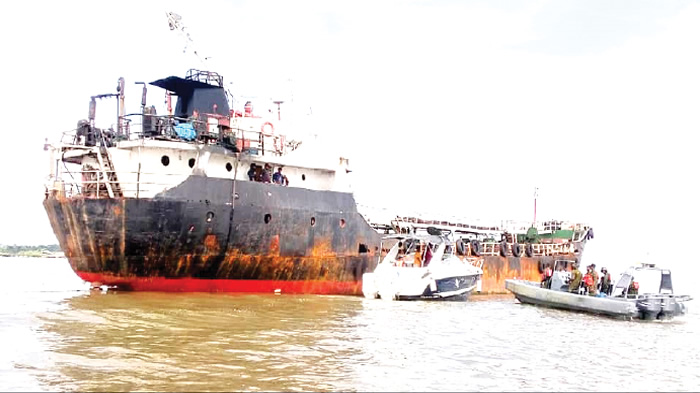
Adewale Adeniyi, the Acting Comptroller-General of the Nigeria Customs Service, on Monday, vowed a heavy clampdown on oil thieves, insisting that the nation cannot “afford to let saboteurs take over our economy.”
Adeniyi, who said there were still cases of smuggling of Premium Motor Spirit, popularly called petrol, at Nigeria’s border stations despite the removal of subsidy on the commodity, said the agency had adopted new border patrol strategies to close in on oil thieves.
He made the disclosure on the sidelines of a sensitisation workshop on the Nigeria Customs Service Act 2023 for management staff of the NCS in Abuja.
Adeniyi spoke as the Nigeria National Petroleum Company Limited on Monday said it intercepted a suspected Cameroon-bound vessel with a cargo of crude oil on board.
The Chief Corporate Communications Officer, NNPCL, Garba Muhammad, said in a statement that the cargo was intercepted on July 7, 2023, by a private security contractor engaged by the NNPCL, Messrs Tantita Security Services.
“Following the receipt of credible intelligence, a private security contractor engaged by NNPC Ltd., Messrs Tantita Security Services, intercepted a suspicious vessel with a cargo of crude oil on board on July 7, 2023,” the statement read in part.
It added that the vessel, which is owned by a Nigerian registered company, was heading to Cameroun when it was apprehended.
“The Vessel, MT TURA II (IMO number: 6620462), owned by a Nigerian Registered Company, Holab Maritime Services Limited with registration number RC813311, was heading to Cameroun with the cargo on board when it was apprehended at an offshore location (Latitude: 5.8197194477543235°, Longitude: 4.789002723991871°), with the Captain and Crew members on board,” it said.
President Bola Tinubu announced the end of the petrol subsidy during his inaugural address on May 29, 2023, after the Federal Government had kept subsidising the product for several decades, spending trillions of naira in the process.
The government had repeatedly complained that petrol from Nigeria was being smuggled to other West African countries, due to it low price in Nigeria as a result of subsidy, when compared to its cost in these nations.
To address this and other fuel subsidy-related concerns, a lot of institutions and professionals had called for a halt in the subsidy regime, which was eventually implemented by Tinubu.
But the Customs CG revealed on Monday that smuggling had reduced but it had not stopped in some border stations.
As such, he said the agency was reviewing its enforcement strategies, adding that based on the new Nigeria Customs Service Act 2023, there would be heavy penalties against violators of the recently passed legislation.
Asked whether petrol was still being smuggled out of Nigeria after the removal of subsidy on the commodity, he replied, “We still have some incidences in some border stations.
“The rate has reduced and we are going to be watching the situation very closely. The situation of fuel is very sensitive and we cannot afford to let the saboteurs take over our economy.”
Enforcement strategy review
Commenting on plans by the service to review policies that constitute obstacles to trade, Adeniyi said this had to do with the enforcement strategies of the NCS, as well as its procedures and processes at the ports.
“One of the things that I intend to do as we start is that we need to take a look at our procedures and processes in the ports and border areas. Also, our enforcement strategies. We are going to review all that.
“And we want to do them in such a way that they promote user-friendliness and economic growth without compromising our national security. We will get details when we unfold the plans,” Adeniyi stated.
He said the new legislation of the service would impose heavy sanctions and penalties on violators of customs laws.
“We discovered that the previous legislation did not provide sanctions that are punitive enough for violations of customs laws. Some of the fines were ridiculous. Remember that this (old) piece of legislation was put in place in 1958.
“You won’t believe that in some parts of the legislation, some fines were written on pennies, and when you translate them they mean nothing. So criminals are always willing to commit fraud because they know that they are only going to get a slap on the wrist.
“So what this new law has brought are very heavy punitive sanctions that should deter people from committing those violations against the customs law,” the NCS boss stated.
He said the defunct Customs and Excise Management Act Cap C45 LFN 2004 law was enacted 63 years ago and had remained in operation since then without any significant amendment notwithstanding the expansion in government, growth in population and over dynamic progress and challenges in the economy.
“Consequent upon this, several attempts were made in the past to cause amendments or the repeal of CEMA to no avail. The efforts were necessary because the provisions of CEMA had become obsolete and could no longer adequately meet the contemporary fiscal policies of the government and the mandate of the service.
“This situation undoubtedly propelled the National Assembly through a private member bill to initiate the repeal and enactment of a new Nigeria Customs Service Bill which was passed by the parliament and assented to by (former) President Muhammadu Buhari,” Adeniyi stated.
NNPCL intercepts
Meanwhile, NNPCL said its preliminary investigations revealed that the crude oil cargo on board was illegally sourced from a well jacket offshore Ondo State, Nigeria.
The NNPCL spokesman, Muhammad, said there was no valid documentation for the vessel or the crude oil cargo on board at the time of the arrest.
“Further investigation into the activities of the vessel at the NNPC Ltd. Command and Control Centre also revealed that the vessel has been operating in stealth mode for the last 12 years. The last reported location of the vessel was Tin Can Port in July 2011.
“Details of this arrest and the outcomes of the investigations were escalated to the appropriate government authorities, upon which it was concluded to destroy the vessel to serve as a strong warning and deterrent to all those participating in such illegal activities to cease and desist,” he said.
Stressing that it was important to destroy vessels involved in transporting stolen crude oil, Muhammad said the illegal trade of stolen crude oil inflicts significant economic losses on Nigeria and legitimate stakeholders in the oil industry.
He added that oil theft “also perpetuates a cycle of corruption, environmental devastation, and social instability.”
Also, the Executive Director, Technical and Operations of Tantita Security Services, Captain Warredi Enisuoh, while addressing journalists on Monday during an inspection of the intercepted vessel, anchored at Oporoza in Gbaramatu kingdom in Warri South West Local Government Area of Delta State, stated that the ship was arrested with 13 crew members during a sting operation.
Enisuoh disclosed that the pipeline surveillance firm had deployed both human and technical intelligence in monitoring the movements of the vessel until it was finally caught on Friday.
“Unknown to the perpetrators, we have been monitoring the movements of the vessel until we finally apprehended it off the coast in Ondo State,” he said.
“The original name of the vessel was Ali-Riza-Bey but it was altered to ‘MT Tura 11’ to evade the eagle eyes of security agencies,” he added.
While noting that the vessel had once been arrested for same crude theft, but disappeared in mysterious circumstances, Enisuoh affirmed to newsmen saying “we are here with the same vessel committing the same atrocity.”
Consequently, the vessel was handed over to the troops of the military Joint Task Force Operation Delta Safe which has the mandate to rid Niger Delta of all criminal acts.
Speaking, the Commander, JTF Operation Delta Safe (OPDS), Rear Admiral Olusegun Ferreira, who led other service chiefs to the scene, told newsmen that an investigation is ongoing to unravel the perpetrators of the act just as he warned criminals to steer clear of the maritime domain.
Ferreira assured Nigerians that the long arms of the law would catch up with the hoodlums.
Marketers react
Reacting to the revelation by the NCS that petrol was still being smuggled, oil marketers and operators in the downstream sector stated that this was possible but very risky due to the deregulation of the downstream oil sector.
They also charged the NCS to arrest culprits, as well as deploy tracking systems on petroleum tankers in a bid to end the smuggling of PMS and other refined products.
“There is a high risk in smuggling petrol out of Nigeria now, though I cannot rule out the fact that it is possible,” the National President, Independent Petroleum Marketers Association of Nigeria, Chinedu Okonkwo, stated.
He added, “The risk is high because you might get there and they will not buy from you, unless the smugglers are taking adulterated products to these neighbouring countries. The Customs should also do their work. If they catch anyone, they should use him as an example.”
Okonkwo said there should be the deployment of tracking systems on tankers to track their movements nationwide.
“At a time we brought a technology for them (Customs), where you can track any truck by knowing where it is coming from or where it is going. But immediately we were about rolling it out, COVID-19 struck.
“So there are technologies to fight these things and if they want to collaborate with us we will bring it up again. IPMAN is ready to demonstrate it again if they are ready to work with us,” he stated.
On his part, the President, Petroleum Products Retail Outlets Owners Association of Nigeria, Billy Gillis-Harry, told our correspondent that PETROAN had developed a technology to help tackle this.
He said, “A criminal will always be a criminal. Most times there is nothing you can do to deter a criminal until you mitigate their criminal activities. That is why PETROAN developed a 3-P solution, which is the Petroleum Product Passport solution that will completely stamp out smuggling.
“This is because nobody will be able to smuggle products when this solution is deployed, for at the end of the day we have to depend on a technology that is dependable and reliable. The 3-P solution is working for PETROAN, so we recommend it to the Federal Government and other operators in the downstream sector.”
Also speaking on the issue, the Secretary, IPMAN, Abuja-Suleja, Mohammed Shuaibu, “The customs serviceman the borders of Nigeria and they should do their work. Let them go after the smugglers, for as far as we are concerned, deregulation has come to stay.
Meanwhile, some oil marketers said cross border smuggling of petrol would persist except prices in Nigeria correlates with prices of fuel in neighbouring countries.
A former Chairman of the Major Oil Marketers Association of Nigeria and CEO/MD of 11 Plc, Tunji Oyebanji, said the real prices of petrol would be determined by the price of the product in neighbouring countries.
“The Federal Government needs to eradicate the economic incentives that are making marketers be willing to take products meant for Nigeria outside the country, and that would happen when independent marketers start importing, and prices at the pump reflect the new landing cost. But as we speak, we are still selling products being sold to us by the NNPCL which is still being subsidised, so it is Nigeria that is losing, not marketers. Rumour has it that about 30 per cent of products are being smuggled out of the country, so that’s where the problem is currently,” he said.
A professor of Economics at the Olabisi Onabanjo University, Tella Sheriffdeen, advised the government to activate local refining.




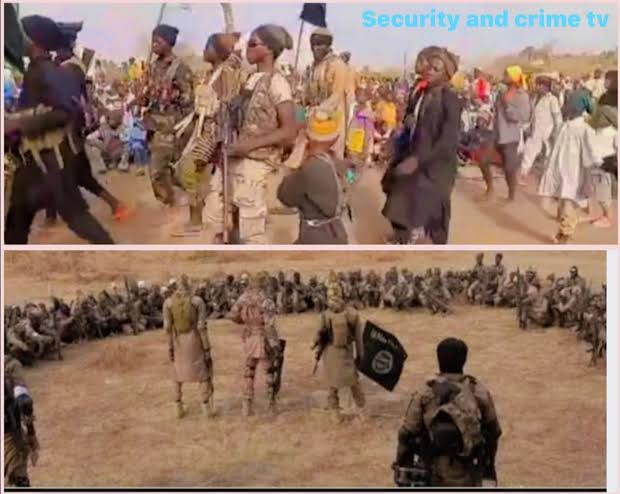
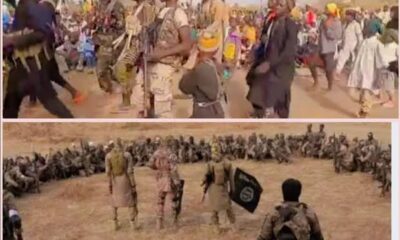
More than 23 terrorists have been killed in renewed fighting between rival Boko Haram and Islamic State West Africa Province (ISWAP) factions in the Sambisa Forest area of Borno State, security sources say.
The latest clashes erupted around the Chingolo axis of Bama Local Government Area after Boko Haram fighters attacked ISWAP members advancing into the area. The fighting forms part of a fresh wave of hostilities that began about two days ago.
A video obtained by Zagazola Makama shows sustained exchanges of fire as both groups tried to consolidate positions and block the other from expanding influence inside the forest.
Preliminary intelligence puts the death toll at more than 23 on both sides since the latest round began, though exact figures for each faction could not be independently verified.
The violence underscores the ongoing rivalry between Boko Haram and ISWAP over territory, access routes, resources and control of fighters in Sambisa Forest and surrounding areas. The confrontation has further weakened both groups and disrupted their activities in a long-standing insurgent stronghold.
Security forces are closely monitoring the situation and exploiting intelligence on the factions’ movements. The military continues to target terrorist concentrations, logistics networks and hideouts across the North-East as part of efforts to degrade the insurgents.
Officials have urged communities near the forest to remain vigilant and report any suspicious movements. The situation remains fluid, with further clashes possible as both sides seek to reposition and reinforce their fighters.
Watch video below:
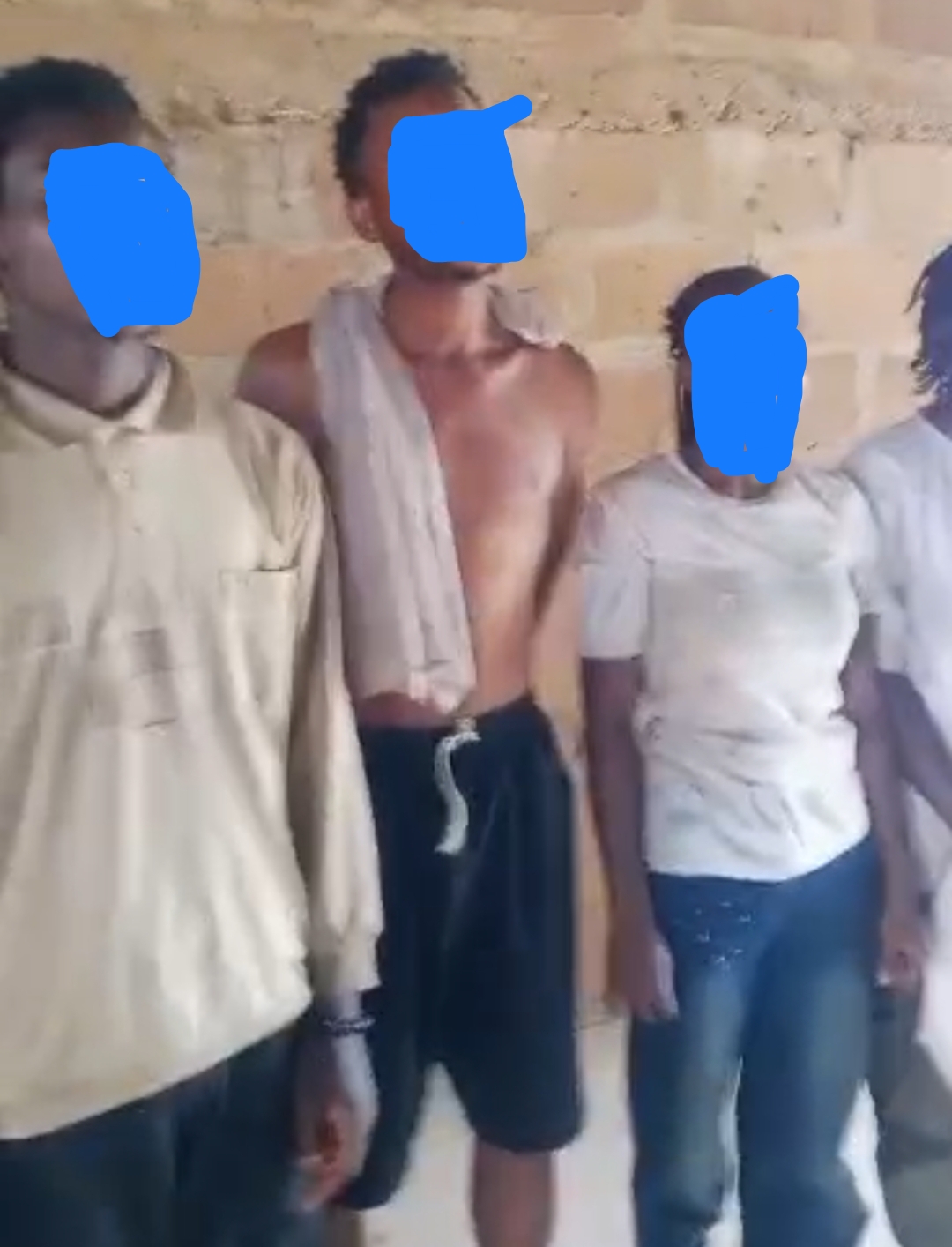
The Kogi State Police Command has confirmed that 10 of the 15 National Youth Service Corps members abducted by suspected bandits along the Aloma–Egane Expressway in Ofu Local Government Area have been rescued.
Commissioner of Police Naziru Bello Kankarofi said security operatives are combing surrounding forests and intensifying efforts to free the remaining victims.

He dismissed reports that the 10 rescued corps members were among the 11 persons freed during a joint security operation last week, clarifying that those earlier rescued were other travellers caught up in the same kidnapping incident.

The commissioner added that several suspects have been arrested in connection with the attack.
Watch the video below:

Suspected terrorists killed four people, abducted four others and injured several more in an attack on Gorau town in Goronyo Local Government Area of Sokoto State on Wednesday night.
The attackers invaded the community around 9pm and shot 11 residents, according to the village head, Alhaji Aliyu Magaji Na-Batsami. Seven of those shot survived and were rushed to hospital for treatment, while four died instantly.
The assault came barely six days after a boat accident claimed 65 lives in the same community. Na-Batsami said the terrorists specifically targeted families of the boat mishap victims over the N1 million relief money donated by the Sokoto State Government to each bereaved family. He said the bandits went from house to house searching for the cash.
Bashir Usman Gorau, the member representing Gada/Goronyo Federal Constituency, confirmed the incident and offered condolences to the affected families.
Efforts to reach the Police Public Relations Officer of the Sokoto State Police Command, DSP Ahmad Rufai, were unsuccessful as calls were not returned at the time of filing this report.


FG announces two-week traffic delays on Kara–Berger Bridge for repairs

MKO Abiola’s Documentary to hit Cinemas in October

Trump sends envoys to Russia, Ukraine with new peace plan

Tech Expert, Zuckerberg trains with UFC champions, Adesanya, Alexander

Organ Trafficking: Ekweremadu bags 10 years in UK prison

SAINT OBI: Between his marriage and his death
-

 Business3 days ago
Okin Biscuits Set For Comeback After 17 Years, Targets Revival Of Jobs, Local Manufacturing
-

 News3 days ago
BREAKING: FG Harmonizes Workers’ Salaries
-

 News3 days ago
Toxic fumes kill 37 in Okrika oil tragedy
-

 Politics3 days ago
Nduka Obaigbena Challenges Tinubu, Atiku, Obi on 2027 election campaigns
-
 News3 days ago
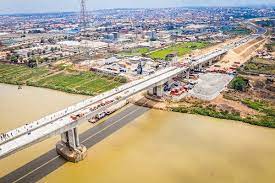
FG Announces Two Weeks Closure of First Niger Bridge for Repairs
-
 Crime3 days ago
More Than 23 Terrorists Killed in Boko Haram-ISWAP Clash in Sambisa (Video)
-

 Sports3 days ago
FIFA Accuses UEFA of ‘Smear Campaign’ Against Infantino
-
 Politics3 days ago
ADC unveils 28 governorship candidates for 2027 election