Business
Dangote, NMDPRA CEO’s Feud: Ahmed disclaims Reaction in the News

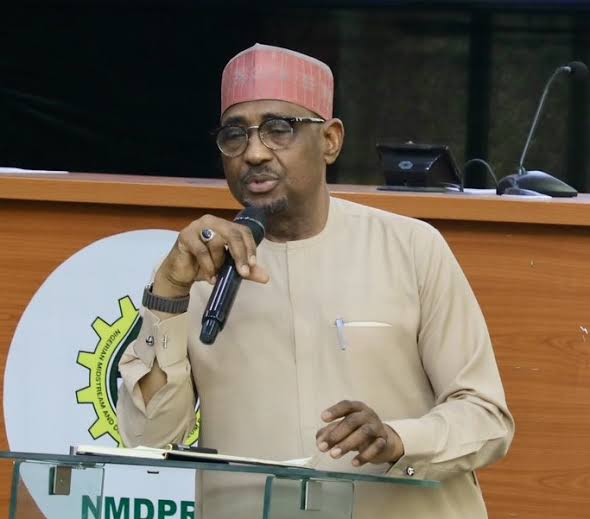
Engr. Farouk Ahmed, Chief Executive of the Nigerian Midstream and Downstream Petroleum Regulatory Authority (NMDPRA), has issued a disclaimer distancing himself from a purported response circulating online regarding recent corruption allegations levelled against him by billionaire businessman Aliko Dangote.
In a statement titled “DISCLAIMER/CLARIFICATION” personally signed by Ahmed, he categorically denied authoring or authorising any prior public response to the claims.
He said: “My attention has been drawn to a purported response I was said to have made on the recent allegations against my person,” the statement read.
“I hereby state categorically that the so-called statement did not emanate from me.
“Ahmed acknowledged awareness of what he described as “wild and spurious allegations” targeting him and his family, which have sparked significant public attention. However, citing his role as regulator of a sensitive industry, he said he has deliberately avoided engaging in public exchanges or “brickbats.”
“Thankfully, the person behind the allegations has taken it to a formal investigative institution,” Ahmed noted. “I believe that would provide an opportunity to dispassionately distill the issues and to clear my name.
“The disclaimer comes amid escalating tensions in Nigeria’s petroleum sector. Dangote, president of Dangote Industries Limited, recently petitioned the Independent Corrupt Practices and Other Related Offences Commission (ICPC) to investigate Ahmed over claims of living beyond legitimate means, including alleged multi-million-dollar expenditures on his children’s education abroad.
The ICPC has confirmed receipt of the petition and stated it will be duly investigated.Ahmed’s statement signals his preference for the matter to be resolved through official channels rather than media debates.
Business
CBN Pledges Policy Consistency Into 2027
The single-digit inflation target remains the anchor.


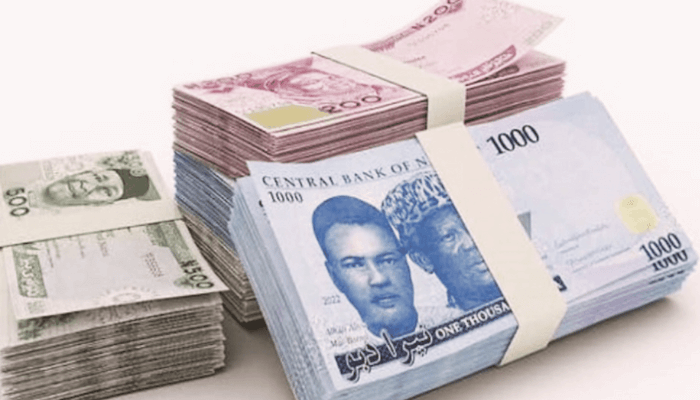
The Central Bank of Nigeria says that it will keep a consistent monetary policy direction in 2027, as it pursues the single-digit inflation target.
The stance puts policy continuity at the centre of the CBN’s inflation fight.
The bank is tying its inflation goal to consistency in monetary policy rather than a change in direction.
The single-digit inflation target remains the anchor.
The CBN’s message is that the target still stands and that policy will stay consistent in 2027.
₦1450 DOLLAR (USD)
₦1875POUND (GBP)
₦1575EURO (EUR)
₦950 CANADIAN DOLLAR (CAD)
₦70 SOUTH AFRICAN RAND (ZAR)
₦350 UAE DIRHAM (AED)
₦190 CHINESE YUAN (CNY)
₦100 GHANAIAN CEDI (GHS)
₦2240 WEST AFRICAN CFA F.(XOF)
₦2180 CENTRAL AFRICAN CFA F.(XAF)
₦820 AUSTRALIAN DOLLAR (AUD)
Business
MAN Seeks Tobacco Exclusion From NAFDAC Bills Over Regulatory Overlap
The association further maintained that the existing regulatory framework, administered through the Federal Ministry of Health and Social Welfare and the Federal Ministry of Industry, Trade and Investment, already provides for the regulation of the legal tobacco sector.
The Manufacturers Association of Nigeria (MAN) has called on the National Assembly for explicit tobacco products exclusion from two proposed bills seeking to repeal and reenact the laws establishing the National Agency for Food and Drug Administration and Control (NAFDAC), warning that their passage could create overlapping regulatory responsibilities and increase compliance costs for manufacturers.
The bills are the National Agency for Food and Drug Administration and Control (Repeal and Enactment) Bill, 2026 (SB. 940) and the Food, Medical Products and Related Products (Registration, Etc.) Bill, 2026 (SB. 952).
The Director-General of MAN, Segun Ajayi-Kadir, therefore urged the lawmakers to remove all references to tobacco from both bills, including relevant definitions, schedules and consequential provisions.
It also called for an explicit exclusion clause to prevent tobacco products from subsequently being brought under the proposed legislation through administrative instruments.
According to the association, such a provision would preserve clarity in institutional mandates and regulatory responsibilities while preventing unnecessary regulatory overlaps.
MAN maintained that regulatory reforms should strengthen public-health protection, address demonstrable regulatory gaps and improve compliance without creating additional administrative burdens for legitimate businesses.
It argued that clear institutional mandates, proportionate enforcement and effective inter-agency coordination were essential to achieving these objectives while supporting manufacturing, employment and investment.
The association further maintained that the existing regulatory framework, administered through the Federal Ministry of Health and Social Welfare and the Federal Ministry of Industry, Trade and Investment, already provides for the regulation of the legal tobacco sector.
MAN reaffirmed its readiness to engage constructively with the National Assembly and relevant government institutions, particularly the two federal ministries, to ensure that the proposed legislation delivers effective regulation without unnecessary duplication, conflicting institutional mandates or regulatory uncertainty.


Senator Idiat Oluranti Adebule Dies at 56

JUST IN: Obi-Kwankwaso Movement Suspends DG with Immediate Effect

CBN Pledges Policy Consistency Into 2027

BREAKING: Lagos Govt Declares Today, Thursday Work-Free to Mark 2026 Ìṣẹ̀ṣe Day

Tech Expert, Zuckerberg trains with UFC champions, Adesanya, Alexander