
Opinions
65 Years of Nigeria’s Economic Journey, by Muda Yusuf
Nigeria’s economic history at 65 is one of resilience, missed opportunities, and enormous untapped potential.

Nigeria’s economic journey over the past 65 years has been one of profound transformation — shaped by cycles of boom and bust, far-reaching reforms, recurring crises, and enduring struggles with diversification.
As the nation marks 65 years of independence, reflecting on this trajectory is essential to chart a more sustainable, competitive, and inclusive path for the future.
Foundations and Lessons from the Early Years
At independence, Nigeria’s economy was largely agrarian, productive, and inclusive.
Agriculture contributed an estimated 60 percent of gross Domestic Product [GDP] and employed the majority of the country’s workforce.
The export economy was anchored on cash crops — cocoa, groundnuts, palm oil, and rubber — and citizens were actively engaged in the entire value chain.
Governance was decentralized, with regions controlling resources and revenues, which promoted balanced development, accountability, and healthy competition.
This early experience offers an enduring lesson: decentralization and local ownership of resources drive innovation and inclusive growth.
Restoring a more fiscally federal structure could once again foster subnational competitiveness, stimulate innovation, and encourage states and regions to take greater ownership of economic outcomes.
The Oil Boom and Structural Distortions
The discovery and commercialization of crude oil in the late 1960s radically altered Nigeria’s economic and political trajectory.
By the 1970s, oil had become the dominant source of public revenue and foreign exchange.
The oil boom delivered significant wealth but also created structural vulnerabilities.
Agriculture was neglected, leading to food import dependence.
Corruption and rent-seeking behavior escalated, while import-substitution industrialization became overly dependent on imported inputs, leaving domestic value chains underdeveloped.
This dependence made the economy acutely vulnerable to oil price shocks — a weakness that continues to destabilize public finances to this day.
The key lesson is clear: resource wealth must be managed prudently and counter cyclically through well-governed stabilization funds and sovereign wealth investments, while industrialization must be firmly rooted in domestic value chains rather than external dependence.
Nigeria has experienced eight recessions since independence — in 1967, 1975, 1978, 1981–1983, 1993, 2016, and 2020 — largely triggered by oil price shocks, fiscal mismanagement, or global crises.
Adjustment, Liberalization, and Social Costs
The oil price collapse of the early 1980s triggered fiscal and balance-of-payments crises that forced Nigeria to adopt the Structural Adjustment Program (SAP) in 1986.
This shift introduced currency devaluation, trade liberalization, financial sector reform, and privatization of state-owned enterprises.
While SAP nudged Nigeria toward a market economy, it also came with significant social costs — rising poverty, inflation, and industrial underutilization. Import dependence worsened in the absence of robust domestic production.
The lesson here is that reforms must be carefully sequenced and complemented with strong institutional frameworks and social protection mechanisms to avoid deepening poverty and inequality.
Recurring Recessions and Structural Weakness
Nigeria has experienced eight recessions since independence — in 1967, 1975, 1978, 1981–1983, 1993, 2016, and 2020 — largely triggered by oil price shocks, fiscal mismanagement, or global crises.
Each downturn revealed the same structural fragilities: heavy reliance on oil revenues, weak non-oil exports, and excessive import dependence.
Building resilience will require export diversification, fiscal discipline, and the creation of credible stabilization mechanisms to ensure stability of government spending during periods of revenue volatility.
Oil and Gas Governance: From Crisis to Opportunity
For decades, Nigeria’s oil and gas sector was plagued by poor governance, corruption, and rent-seeking, leading to the collapse of state-owned refineries, heavy dependence on imported petroleum products, and widespread crude oil theft.
This mismanagement undermined fiscal stability and reduced the sector’s developmental impact.
Cheerfully, recent developments — notably the Dangote Refinery and petrochemical complex and ongoing industry reforms — signal a potential turnaround.
These efforts, if sustained, could restore value to the sector, enhance energy security, and catalyze new downstream and petrochemical investments.
Security and Productivity
The last two decades have seen a deterioration in national security — insurgency, banditry, kidnapping, ethnic and religious conflicts, farmers herders clashes and armed robbery — which disrupted agriculture, manufacturing, and mining, and eroded investor confidence.
Restoring security is therefore not just a social imperative but an economic one, necessary to rebuild productivity and unlock investment in the real economy.
Emerging Bright Spots
Despite persistent challenges, Nigeria has achieved notable successes.
The ICT and telecommunications sector has grown from fewer than 20,000 telephone lines in 1960 to over 165 million active lines today, transforming commerce, banking, and governance.
Financial services have deepened, fintech has flourished, and capital markets have expanded.
Nollywood and Afrobeats have turned Nigeria into a global cultural powerhouse.
Broadcasting has grown from one TV station and a few government-owned radio stations at independence to more than 740 broadcast stations today, while e-commerce is reshaping consumer markets.
These sectors demonstrate Nigeria’s potential for non-oil-led growth. Unlocking further progress will require strengthening infrastructure, power supply, broadband penetration, and regulatory consistency to attract and sustain private sector investment.
Macroeconomic and Fiscal Challenges
Persistent macroeconomic instability continues to weigh on growth.
The naira’s dramatic depreciation — from being stronger than the U.S. dollar in the 1970s to ₦1,600/$ in 2024 — has eroded purchasing power, raised production costs, and discouraged investment.
Rising public debt and unsustainable debt-service-to-revenue ratios have constrained the fiscal space, limiting governments’ capacity to fund critical infrastructures.
Policy priorities must focus on restoring currency stability through credible monetary policy, expanding foreign exchange supply by growing non-oil exports, improving public spending efficiency, plugging fiscal leakages, and raising non-oil revenue without stifling private enterprise.
The good news is that the economy is beginning to experience remarkable degree of stability over the last one year.
Demographics, Infrastructure, and Future Growth
Nigeria’s population of an estimated 230 million is both a significant opportunity and a daunting challenge. Infrastructure — roads, power, housing, education, and healthcare — remains grossly inadequate, undermining productivity and competitiveness.
Aggressive infrastructure investment, leveraging public-private partnerships and innovative financing models, is no longer optional but an urgent necessity.
Reform Agenda and the Way Forward
In the last two years, the government has implemented bold reforms, including exchange rate unification, fuel subsidy removal, and tax policy adjustments.
These measures have imposed short-term pain — high inflation and reduced household purchasing power — but early signs of macroeconomic stabilization are emerging.
To sustain reform momentum, these measures must be complemented by targeted social protection programs — cash transfers, food security interventions, and job-creation initiatives — to shield vulnerable households and maintain public support.Strategic Priorities for the Next Decade
Looking ahead, Nigeria must focus on:Deepening economic diversification: Scaling up value addition in agriculture, manufacturing, and solid minerals.
Strengthening governance and institutions: Enhancing transparency, reducing the cost of governance, and improving fiscal responsibility and management.
Investing in human capital: Prioritizing education, health, and vocational training to harness the demographic dividend.
Accelerating infrastructure development: Power, transport, and broadband must be prioritised through PPPs and innovative finance.
Ensuring inclusive growth:
Embedding poverty reduction, job creation, and social protection in fiscal and monetary policy.
Conclusion
Nigeria’s economic history at 65 is one of resilience, missed opportunities, and enormous untapped potential.
The current reform agenda presents a rare opportunity to reset the economy on a path of stability, competitiveness, and shared prosperity.
Seizing this moment will require consistent policies, institutional strengthening, and a deliberate effort to ensure that economic growth translates into improved living standards for citizens.
• Dr Muda Yusuf is the Director/ CEO, Centre for the Promotion of Private Enterprise, CPPE.
Opinions
The Girl Who Was Almost Married at 10 Is Taking Her Story to the United Nations
On September 4 this week…Sierra Leone’s First Lady is expected to stand before the United Nations General Assembly with a proposal aimed at protecting millions of girls from the same fate.

• Sierra Leone’s First Lady, Fatima Maada Bio
By Ahmed Sahid Nasralla (De Monk)
AT about 10 years old, Fatima Maada Bio already knew who she was expected to marry.
She was a child, but an adult decision had been made about the direction her life should take. Somehow, she escaped that future.
On September 4 this week, many, many years after that little girl could have been sent into a marriage she did not choose, Sierra Leone’s First Lady is expected to stand before the United Nations General Assembly with a proposal aimed at protecting millions of girls from the same fate.
She is expected to present a draft resolution seeking the proclamation of November 27 as an ‘International Day for the Elimination of Child, Early and Forced Marriage’. The proposal is new.
The date is not yet an official UN observance. It is a call for the international community to give the issue a permanent place on its calendar and, with it, sustained attention and action.
There is something deeply personal about that journey.
According to briefing material from the Office of the First Lady of Sierra Leone, she knew at around the age of 10 who she was expected to marry and narrowly escaped child marriage.
That experience did not become a footnote in her life. It became part of the reason she has spent years speaking about the rights and protection of women and girls.
The First Lady’s public advocacy has taken her from communities in Sierra Leone to some of the world’s most important international forums.
Her flagship ‘Hands Off Our Girls’ campaign has focused on ending rape, early marriage and violence against women and girls, while her work has also extended into girls’ education, women’s health and other issues affecting vulnerable communities.
However, her return to the United Nations this time carries a particularly personal weight.
She is taking a subject that could have defined her own childhood and asking the international community to give it greater and lasting attention.
It is not her first attempt to put child protection on the UN agenda.
In 2022, she spearheaded the effort that led the General Assembly to proclaim November 18 as the ‘World Day for the Prevention of and Healing from Child Sexual Exploitation, Abuse and Violence’.
“She is expected to present a draft resolution seeking the proclamation of November 27 as an ‘International Day for the Elimination of Child, Early and Forced Marriage’. The proposal is new.”
UNAIDS describes her as having championed the adoption of that first-ever World Day.
The United Nations has also continued to strengthen its attention to child, early and forced marriage.
In December 2024, the General Assembly adopted a resolution addressing the issue.
Sierra Leone has been moving on the national front too. The country enacted legislation in 2024 prohibiting marriage involving anyone under 18.
So when Fatima Maada Bio walks into the General Assembly this week, she will be carrying a story that has travelled through several stages: from the experience of a young girl, to a national campaign, to legislation, and now to another attempt to secure a place for the issue on the global calendar.
The numbers behind the issue are sobering.
The United Nations and other international organisations have consistently described child marriage as a major barrier to girls’ education, health, economic opportunity and personal autonomy.
Behind every statistic, though, there is a girl whose childhood is being shortened.
There is a school she may leave, friends she may lose, choices she may never get to make, and a future that may be decided for her before she is old enough to understand what that future means. That is why the personal history of the woman making this proposal is important.
Fatima Maada Bio knows what it means for adults to imagine a future for a girl before she has had the opportunity to imagine one for herself. She also knows what it means to get away.
That gives her advocacy a particular human quality. The issue is something she encountered as a child and has carried into her public life as an adult.
The fight has also taken her beyond child marriage. Last week, OncoDaily named her among its 100 Influential Women in Oncology for 2026, recognising her work in women’s health and cancer prevention.
The publication highlighted her partnership with the Merck Foundation, which has supported specialist medical training in Sierra Leone, including scholarships that contributed to the development of the country’s cancer-care workforce.
It also noted her advocacy for breast cancer awareness and early detection and her participation in discussions around the WHO Global Breast Cancer Initiative.
It is another part of a public role that has increasingly stretched beyond the traditional image of a First Lady.
Then there is child protection, and women’s health.
There is girls’ education, and the wider question of how countries protect women and children who often have the least power over decisions affecting their lives.
The international recognition in oncology is significant for another reason.
It shows that her advocacy is being noticed in fields far removed from the political spotlight in which First Ladies are usually seen.
Nonetheless, the child-marriage campaign remains different. It brings her public work unusually close to her own childhood.
Sierra Leone, as a country, has its own reason to pay attention to what happens in New York this week.
The country has already taken the important step of outlawing marriage involving children under 18.
The First Lady has been one of the most visible voices pushing the protection of girls into the national conversation.
Her campaign has also received international recognition, including her appointment by UNAIDS as a champion for the empowerment and engagement of adolescent girls and young women.
Now she is taking the conversation back to the United Nations. The proposed international day would not, by itself, end child marriage.
A date on the UN calendar cannot keep a girl in school, or protect her from an abusive household or change the circumstances that make families vulnerable to marrying off their daughters.
Those things require laws, enforcement, education, economic opportunity, social protection and changes in attitudes that can take generations.But international days can keep issues alive.
They create opportunities for governments, schools, civil society organisations, communities and international agencies to return to a problem every year, measure progress and remind themselves of what remains unfinished. That is the opportunity behind November 27.
This may also be the reason why the story of the little girl who nearly became a child bride is worth remembering when Fatima Maada Bio enters the General Assembly. She is no longer that girl.
She got education and became a journalist, an actress, an advocate, a mother, and Sierra Leone’s First Lady. She also became the President of the Organisation of African First Ladies for Development.
She is now asking the world to give millions of girls something she was fortunate enough to have: the chance to grow up and become all of that and even more before someone else decides what their lives should become.
That is what, on behalf of Sierra Leone and the world, she is carrying into the United Nations on September 4.
Not a speech or a title. She is carrying a powerful story the General Assembly should listen and act on.
• Ahmed Sahid Nasralla is the Ex-Officio and Immediate Past President of the Sierra Leone Association of Journalists (SLAJ), and the Chairman of the Federation of African Journalists (FAJ) Working Group on Climate Change.
Opinions
Is Dangote Refinery Playing the Giraffe by Leaving Domestic Oil Supply to Marketers?
Is Nigeria gradually returning to a situation where imported petrol is competing with locally refined PMS, even as Dangote Refinery has the capacity to supply a substantial portion of domestic demand?
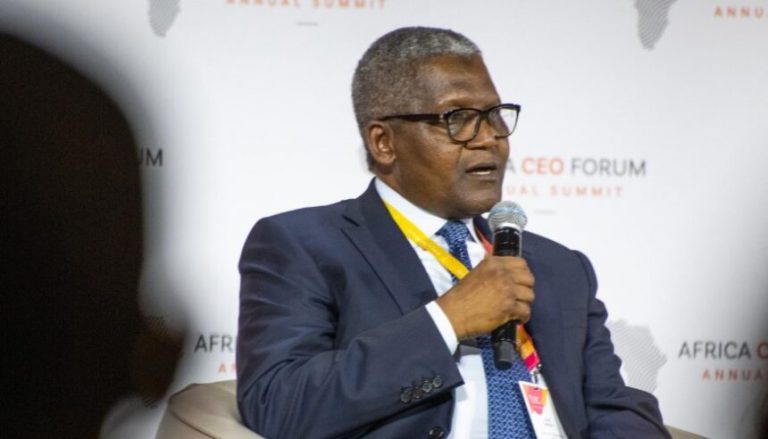
[File Photo] Aliko Dangote
By Ochefa
WHEN I was younger, bedtime storytelling was one of my favourite pastimes in my family. After the evening meal, my mother would usually gather us together for this special treat.
Of all the fables she told us, one that has remained indelibly etched in my memory to this day was Why the Giraffe Eats from Tall Trees.
The story portrayed the giraffe as a humble and considerate animal. Because of its long neck, it could reach the leaves and branches of tall trees, leaving the grasses and shorter vegetation for sheep and goats whose shorter necks could not reach the higher branches.
So, what is the point?
Could the Dangote Petroleum Refinery be playing the giraffe in Nigeria’s downstream petroleum market—leaving marketers to supply the domestic market with imported Premium Motor Spirit (PMS), while it increasingly exports its refined products to other countries?
Recent developments in the petroleum industry appear to lend some credence to this question.
The management of Dangote Petroleum Refinery recently attributed its increased export volumes to rising imports of petrol into Nigeria.
The refinery said the decision to focus more on exports should not be interpreted as a lack of commitment to the Nigerian market.
“Rather, exports are a prudent operational response to the realities of a market where imported products continue to compete with locally refined fuel despite the availability of sufficient domestic refining capacity,” the refinery said.
Figures from the Nigerian Midstream and Downstream Petroleum Regulatory Authority (NMDPRA) appear to support the changing supply pattern.
According to the regulator’s recent report, Dangote Refinery’s supply of PMS to the domestic market fell by 21 per cent to 25.8 million litres per day in July, from 32.5 million litres per day in June.
The monthly factsheet showed that the refinery produced about 25.9 million litres of PMS per day in July and exported 3.4 million litres per day.
The July domestic supply figure was reportedly the lowest recorded by the refinery in 2026.
At the same time, petrol imports rose by nine per cent to 19.7 million litres per day, from 18.1 million litres per day in June.
These figures raise an important question: Is Nigeria gradually returning to a situation where imported petrol is competing with locally refined PMS, even as Dangote Refinery has the capacity to supply a substantial portion of domestic demand?
Dangote Refinery has expressed concern about the continued issuance of import licences for petroleum products. It maintains that it has demonstrated sufficient capacity to meet, and even exceed, Nigeria’s domestic PMS requirements.
The refinery said that although it remains committed to Nigeria’s energy security and uninterrupted fuel availability, the continued inflow of imported PMS has created uncertainty around domestic demand forecasting and inventory management.
According to the refinery, it has consistently maintained sufficient inventories and reserved product volumes to guarantee steady supplies to the Nigerian market since commencing operations.
That commitment, it said, has involved substantial investment in storage facilities, logistics and working capital to protect consumers from supply disruptions and market volatility.
Why Dangote Says It Is Exporting More
The refinery’s major concern appears to be the lack of transparency over the volume of imported petrol expected to enter the country.
Without reliable information on future import volumes, it argues, it becomes increasingly difficult to plan production and manage inventories efficiently.
Maintaining large stocks of petrol that may not be absorbed by the domestic market also comes with significant storage and financing costs.
“As a responsible energy provider, we have always endeavoured to keep adequate reserves to satisfy local demand at all times,” the refinery said.
However, where significant quantities of imported PMS continue to enter the market through licences issued by the regulator, and there is limited visibility on future import volumes, the refinery says it becomes commercially unsustainable to hold excess inventory indefinitely.
Its argument is straightforward: when locally refined products cannot be absorbed by the domestic market because of competing imports, the surplus must be moved elsewhere.
Hence, the increased exports.
The refinery insists that this does not mean Nigeria’s domestic market cannot be supplied. Rather, it says the exports are a response to market uncertainty created by competing imports.
It also warned that if supply shortages eventually occur because of market distortions caused by excessive importation and the resulting difficulty in forecasting domestic demand, such shortages should not automatically be blamed on Dangote Refinery.
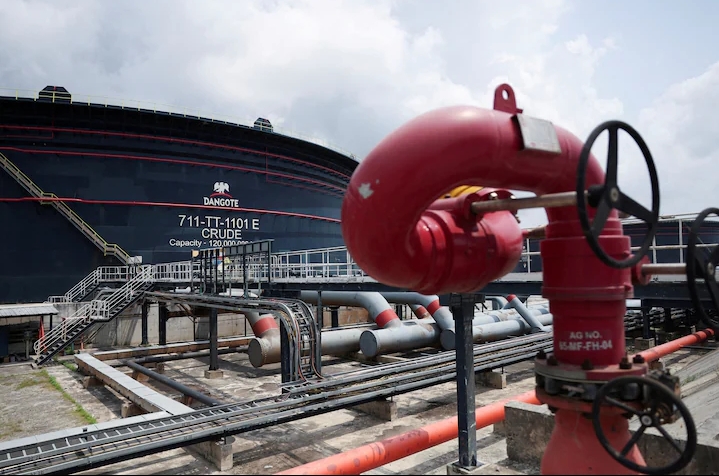
The company maintains that it remains ready and capable of meeting and exceeding Nigeria’s petroleum product requirements.
Dangote’s Transparency Concern Is Genuine—Expert
Oil and gas expert Dr Ayodele Oni believes Dangote Refinery’s concern over transparency is legitimate.
According to him, Section 317 of the Petroleum Industry Act contemplates the issuance of import licences where there is a demonstrable shortfall.
But, he argued, a shortfall determination that is not published cannot easily be scrutinised.
“NMDPRA should publish, ex ante, the aggregate volume of import authorisations it has approved for each quarter and the shortfall assessment behind them. That is a modest reform and it costs the regulator nothing,” he said.
However, Oni cautioned against simply shutting out imports.
He pointed to the performance of the country’s government-owned refineries, noting that NNPC’s three refineries produced nothing in July.
“A single plant supplying nearly the entire national market, with imports switched off, is a structural risk, not an achievement,” he argued.
He added that the Federal Competition and Consumer Protection Act exists to address such situations, stressing that regulatory policy should not be based on the assumption that a single refinery will never experience an unplanned outage.
According to him, the solution is structural: a transparent shortfall methodology, published quarterly import quotas, and the development of genuine second and third domestic refineries.
“Everything else is noise,” he said.
” The government cannot simultaneously encourage domestic refining, allow substantial imports without clearly communicating the basis for them, and expect refiners to maintain costly inventories indefinitely.”
Imports or Domestic Refining?
Another industry analyst and former Managing Director of 11PLC, formerly Mobil, Otunba Adetunji Oyebanji, believes Dangote Refinery is within its rights to export.
He argued that the government must retain the flexibility to import petroleum products whenever there is a potential shortfall.
“This is an internationally traded product,” he said, pointing out that even countries with substantial refining capacity, including the United States, continue to import petroleum products.
His argument is that economics, rather than sentiment, ultimately determines where petroleum products are bought and sold.
“We heard that Dangote exported to America. Don’t they have refineries?” he asked rhetorically.
For him, pricing remains a major determinant.
And therein lies the real issue.
The giraffe in my mother’s story was not merely tall; it was considerate. It reached the leaves that other animals could not reach and left the lower vegetation for them.
But Nigeria’s petroleum market is not a fable. Dangote Refinery is a commercial enterprise, not a charitable institution. It must make economically rational decisions, just as marketers and importers do.
The bigger question, therefore, is not whether Dangote Refinery should export.
It is whether Nigeria’s petroleum regulatory framework is creating the right conditions for locally refined products to compete fairly, while ensuring that consumers are protected and the country is not exposed to the risks of relying too heavily on a single refinery.
If Dangote has the capacity to meet domestic demand but finds it more commercially sensible to export because imported PMS is competing with its products at home, then the problem may be bigger than Dangote.
It may point to a regulatory and market-structure problem that requires urgent attention.
The government cannot simultaneously encourage domestic refining, allow substantial imports without clearly communicating the basis for them, and expect refiners to maintain costly inventories indefinitely.
There must be transparency.
There must also be competition.
And, most importantly, Nigeria needs more functioning refineries capable of supplying the domestic market.
Perhaps, then, the lesson from the giraffe is not that Dangote should leave the “grass” to the marketers.
It is that the rules of the forest must be clear enough for every animal to know where it stands.

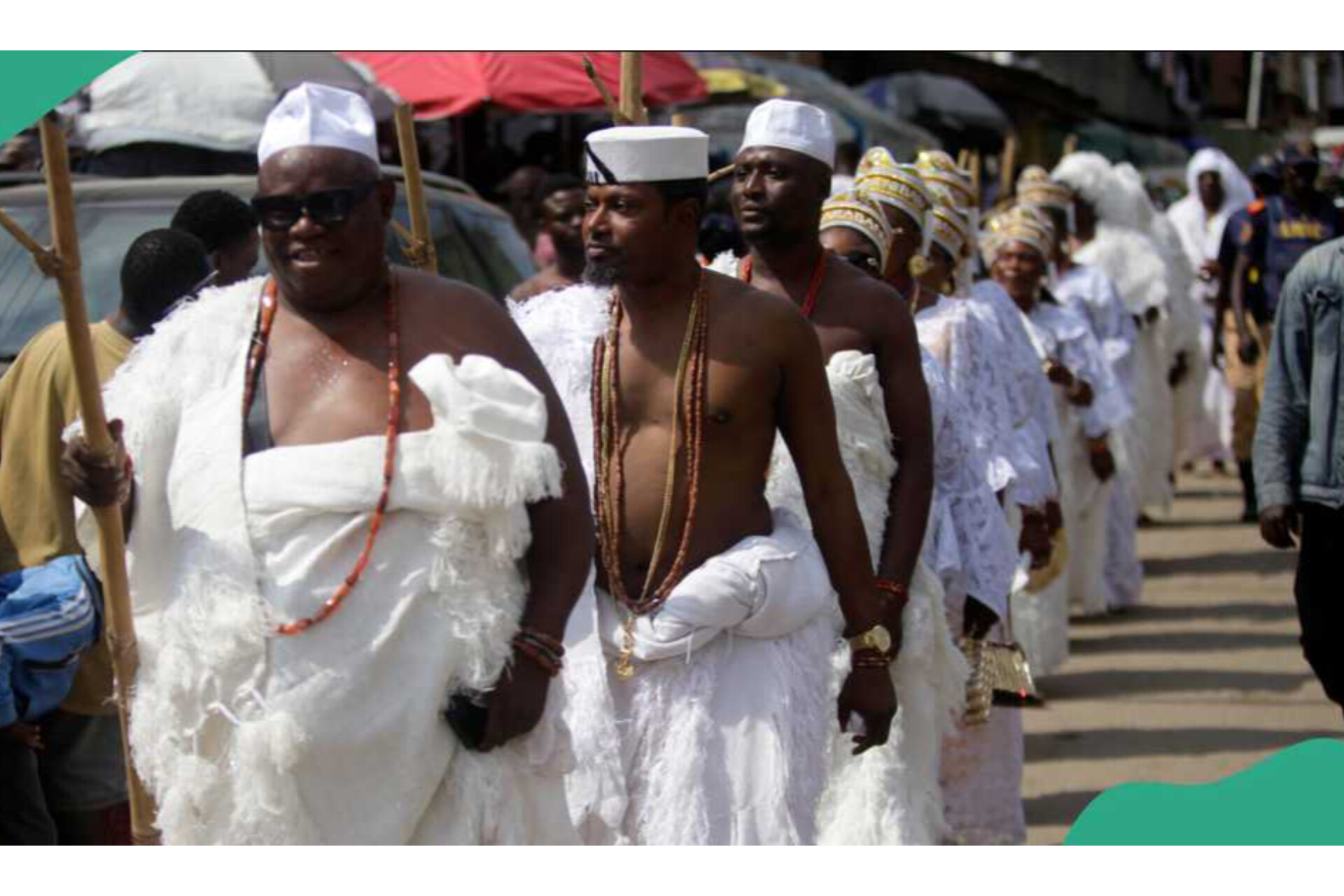
The Lagos State Government has declared Thursday, August 20, 2026, a work-free day for public servants, political appointees and others to mark this year’s Ìṣẹ̀ṣe Day celebration.
The announcement was made by the Special Adviser to the Governor on Tourism, Arts and Culture, Idris Aregbe, in a statement on Wednesday. He described Ìṣẹ̀ṣe as “not a relic” but “a living expression of our traditions and a celebration of Yoruba spirituality as an important part of Nigeria’s cultural and religious landscape.”
Authorities expect the event to draw more than three million residents and traditional worshippers in what is billed as one of the largest gatherings of its kind. Celebrations will feature prayers, rituals, processions, drumming and cultural displays dedicated to the Òrìṣà, coordinated by the Association of African Traditional Religion Nigeria and Overseas.
Ìṣẹ̀ṣe Day has been observed as a work-free day in Lagos since 2023, following a request by the Lagos State Council of Obas and Chiefs. Governor Babajide Sanwo-Olu has maintained the practice annually as part of the administration’s commitment to indigenous values and religious inclusiveness under the THEMES+ Agenda.
Normal government activities are expected to resume on Friday, August 21. Residents have been urged to celebrate peacefully and respectfully.


Macron Hosts Tinubu for Private Dinner at Élysée Palace (Photos)

Madonna Returns To MTV Video Music Awards, After 23 years

Emir Sanusi mobilises Kano People “Buy Dangote Refinery’s Shares Now”

Tech Expert, Zuckerberg trains with UFC champions, Adesanya, Alexander

Organ Trafficking: Ekweremadu bags 10 years in UK prison

SAINT OBI: Between his marriage and his death
-
 Health2 days ago
Ondo ‘Monkey Tail’ herbal drink kills 49
-

 Business2 days ago
Nigerians Speak As Petrol sells N1,500/litre
-
 Business2 days ago
Emir Sanusi mobilises Kano People “Buy Dangote Refinery’s Shares Now”
-
 News2 days ago
Digital Economy Minister Says NDPC Now Properly Functional With New HQ
-

 News2 days ago
UK court jails Nigerian man for masturbating in front of a woman
-
 Entertainment2 days ago
Madonna Returns To MTV Video Music Awards, After 23 years
-
 International21 hours ago
Macron Hosts Tinubu for Private Dinner at Élysée Palace (Photos)