
International
Macron names ally Sébastien Lecornu as new French PM
Lecornu, 39, was among the favourites to take over the job, and has spent the past three years as armed forces minister, with a focus on France’s response to Russia’s war in Ukraine.


President Emmanuel Macron has named close ally Sébastien Lecornu as new French prime minister.
This was 24 hours after a vote of confidence ousted François Bayrou as head of his government.
Lecornu, 39, was among the favourites to take over the job, and has spent the past three years as armed forces minister, with a focus on France’s response to Russia’s war in Ukraine.
In a statement the Elysée Palace said he had been given the task of consulting political parties with the aim of adopting France’s next budget.
Bayrou had visited the president hours earlier to hand in his resignation, paving the way for Lecornu to become the fifth prime minister of Macron’s second term as president.
Lecornu will face the same challenges as his predecessor, including getting a cost-cutting budget past parliament without a majority.
France has a spiralling public debt, which hit €3.3tn (£2.8tn) earlier this year and represents 114% of the country’s economic output or GDP.
Bayrou had proposed €44bn in budget cuts, and his decision to put his plans to a vote of confidence was always going to fail.
In the end France’s National Assembly decided to oust his government by 364 votes to 194.
Lecornu’s appointment has already been condemned by parties on both the left and right, an indication of the difficulties he will face.
(BBC News)
International
JUST IN: Third Batch of Evacuated Nigerians from SA Arrives in Lagos Amid Xenophobia Fears

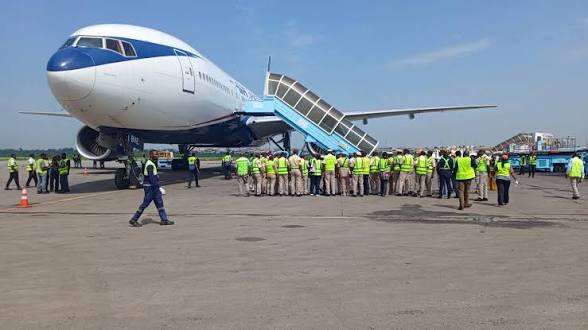
A fresh group of Nigerians evacuated from South Africa has landed safely in Lagos as the Federal Government continues its voluntary repatriation exercise amid heightened anti-immigrant tensions in the country.
The Air Peace flight carrying approximately 271 returnees touched down at the Murtala Muhammed International Airport (MMIA) in Lagos on Tuesday morning, shortly before 11 a.m. This marks the third major batch in the ongoing operation.
Officials from the National Emergency Management Agency (NEMA), Nigeria Immigration Service (NIS), Nigerians in Diaspora Commission (NiDCOM), and other relevant agencies were on ground to receive the evacuees, who will undergo documentation, profiling, and medical checks before reintegration support.
The latest flight departed Johannesburg late Monday night / early Tuesday, following an earlier departure from Nigeria. It forms part of President Bola Tinubu administration’s efforts to ensure the safety and welfare of citizens choosing to return home voluntarily.
Prior batches included around 258-268 returnees who arrived on June 11 and 66 more on June 25, bringing the cumulative total to over 500 before today’s arrival. The government has indicated plans for additional flights to accommodate more registered Nigerians wishing to leave South Africa.
The evacuations come ahead of and in response to planned anti-migrant protests in South Africa on June 30, with reports of over 15,000 Nigerians still potentially interested in returning amid fears of xenophobic attacks, looting, and harassment.
The Ministry of Foreign Affairs has urged remaining Nigerians in South Africa to stay vigilant, maintain contact with the Nigerian High Commission, and take advantage of available evacuation support where needed. Officials continue to monitor the situation closely while providing consular assistance.
International
HAPPENING NOW: Shops, businesses shut as protesters gather in South Africa over xenophobia
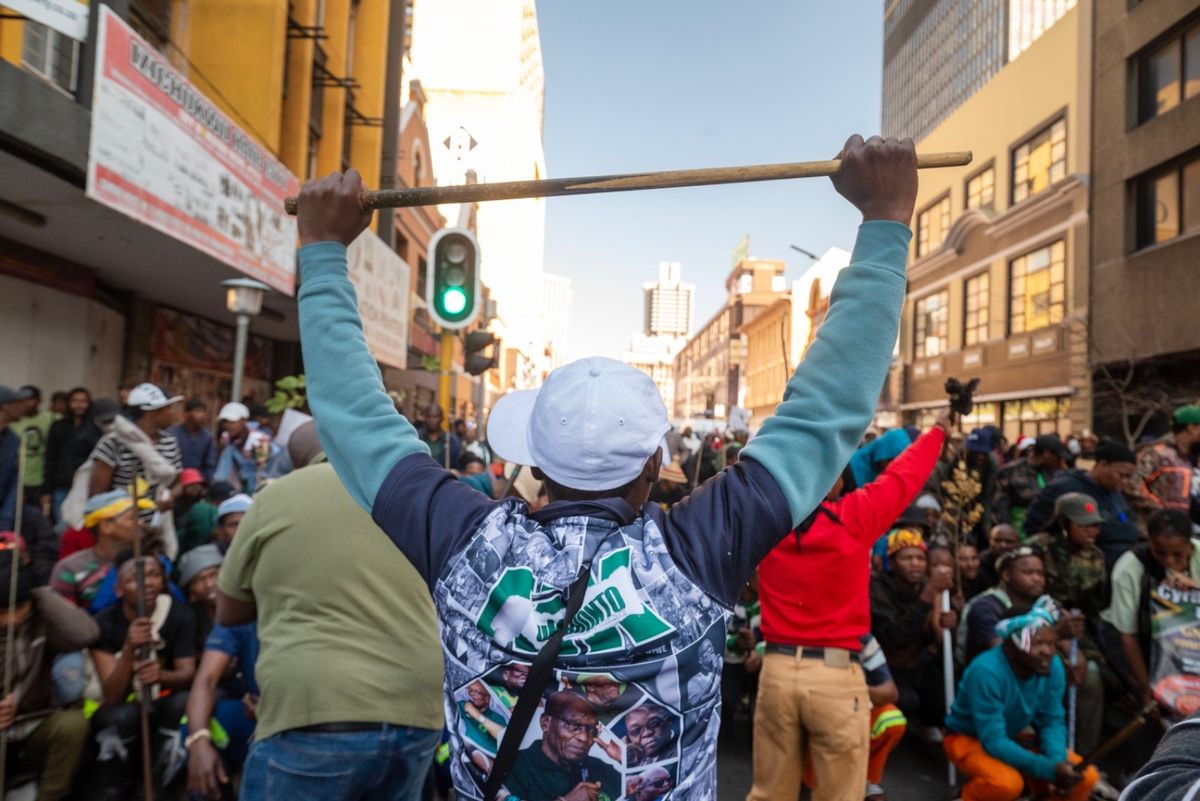
Many shops and businesses remained closed across parts of South Africa on Tuesday as protesters mobilized for anti-immigrant demonstrations, highlighting deep tensions over immigration, jobs, and alleged crime linked to foreign nationals.
Protesters, often associated with groups such as March and March, gathered in cities including Durban, Johannesburg, Boksburg, and other areas, demanding that undocumented migrants leave the country. Some marches featured participants wrapped in South African flags and carrying sticks, chanting slogans like “Mabahambe” (“They must go”). A key flashpoint has been the self-imposed June 30 deadline set by some activist groups for foreigners without valid documentation to depart.
Business owners, particularly those running foreign-owned spaza shops, informal stalls, and small enterprises, shuttered their premises in anticipation of potential unrest. In areas like Boksburg and Kwathema, many shops stayed closed for the day, with some owners citing fears of vandalism, looting, or confrontations. Reports emerged of protesters moving between businesses to inspect worker documentation and urging the dismissal of non-South African employees.
While many demonstrations proceeded under heavy police presence and remained largely peaceful, isolated incidents of intimidation, vandalism, and demands for foreign nationals to vacate properties were noted. In previous weeks and related actions, some immigrant traders abandoned their stalls after threats, with communities turning into “ghost towns” in affected neighborhoods.
Protesters voiced frustrations over what they perceive as foreigners taking local jobs, contributing to crime, and straining public services. “People are not working, the jobs are being taken by illegal foreigners. It’s not fair,” one demonstrator told reporters in Durban.
Critics, including human rights groups and some analysts, have labeled the actions as xenophobic, noting that migrants are often scapegoated despite limited evidence for broad claims. Many affected business owners, including those legally residing in South Africa, expressed fear for their safety and livelihoods.
The South African government has distanced itself from the June 30 deadline, with authorities deploying police to maintain order. The situation continues to evolve amid broader debates on immigration policy ahead of local elections.
This latest wave of protests reflects recurring tensions in South Africa, where economic hardship and competition in the informal retail sector have fueled anti-foreigner sentiment in recent years.
International
Mum rescued from Venezuela rubble with newborn baby tells BBC how he helped her survive
Tens of thousands more are missing in what the country’s interim president has described as the “most brutal natural catastrophe” in Venezuela’s history.

A mother who was pulled from the rubble of her wrecked home in Venezuela with her 18-day-old baby has told the BBC of how her son helped keep her alive.
Dayana Patino said her son Juan David gave her “motivation to be awake and alert”.
“As long as he was alive, I was going to be alive. Every now and then I was touching his nose for proof that he was still breathing,” she said.
Footage of the rescue has been shared around the world, with Juan David becoming a symbol of hope in Venezuela, which has been devastated by the twin earthquakes that hit the country on Wednesday – killing at least 1,450 people.
Tens of thousands more are missing in what the country’s interim president has described as the “most brutal natural catastrophe” in Venezuela’s history.


JUST IN: Third Batch of Evacuated Nigerians from SA Arrives in Lagos Amid Xenophobia Fears

Lagos Tops Nigeria’s HIV Burden with Highest New Infections as National Total Hits 102,025

HAPPENING NOW: Shops, businesses shut as protesters gather in South Africa over xenophobia

Tech Expert, Zuckerberg trains with UFC champions, Adesanya, Alexander

Organ Trafficking: Ekweremadu bags 10 years in UK prison

SAINT OBI: Between his marriage and his death
-

 News3 days ago
NDLEA, Army, NAFDAC, Agunechemba, Others Rally Against Drug Abuse in Anambra
-

 Business1 day ago
Naira Exchange Rates Monday, 29 June 2026
-

 Health1 day ago
WHO Confirms 1,300 deaths in Europe heatwaves
-
 News1 day ago
JUST IN: Two Trucks, Car Collide on Lagos Expressway, Several Injured
-

 Politics1 day ago
2027: Atiku Alleged Plot To Keep ADC Off Ballot
-
 News3 days ago
Sanwo-Olu Addresses PSP Operator’s Challenges , Announces Measures to Boost Waste Management (Photos)
-
 News1 day ago
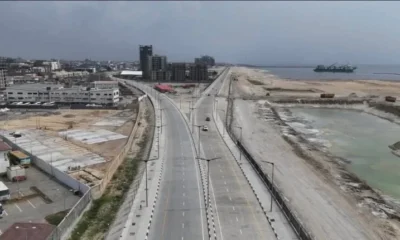
FG bans motorcycles, tricycles on Lagos-Calabar Coastal Highway
-

 Crime2 days ago
Operation Whirl Stroke Troops Foil Terrorist Attack at Tor Donga Yam Market (Images)